Medical Care as a Matter of Life and Faith

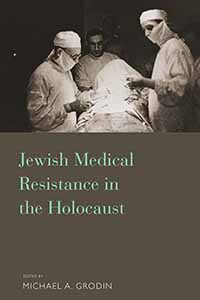
During the Holocaust, Jewish physicians were faced with mounting challenges to providing care, but, amazingly, were still able to maintain many of the conventional standards of medical care. Written based on accounts of these physicians and, in some cases, their children, Jewish Medical Resistance in the Holocaust tells the stories of these doctors and their incredible work in a “dark hour of recent history.” Following, editor Michael A. Grodin explains how he happened on the fascinating subject that became the heart of this soon-to-be-released volume.


_____________________________


What drew you to the study of medical practices during the Holocaust?


I began the project on medicine and the Holocaust over 25 years ago. As a psychiatrist, I specialized in the care of Holocaust survivors and their families and worked with several twin survivors researched on by Dr. Joseph Mengele.

Continue reading “Medical Care as a Matter of Life and Faith”

Mentoring: Doing and Theorising

Girlhood StudiesThe below is a special guest post written by Ann Smith, the Managing Editor of Girlhood Studies – An Interdisciplinary Journal.


While we work with many leading scholars and well-established authors, we also encourage new and inexperienced writers to contribute to Girlhood Studies so, as the managing editor, I see my task as necessarily including a great deal of mentoring. But, how does one talk about mentorship without sounding patronising? Being a mentor in this context is not difficult, if very time-consuming; I have never yet encountered any opposition from an inexperienced contributor to my guidance and suggestions and I often preface encouraging comments about improvements and progress in the development of a ms that is gradually becoming suitable for publication with a statement like: “I don’t mean to sound patronising but I do want to tell you how much better this version is” or something similar. Without exception so far, these authors voice gratitude and are willing to do whatever it takes. But being a mentor and talking about this process are two very different things.

When I say that I have mentored authors whose command of English indicates that this is their second (if not third) language I am already sounding like a colonial authority! There are many Englishes spoken around the world but I have to insist on a level of what might be called white Western English. When I describe an author’s command of academic language as poor or lacking I am insisting that she or he write in a way that is acceptable to a very tiny minority of readers. I find that hard to justify here although I know that what I am doing is the right thing to do in this particular context of editing an academic journal.

It is much easier to use an unoffending agentless passive voice construction to suggest to an author that a thesis put forward, say, in her abstract is being contradicted later in the article than it is to say here—in the brutally declarative active voice—that some authors appear to lack logic and seem to be unable to argue conclusively, true as this might be. And, in the work of new and inexperienced authors, it is easier to correct the misplaced modifiers (of which there have been very many over the years) and fix the incorrect punctuation (that seems to me to be endemic) than it is to say here that some writers have a poor grasp of basic English grammar.

But then, luckily, I am not often called upon to articulate why this mentoring is necessary; I just do it and the best part of it falls outside of any theorising—the recognition that Girlhood Studies has functioned as a launching pad for authors who are on their way to becoming the next generation of leading scholars, and that I have played a role in this process.

by Ann Smith, Managing Editor of Girlhood Studies

Follow Girlhood Studies on Twitter!

Unmasking the Visages of Ukrainian Women

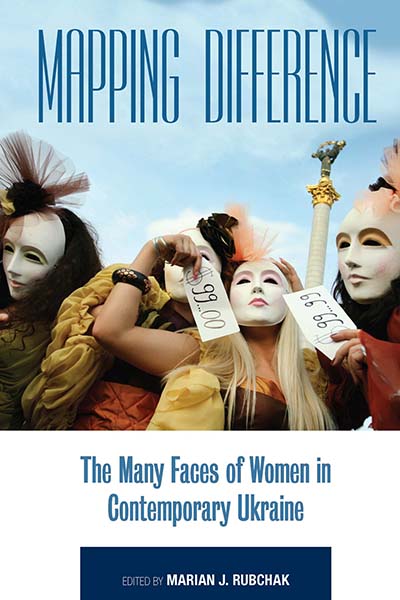
A look into the life of post-Soviet Ukrainian women, Mapping Difference: The Many Faces of Women in Contemporary Ukraine is now available in paperback. This book uncovers the virtues of women that sometimes lie just beneath negative gender stereotypes. Following, editor of the collection, Marian Rubchak, gives readers a deeper look into the volume via the book’s cover.


_________________________________


Since the demise of the Soviet “Empire of Nations”[i] in 1991 Ukraine’s women have lived in a world largely shaped by the rejection of communist values and efforts to transform a moribund socialist system into an open democratic society. Early in the transformative period this society gave rise to a small core of female activists who chose to work within the existing system, with its traditional values, to effect the changes that would return their voice to women. Although they disavowed the label of feminist as a self-descriptor their agendas clearly reflected feminist principles.

Continue reading “Unmasking the Visages of Ukrainian Women”

A Vehicle for Ideas

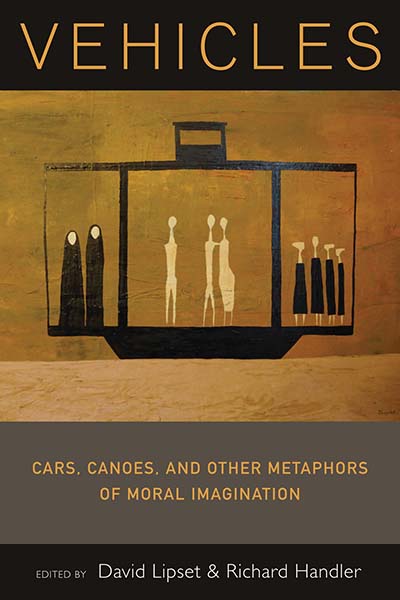
Vehicles: Cars, Canoes and other Metaphors of Moral Imagination, edited by David Lipset and Richard Handler, offers insight into the vehicle as an object that can move not only people, but also ideas. Following, the editors weigh in on the metaphor of the vehicle in contemporary culture.


_______________________________________


Take a moment to consider these three vehicle images, of two boats and cars:


Continue reading “A Vehicle for Ideas”

Q&A for Democratic Theory: An Interdisciplinary Journal

Democratic TheoryBerghahn is pleased to announce the launch of an exciting new journal in 2014, Democratic Theory – An Interdisciplinary Journal. The first issue has been published this month!
Democratic Theory is a peer-reviewed journal that encourages philosophical and interdisciplinary contributions which critically explore democratic theory – in all its forms. Below is the transcript of an electronic interview between the Berghahn blog editor and the journal’s editors, Mark Chou and Jean-Paul Gagnon.

Continue reading “Q&A for Democratic Theory: An Interdisciplinary Journal”

Connecting Germany and Asia: A History

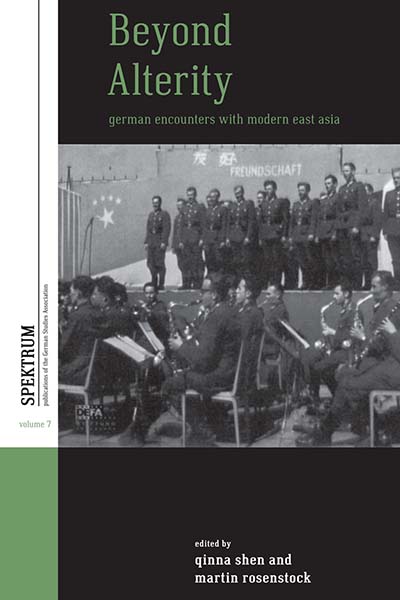
The relationship between the people of Germany and Asia strengthened in the second half of the twentieth century, resulting in the burgeoning of the academic field of Asian German studies in recent years. Beyond Alterity: German Encounters with Modern East Asia is a collection of this scholarship. Following, editors Qinna Shen and Martin Rosenstock discuss their love of subject, the collection and how the field will grow in the future.


_________________________________


What drew you to study the relationship between Germany and Asia? What inspired your love of your subject? When?


Qinna Shen: I’m a Chinese Germanist. I started to learn German in Beijing, then attended Heidelberg University before coming to the States for my doctoral degree.

Continue reading “Connecting Germany and Asia: A History”

Looking at Tourism through Anthropology’s Lens

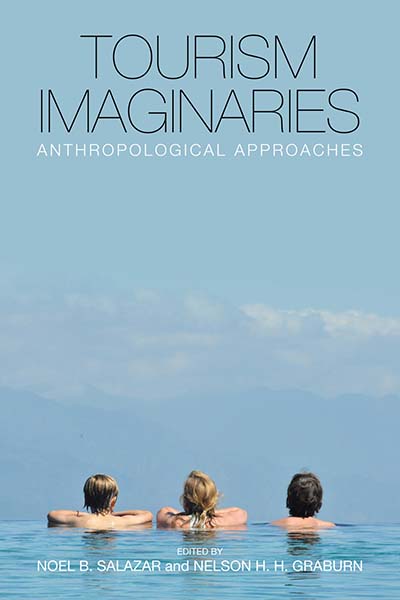
Just in time for summer vacation, Tourism Imaginaries: Anthropological Approaches will soon be available for purchase. This collection features a diverse group of scholars who dive deeper into the idea of “tourist” around the world, from Cambodia to Belize to the Netherlands. Following, editors Noel Salazar and Nelson H. H. Graburn give a glimpse into their work with the volume, their histories with the topic, and where they themselves like to “play tourist.”


_____________________________________


What drew you to study the seductive draw of tourism?


Salazar: It may sound odd, but I became interested in tourism (as an object of study) while working for an NGO specialized in aiding refugees. At the end of the 1990s, the organization sent me on a mission to a remote refugee camp in northern Uganda, on the border with Sudan.

Continue reading “Looking at Tourism through Anthropology’s Lens”

The Ethical Sequence of Eugenics?

If you could modify the human population to be more intelligent or more beautiful, would you? When this idea of eugenics — or selectively breeding a population with more “desirable” traits — was first popularized in the twentieth century, such contemporary figures as Winston Churchill, Theodore Roosevelt, H.G. Wells, and, not surprisingly, Adolf Hitler, were supporters. Now, with renewed interest in the science of eugenics, editors Calum MacKellar and Christopher Bechtel explore the unsavory aspects and issues in The Ethics of the New Eugenics, to be published this month. Following, the editors explain what led them to study this science, and what may be ahead for the field.


___________________________________________


What drew you to the study of eugenics?


Calum MacKellar: Over the many years that I have worked in the field of human bioethics, I have always suspected that the topic of eugenics would eventually come back to haunt society.

Continue reading “The Ethical Sequence of Eugenics?”

Egress and Ingress: Exploring ‘Points of Passage’

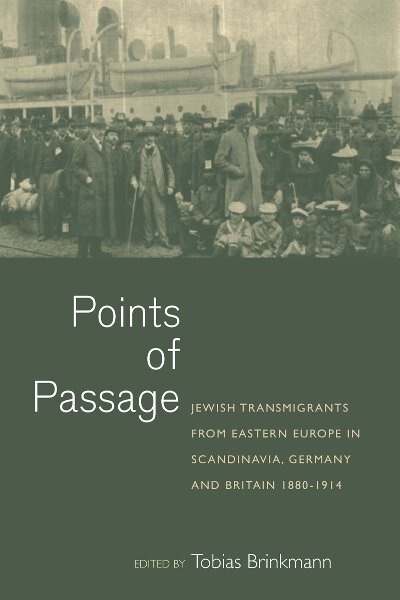
Ellis Island in New York City is a historically recognized entrance point for European migrants to the United States. But if this is so well-known, then why do we know so little about the points of departure? This is one of many research questions that informed the writing of Points of Passage: Jewish Migrants from Eastern Europe in Scandinavia, Germany, and Britain 1880-1914, published last October. Following, an excerpt from the volume — bookended by comments from editor Tobias Brinkmann — delves deeper into these queries.


 _________________________________________


When I began researching the history of Jewish migrations in the 1990s I concentrated on immigrants. I collected sources on the settlement of Jewish immigrants from small villages in the Central and Eastern European countryside in Chicago between 1840 and 1900. Within a few years the immigrants built a Jewish community, prospered economically and became respected members of Chicago’s social and political circles. My first book concentrated on two major research questions that continue to drive immigration studies: the impact of forces strengthening or weakening ethnic communities, and the impact of assimilation processes on immigrants.

Continue reading “Egress and Ingress: Exploring ‘Points of Passage’”

The Reciprocal Relationship of Media and Movement

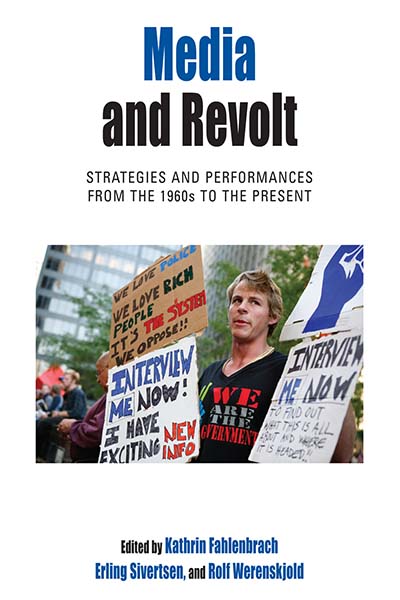
Editors Kathrin Fahlenbrach, Erling Sivertsen and Rolf Werenskjold’s volume Media and Revolt: Strategies and Performances from the 1960s to the Present was published last month. Following, the editors introduce the timely volume and share an excerpt from the Introduction. 


__________________________________________________


Looking at journals, television, or on the internet in these days, news dealing with protests abounds: the upheavals around the Euro-Maidan in the Ukraine, anti-governmental protests in Bangkok, the “Occupy-Gezi-Park”-manifestations in Istanbul or protest actions of NGOs like Greenpeace against oil companies or whale hunters. Obviously protest has an enormous “news value”: it offers spectacular pictures, it makes evident political conflicts and decisions by polarizing their actors, and it offers media the chance to perform as center of society.

Continue reading “The Reciprocal Relationship of Media and Movement”