Variations on an Educational Theme

When the traditional educational system of colonizing societies was disseminated to indigenous societies, it was not accepted by the colonized “as-is,” but was adopted as merely an underlying framework. This hybridization led to a multitude of varied, yet similar, educational systems across the post-imperialized world. In the following excerpt from the Introduction of Connecting Histories of Education: Transnational and Cross-Cultural Exchanges in (Post)Colonial Education, to be published this month, editors Barnita Bagchi, Eckhardt Fuchs and Kate Rousmaniere further explain the connections within modern educational culture.


______________________________
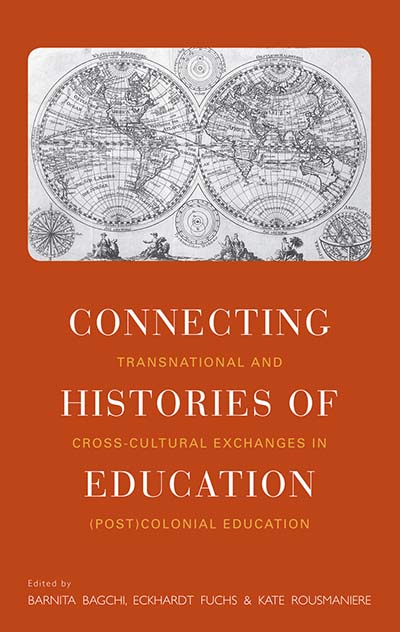
Connecting Histories of Education bears a double meaning. The volume connects historians of education from South Asia and other parts of the world to enhance a comparative perspective and create a wider research network beyond the Euro-Western world. In addition, it presents local, regional, national and transnational research, with the goal of highlighting the interconnectedness of histories of education in the modern world.
Continue reading “Variations on an Educational Theme”

Throwing Out Ideas, The Culture of ‘Urban Pollution’

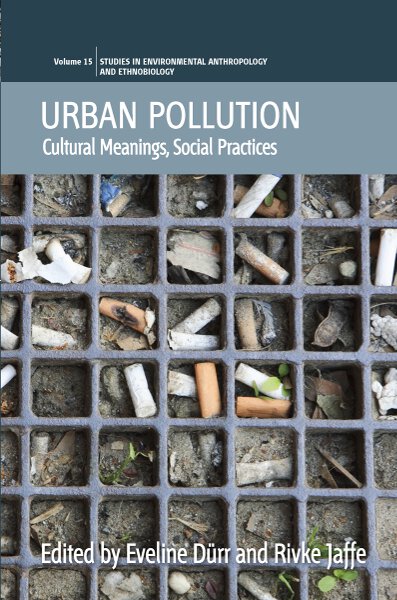
The celebrated volume of anthropologist Mary Douglas, Purity and Danger (1966), broke ground with its discussion of cleanliness, dirtiness, and sacred ritual. Editors Rivke Jaffe and Eveline Dürr took this up in their 2010-published Urban Pollution: Cultural Meanings, Social Practices. The volume, which was published as a paperback earlier this month, dusts off the concepts of clean and dirty, and looks at modern intersections of pollution and culture. Jaffe and Dürr revisit the origins and makings of the volume, below.
 

_____________________________________________


Berghahn Books: What is the idea behind the collection, and how did the book come about?


Rivke Jaffe and Eveline Dürr: We wanted put together a collection that could help bridge the divide between environmental anthropology and urban anthropology. The bulk of work in environmental anthropology has neglected cities and specifically urban pollution. Meanwhile, urban anthropologists rarely incorporate an environmental dimension in their work.

Continue reading “Throwing Out Ideas, The Culture of ‘Urban Pollution’”

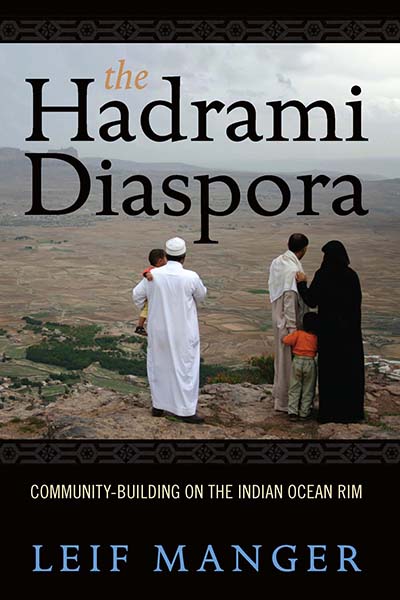
Following the Diaspora: A Study of the Hadrami Community

The Hadrami community’s migratory patterns throughout the Indian Ocean region have historically been propelled by trade and religious ambitions. Leif Manger’s complex ethnographic account of this community’s varied and widespread diaspora from South Yemen is explored in The Hadrami Diaspora: Community-Building on the Indian Ocean Rim, which was published this month in paperback. Following, Manger discusses his work on this volume and his time spent with this diverse community in widespread areas.


_______________________________________


Berghahn Books: What came first, your interest in Hadrami culture or your interest in migration? What drew you to these areas of study?


Leif Manger: Yemen has always been a dream for me, but I was particularly fascinated by the terraces in the mountains of the north of the country and the ecological effects of adaptations in such areas. This was due to my research interests in my early career, on intensification of agriculture, agro-pastoral interaction and development.

Continue reading “Following the Diaspora: A Study of the Hadrami Community”

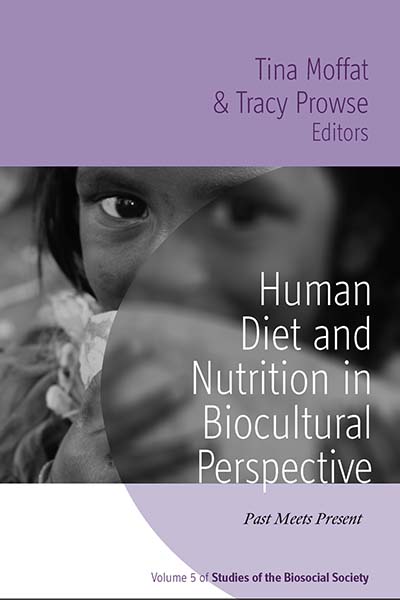
The Importance of Being Nourished

Nutrition is essential to human life, no matter one’s cultural background or period in which one lived. Human Diet and Nutrition in Biocultural Perspective: Past Meets Present, published in 2010 and recently available as an ebook, follows this fundamental building block of life and its impact on society from prehistoric to contemporary times, across the world. Following, volume editors Tracy Prowse and Tina Moffat discuss the most (and least) enjoyable aspects of editing a collection, changes in the study of human diet, and the way forward in the Anthropology of diet and nutrition.


___________________________________________


Berghahn Books: What drew you to the study of health and nutrition?


Tracy Prowse: I really like food. Seriously, I’ve always been interested in diet and nutrition in past populations.


Tina Moffat: I started out in infant mortality studies and child health and realized quickly that nutrition is a major component of child health. 

Continue reading “The Importance of Being Nourished”

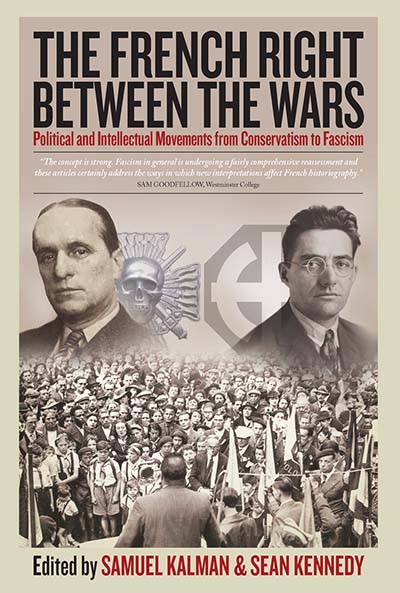
Souvenir of the Right: Reexamining Twentieth-Century French Politics

The French Right Between the Wars: Political and Intellectual Movements from Conservatism to Fascism, to be published this month, re-opens the history books on  France between World Wars I and II. In this collection of essays, scholars take a look at the polarized political scene, especially the right, within the country. Below, in an interview with editors Samuel Kalman and Sean Kennedy, the scholars speak to the challenges of compiling the collection as well as the potential controversy of writing on such a politically charged topic.


__________________________________________

Berghahn Books: What aspect of compiling an edited collection did you find most challenging?  Most rewarding?


Sean Kennedy: When we began this project I was anxious that coordinating thirteen different contributions – in terms of deadlines and ensuring consistency in format – would be a major challenge. I should not have worried so much. Our contributors did a fine job of sticking to the production schedule and carrying out editorial work.

Continue reading “Souvenir of the Right: Reexamining Twentieth-Century French Politics”

How the ‘Legacies of Two World Wars’ Compare to Current Conflict

In an excerpt from the Introduction, the editors explain the point of origin for The Legacies of Two World Wars: European Societies in the Twentieth Century. In the volume, published last month in paperback, contributors follow the European zeitgeist as the continent was plunged first into one war, then a second. Editors Lothar Kettenacker and Torsten Riotte pit the public feeling surrounding these World Wars with that of the U.S. people when the government invaded Iraq in 2003.


_______________________________________


The aim of this book is to trace the moods and attitudes of the people of four Western countries before, during and after the First and Second World Wars. The contributions examine public opinion in Great Britain, France, Germany and Italy during the crucial moments of the two major conflicts of the twentieth century (in their differences and similarities). The inspiration to look again at the attitudes of ordinary Europeans to the two wars came from the controversy surrounding the US invasion of Iraq in 2003.

Continue reading “How the ‘Legacies of Two World Wars’ Compare to Current Conflict”

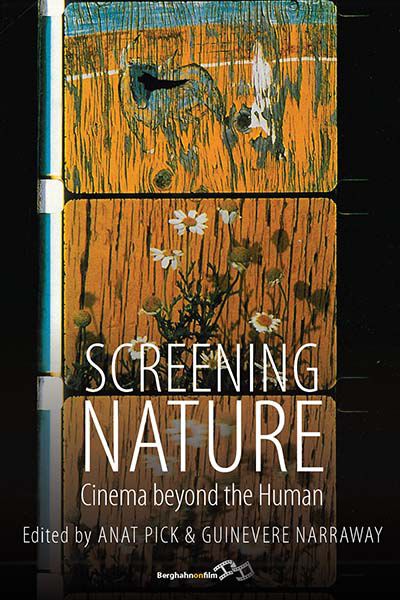
‘Screening Nature’ Turns the Cinematic Gaze to Mother Earth

Flora, fauna and film are the foci of Screening Nature: Cinema Beyond the Human, published in November 2013. The collection, edited by Anat Pick and Guinevere Narraway, hopes to open the film-viewers’ gaze to the often-overlooked nonhuman living subjects in film. The following is an interview with Pick and Narraway on the mission of Screening Nature, and on the environmental and ecocritical challenges to the discipline of Film Studies.


________________________________


Berghahn Books: What is the idea behind the collection and how did it come about?


Anat Pick and Guinevere Narraway: Screening Nature is one installment in a bigger project to push Film Studies to engage more closely with the natural world and with issues of ecology. It is fair to say that there is currently an “ecological turn” in Film Studies, and the book is part of what we hope will be a significant paradigm shift in the way we think and talk about film. But despite the growing interest in the ecological dimensions of cinema, both in terms of cinema’s representation of nonhuman nature and animals, and in terms of cinema’s ecological impact as a consumer and emitter of fossil fuels, Film Studies departments remain staunchly humanist and anthropocentric, with most courses theorizing and making films with little regard—in the literal sense of the word—to more-than-human concerns.

Continue reading “‘Screening Nature’ Turns the Cinematic Gaze to Mother Earth”

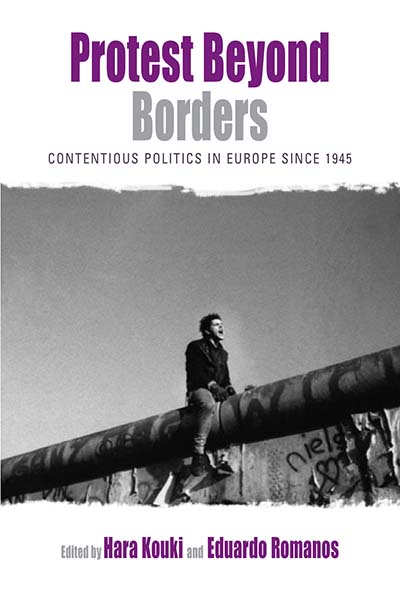
How Social Movements in Reality (Hopefully) Revitalize Theory

Protest beyond Boders: Contentious Politics in Europe since 1945, recently published in paperback, examines protest culture since the second World War from a variety of angles — historical, political, social, and cultural. But much has changed in worldwide politics since the volume’s original March 2011 publication. Below, the editors reflect on how the reality of the political protest sphere has renewed interest in studying the underlying theories of social movements.


___________________________________________________


In recent years, we have been all caught by surprise. A sudden outbreak of confrontations and protests erupted in unrelated places, such as Bulgaria, Spain, Greece, Hungary and beyond Europe, in Tunisia, Egypt, Thailand, United States and Brazil. Most often lacking clarity in terms of organization, membership, protest demands and goals, this rise of contention erupting across the globe is far from completed. Something new is unfolding, which could not have been predicted and cannot easily fit in our categories of thinking and classifying the world.

Continue reading “How Social Movements in Reality (Hopefully) Revitalize Theory”

Past, Present, Future Changes: An Anthropologist Looks at Africa

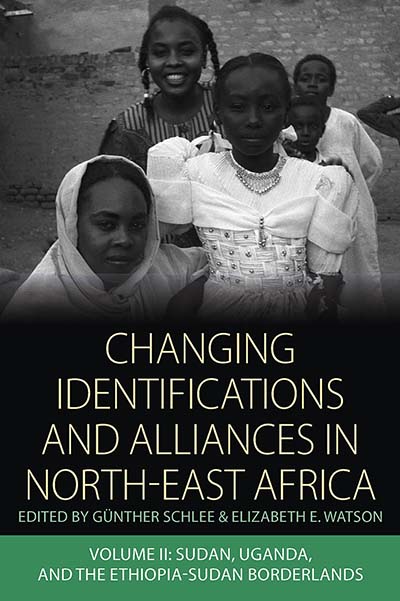
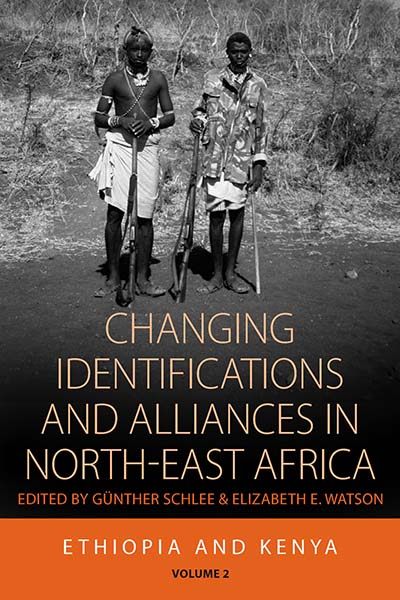
Günther Schlee traces old steps and tracks steps forward since the original publication of Changing Identifications and Alliances in North-East Africa, Volume 1 and Volume 2. The paperback versions were published in October. Following, Schlee rounds out the two-part interview with a reflection on the book’s release, and where he is proceeding within the field.


The first half of this interview is available here.

_____________________________________________________


Berghahn Books: To what extent did the initial release of the book contribute to debates among current and future academics within the field?


Günther Schlee: People use these two books as an introduction to the region. But it has also been taken up by people who have little to do with Africa. They have taken an interest in the theoretical issues we make.


Continue reading “Past, Present, Future Changes: An Anthropologist Looks at Africa”

Africa, from an Anthropologist’s-Eye View

Changing Identifications and Alliances in North-East Africa, originally published in 2009, was published in paperback in October. The two-volume collection, made up of Volume I: Ethiopia and Kenya and Volume II: Sudan, Uganda, and the Ethiopia-Sudan Borderlands, gives an overall view of the North-East of the continent and addresses the importance of the group dynamic, as it plays into politics, cultural identity, and war and peace. Co-editor Günther Schlee discusses the beginning of the collection, with its roots planted where his studies of Africa began — and how they are growing.


___________________________________________

Berghahn Books: What drew you to the study of Africa, specifically northeast Africa?


Günther Schlee: Like many students in the 1970s, I was fascinated by South America. When I studied anthropology and linguistics at Hamburg, I took Spanish up to the highest level. I read a lot about South America and followed the volatile politics of that continent very closely. When it was time to think about a PhD project, I was determined to do field research in South America. In order to identify a location and to enable myself to write a decent research proposal, I decided to go there on an exploratory visit on my own expense.

Continue reading “Africa, from an Anthropologist’s-Eye View”