Artisan Society and Struggles in the Ottoman Empire

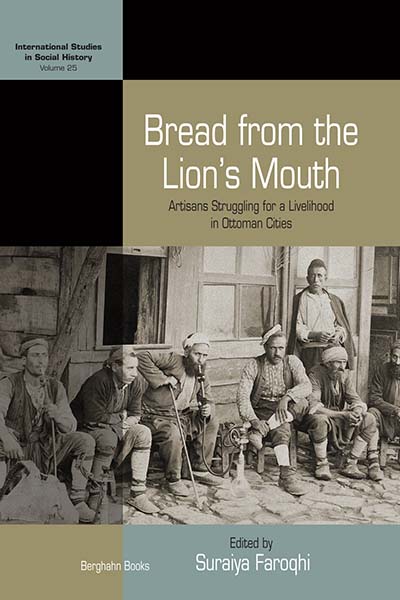
In recent years, there has been renewed interest in the history of the lives and work of middle eastern artisans. Bread from the Lion’s Mouth: Artisans Struggling for a Livelihood in Ottoman Cities, soon to be published, uses archival documents to re-create a scene of life in the Ottoman Empire from the fifteenth through twentieth centuries. Following, editor Suraiya Faroqhi discusses the history of this project and her interest in this region.


__________________________


What drew you to the study of artisans in Ottoman cities? Why do you think there is a renewed interest in this field today?


Perhaps because I am fond of my own work, as a historian I have for a long time been interested in people that work – as opposed to those that pray, govern, or fight. Moreover I like to see the things that artisans/artists have made; and we must keep in mind that the beautiful things we admire in museums did not come into being ‘just like that’ but are the product of human work, especially that of artisans and artists.

Continue reading “Artisan Society and Struggles in the Ottoman Empire”
Identity at the Intersection of Science and Culture

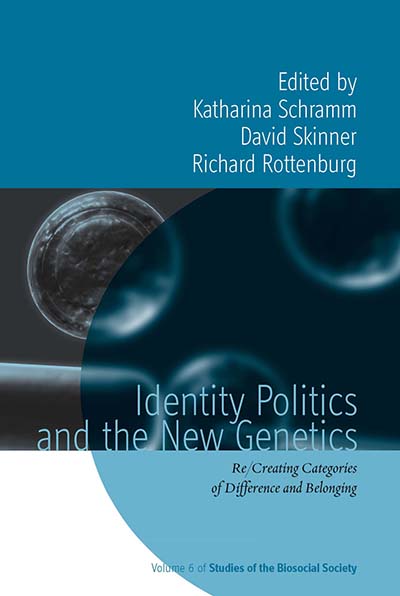
Drawing on the work of medical researchers, anthropologists, historians of science, and sociologists, Identity Politics and the New Genetics: Re/Creating Categories of Difference and Belonging explores how science and culture are used to create and perpetuate ideas of race and ethnicity. The volume was published as a paperback in November. Following, David Skinner, who co-edited the volume with Katharina Schramm and Richard Rottenburg, reflects on the volume’s reception and its distinction from other volumes on genetics and social history.


As the attention devoted to science journalist Nicholas Wade’s recent book A Troublesome Inheritance: Genes, Race, and Human History illustrates, discussion of race and genetics is habitually deemed ‘difficult’ or ‘controversial’. Wade is one of a long line of writers who portray themselves as fearless truth-seekers battling the politically correct consensus that races are social not biological types.

Continue reading “Identity at the Intersection of Science and Culture”

Writing for Goffman: Coincidence Drives Idea behind ‘Vehicles’

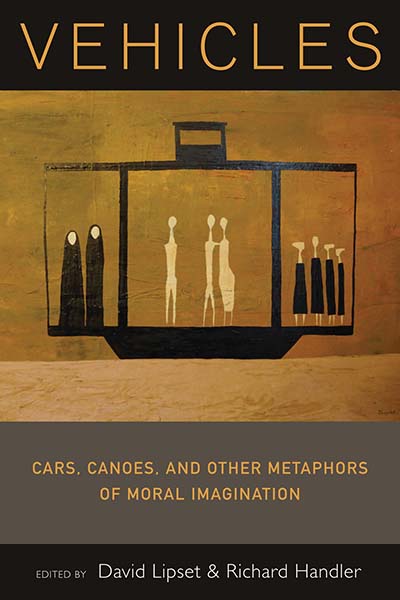
Recently published Vehicles: Cars, Canoes and other Metaphors of Moral Imagination, edited by David Lipset and Richard Handler, offers insight into the vehicle as an object that can move not only people, but also ideas. Following, Handler discusses the origination of the volume, which all came about by way of an interesting connection of coincidence.


______________________________


This volume came about serendipitously.


My friend David Lipset emailed me in the summer of 2008 with the standard “what are you working on” question. I replied that I was working on a series of essays about the great American sociologist, Erving Goffman. David wrote back to tell me the rather astounding story about his first car, a late-1950s VW Beetle that his father had bought from Goffman, in Berkeley, California, where both of them taught.


The fact that Goffman was an “early adopter” (in the U.S.) of the Beetle explained, I thought, some cryptic comments in Behavior in Public Places, where Goffman described the interactional contempt that drivers of small cars endured.


Continue reading “Writing for Goffman: Coincidence Drives Idea behind ‘Vehicles’”

The Social Impact of Economic Growth

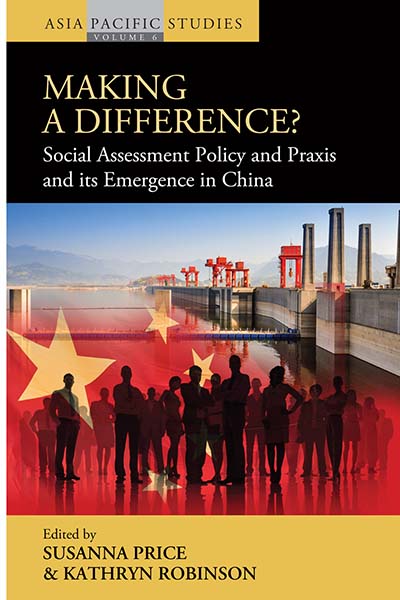
Editors Susanna Price and Kathryn Robinson explore the social aspects of Chinese economic growth in their soon-to-be-published book, Making a Difference? Social Assessment Policy and Praxis and its Emergence in China. Following, Susanna Price offers further insight into the book’s origins and the impact the book may have on the field of Asian development studies.


_______________________________


Why did we write this book?


We are all familiar with the striking, sometimes wildly exaggerated, news headlines on China’s rapid economic growth, its geo-political consequences and – perhaps less frequently − the possible flow-on implications for liberal democratic governance. We felt that such headlines, focusing on growth, overshadowed an alternative narrative, on the social dimensions of that growth and transformation. It came down to a simple wish: we wanted to tell a different China story that reflected our own experience and practice.

Continue reading “The Social Impact of Economic Growth”

Looking Back through Anthropology

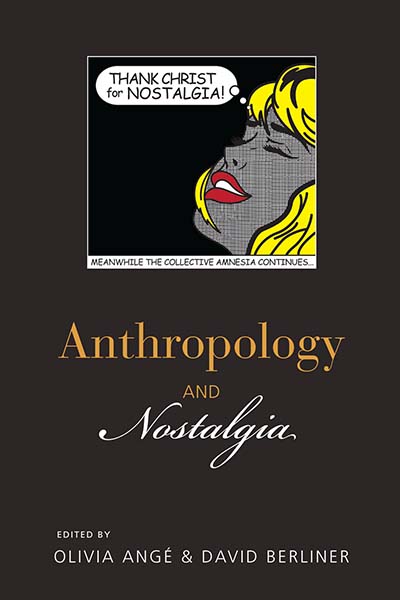
Although nostalgia seems to permeate much of modern (especially Western) society, there are few detailed anthropological accounts of this longing for the past. Editors Olivia Angé and David Berliner seek to fill this gap and explore this phenomenon in their newly published volume, Anthropology and Nostalgia. Following, the editors look back on the creation of their volume and look forward to its reception within the social science community.
 

_______________________________________


What drew you to the study of nostalgia, especially as it relates to the social sciences?


Well, nostalgia is a central notion that permeates present-day discourses and practices. In many parts of the world, there seems to be a current overdose of nostalgia, a reaction to the modern acceleration deployed in universes as diverse as nationalism, heritage policies, vintage consumerism, the tourism industry, and religious and ecological movements.

Continue reading “Looking Back through Anthropology”

Holdings of the Kingdom of Norway


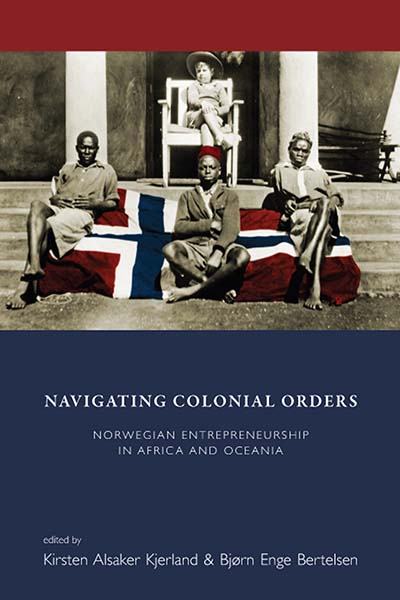
When considering powerhouses of colonization, most do not rank Norway among the likes of England and France. However, this country did have numerous outposts and much influence in Africa and Oceania. These territories come into focus in Navigating Colonial Orders: Norwegian Entrepreneurship in Africa and Oceania, which was published this month. Following, editors Kirsten Alsaker Kjerland and Bjørn Enge Bertelsen share insights into their book.


_______________________________


What drew you to the study of the entrepreneurial efforts of Norwegians in colonial Africa and Oceania? How was Norway’s involvement different from its counterparts in the rest of Europe at the time? How were they the same?


When looking at classical representations of colonial Africa, Oceania or, also, Latin America, one is struck by how the large colonizing countries have monopolized history. What struck us when starting to follow Norwegians that went abroad in the late 1800s and early 1900s was that this was simply not the case: The various colonial settings that we have examined have uncovered great diversity in terms of non-indigenous inhabitants and, thus, revealed different forms of colonial dynamics than what has often been contained in colonial histories of the major countries.

Continue reading “Holdings of the Kingdom of Norway”

The Norwegian Constitution, A ‘Living Document’


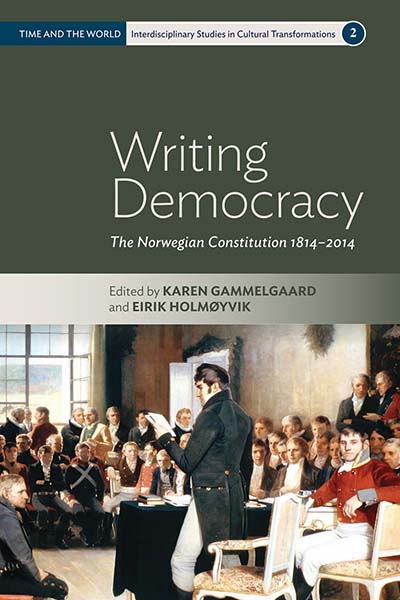
When it was signed May 17, 1814, the Constitution of Norway was considered one of the most radical Constitutions of the day. To celebrate the 200th year since it was first enacted, editors Karen Gammelgaard and Eirik Holmøyvik and their contributors have written a collection of historical accounts about the document. Their book Writing Democracy: The Norwegian Constitution 1814-2014 was published this month. Following, the editors provide more information about the history of this guiding document as well as the history of the volume.


What drew you to the study of the Norwegian Constitution?


For researchers in Norway it has been impossible not to be drawn to the Norwegian Constitution these last few years due to the bicentenary in 2014.

Continue reading “The Norwegian Constitution, A ‘Living Document’”

Investing in the Environment

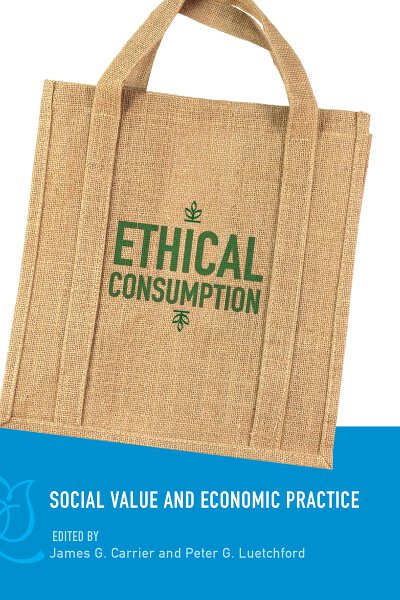
As consumers, are we changing the world with our buying power? This question, which has garnered much attention in recent years, is merely the tip of the iceberg of issues discussed in Ethical Consumption: Social Value and Economic Practice, which is now available in paperback. Following, editors James Carrier and Peter Luetchford explain the purpose behind their volume and delve deeper into the mentality behind “ethical consumption.”


_____________________


This volume arose from our common interest in the ways that ethical consumption is understood, both those seeking to analyse it and by those seeking to pursue it.

Continue reading “Investing in the Environment”

War Magic & Warrior Religion: Sorcery, Cognition & Embodiment

This post is the transcript of an electronic interview between D. S. Farrer and Berghahn blog editor Lorna Field.
D. S. Farrer is the co-author of the article Chants of Re-enchantment: Chamorro Spiritual Resistance to Colonial Domination and special issue editor of Social Analysis Volume 58, Issue 1: War Magic and Warrior Religion: Sorcery, Cognition, and Embodiment


Continue reading “War Magic & Warrior Religion: Sorcery, Cognition & Embodiment”

Hearing History of the 19th and 20th Centuries

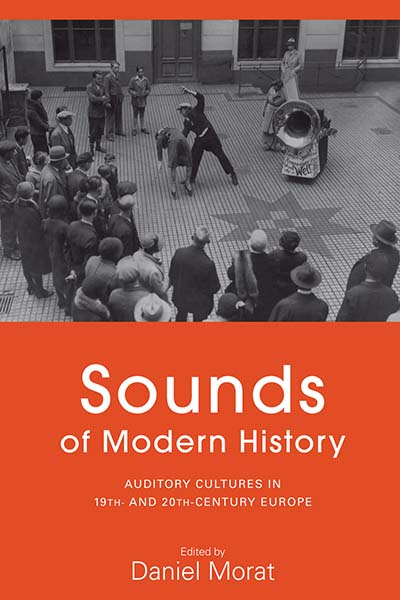
In a newly published collection, editor Daniel Morat and his contributors approach historical analysis in an uncommon way — by using their sense of hearing. The authors examine the way modern history sounds in Sounds of Modern History: Auditory Cultures in 19th- and 20th-Century Europe. Following, the editor gives a brief introduction and shares an excerpt from his chapter. The excerpt is accompanied by a recording from 1914 Germany.


_______________________________


When Europe went to war in the summer of 1914, scenes of vociferous war enthusiasm have been reported from many European cities. Historiographic research of the last twenty years has shown that these scenes were not representative of the general mood in the warring nations. Still, they have long dominated our perception of the outbreak of World War I.

Continue reading “Hearing History of the 19th and 20th Centuries”