Simulated Shelves: Browse December’s New Books

We are delighted to present a selection of our newly published December titles from our core subjects of Cultural Studies, History and Politics, along with a selection of our New in Paperback titles.

———————————————————————————————————————————–


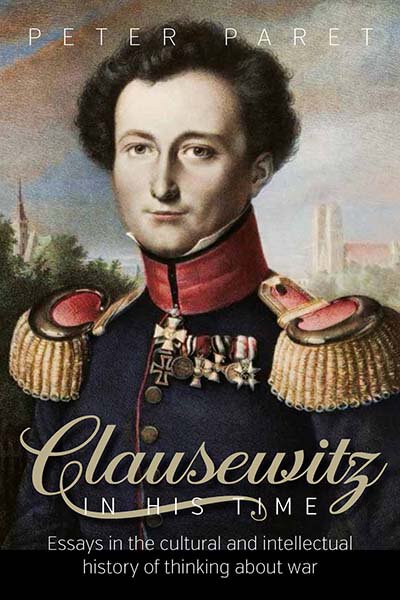
CLAUSEWITZ IN HIS TIME
Essays in the Cultural and Intellectual History of Thinking about War
Peter Paret

Continue reading “Simulated Shelves: Browse December’s New Books”

25th Anniversary of the Fall of the Wall

From 1961 to 1989, the city of Berlin was divided by the most visible sign of the Cold War: a wall more than 140km (87 miles) long. On 9 November 1989, East German authorities announced they would allow free access between east and west Berlin. Crowds of euphoric East Germans crossed and climbed on to the wall, leading to a reunited Germany.


Berlin is marking the 25th anniversary of the fall of the wall by “rebuilding” it with glowing white balloons. Some 8,000 illuminated helium balloons will trace a 15km-long section of the wall, snaking around the city, for just one weekend (7 to 9 November). The installation will come to an end on the evening of 9 November, when volunteers will release the balloons and set them free, soaring into the night sky to the strains of Beethoven’s 9th Symphony, played by the European Youth Orchestra. The balloons are made out of a biodegradable material so will not harm the environment. For a full story and more information on the event please visit ibtimes.co.uk


———————————————————————————————————

Browse Berghahn relevant titles:


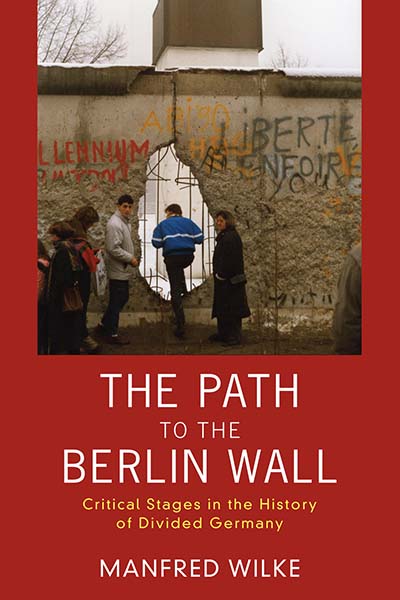
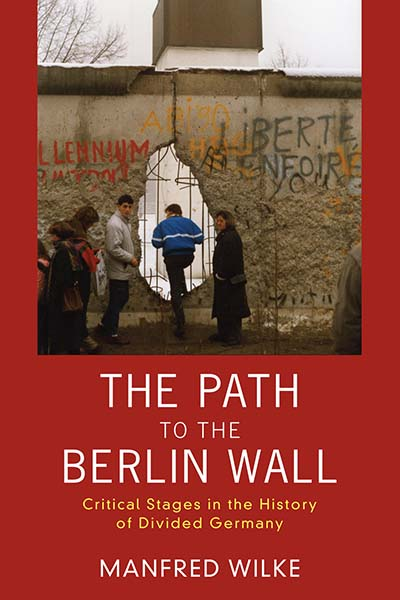
THE PATH TO THE BERLIN WALL
Critical Stages in the History of Divided Germany
Manfred Wilke
Translated from the German by Sophie Perl

Continue reading “25th Anniversary of the Fall of the Wall”

Cameras on the Nation’s Darkest Hour

Recent BBC Culture article, Christian Petzold: How Germans today confront the Nazis, takes a look at how the attitude of German filmmakers has changed in the past 15 years and how the cinema is turning the cameras on the nation’s darkest hour in films and TV. Read more on what Nina Hoss, an actress in the latest German film to address the war and its aftermath Christian Petzold’s Phoenix, has to say bbc.com/culture

———————————————————————————————————————————–

Browse some of Berghahn’s relevant titles on the topic of Nazi portrayal and postwar cinema in Germany & Europe.


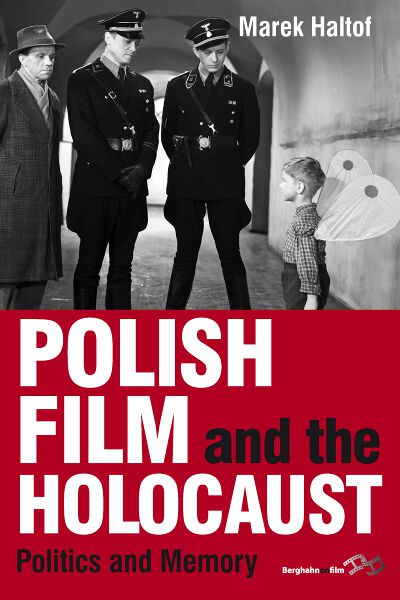
POLISH FILM AND THE HOLOCAUST
Politics and Memory
Marek Haltof

Continue reading “Cameras on the Nation’s Darkest Hour”

Medical Care as a Matter of Life and Faith

During the Holocaust, Jewish physicians were faced with mounting challenges to providing care, but, amazingly, were still able to maintain many of the conventional standards of medical care. Written based on accounts of these physicians and, in some cases, their children, Jewish Medical Resistance in the Holocaust tells the stories of these doctors and their incredible work in a “dark hour of recent history.” Following, editor Michael A. Grodin explains how he happened on the fascinating subject that became the heart of this soon-to-be-released volume.


_____________________________


What drew you to the study of medical practices during the Holocaust?


I began the project on medicine and the Holocaust over 25 years ago. As a psychiatrist, I specialized in the care of Holocaust survivors and their families and worked with several twin survivors researched on by Dr. Joseph Mengele.

Continue reading “Medical Care as a Matter of Life and Faith”

Connecting Germany and Asia: A History

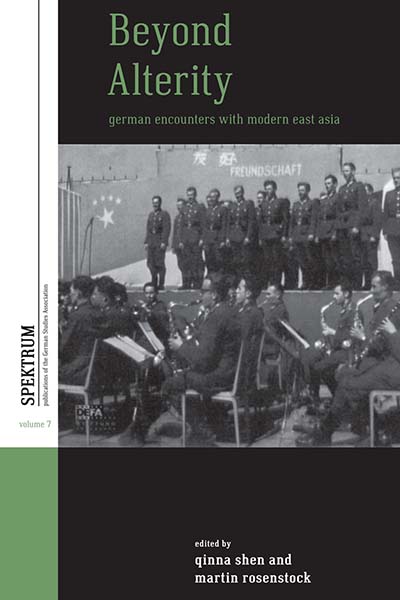
The relationship between the people of Germany and Asia strengthened in the second half of the twentieth century, resulting in the burgeoning of the academic field of Asian German studies in recent years. Beyond Alterity: German Encounters with Modern East Asia is a collection of this scholarship. Following, editors Qinna Shen and Martin Rosenstock discuss their love of subject, the collection and how the field will grow in the future.


_________________________________


What drew you to study the relationship between Germany and Asia? What inspired your love of your subject? When?


Qinna Shen: I’m a Chinese Germanist. I started to learn German in Beijing, then attended Heidelberg University before coming to the States for my doctoral degree.

Continue reading “Connecting Germany and Asia: A History”

A Lived Journey: Tracing ‘The Path to the Berlin Wall’

The Berlin Wall may have been erected in 1961, but the figurative foundation was laid in 1945, as the Soviet Union’s Communist Party and its allies made selections of their areas of influence. In The Path to the Berlin Wall: Critical Stages in the History of Divided Germany, author Manfred Wilke traces the events that led to the eventual construction of the Berliner Mauer. Wilke’s original volume was translated from German into English by Sophie Perl. Following is Perl’s interview with the author about his book.

Continue reading “A Lived Journey: Tracing ‘The Path to the Berlin Wall’”

Author Becomes Subject: Droysen as Topic of Historical Volume

Scholarship has come full circle for Johann Gustav Droysen — a historian lauded for his much-cited volume on Alexander the Great — as the author-historian is now the subject of study. Author Arthur Alfaix Assis delves into the historical theories of Droysen in What is History For? Johann Gustav Droysen and the Functions of Historiography, to be published later this month. Assis precedes the publication by sharing the root of his interest in the scholar, why he believes Droysen is important, and what Assis might have done if he did not follow the path of academia.


______________________________________________


Berghahn Books: What drew you to the study of Johann Gustav Droysen?


Arthur Alfaix Assis: I like to think that part of it has to do with the great impression left on me by the very first text I read as an undergraduate: Max Weber’s ‘Science as a Vocation’. I was a freshman at a provincial university in central Brazil, and was very eager to get in touch with serious historical and philosophical literature. But after a single week of lectures came a three-month-long strike, and the only reading assignment left was Weber’s text.

Continue reading “Author Becomes Subject: Droysen as Topic of Historical Volume”

Jünger in Paris: A Writer’s Wartime Account in the City of Lights

Allan Mitchell takes a look at Ernst Jünger, an under-appreciated twentieth century writer, but an important social figure. The Devil’s Captain: Ernst Jünger in Nazi Paris, 1941-1944 follows the writer at wartime, where he spent his stint in Paris as a military officer whose chief duty was to “mingle with French intellectuals.” Below is an excerpt from the volume, which was originally published in May 2011 and is soon to be released in ebook format.


________________________________________
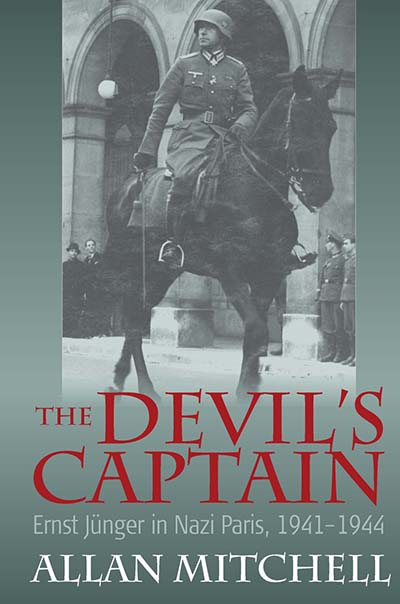
Very few, if any, critics of German literature would rank Ernst Jünger among the greatest writers of the twentieth century. He simply does not compare, as a novelist, with giants like Thomas Mann, Franz Kafka, or Robert Musil. His signature work, Auf den Marmorklippen, has been often justly praised for its chiseled language and allegorical imagination. But for later generations raised on soaring flights of science fiction, Jünger’s 1939 work must seem brief, rather stilted, and now somewhat dated. In any event, it pales beside Buddenbrooks and Der Zauberberg, Das Urteil and Das Schloss, or Der Mann ohne Eigenschaften.

Continue reading “Jünger in Paris: A Writer’s Wartime Account in the City of Lights”

Opening Cassirer and Arendt’s ‘Hidden Conversation’

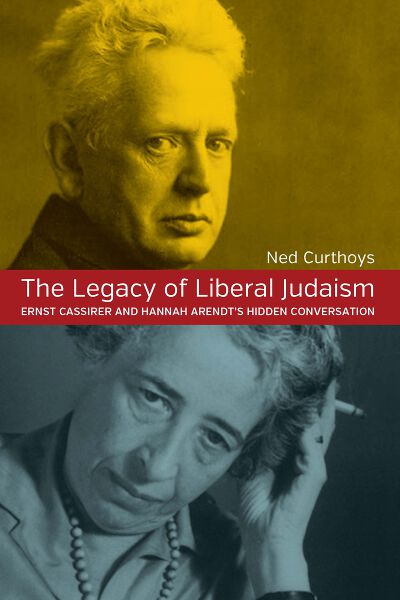
Hannah Arendt was a German-Jewish political theorist; Ernst Cassirer was a German-Jewish philosopher. The ‘liberal Jewish ethics’ of the two come together in Ned Curthoys’ The Legacy of Liberal Judaism: Ernst Cassirer and Hannah Arendt’s Hidden Conversation. The author explains below his fascination of and engagement with the scholars.


_____________________________________

Berghahn Books: What exactly do you mean by the term ‘liberal Judaism’?


Ned Curthoys: Well it’s a diasporic phenomenon, a very interesting response to the twin challenges of secular modernization and inveterate Christian inspired anti-Judaism.

Continue reading “Opening Cassirer and Arendt’s ‘Hidden Conversation’”

Is All Repression Created Equal?

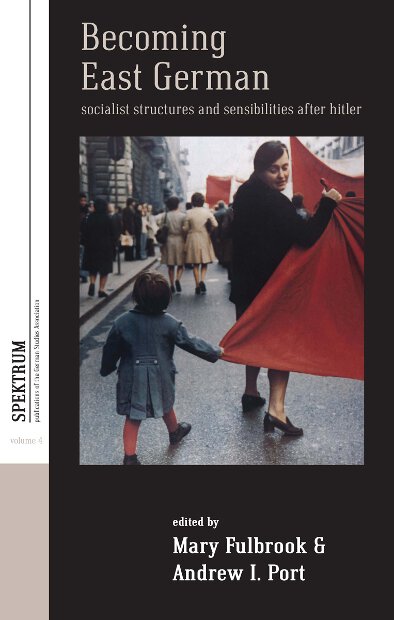
The recent revelations by Edward Snowden about the extensive online information-gathering activities of the National Security Agency (NSA) have led to a flurry of comparisons in the German media between the American agency and the infamous East German Ministry for State Security, or Stasi. According to a popular statistic, the Stasi could have filled 42,000 filing cabinets with the information it had gathered over 40 years—the NSA 48,000,000,000! Chancellor Angela Merkel, a former East German herself, has rejected such comparisons as crude and misleading. Below, in an excerpt from the introduction to Becoming East German: Structures and Sensibilities after Hitler, to be published this month, co-editor Andrew I. Port discusses the extent to which such comparisons are appropriate and potentially valuable.


___________________________________

Let us pose a rhetorical question that is sure to raise some hackles: was the GDR truly more repressive than the Federal Republic—or other Western states, for that matter?

Continue reading “Is All Repression Created Equal?”