Mathematics, A Fundamental Communication Tool

Two days after the United States announced its intention to launch an artificial satellite, on July 31, 1956, the Soviet Union announced its intention to do the same. Sputnik 1 was launched on October 4, 1957, beating the United States and stunning people all over the world. According to Carl L. Devito’s Science, SETI, and Mathematics, we have come a long way since then. Following is the author’s reflection on his volume.
 

__________________________


Mathematics is as much a part of our humanity as music and art.

Continue reading “Mathematics, A Fundamental Communication Tool”

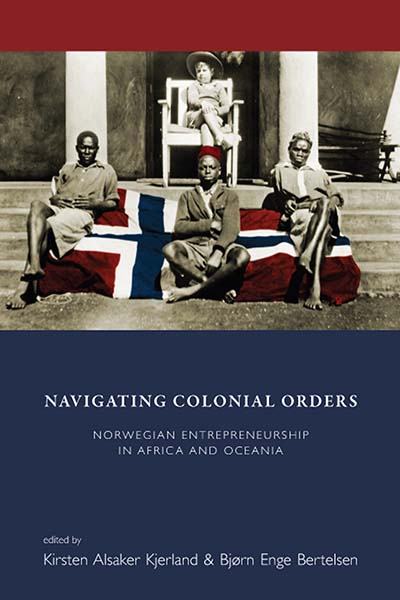
Holdings of the Kingdom of Norway


When considering powerhouses of colonization, most do not rank Norway among the likes of England and France. However, this country did have numerous outposts and much influence in Africa and Oceania. These territories come into focus in Navigating Colonial Orders: Norwegian Entrepreneurship in Africa and Oceania, which was published this month. Following, editors Kirsten Alsaker Kjerland and Bjørn Enge Bertelsen share insights into their book.


_______________________________


What drew you to the study of the entrepreneurial efforts of Norwegians in colonial Africa and Oceania? How was Norway’s involvement different from its counterparts in the rest of Europe at the time? How were they the same?


When looking at classical representations of colonial Africa, Oceania or, also, Latin America, one is struck by how the large colonizing countries have monopolized history. What struck us when starting to follow Norwegians that went abroad in the late 1800s and early 1900s was that this was simply not the case: The various colonial settings that we have examined have uncovered great diversity in terms of non-indigenous inhabitants and, thus, revealed different forms of colonial dynamics than what has often been contained in colonial histories of the major countries.

Continue reading “Holdings of the Kingdom of Norway”

The Importance of Learning from Children

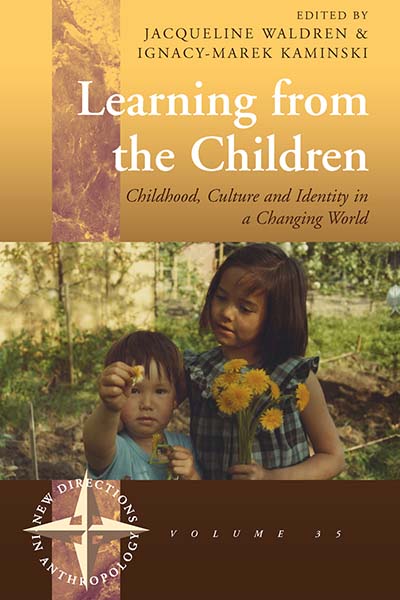
Now available in paperback, Learning from The Children: Childhood, Culture and Identity in a Changing World, edited by Jacqueline Waldren and Ignacy-Marek Kaminski, explores the world of children and their significant role in current society and its future. The following text is Waldren’s reflection on the book’s importance, supplemented by a selection of images from the volume. 


Children have increasingly come into the forefront as culture makers and not just as extensions to the study of adults. At the same time, children are commonly depicted as victims of war, poverty or illness. Cultural values regarding the meaning of children, families, and belonging vary greatly and notions of the child, childhood and identity alter across time and space.

Continue reading “The Importance of Learning from Children”

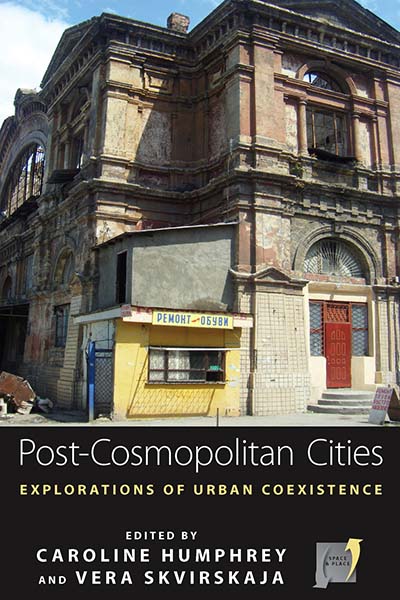
Reflecting on ‘Post-Cosmopolitan’ Odessa

Recently published in paperback, Post-Cosmopolitan Cities: Explorations of Urban Coexistence offers readers an in-depth view into the lives of urban dwellers in six cities, from Venice to Warsaw and Odessa to Thessalonica. Below, volume editors Caroline Humphrey and Vera Skvirskaja reflect on the content of their volume and how the study sites and subjects may have changed in the two years since its original publication.


__________________________________


Our book Post-Cosmopolitan Cities: Explorations of Urban Coexistence contains three chapters about Odessa, the port city on the Black Sea, but they were written before the recent events in Ukraine. We argued that cities famed for their cosmopolitanism, including the ‘merry’, ‘worldly’ Odessa, deserve deeper investigation of what lies beneath the surface and the uncertain effects of the past on the present.

Continue reading “Reflecting on ‘Post-Cosmopolitan’ Odessa”

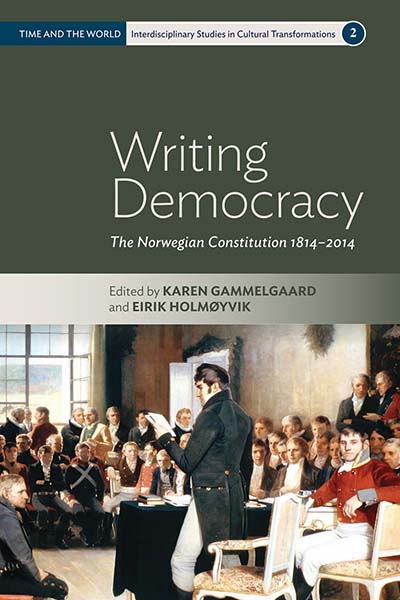
The Norwegian Constitution, A ‘Living Document’


When it was signed May 17, 1814, the Constitution of Norway was considered one of the most radical Constitutions of the day. To celebrate the 200th year since it was first enacted, editors Karen Gammelgaard and Eirik Holmøyvik and their contributors have written a collection of historical accounts about the document. Their book Writing Democracy: The Norwegian Constitution 1814-2014 was published this month. Following, the editors provide more information about the history of this guiding document as well as the history of the volume.


What drew you to the study of the Norwegian Constitution?


For researchers in Norway it has been impossible not to be drawn to the Norwegian Constitution these last few years due to the bicentenary in 2014.

Continue reading “The Norwegian Constitution, A ‘Living Document’”

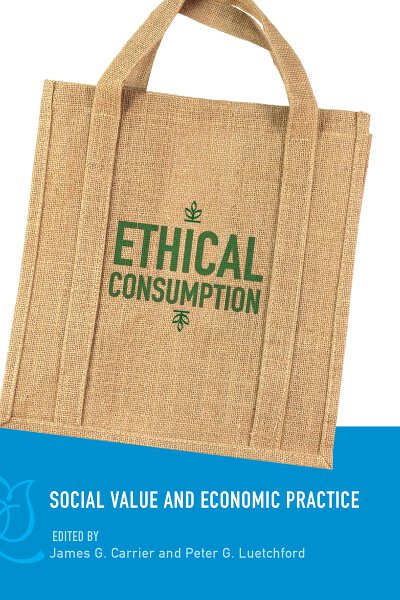
Investing in the Environment

As consumers, are we changing the world with our buying power? This question, which has garnered much attention in recent years, is merely the tip of the iceberg of issues discussed in Ethical Consumption: Social Value and Economic Practice, which is now available in paperback. Following, editors James Carrier and Peter Luetchford explain the purpose behind their volume and delve deeper into the mentality behind “ethical consumption.”


_____________________


This volume arose from our common interest in the ways that ethical consumption is understood, both those seeking to analyse it and by those seeking to pursue it.

Continue reading “Investing in the Environment”

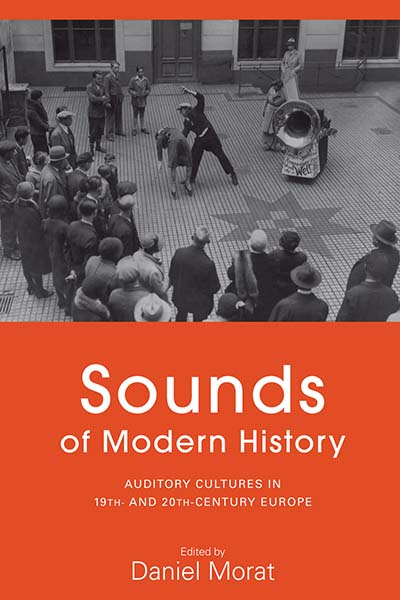
Hearing History of the 19th and 20th Centuries

In a newly published collection, editor Daniel Morat and his contributors approach historical analysis in an uncommon way — by using their sense of hearing. The authors examine the way modern history sounds in Sounds of Modern History: Auditory Cultures in 19th- and 20th-Century Europe. Following, the editor gives a brief introduction and shares an excerpt from his chapter. The excerpt is accompanied by a recording from 1914 Germany.


_______________________________


When Europe went to war in the summer of 1914, scenes of vociferous war enthusiasm have been reported from many European cities. Historiographic research of the last twenty years has shown that these scenes were not representative of the general mood in the warring nations. Still, they have long dominated our perception of the outbreak of World War I.

Continue reading “Hearing History of the 19th and 20th Centuries”

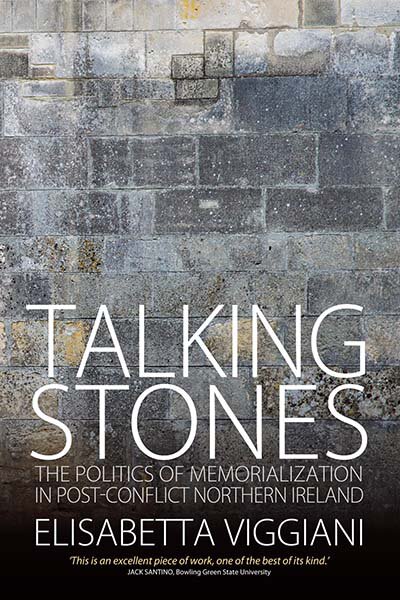
If Monuments Could Talk

War memorials are more than a simple, objective way to commemorate the past; they can also, as a visual message, guide the memory of a society in certain political and ideological directions. Author Elisabetta Viggiani looks at and into war memorials in Northern Ireland — and what these say about the broader culture — in her just-published Talking Stones: The Politics of Memorialization in Post-Conflict Northern IrelandBelow, the author gives an introduction to her work, followed by an excerpt from the volume.


____________________________


If memory was simply about the past, why would governments and public authorities be prepared to put their ever-shrinking budgets at its service? The answer is because memory is seldom about the past, rather it is about the present moment; as Pierre Nora puts it, ‘through the past, we venerate above all ourselves’. Talking Stones investigates how collective memory and material culture are used to support present political and ideological needs in contemporary society.


Continue reading “If Monuments Could Talk”

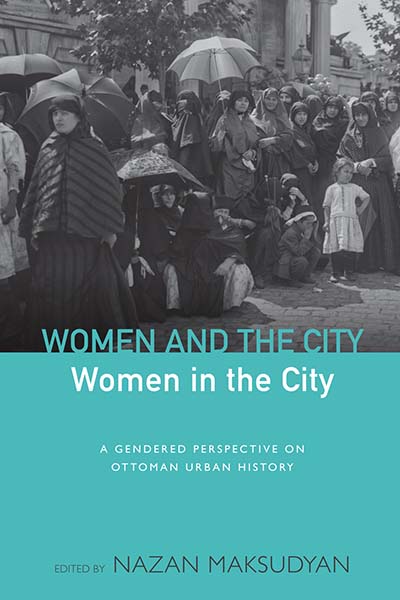
Origins, ‘Kaffee und Kuchen’

A look through history at gender roles in Ottoman cities from Sofia to Istanbul, Women and the City, Women in the City: A Gendered Perspective on Ottoman Urban History will be published later this month. Editor Nazan Maksudyan has a deep-seated interest in the topic, which is connected to her relationship with her grandmother. Below is an excerpt from the book about life in Turkey and the women’s relationship. The text is followed by a photo collection of the editor’s family, namely, her grandmother Maryam Maksudyan.


While working on putting together this volume, my intent was to have a range of essays that covered a wide array of subjects, and the final product proudly bears witness to this initial hope. Yet, when trying to prepare the introductory section and reflecting on the two keywords in the title of the book, “women” and “city,” I could not help but remember Edward Hopper’s famous painting, Chop Suey from 1929.


Continue reading “Origins, ‘Kaffee und Kuchen’”

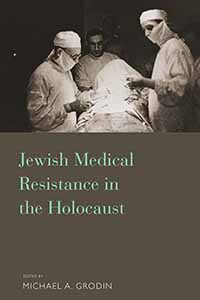
Medical Care as a Matter of Life and Faith

During the Holocaust, Jewish physicians were faced with mounting challenges to providing care, but, amazingly, were still able to maintain many of the conventional standards of medical care. Written based on accounts of these physicians and, in some cases, their children, Jewish Medical Resistance in the Holocaust tells the stories of these doctors and their incredible work in a “dark hour of recent history.” Following, editor Michael A. Grodin explains how he happened on the fascinating subject that became the heart of this soon-to-be-released volume.


_____________________________


What drew you to the study of medical practices during the Holocaust?


I began the project on medicine and the Holocaust over 25 years ago. As a psychiatrist, I specialized in the care of Holocaust survivors and their families and worked with several twin survivors researched on by Dr. Joseph Mengele.

Continue reading “Medical Care as a Matter of Life and Faith”