The Road to Belonging is Paved with Charity

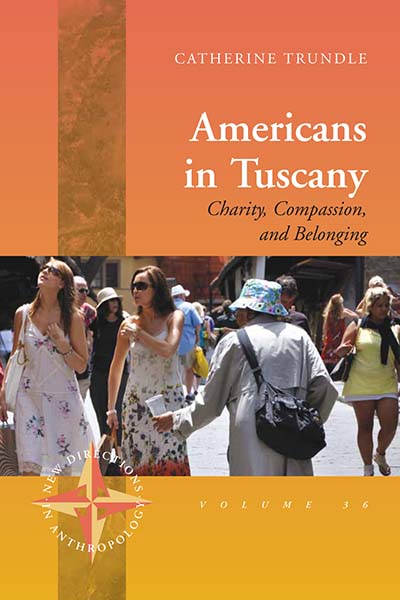
Catherine Trundle’s recently published volume Americans in Tuscany: Charity, Compassion, and Belonging explores the lives of American female migrants to Italy, and follows a collection of women as they navigate Tuscan society in an attempt to integrate. The author discovered that these women have used charitable acts as a road map to guide their quest to belong. Following, the author provides more information about her background and how it led her to share the stories of this migrant group.


_______________________


What drew you to the study of American female migrants in Italy and their quest for inclusion?


I had conducted previous ethnographic work on American migrants to rural New Zealand, and was fascinated with what it meant to be an American abroad – how one’s sense of nationality and citizenship gets transforms through engagements with the stereotypes that others have of the migrant self, and how ‘culture’ gets characterized and sometimes essentialized in the process.


Continue reading “The Road to Belonging is Paved with Charity”
The Political Backdrop of French Film

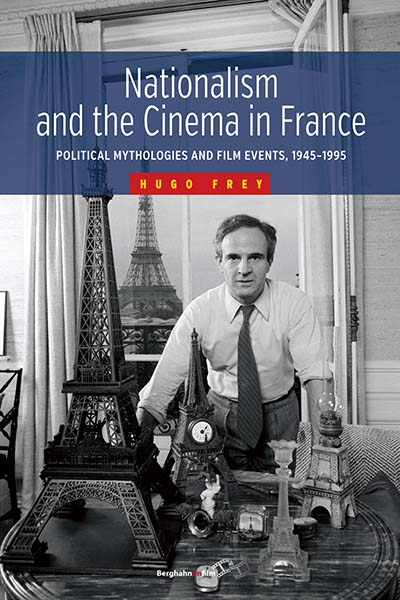
Fifty years of French cinema get their close-up in Hugo Frey’s Nationalism and the Cinema in France: Political Mythologies and Film Events, 1945-1995, published in July. Following, the author offers readers a new angle on the volume, which is itself a fresh perspective on French film against a nationalistic backdrop.


____________________________


Why did you write this book? What were your original aims?


The motivations for undertaking this research are complicated and now date from some time ago. Having written a study of the director Louis Malle (2004), I wanted to continue to develop my knowledge of French cinema, while still connecting to my other interests in national historiography and the collective memory of the Vichy period. However, I did not want to work on a conventional book about either ‘great French films of recent times’ or indeed something that just rehashed familiar debates already presented in titles such as Henry Rousso’s The Vichy Syndrome.

Continue reading “The Political Backdrop of French Film”

Unmasking the Visages of Ukrainian Women

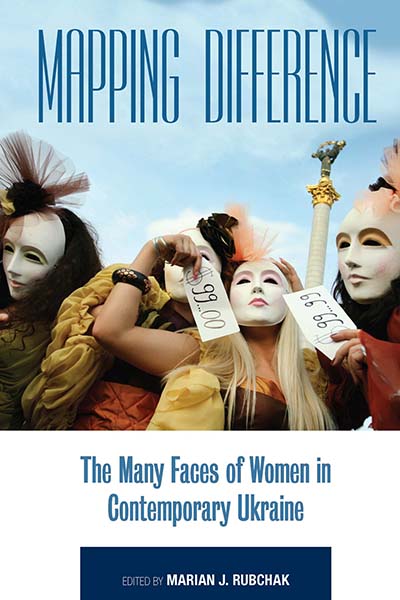
A look into the life of post-Soviet Ukrainian women, Mapping Difference: The Many Faces of Women in Contemporary Ukraine is now available in paperback. This book uncovers the virtues of women that sometimes lie just beneath negative gender stereotypes. Following, editor of the collection, Marian Rubchak, gives readers a deeper look into the volume via the book’s cover.


_________________________________


Since the demise of the Soviet “Empire of Nations”[i] in 1991 Ukraine’s women have lived in a world largely shaped by the rejection of communist values and efforts to transform a moribund socialist system into an open democratic society. Early in the transformative period this society gave rise to a small core of female activists who chose to work within the existing system, with its traditional values, to effect the changes that would return their voice to women. Although they disavowed the label of feminist as a self-descriptor their agendas clearly reflected feminist principles.

Continue reading “Unmasking the Visages of Ukrainian Women”

A Vehicle for Ideas

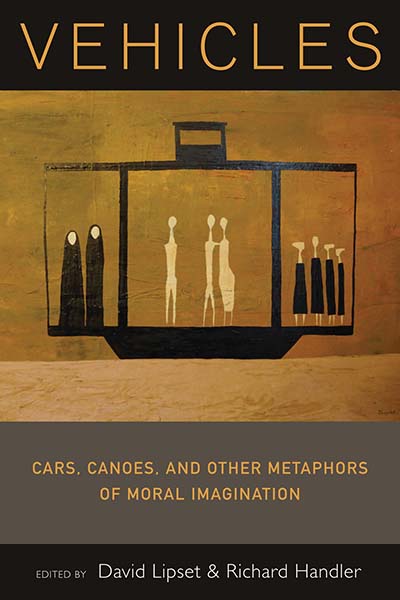
Vehicles: Cars, Canoes and other Metaphors of Moral Imagination, edited by David Lipset and Richard Handler, offers insight into the vehicle as an object that can move not only people, but also ideas. Following, the editors weigh in on the metaphor of the vehicle in contemporary culture.


_______________________________________


Take a moment to consider these three vehicle images, of two boats and cars:


Continue reading “A Vehicle for Ideas”

The Wounds of our Warriors

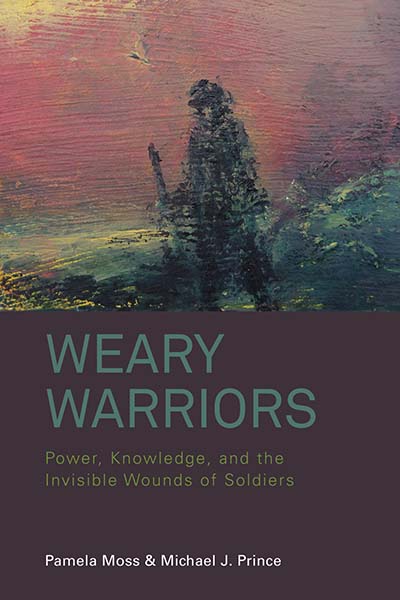
Just because one cannot see wounds does not mean they are not there. Pamela Moss and Michael J. Prince analyze war-derived psychological trauma in their co-authored volume, Weary Warriors: Power, Knowledge, and the Invisible Wounds of Soldiers. Following, the authors share their personal backgrounds and further insight into their volume.


________________________________


How were you drawn to the topic of invisible wounds of combatants?


Michael J. Prince: In a personal way, my interest in the subject of weary warriors comes from being the son of a Second World War veteran. My father served in the Royal Canadian Air Force overseas as flying officer, wireless operator and air gunner, so I grew up in a family in which these topics were, at times, discussed. In a professional way, my work on developments in welfare states highlighted the significant place of wars, soldiers, and veterans in the struggles around the formation of social programs.

Continue reading “The Wounds of our Warriors”

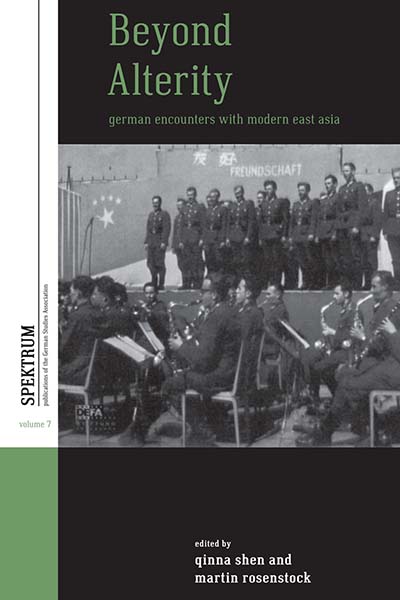
Connecting Germany and Asia: A History

The relationship between the people of Germany and Asia strengthened in the second half of the twentieth century, resulting in the burgeoning of the academic field of Asian German studies in recent years. Beyond Alterity: German Encounters with Modern East Asia is a collection of this scholarship. Following, editors Qinna Shen and Martin Rosenstock discuss their love of subject, the collection and how the field will grow in the future.


_________________________________


What drew you to study the relationship between Germany and Asia? What inspired your love of your subject? When?


Qinna Shen: I’m a Chinese Germanist. I started to learn German in Beijing, then attended Heidelberg University before coming to the States for my doctoral degree.

Continue reading “Connecting Germany and Asia: A History”

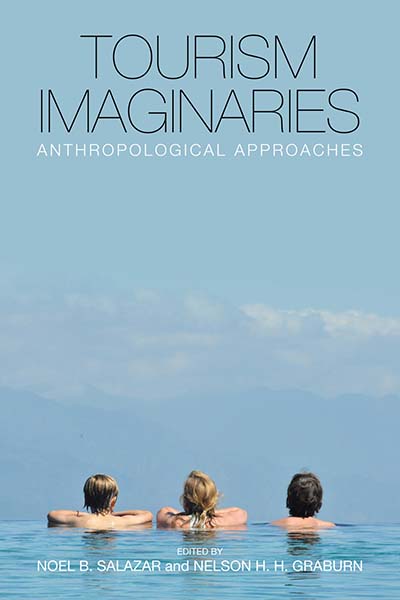
Looking at Tourism through Anthropology’s Lens

Just in time for summer vacation, Tourism Imaginaries: Anthropological Approaches will soon be available for purchase. This collection features a diverse group of scholars who dive deeper into the idea of “tourist” around the world, from Cambodia to Belize to the Netherlands. Following, editors Noel Salazar and Nelson H. H. Graburn give a glimpse into their work with the volume, their histories with the topic, and where they themselves like to “play tourist.”


_____________________________________


What drew you to study the seductive draw of tourism?


Salazar: It may sound odd, but I became interested in tourism (as an object of study) while working for an NGO specialized in aiding refugees. At the end of the 1990s, the organization sent me on a mission to a remote refugee camp in northern Uganda, on the border with Sudan.

Continue reading “Looking at Tourism through Anthropology’s Lens”

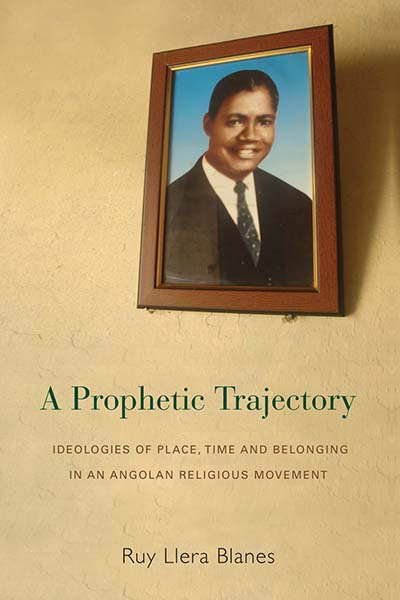
The Life of a Religious Movement: Steps in a Trajectory

Ruy Blanes’ A Prophetic Trajectory follows the life of Simão Toko and the dissemination of the religious movement he founded. While conducting his research, the author worked in Angola, Portugal, and the United Kingdom, where he gathered facts and a collection of photographs — which are introduced and displayed below.


_______________________________


My recently published book, A Prophetic Trajectory, highlights the life and memory of an Angolan prophet, Simão Gonçalves Toko (1918-1984). Continue reading “The Life of a Religious Movement: Steps in a Trajectory”

Cultivating Communication between Cultures

Later this month, Sonya Pritzker’s monograph Living Translation: Language and the Search for Resonance in U.S. Chinese Medicine will be published. Within this volume, Pritzker explains that translation is not a static exercise, but is instead a variable and experiential undertaking. Following, the author shares how she became enamored of Chinese culture and discovered the life of language.


____________________________________


I went to China for the first time in 1995. I was 19. The skies in Beijing were blue then, and the remnants of a stark and closed era were everywhere. I look back on the things of that time with nostalgia, the ever-present red thermoses with flowers, cheap rubber shoes, mian bao che or “bread box” cars, flying pigeon bicycles. My passion for China, in particular the Chinese language, had arisen over time.


Continue reading “Cultivating Communication between Cultures”

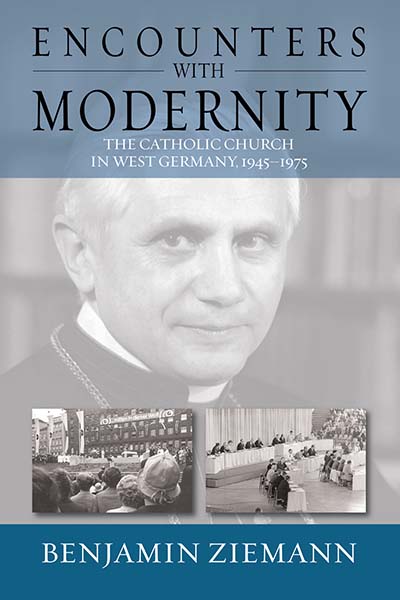
Researching Relevance, or How Sociology Preserved the Church

In Benjamin Ziemann’s historical account Encounters with Modernity: The Catholic Church in West Germany 1945-1975, to be published next month, the author explains how the church attempted to systematically — using the tools of social science — maintain its relevance in post-war German society. Following, the author explains how he, almost completely by accident, happened upon this research that would lead to his future book.

_____________________________

Rather than being the result of meticulous planning, I stumbled over this topic by chance. Originally, I had an interest in writing about the Catholic milieu in 1950s West Germany, and thought that starting with the miners at the Ruhr would be a good idea, not least because I taught at Bochum at the time. One of the challenges that I faced was to gather data on the practiced piety of Catholic workers such as church attendance or Easter Communions, which I thought were difficult to obtain. While I spent time pursuing other hints in the Essen municipal library, I found reports by the “Pastoral Sociological Institute of the Diocese in Essen” (PSI) for the late 1950s. This institute had broken down a count of churchgoers in Essen according to social strata, gender and other social characteristics. Here, I had all the data that I seemed to need.

Continue reading “Researching Relevance, or How Sociology Preserved the Church”