 Join our Email List




Asian Pacific American Heritage Month (APAHM) is a celebration of the culture, traditions, and history of Asian Americans and Pacific Islanders in the United States.
——————————————————————————————————————–
Berghahn is happy to present several series and a selection of books on studies of Asia-Pacific cultures, societies, and histories.
ASAO Studies in Pacific Anthropology Series
The Association for Social Anthropology in Oceania (ASAO) is an international organization dedicated to studies of Pacific cultures, societies, and histories. This series publishes monographs and thematic collections on topics of global and comparative significance, grounded in anthropological fieldwork in Pacific locations.
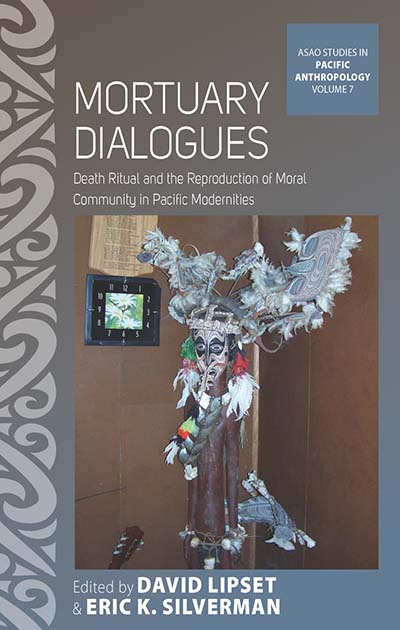 Volume 7 Forthcoming
MORTUARY DIALOGUES
Death Ritual and the Reproduction of Moral Community in Pacific Modernities
Edited by David Lipset and Eric K. Silverman
Foreword by Shirley Lindenbaum
Continue reading “May is Asian-Pacific American Heritage Month”

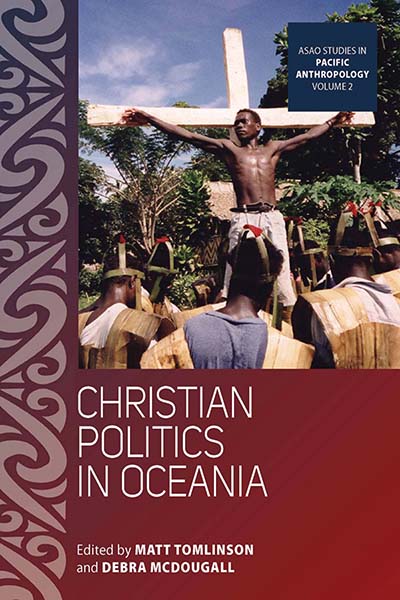 As anthropologists who have worked in the Pacific Islands since the 1990s, we both felt that most political analyses of the region have been flawed for one simple reason: they overlook the enormous but complex political influence of Christian churches. This influence does not always take the form that observers of American politics might expect, where particular churches take explicit stances on political issues or support particular candidates or parties. The political influence of churches in Oceania is both more subtle and more pervasive than that. Time and again during our fieldwork in Fiji and Solomon Islands, we saw how the words of preachers and pastors, activities of Christian organisations, and interpretations of the Bible shaped how people understood their place in political communities. In Oceania, like everywhere else, there is no single Christianity, making it frustratingly difficult to generalize about ‘Christian politics’. Although anthropologists have increasingly turned attention to Christianity, little attention has yet been given to the ways that rival churches position themselves against each other. Our ethnographic research led us to see denominationalism as key source of social friction and creative energy, essential to any understanding of politics in the region.