Making-Over Northern Ireland by Changing Facades & Perceptions

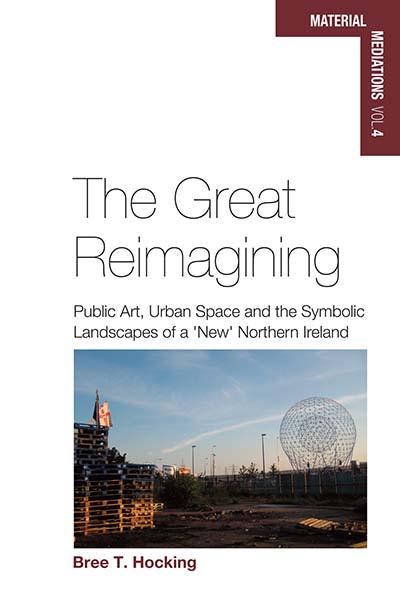
Through art, architecture, and “symbolic landscapes,” post-conflict Northern Ireland is changing the “face” it shows the world. Bree T. Hocking explores this new identity in The Great Reimagining: Public Art, Urban Space, and the Symbolic Landscapes of a ‘New’ Northern Ireland. In the following short essay, the author explains some of actual and perceived changes, by way of the words exchanged with a young Protestant man.


On a recent visit to Northern Ireland, I met a young Protestant man from the Shankill Road heading home after dropping off his daughter at a nearby crèche. It was hardly an extraordinary encounter—save for the fact that the man had just left his toddler at a nursery on the Catholic side of one of Belfast’s largest and oldest peace walls. (These walls, sometimes up to eight metres tall, separate many working-class neighborhoods across the city along ethno-national lines.)

Continue reading “Making-Over Northern Ireland by Changing Facades & Perceptions”
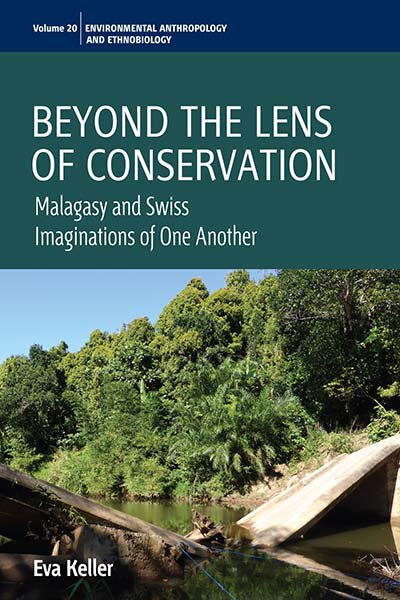
Visions of The Other: Swiss & Malagasy See, But Do They Understand?

Where do Switzerland and Madagascar meet, and what do the people of each place think of those in the other? Eva Keller, in her recently published Beyond the Lens of Conservation: Malagasy and Swiss Imaginations of One Another, in seeking to connect these two places winds up highlighting the disconnect between them. Following, the author offers a brief glimpse into the volume from two directions: from a Swiss classroom looking at Madagascar and from a Malagasy man looking at a national park.


_______________________________


Read the following extract of a conversation which took place in a Swiss classroom with pupils aged between 11 and 12. My questions are in italics.


What do you know about Madagascar?


Takschan: I think there are cannibals there, I think, the people, like they eat the flesh.

Continue reading “Visions of The Other: Swiss & Malagasy See, But Do They Understand?”

Supercinematic Projection: Author Looks toward Future of Film Studies

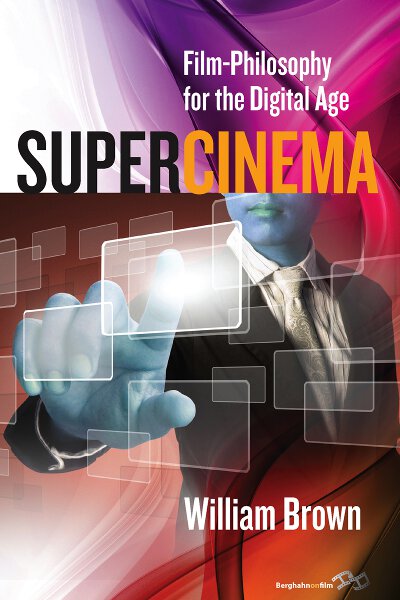
Supercinema: Film-Philosophy for the Digital Age, originally published in May 2013, is now available in paperback. Following, author William Brown reflects on the book as a launching pad for his own studies and what he perceives as the forward trajectory of film studies. This post pairs with his reflection on the book’s initial release, which can be read here.


______________________________________


The argument in Supercinema: Film-Philosophy for the Digital Age is about the depiction and possible meanings of the continuous times and spaces that contemporary mainstream cinema often seems to depict thanks to the aesthetic possibilities opened up to, or at the very least made more easily achievable by, cinema as a result of digital technology.

Continue reading “Supercinematic Projection: Author Looks toward Future of Film Studies”

Artisan Society and Struggles in the Ottoman Empire

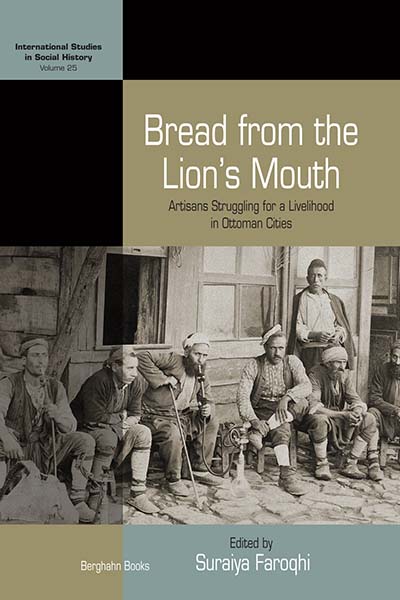
In recent years, there has been renewed interest in the history of the lives and work of middle eastern artisans. Bread from the Lion’s Mouth: Artisans Struggling for a Livelihood in Ottoman Cities, soon to be published, uses archival documents to re-create a scene of life in the Ottoman Empire from the fifteenth through twentieth centuries. Following, editor Suraiya Faroqhi discusses the history of this project and her interest in this region.


__________________________


What drew you to the study of artisans in Ottoman cities? Why do you think there is a renewed interest in this field today?


Perhaps because I am fond of my own work, as a historian I have for a long time been interested in people that work – as opposed to those that pray, govern, or fight. Moreover I like to see the things that artisans/artists have made; and we must keep in mind that the beautiful things we admire in museums did not come into being ‘just like that’ but are the product of human work, especially that of artisans and artists.

Continue reading “Artisan Society and Struggles in the Ottoman Empire”

Seeing is Feeling: Tangible Emotion in the Work of Aronofsky


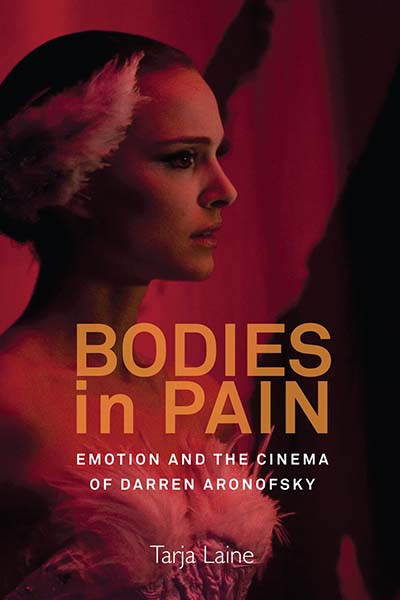
In Bodies in Pain: The Emotion and Cinema of Darren Aronofsky,  Laine explores the emotionally engaging nature of this prominent director’s work, which includes Requiem for a Dream and Black Swan, Pi and The Fountain. Following, the author explains how she came to write this book, as well as some emotional nuances in the director’s oeuvre.


In 2011 when I was asked by Mark Stanton, then-senior editor at Berghahn Books to write a book about emotion and film aesthetics in the cinema of Darren Aronofsky, my book entitled Feeling Cinema had just been released a month before. At that point I was not planning to start a new book project any time soon, and nor did I have a clue where the next idea for a book would come from, so his proposal almost appeared to me as a gift from the universe. Furthermore, since Aronofsky as a filmmaker was not an obvious choice for me to write about, it was an extra challenge to come up with an aesthetically meaningful starting point, without falling into the trap of cheap auteurism.

Continue reading “Seeing is Feeling: Tangible Emotion in the Work of Aronofsky”

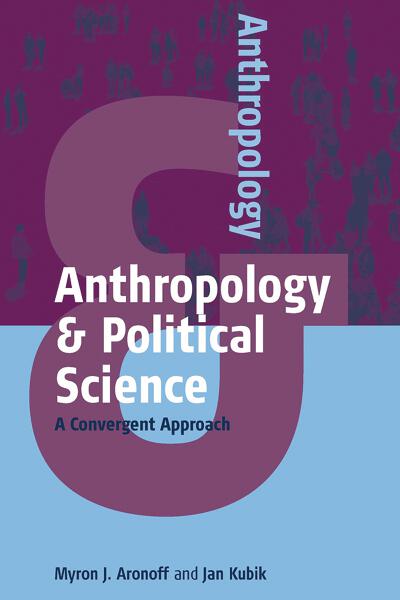
Meeting of Minds and Disciplines: Authors Discuss ‘Anthropology & Political Science’

Myron J. Aronoff and Jan Kubik’s  Anthropology and Political Science: A Convergent Approach was published in paperback last November. Following, the co-authors reflect on the conception of the book and their writing process, as well as its reception since the initial publication.


I lived abroad for a dozen years from 1965-1977 having earned a Ph.D. in social anthropology from Manchester University and in political science from UCLA. The Chair of the Department of Political Science at Tel Aviv University, where I had taught for eight years, asked me what I would write about when I returned to the US to take up my position at Rutgers University. I told him that, among other topics, I intended to write an analysis of the convergent approach bridging anthropology and political science that I was developing. I then wrote my third book on Israel and updated and expanded my earlier book on the Israel Labor Party.

Continue reading “Meeting of Minds and Disciplines: Authors Discuss ‘Anthropology & Political Science’”

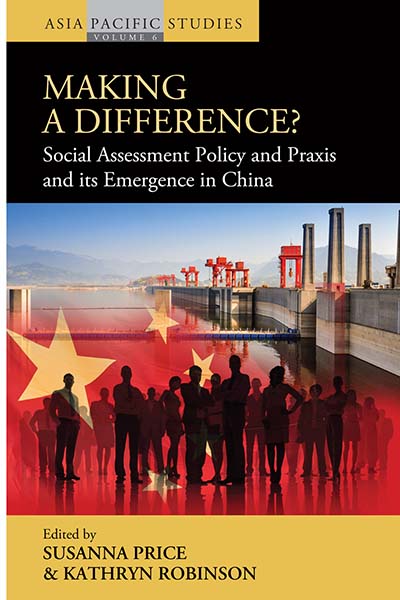
The Social Impact of Economic Growth

Editors Susanna Price and Kathryn Robinson explore the social aspects of Chinese economic growth in their soon-to-be-published book, Making a Difference? Social Assessment Policy and Praxis and its Emergence in China. Following, Susanna Price offers further insight into the book’s origins and the impact the book may have on the field of Asian development studies.


_______________________________


Why did we write this book?


We are all familiar with the striking, sometimes wildly exaggerated, news headlines on China’s rapid economic growth, its geo-political consequences and – perhaps less frequently − the possible flow-on implications for liberal democratic governance. We felt that such headlines, focusing on growth, overshadowed an alternative narrative, on the social dimensions of that growth and transformation. It came down to a simple wish: we wanted to tell a different China story that reflected our own experience and practice.

Continue reading “The Social Impact of Economic Growth”

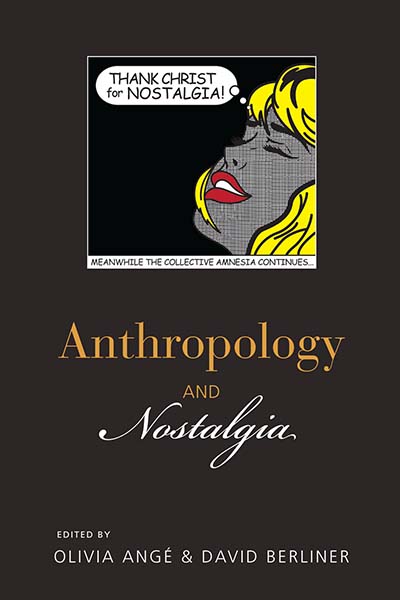
Looking Back through Anthropology

Although nostalgia seems to permeate much of modern (especially Western) society, there are few detailed anthropological accounts of this longing for the past. Editors Olivia Angé and David Berliner seek to fill this gap and explore this phenomenon in their newly published volume, Anthropology and Nostalgia. Following, the editors look back on the creation of their volume and look forward to its reception within the social science community.
 

_______________________________________


What drew you to the study of nostalgia, especially as it relates to the social sciences?


Well, nostalgia is a central notion that permeates present-day discourses and practices. In many parts of the world, there seems to be a current overdose of nostalgia, a reaction to the modern acceleration deployed in universes as diverse as nationalism, heritage policies, vintage consumerism, the tourism industry, and religious and ecological movements.

Continue reading “Looking Back through Anthropology”

Prose and Economic Development in an African Village

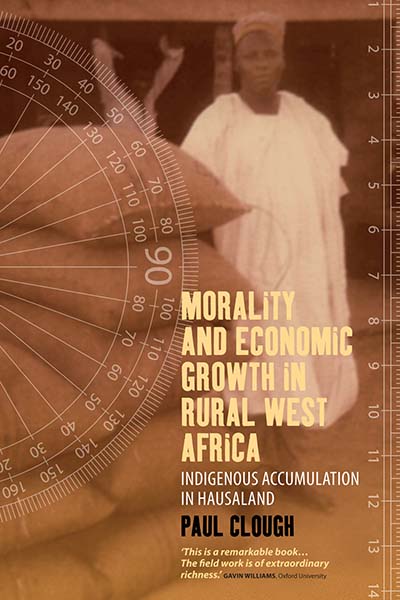
Paul Clough spent many years studying the economic situation of the Marmara village, in Hausaland, northern Nigeria. His work there began in 1977-1979, then was followed by stints in 1985, 1996, and 1998. In Morality and Economic Growth in Rural West Africa: Indigenous Accumulation in Hausaland, his book based on that fieldwork, the author explores the economic growth and accumulation of this non-capitalistic, polygynous society through boom and bust periods. Following is the author’s reflection on his book, fieldwork, and forged relationships.


________________________________


What drew you to the field of African studies? Specifically, what drew you to Hausaland in Nigeria?


All of this happened by accident when I was very young. I wanted to be a volunteer, to work in the field of development. Since the Peace Corps in early 1970 would not send me to Latin America (perhaps because I had no Spanish), I managed through other channels to find a teaching post in northern Nigeria. I arrived at Kano Airport in late 1970, when I was only twenty-two, knowing next to nothing about Africa or Hausaland.


But I fell in love immediately.

Continue reading “Prose and Economic Development in an African Village”

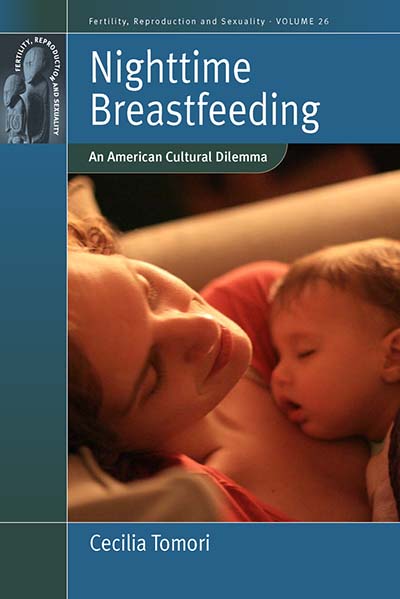
Dilemma after Dark: Balancing Sleep and Breastfeeding

In her newly published book, author Cecília Tomori explores a major challenge for new parents, the nighttime balance of sleep and breastfeeding. Nighttime Breastfeeding: An American Cultural Dilemma, published in October, is the result of her long-term ethnographic study alongside new parents and how they cope with the pressures of parenthood. Following, the author gives insight into this in-depth study which eventually became her book.


As an anthropologist seeking to learn about breastfeeding, I had the privilege of visiting new parents who had just returned home from the hospital after the birth of their first child. During these visits, the joy of becoming parents was visible in the way parents gazed upon one another and held their newborns in their arms. Their joy, however, was often complicated by exhaustion and uncertainty over some fundamental concerns: breastfeeding and sleeping at night.

Continue reading “Dilemma after Dark: Balancing Sleep and Breastfeeding”