A Conversation with the Editors of “Civilizing Nature” on the National Park

Patrick Kupper, Bernhard Gissibl, and Sabine Höhler are the editors of Civilizing Nature, published in November 2012 by Berghahn Books.  Civilizing Nature examines the phenomenon of the national park from a historical and transnational perspective.  


Why did you choose a global history approach to studying national parks?


Patrick:

National parks have arguably been the most important tool of nature conservation worldwide. Since the first patches of nature were segregated under that label in the late 19th century, parks have become a global phenomenon – there are thousands of them all over the world, and they occupy an astonishing amount of terrestrial and, more recently, also maritime space. We found a paradoxical relationship between the national and the global in nature conservation, and the connections behind parks a striking and illustrative instance of what we have become accustomed to call globalization. Delving into this genuinely global history says a lot about the making and the nature of global environmentalism.

Continue reading “A Conversation with the Editors of “Civilizing Nature” on the National Park”

Meet the Editors – Rex Clark and Oliver Lubrich

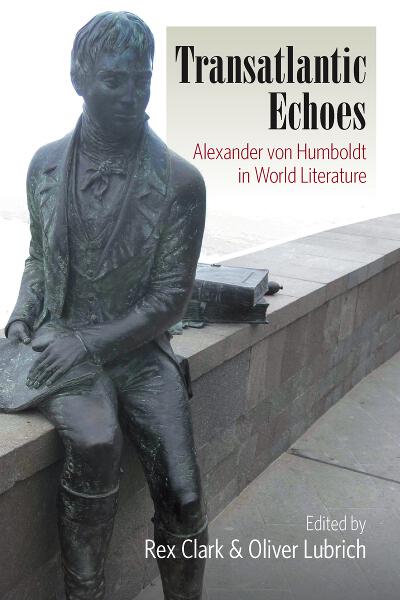
Rex Clark and Oliver Lubrich are the editors of Cosmos and Colonialism and Transatlantic Echoestwo volumes that collect writings by and about Alexander von Humboldt – the first collection of its kind.  Below, the editors discuss their enthusiasm for von Humboldt’s life and work, and its continued relevance in the 21st century.

__________________________________________________

What drew you to the study of Alexander von Humboldt?

Humboldt was a fascinating character—explorer of South American tropics, extreme mountain climber in the Andes, darling of the salon society in Paris and Berlin, and a celebrity intellectual known around the world in his time. His vision of society and knowledge discovery was truly intercultural and multidisciplinary and throughout his long life he sparked controversy and attracted attention.

In our original discussions about the project we were struck by how scholarship and conference presentations seemed very isolated and split between English, Spanish, and German language topics and traditions of Humboldt research. We planned to bridge this with a volume of representative essays from around the world. In researching the background contexts we discovered a rich history of literary and critical responses to Humboldt. So then the project morphed and grew to become a cultural history of those responses. We were drawn to how Humboldt appeared in poetry and fiction from his day to the present and we collected the literary responses which became the 100 texts in Transatlantic Echoes. The philosophical discussions and critical works inspired by Humboldt became the 50 essays of Cosmos and Colonialism.

So our two volumes are not really focused on Humboldt per se, but rather on the works of authors who created their own stories and myths, their own theories and propaganda. A mash up of Humboldt’s life and works, if you will, imagined by other writers, crossing two centuries and mixing up genres and nationalities. Other media are there as well, films, plays, comics. And since many of these were originally published in other languages, we had those texts translated so we can present everything in English to our readers. For us it was a big adventure of discovery—to find texts, research authors and their context, and then make the selections. And then we had to get the translations done and deal with all the issues of editing and copyright permissions, that was the part of the journey where we could identify with some of the hardships of Humboldt’s travels.

Continue reading “Meet the Editors – Rex Clark and Oliver Lubrich”

The fantasy of a historical source

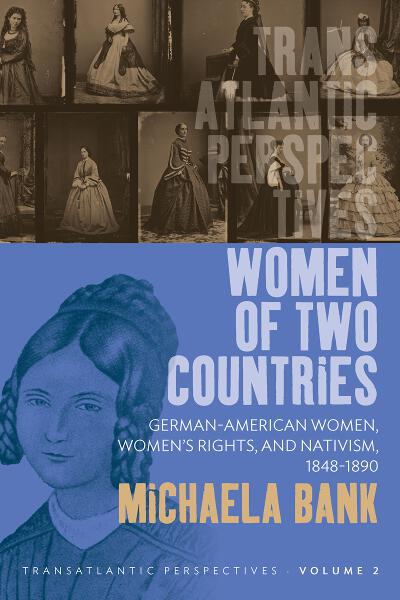
Michaela Bank’s Women of Two Countries: German-American Women, Women’s Rights and Nativism, 1848-1890 has just been released by Berghahn. The second volume in our new series Transatlantic Perspectives, it focuses on the challenges faced by three German-American feminists not only with the US women’s rights movement itself but also within their own ethnic community. In the following post, the author recounts the discovery of a seemingly significant event while undertaking her research.

_______________________________

When I first spent long days in libraries and archives to find out more about German-American women’s participation in the US women’s rights movement I stumbled over an extensive report of a German women’s rights convention that took place in 1868 near Boston. Reading the report, which had been published in a German-language paper by Karl Heinzen, who was one of the rather more radical political editors of the time, I found the presented ideas clear and expressed in sharp language. To give an example, here is what one female speaker is recorded as having said to the audience:

“I predict that, if women are granted the right to vote, the political party that seeks to limit the freedom of social life by moral police and seeks to expand the authority of the clerics by religious coercion will be significantly strengthened. What it has not achieved so far, it will conceivably achieve now with the help of American women who are generally more dependent on the representatives of religion than American men. This party’s goal will be achieved if those women’s additional votes are not made powerless by a pull in the opposite direction. And who shall and will provide this pull? Only the German women!”

Such an openly aggressive opposition to the US-American women’s rights movement among German-American women struck me as rather exceptional. I was thrilled as this convention report was a marvelous source for my study on German-American women, nativism and women’s rights in this period, and so I continued to dig deeper into the sources to find out more about it. How did the grand ladies of the US-American movement, Elizabeth Cady Stanton, Lucy Stone and other prominent advocates of women’s rights, react to this opposition?

…Yet, not all paths in historical research lead to success: I could not find any records of the Roxbury convention anywhere. Then, a few weeks later, I found a short note revealing that Karl Heinzen’s report had actually been a fictional one. Suddenly the shockingly clear and sharp language made sense to me.

Although a fantasy, it remained a fascinating report for me because it illustrated pointedly what a group of German-Americans interested in reform politics thought of the women’s rights movement and why conflict arose so often between the two groups. As I discovered, only a few German-American women were willing to stand up and raise their voice strongly and even aggressively. Such were the women who could endure the tension between their ethnic community, which was often at odds with the US-American women’s rights movement because of its nativist and prohibition stances, and the women’s rights movement that they wanted to be a part of. The efforts of Clara Neymann, Mathilde Wendt, and Mathilde Franziska Anneke for an idea of equal women’s rights are special – special, because they were not at all common while still being powerful and influential. In the end, I was still more than happy that I had found the report of the fictional convention even if it was just a „Hirngespinst“ – a pipe-dream – as a newspaper article called it.

_______________________________

 Michaela Bank received her doctoral degree in American Studies from Goethe-University in Frankfurt/Main, Germany in 2009. She was a fellow in the graduate research training group “Public Spheres and Gender Relations” funded by the German Research Foundation from 2005 to 2008. From 2008 to 2010 she was a Lecturer of American History and Gender Studies at Goethe-University in Frankfurt/Main.


An Excerpt from A Lover’s Quarrel with the Past: Romance, Representation, Reading

Note: Berghahn recently published Ranjan Ghosh’s A Lover’s Quarrel with the Past: Romance, Representation, Reading, an exploration of the relationship between history and theory. Here the author talks about the origins for the section on dust that appears in the book.

__________________________________

Dust
I suffer from a dust allergy. If I’m really careful, it wouldn’t affect my life in any significant way. For what, after all, are allergies? A few crustaceans managing to live out their lifespan because a gourmet friend of mine suffers from a seafood allergy. Compared to that exchequer, my allergy has almost no exchange value. I can joke about it, although, only in the way a bald stand-up comedian can joke about his hair or lack thereof. For the truth is this: my relationship with dust has affected the way I have done history.

My mother, whose mythical bedtime stories first introduced me to history as a child, was a historian. Her specialisation was numismatics but she eventually gave up teaching history to take over curatorship of the university museum. She was also diagnosed with asthma — a disease for which dust is an enemy — and she suffered especially during the dusty Indian winter months. I subsequently grew up with a psychosomatic hatred for dust: a maid cleaned our house twice a day and I became the subject of much teenage laughter in school, holding, as I did, a hankie to my nose at all times.

Now, why do I say all this? My book, A Lover’s Quarrel with the Past: Romance, Representation, Reading, has a section on dust. When I first read Carolyn Steedman’s fine book, Dust: The Archive and Cultural History (it was published exactly a year after my mother’s death), I was overcome by several strong emotions. Primary among them was a sense of despair. Like my mother who would wheeze at the mention of a furry animal or sandstorm, I read Steedman’s book literally out of breath. My sense of despair came from the realisation that I would never be able to work in an archive — that I would never have a career in dust.

My Lover’s Quarrel is, in that sense, also a quarrel with dust, my private trope for history, the past and the future, beyond the biblical from where we come to where we go.

There is a living, buoyant ligature between a historian and the archival milieux where one encounters the recorded past as much as a ‘history of loss’, where the dust rests as no mere squalid accretions but animated particles that can waft into the historian with differential vibrations….Dust speaks; dust makes us aware of a past that is absent and present at the same time, a temptation to the historian’s reconstructionist desires and a reminder of his or her affiliation to grounded evidence. In a kind of sensory encounter with the past, dust, as a materiality, awaits mediation, conjuring up the ‘presence’ of the past. (102)

My book combines South Asian history with the continental philosophies of history. But my accusative finger is at dust and my physiological condition, which has prevented me from being a ‘proper’ historian. I’ve written on textbooks and pamphlets, and their unique semantics of a propagandist historicising, but I’ve always had to take the help of someone, a kind acquaintance at the library, often my wife or father, to first wipe the dust away from their pages before I could examine them.

That has also become my shorthand for doing history: wiping the dust. In that there is much romance and representation, and of course, always, always, a new reading.

__________________________________

Ranjan Ghosh teaches in the Department of English at the University of North Bengal, India. Featuring lectures and a panel discussion on the book, Lover’s Quarrel will be launched on September 21 at the University of North Bengal.

Hot Off the Presses- New Book Releases

Newly released titles from Berghahn’s history list:
Hitler’s Plans for Global Domination: Nazi Architecture and Ultimate War Aims, Jochen Thies, with a Foreword by Volker R. Berghahn
The Holocaust and Historical Methodology, edited by Dan Stone
Changing Perceptions of the Public Sphere, edited by Christian J. Emden and David Midgley
Reassessing the Nuremberg Military Tribunals: Transitional Justice, Trial Narratives, and Historiography, edited by Kim C. Priemel and Alexa Stiller
Charismatic Leadership and Social Movements: The Revolutionary Power of Ordinary Men and Women, edited by Jan Willem Stutje

Newly released paperbacks from Berghahn’s history list:
Jewish Life in Nazi Germany: Dilemmas and Responses, edited by Francis R. Nicosia and David Scrase
Berlin Divided City, 1945-1989, edited by Philip Broadbent and Sabine Hake
Changing the World, Changing Oneself: Political Protest and Collective Identities in West Germany and the U.S. in the 1960s and 1970s, edited by Belinda Davis, Wilfried Mausbach, Martin Klimke, and Carla MacDougall


Interview with the Author – Britta McEwen, author of Sexual Knowledge: Feeling, Fact, and Social Reform in Vienna, 1900-1934

Britta McEwen is author of Sexual Knowledge: Feeling, Fact, and Social Reform in Vienna, 1900-1934, published earlier this year by Berghahn. Her work uncovers the transformation of sexual knowledge from the realm of specialized medical science to that of social reform for the wider populace. Here she discusses her work, some of the challenges she faced in writing about some of the key historical figures, and how she would utilize her apple pie making skills if she weren’t a historian.

1. What drew you to the study of sexual knowledge in the early twentieth century?

I actually got into this field through architecture!  Vienna has these amazing public housing projects from the interwar period, and as I investigated them I learned that they were intended for a new kind of people – upright, moral, hardworking small families.  This seemed to entail a new sexual system, starting with birth control at the very least.  That, combined with a well-timed read of Isabel Hull’s “Sexuality, State, and Civil Society in Germany,” made me think that there was a story to tell in Vienna’s early twentieth century about attitudes towards sex.

2. Did any perceptions on the subject change from the time you started your research to the time you completed the book?

On of my assumptions at the beginning of my project was that science was always a liberating voice vis-à-vis sexuality.  While scientific discourse was used to challenge Church teachings about sex, I found that many authors in the early twentieth century were actually using melodramatic language, rather than scientific language, to express the call to sexual and social justice.  At first I thought this was just a trick to popularize complex ideas, but as I went on I came to believe that melodrama offered people writing about sex a way to talk about ignorance, shame, and consequences in a way that would be convincing to a wide audience.

3. What aspect of writing this work did you find most challenging?  Most rewarding?

I’ll answer that one by combining the questions and talking about what was both challenging AND rewarding…  some of the historical characters I met in my research were so very colorful and compelling that they threatened to overshadow the “knowledge” they sought to impart.  Here I’m thinking of Wilhelm Reich, Johann Ferch, and above all, Hugo Bettauer.  Bettauer became a personal hero of mine as I wrote, which made it difficult to really focus on his journalism, rather than his person, for the book.  In another world, I think I would have ditched the reams of research I had collected and simply written about Bettauer’s humanism and his outrageous career.

4. To what extent do you think the book will contribute to debates among academics within the field?

Although one of the arguments of my book is that Vienna was a special site for the production and distribution of sexual knowledge in the early twentieth century, I think it would be interesting to see comparative work done on this issue.  How unusual were places like Vienna, Paris, and Berlin?  What made them unique?  I also wonder if books like mine will help dispel the belief that there was only one sexual revolution.  Finally, the debate in the German-speaking world about the “repressive” sexual regimes of the twentieth century is really heating up, and I think books like mine will help contextualize what sexual “liberation” meant to different historical actors.

5. If you weren’t a historian, what would you have done instead?

Although I am a hardly an entrepreneur, I do think I might have been able to run a public space.  Lord knows I waitressed enough to know a good cup of coffee when I see it, and I make a mean apple pie.  So some days I fantasize about running a bookstore specializing in science fiction and mysteries, where you could get something sweet to eat and sit all day (just like in Vienna), reading and gabbing.  I imagine it to be the kind of place with a bad pun in the title and a standing feminist knitting circle – come to think of it, the kind of place that could be lampooned on “Portlandia.”

Britta McEwen teaches European History at Creighton University in Omaha, Nebraska.

In their own words: The broader context of Small Town and Village in Bavaria

Note: Berghahn recently published Peter H. Merkl’s Small Town and Village in Bavaria: The Passing of a Way of Life, a study of that region’s modernization efforts in the 1970s and 1980s that led to a considerable reduction in the autonomy of its small communities. Here the author discusses how the decline of iconic village life (and the broader implications) motivated his study:
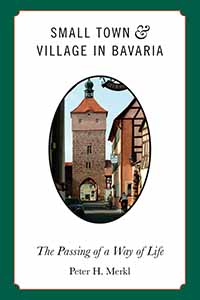
Immense changes have occurred in German agriculture and in the economic and social life of very small towns, which I explore in my work Small Town and Village in Bavaria: The Passing of a Way of Life. In many ways, these changes mirror transformations occurring in small towns across the industrialized world. While many people in today’s urbanized society actually come from small town backgrounds or grew up in the countryside and feel nostalgia for the closeness of small communities or for a family farming way of life, these settings have nearly vanished in the last 100 years or so. Where once a majority of the German population were farmers, only a tiny percentage remain so today and most of them are part-time farmers. The majority of really small places have lost their taverns and other local businesses while both schoolchildren and adults commute daily to distant, larger towns.

While the populations of small places decline, the charms of their old historical structures endure, highlighted in art and literature. When we travel through very old towns we are struck by the medieval walls, gates and turrets, and ancient churches that manifest the venerable age of communities that have witnessed centuries of political and social change. Tourists have discovered such places all over Europe, especially in the United Kingdom, France, and Germany where such well-known medieval towns as Rothenburg on the Tauber River or the small villages along the Romantic Road in Bavaria still enchant the visitor.

My book not only focuses on the long-term changes in German agriculture and in fifteen old Franconian mini-towns but also examines the effects of an ambitious modernization project by the Bavarian state that sought to deprive all communities under a certain size of their autonomy and to force them into “administrative unions” with other small places. It was a process not unfamiliar in the U.S. and many European countries, though usually in a more voluntary form, but resulting in far fewer, modernized local units in either case.

The tension between the preservation of these small communities amid the slow dynamics of social change on the one hand and the massive state intervention to modernize Bavarian local government at the periphery on the other is what drew me to this project. It seemed preposterous to force groups of medieval, independent small towns to merge for the sake of modernization. Through my research, which included several mail surveys of mayors, interviews with state and local officials, and statistical materials, I have created a fuller picture of these micro-towns and placed them within the larger hierarchy of German and European levels of government, providing a clearer context for the changes in these localities.

Peter H. Merkl is Professor Emeritus of Political Science at the University of California, Santa Barbara. He has published extensively on comparative and German government and politics, in particular the origin of the West German Republic and German unification.

Hot Off the Presses- New Book Releases

New in print from Berghahn:
After The History of Sexuality: German Genealogies with and beyond Foucault, edited by Scott Spector, Helmut Puff, and Dagmar Herzog

Cinema of Choice: Optional Thinking and Narrative Movies, by Nitzan Ben Shaul

Hitler’s Volksgemeinschaft and the Dynamics of Racial Exclusion: Violence against Jews in Provincial Germany, 1919-1939, by Michael Wildt, translated from German by Bernard Heise

Sharing the Sacra: The Politics and Pragmatics of Intercommunal Relations around Holy Places, edited by Glenn Bowman