Opening Cassirer and Arendt’s ‘Hidden Conversation’

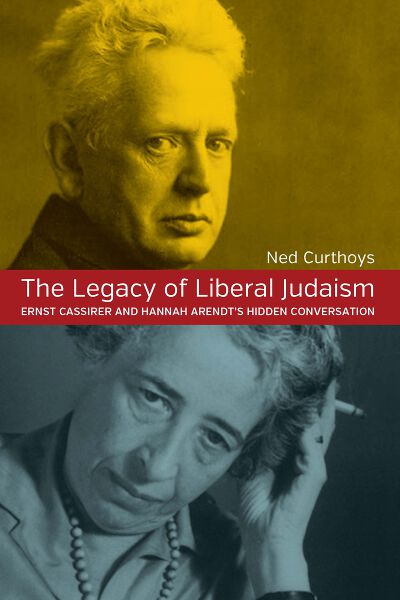
Hannah Arendt was a German-Jewish political theorist; Ernst Cassirer was a German-Jewish philosopher. The ‘liberal Jewish ethics’ of the two come together in Ned Curthoys’ The Legacy of Liberal Judaism: Ernst Cassirer and Hannah Arendt’s Hidden Conversation. The author explains below his fascination of and engagement with the scholars.


_____________________________________

Berghahn Books: What exactly do you mean by the term ‘liberal Judaism’?


Ned Curthoys: Well it’s a diasporic phenomenon, a very interesting response to the twin challenges of secular modernization and inveterate Christian inspired anti-Judaism.

Continue reading “Opening Cassirer and Arendt’s ‘Hidden Conversation’”

Hot Off the Presses – New Book Releases

FelliniJourney

Newly released titles from Berghahn’s Anthropology and Applied Anthropology, Film Studies, and History lists:

Toward Engaged Anthropology, Sam Beck and Carl A. Maida

Pastoralism in Africa: Past, Present, and Future, Michael Bollig, Michael Schnegg, and Hans-Peter Wotzka

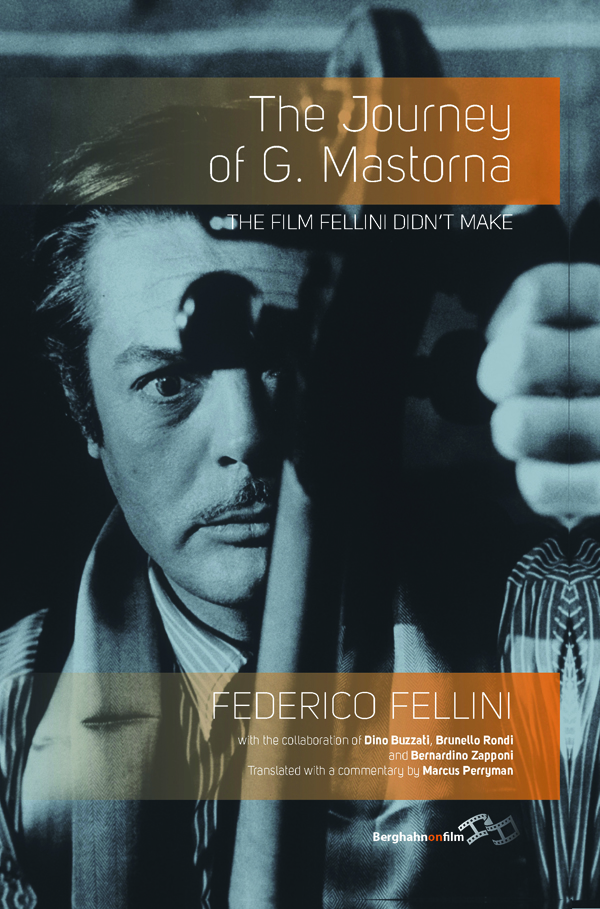
The Journey of G. Mastorna: The Film Fellini Didn’t Make, Federico Fellini, with the collaboration of Dino Buzzati, Brunello Rondi, and Bernardino Zapponi, translated with a commentary by Marcus Perryman

Soldiering Under Occupation: Processes of Numbing among Israeli Soldiers in the Al-Aqsa Intifada, Erella Grassiani

Germany and the Black Diaspora: Points of Contact, 1250-1914, Mischa Honeck, Martin Klimke, and Anne Kuhlmann

Elusive Promises: Planning in the Contemporary World, Simone Abram and Gisa Weszkalnys

Judging “Privileged” Jews: Holocaust Ethics, Representation, and the “Grey Zone”, Adam Brown

Pregnancy in Practice: Expectation and Experience in the Contemporary, Sallie Han

United Germany: Debating Processes and Prospects, Konrad Jarausch

Ethics in the Field: Contemporary Challenges, Jeremy MacClancy and Agustín Fuentes

Remembering African-German Points of Contact

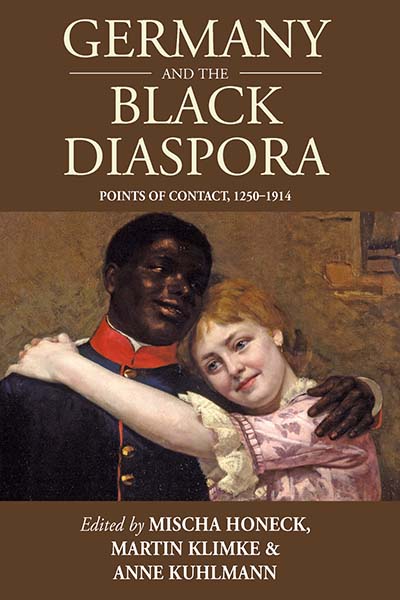
Eight centuries of German and African interactions up until World War I are often glossed over in historical literature.  The contributors to Germany and the Black Diaspora: Points of Contact, 1250-1914, published last month, seek to illuminate these intersections and share popular sentiments of the time. Below, co-editor Martin Klimke describes a significant—and still remarkable—relic of this pre-WWI period.


______________________________________________________


For more than ten years now, visitors to the German Historical Museum in Berlin have paused in amazement before a painting unlike any other in the museum’s collection.

Continue reading “Remembering African-German Points of Contact”

A Moving Picture: The Evolution of Africa on Screen

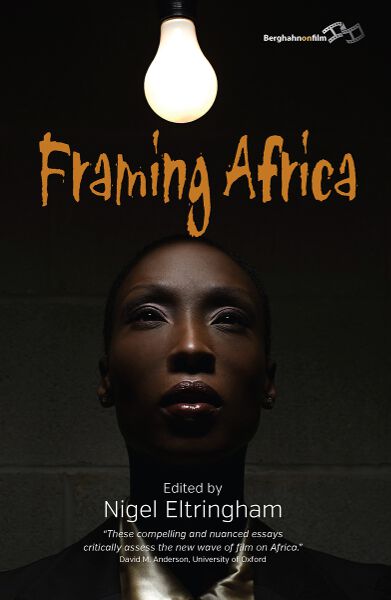
The perception of Africa through the lens has certainly changed since the films of the 1950s. That change in the way viewers see Africa in twenty-first century film is the topic of Framing Africa: Portrayals of a Continent in Contemporary Mainstream Cinema, published in June 2013. Below, the collection editor Nigel Eltringham discusses the changing frame of Africa in mainstream cinema.

_______________________________________________________

In November 2004, I attended the annual meeting of the African Studies Association in New Orleans. A flier inserted into the conference programme invited participants to a private screening of a new film, Hotel Rwanda, at a small arts cinema nearby.

Continue reading “A Moving Picture: The Evolution of Africa on Screen”

Hot Off the Presses – New Book Releases

Newly released titles from Berghahn’s Anthropology, Colonialism, Economics, Politics, and HistoryCorsinAnthropological lists:

Creating a Nation with Cloth: Women, Wealth, and Tradition in the Tongan Diaspora, Ping-Ann Addo

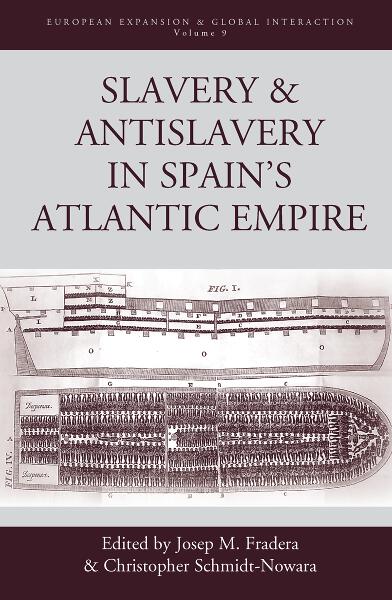
Slavery and Antislavery in Spain’s Atlantic Empire, Josep M. Fradera and Christopher Schmidt-Nowara

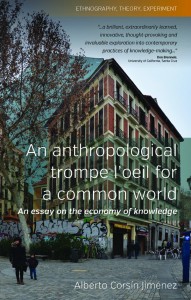
An Anthropological Trompe L’Oeil for a Common World: An Essay on the Economy of Knowledge, Alberto Corsín Jiménez

Framing Africa Portrayals of a Continent in Contemporary Mainstream Cinema, Nigel Eltringham

Tax Justice and the Political Economy of Global Capitalism, 1945 to the Present, Jeremy Leaman and Attiya Waris

Routes into the Abyss Coping with Crises in the 1930s, Helmut Konrad and Wolfgang Maderthaner

Bedouin of Mount Sinai: An Anthropological Study of their Political Economy, Emanuel Marx

Empire, Global Coloniality and African Subjectivity, Sabelo J. Ndlovu-Gatsheni

Family Upheaval Generation, Mobility and Relatedness among Pakistani Migrants in Denmark, Mikkel Rytter

Up Close and Personal: On Peripheral Perspectives and the Production of Anthropological Knowledge, Cris Shore and Susanna Trnka

Astonishment and Evocation: The Spell of Culture in Art and Anthropology, Ivo Strecker and Markus Verne

The Gaddi Beyond Pastoralism: Making Place in the Indian Himalayas, Anja Wagner

The Nazi Genocide of the Roma: Reassessment and Commemoration, Anton Weiss-Wendt

Writing the Wrongs of the Atlantic Slave Trade

Slavery and Antislavery in Spain’s Atlantic Empire, published June 2013, offers a wide-ranging view of the Spanish slave trade, from Caribbean trafficking to Spanish antislavery protests. Editors Josep M. Fradera and Christopher Schmidt-Nowara speak to the trials and rewards of editing the collection of work, their influences, and a prediction of what will be the future important studies in the field.

____________________________________________

Berghahn Books: What drew each of you to the study of the Spanish empire’s Atlantic holdings?
Continue reading “Writing the Wrongs of the Atlantic Slave Trade”

Edward Berenson and Eva Giloi on 19th Century Celebrity

In the collection Constructing Charisma, editors Edward Berenson and Eva Giloi have brought together a series of essays exploring the growth of the idea of celebrity in 19th century Europe. In this lengthy interview, the editors discuss the roots of their ideas, and how the study of the 19th century is still significant for understanding celebrity today. 

__________________________________

What drew you to the study of celebrity, especially in 19th Century Europe?


1. Both of us had been working on certain celebrated individuals in 19th century Europe. In Ed’s case, it was colonial figures like Henry Morton Stanley; in Eva’s it was the German Kaiser. We each saw that our historical subjects owed a large part of their renown to forms of media new to the 19th century, especially photography and the mass press. The Kaiser would, of course, have been well known in any case, but Eva showed that photography helped make him not just a household name, but a household object, as individuals collected pictures of him. As for Stanley and other “colonial heroes,” they became celebrities because the mass press obsessively promoted them and their exploits. Through our individual works, we both perceived that that celebrity became a hugely important social and cultural phenomenon in the 19th century; to investigate it further, we decided to bring together colleagues from a variety of disciplines with expertise in the key European countries.

Continue reading “Edward Berenson and Eva Giloi on 19th Century Celebrity”

Hot Off the Presses – New Book Releases

Newly released paperbacks from Berghahn:

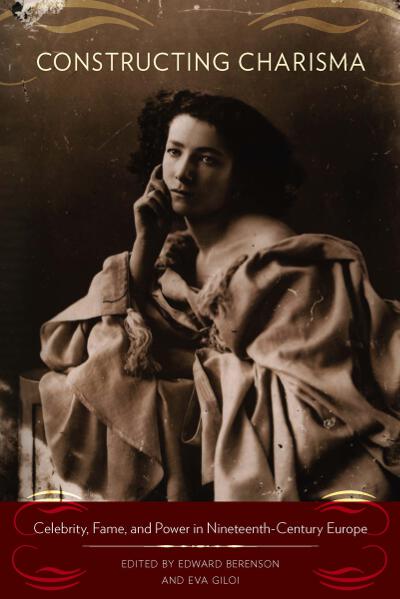
Constructing Charisma: Celebrity, Fame, and Power in Nineteenth-Century Europe, edited by Edward Berenson and Eva Giloi
Comics in French: The Bande Dessinée in Context, Laurence Grove
News as Culture: Journalistic Practices and the Remaking of Indian Leadership Traditions, Ursula Rao
Human Nature as Capacity: Transcending Discourse and Classification, Nigel Rapport
State Practices and Zionist Images: Shaping Economic Development in Arab Towns in Israel, David A. Wesley, with a foreword by Emanuel Marx
The Ethnographic Self as Resource: Writing Memory and Experience into Ethnography, edited by Peter Collins and Anselma Gallinat

Hot Off the Presses – New Book Releases

Newly released titles from Berghahn’s history and anthropology lists:

The Viennese Café and Fin-de-siècle Culture, edited by Charlotte Ashby, Tag Gronberg and Simon Shaw-Miller

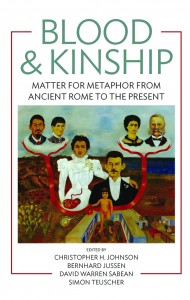
Blood and Kinship: Matter for Metaphor from Ancient Rome to the Present, edited by Christopher H. Johnson, Bernhard Jussen, David Warren Sabean, and Simon Teuscher

A Social History of Europe, 1945-2000: Recovery and Transformation after Two World Wars, Hartmut Kaelble

Two Sides of One River: Nationalism and Ethnography in Galicia and Portugal, António Medeiros

The Golden Chain: Family, Civil Society and the State, edited by Jürgen Nautz, Paul Ginsborg, and Ton Nijhuis