Visions of The Other: Swiss & Malagasy See, But Do They Understand?

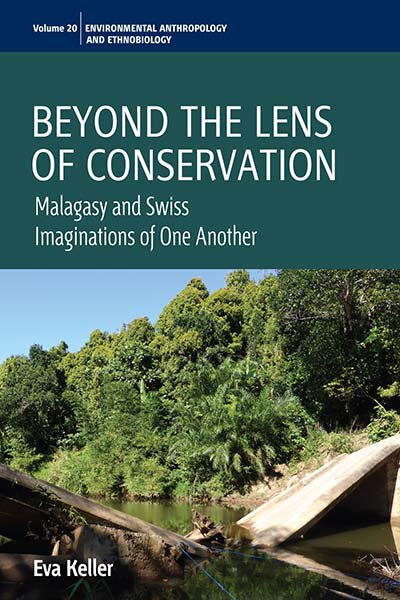
Where do Switzerland and Madagascar meet, and what do the people of each place think of those in the other? Eva Keller, in her recently published Beyond the Lens of Conservation: Malagasy and Swiss Imaginations of One Another, in seeking to connect these two places winds up highlighting the disconnect between them. Following, the author offers a brief glimpse into the volume from two directions: from a Swiss classroom looking at Madagascar and from a Malagasy man looking at a national park.


_______________________________


Read the following extract of a conversation which took place in a Swiss classroom with pupils aged between 11 and 12. My questions are in italics.


What do you know about Madagascar?


Takschan: I think there are cannibals there, I think, the people, like they eat the flesh.

Continue reading “Visions of The Other: Swiss & Malagasy See, But Do They Understand?”
A Swiss Interpretation of the American Park

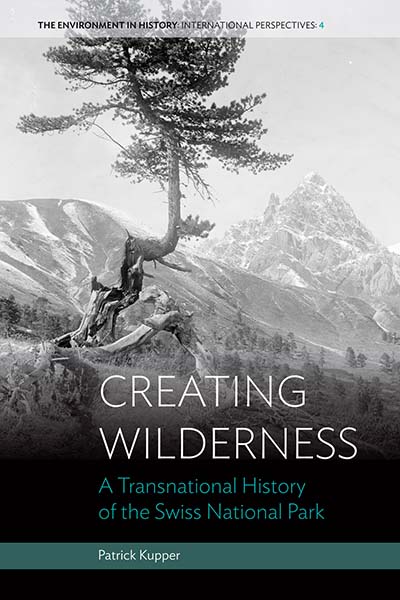
The Swiss National Park is a re-figuring of the American National Park, but with an emphasis on science. This idea of a scientific park is the focus of Patrick Kupper’s Creating Wilderness: A Transnational History of the Swiss National Park, published this month. Below, read an excerpt from the author’s Turku Book Prize-winning book.


______________________________


Today’s national parks differ vastly around the globe, not only in appearance but also in purpose: they shall protect biodiversity, landscape, or wilderness and serve for tourism, edification, or research. The term “national park” provides a common denominator for all this diversity, yet the denominator itself is indistinct. How shall one cope with this irritating complexity?


Continue reading “A Swiss Interpretation of the American Park”

Excerpt Examines ‘Brazil’

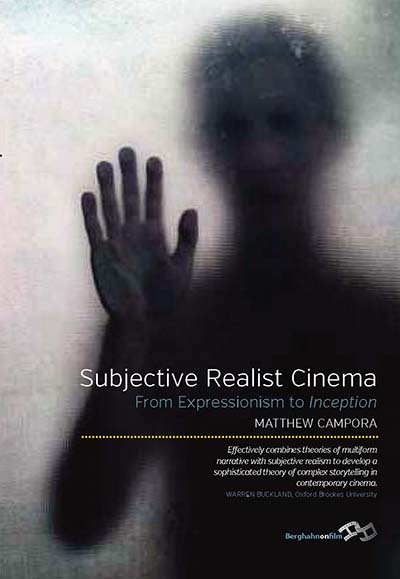
Matthew Campora’s newly published Subjective Realist Cinema focuses in on “fragmented narratives and multiple realities” in films from Mulholland Drive to Eternal Sunshine of the Spotless Mind. Following is an excerpt from the volume, which turns its gaze to Brazil. This is the second entry from the author, the first of which can be read here.


[N. Katherine] Hayles and [Nicholas] Gessler explore what they call “slipstream” fiction, defined as “works that occupy a borderland between mainstream and science fiction because they achieve a science-fictional feeling without the usual defamiliarization devices” (482).

Continue reading “Excerpt Examines ‘Brazil’”

Urban Update: Alexanderplatz Seen as a Site to Improve

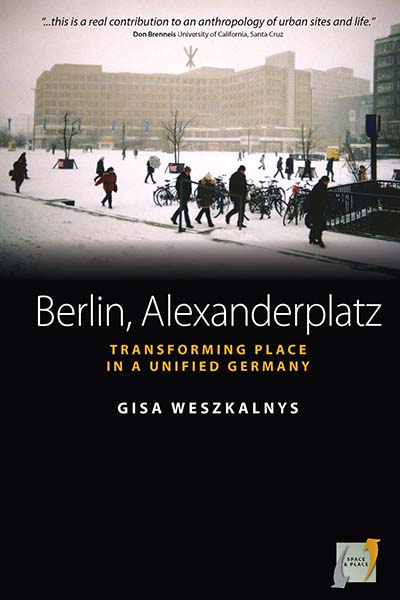
In 1990s Germany, Alexanderplatz, a centuries-old public square and transportation hub in Berlin, was seen a site in need of updating. Plans to improve the space, which were a part of post-unification revitalization, are central to Gisa Weszkalnys’ Berlin, Alexanderplatz: Transforming Place in a Unified Germany, which was published as a paperback late last year. Following is an excerpt from the volume, which gives insight into the collaborative process of the planned update.

____________________

In the early 1990s, Alexanderplatz was identified as a problem of urban design. A solution was to be found through an urban design competition, launched by the Senat’s Administration for Urban Development (SenStadt) in 1993. The winning design was to provide the basis for future constructions in the square. Following the competition, the Berlin Senat proceeded to establish a public-private partnership and to sign so-called urban development contracts with prospective investors.

Continue reading “Urban Update: Alexanderplatz Seen as a Site to Improve”

Filmic Multiple Reality Syndrome

The nonlinear narratives of such films as Mulholland Drive, Memento, and Eternal Sunshine of the Spotless Mind come into sharper focus in Matthew Campora’s newly released book Subjective Realist Cinema: From Expressionism to Inception. Following, the author introduces an excerpt to his book, tells the reader of his initial inspiration to write it, and gives insight into “multiform narrative.”


______________________________

What follows is an excerpt from my book Subjective Realist Cinema. I have chosen to present it here because it contains some of the key ideas of the book, as well as a brief analysis of the film that inspired my interest in complex narrative cinema in the first place, Terry Gilliam’s Brazil. Watching it teenager, I found Brazil confusing, even incomprehensible. However, I was also fascinated by it and suspected there was more to the film than I had grasped. When I returned to it years later and discovered that I was able to comprehend it in a way that had eluded me earlier, I was even more intrigued. How could I have NOT grasped what seemed so simple to me now? That the key to understanding the film lay in recognizing the shifts between Sam Lowry’s nightmarish waking world on the one hand, and his imagination, dreams, and hallucinations on the other. The lack of clearly marked shifts between the film’s different ontological levels had created a complexity that I was not accustomed to, and solving the puzzle the film posed had proven tremendously satisfying. I began seeking out similar films in order to understand how they created their effects and what follows is fragment of the work that has grown out of the years spent with these films.

Continue reading “Filmic Multiple Reality Syndrome”

Transnational Ahead of Its Time: Author Examines Council of Women

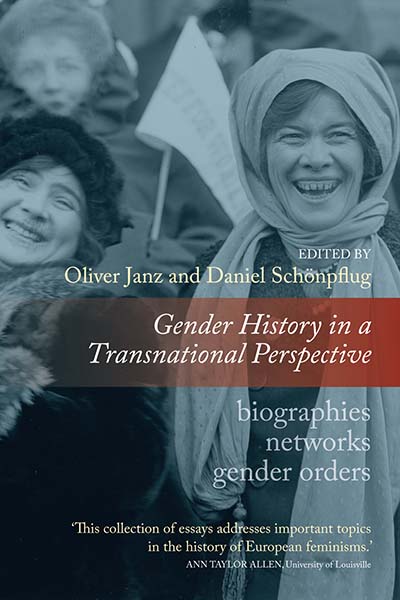
National borders are broken down in Oliver Janz and Daniel Schönpflug’s soon-to-be-released collection Gender History in a Transnational Perspective: Networks, Biographies, Gender Orders. The contributors examine historic cross-continent networks of European feminists. Following a short introduction from the author is a excerpt from Karen Offen’s chapter, in which the author examines the International Council of Women, which she considers “transnational” before the term was coined.

____________________________________


Karen Offen introduces this first part of the volume with reflections on a fundamental question: Can the category “transnational” be applied to the early international women’s movement, even though its representatives did not yet employ the term.


Historical scholarship is pressed to justify anachronistic terminology. It seems, though, that its use is often unavoidable, since historians’ implicit and explicit questions about the past always stem from their own present. Also, from a theoretical and methodological point of view, employing anachronistic terms allows for clearer analytical terminology as the linguistic horizon of the contemporaries is often ambivalent, contradictory and multifold. 

Continue reading “Transnational Ahead of Its Time: Author Examines Council of Women”

Storms, Sickness, Suspicions: The Darker Side of Migration

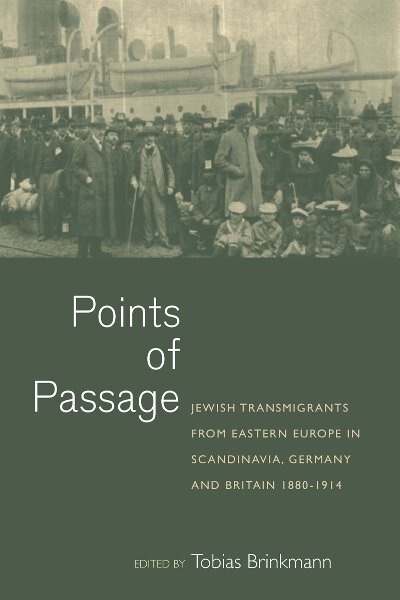
In Points of Passage: Jewish Migrants from Eastern Europe in Scandinavia, Germany, and Britain 1880-1914, published last October, contributors reveal some of the less-savory aspects of immigration (of which there were many). Following, in an excerpt from the newly published volume, editor Tobias Brinkmann gives two examples of passengers enduring misery before arriving on the supposed paradise of North American soil. This is the second entry about the book; read the former here.
_______________________________________

The essay collection “Points of Passage” seeks to shift attention from the well-known success story of Jewish immigration in the United States to the journey. On which paths did Jewish (and other) migrants travel from Eastern Europe to the ports on the North Sea and across the Atlantic between the 1880s and the 1920s, and which obstacles did they face? Researching the paths of migration can be much more challenging than studying immigration.

Continue reading “Storms, Sickness, Suspicions: The Darker Side of Migration”

Not So Different After All: Connecting British and Bengali Education Systems

Connecting Histories of Education: Transnational and Cross-Cultural Exchanges in (Post)Colonial Education, edited by Barnita Bagchi, Eckhardt Fuchs and Kate Rousmaniere, has recently been published by Berghahn. The editors previously shared an excerpt from the volume’s Introduction, which can be read here. A second extract, this one from Mary Hilton’s chapter “A Transcultural Transaction: William Carey’s Baptist Mission, the Monitorial Method and the Bengali Renaissance,” gives readers insight into the education system shared between Britain and Bengal.


__________________________________________

To understand the early-nineteenth-century reforming mentality that drove change in both Britain and Bengal, we must first sketch those systems of basic education that prevailed in their traditional rural communities before the English industrial revolution and before the development of the fully evangelical, self-righteous and reforming mercantile thrust of English imperialism.

Continue reading “Not So Different After All: Connecting British and Bengali Education Systems”

Egress and Ingress: Exploring ‘Points of Passage’

Ellis Island in New York City is a historically recognized entrance point for European migrants to the United States. But if this is so well-known, then why do we know so little about the points of departure? This is one of many research questions that informed the writing of Points of Passage: Jewish Migrants from Eastern Europe in Scandinavia, Germany, and Britain 1880-1914, published last October. Following, an excerpt from the volume — bookended by comments from editor Tobias Brinkmann — delves deeper into these queries.


 _________________________________________


When I began researching the history of Jewish migrations in the 1990s I concentrated on immigrants. I collected sources on the settlement of Jewish immigrants from small villages in the Central and Eastern European countryside in Chicago between 1840 and 1900. Within a few years the immigrants built a Jewish community, prospered economically and became respected members of Chicago’s social and political circles. My first book concentrated on two major research questions that continue to drive immigration studies: the impact of forces strengthening or weakening ethnic communities, and the impact of assimilation processes on immigrants.

Continue reading “Egress and Ingress: Exploring ‘Points of Passage’”

The Reciprocal Relationship of Media and Movement

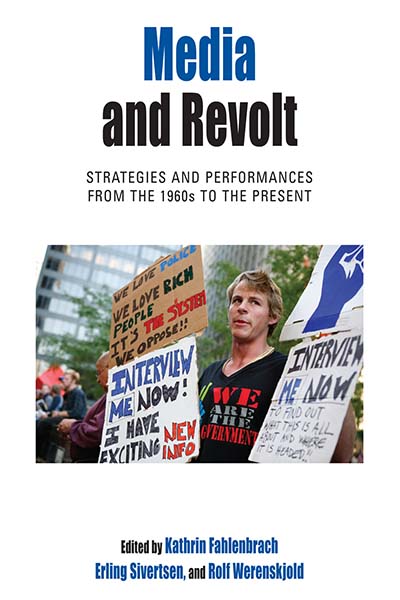
Editors Kathrin Fahlenbrach, Erling Sivertsen and Rolf Werenskjold’s volume Media and Revolt: Strategies and Performances from the 1960s to the Present was published last month. Following, the editors introduce the timely volume and share an excerpt from the Introduction. 


__________________________________________________


Looking at journals, television, or on the internet in these days, news dealing with protests abounds: the upheavals around the Euro-Maidan in the Ukraine, anti-governmental protests in Bangkok, the “Occupy-Gezi-Park”-manifestations in Istanbul or protest actions of NGOs like Greenpeace against oil companies or whale hunters. Obviously protest has an enormous “news value”: it offers spectacular pictures, it makes evident political conflicts and decisions by polarizing their actors, and it offers media the chance to perform as center of society.

Continue reading “The Reciprocal Relationship of Media and Movement”