Remembering Forgetting: A Monument to Erasure at the University of North Carolina

by Timothy J. McMillan

The following essay originally appeared in Silence, Screen and Spectacle: Rethinking Social Memory in the Age of Information. This book is now available in paperback.

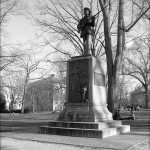
In 2001, I began teaching a first-year seminar titled “Defining Blackness.” My journey with that class and its descendants is intertwined with my relationship with the memorial landscape, concrete and virtual, of the campus of the University of North Carolina at Chapel Hill. In its initial year, the class decided to take as its focus the idea of how blackness, specifically American blackness, might mediate and alter how people experience the physical campus. In class discussions we surmised that there is a segregation of knowledge and of perception that might become manifest by examining the memorial landscape and that there are aspects of the campus that might be invisible to some but highly charged to others. Continue reading “Remembering Forgetting: A Monument to Erasure at the University of North Carolina”
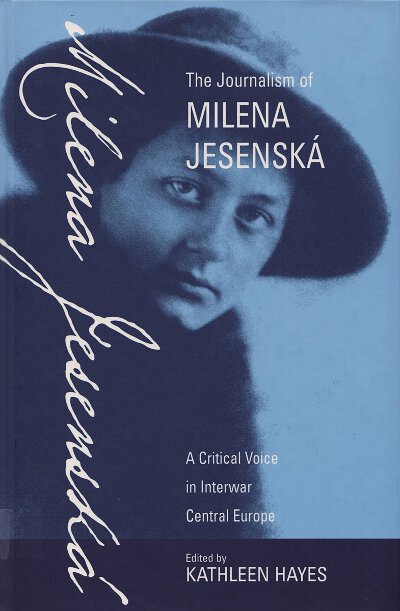
Milena Jesenská: Prague, the Morning of 15 March 1939

Milena JesenskáMilena Jesenská (10 August 1896 – 17 May 1944) was a Czech journalist, writer, editor and translator. She is popularly remembered as one of Franz Kafka’s great loves, and Jesenská’s translation of The Stoker was the first translation of Kafka’s writings into any foreign language.

After the occupation of Czechoslovakia by the German army, Jesenská joined an underground resistance movement and helped many Jewish and political refugees to emigrate. In the Czech Republic, she is remembered as one of the most prominent journalists of the interwar period and as a brave one: in 1939 she was arrested for her work in the resistance after the German occupation of Bohemia and Moravia, and died in Ravensbrück concentration camp in 1944.

It is estimated that Jesenská wrote well over 1,000 articles but only a handful have been translated into English. In The Journalism Of Milena Jesenská: A Critical Voice in Interwar Central Europe, her own writings provide a new perspective on her personality, as well as the changes in Central Europe between the two world wars as these were perceived by a woman of letters. The articles in this volume cover a wide range of topics, including her perceptions of Kafka, her understanding of social and cultural changes during this period, the threat of Nazism, and the plight of the Jews in the 1930s.

On 15 March 1939, the German Wehrmacht moved into Prague, and the occupation would not end until the surrender of Germany following World War II. Below is an excerpt from the book The Journalism Of Milena Jesenská: A Critical Voice in Interwar Central Europe.


Continue reading “Milena Jesenská: Prague, the Morning of 15 March 1939”

“No Savage Shall Inherit the Land”: The Indian Enemy Other, Indiscriminate Warfare, and American National Identity, 1607-1783

by Walter L. Hixson


US Foreign Policy and the Other

John Quincy Adams warned Americans not to search abroad for monsters to destroy, yet such figures have frequently habituated the discourses of U.S. foreign policy. U.S. Foreign Policy And The Other focuses on counter-identities in American consciousness to explain how foreign policies and the discourse surrounding them develop. This excerpt, adapted from Chapter 1. “No Savage Shall Inherit the Land”: The Indian Enemy Other, Indiscriminate Warfare, and American National Identity, 1607-1783, looks at how Native Americans, as the primary and quintessential American other, proved central to forging national identity. This book is now available in paperback.

Continue reading ““No Savage Shall Inherit the Land”: The Indian Enemy Other, Indiscriminate Warfare, and American National Identity, 1607-1783”

Does Every Vote Count In America? Emotions, Elections, and the Quest for Black Political Empowerment

by Britta Waldschmidt-Nelson

The following excerpt was adapted from chapter 11 in the book Emotions in American History: An International Assessment edited by Jessica C. Gienow-Hecht, published in 2010.


The history of emotions provides important keys to understanding human behavior and can be of great assistance in explaining wider political, social, and economic trends in American history.1 This applies in particular to the history of African Americans, as racial conflicts in general and the black struggle for freedom and equality in particular repeatedly stirred public emotions in the United States to a degree hardly ever reached by other domestic issues. Thus, interracial relations have always been identified as an extremely emotionally charged aspect of American history, and in view of the new approaches to historical research proposed by the history of emotion, a closer examination of this phenomenon can offer significant additional insights into the close connection between emotions and politics. A broad and multifaceted cluster, such as the Civil Rights Movement or any other social protest movement, encompasses emotions on various levels and should therefore be analyzed from more than one perspective. Continue reading “Does Every Vote Count In America? Emotions, Elections, and the Quest for Black Political Empowerment”

The Life of a Native Hawaiian: A Perspective on Hawaii–US Relations

By Judith Schachter

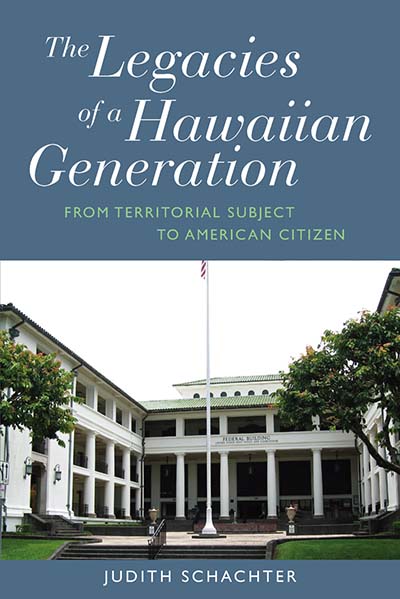
The following is an excerpt from The Legacies of a Hawaiian Generation. Author Judith Schachter remembers a friendship that began at a May 1989 meeting of the Waimānalo Senior Citizens Association. The Legacies of a Hawaiian Generation by Judith Schachter is now available in paperback.


Continue reading “The Life of a Native Hawaiian: A Perspective on Hawaii–US Relations”

A Walk of Life: Entering Catholic West Belfast

Zenkerby Olaf Zenker


Ethnographer Olaf Zenker details a walk through the Catholic side of Ireland in this excerpt from his book Irish/ness is all Around Us: Language Revivalism and the Culture of Ethnic Identity in Northern Ireland, now available in paperback. Read Chapter One for free. 


On a Friday afternoon in September 2004, shortly before returning home from my ethnographic fieldwork, I took my video camera and filmed a walk from the city centre into Catholic West Belfast up to the Beechmount area, where I had lived and conducted much of my research. I had come to Catholic West Belfast with the intention of learning about locally prevailing senses of ethnic identity. Yet I soon found out that virtually every local Catholic I talked to seemed to see him- or herself as ‘Irish’, and apparently expected other locals to do the same. My open questions such as ‘What ethnic or national identity do you have?’ at times even irritated my interlocutors, not so much, as I figured out, because they felt like I was contesting their sense of identity but, to the contrary, because the answer ‘Irish’ seemed so obvious. ‘What else could I be?’ was a rhetorical question I often encountered in such conversations, indicating to me that, for many, Irish identity went without saying. If that was the case, then what did being Irish mean to these people? What made somebody Irish, and where were local senses of Irishness to be found?

Continue reading “A Walk of Life: Entering Catholic West Belfast”

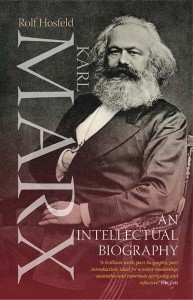
Karl Marx as a Young Journalist

By Rolf Hosfeld

HosfeldKarl

Excerpted by Karl Marx: An Intellectual Biography by Rolf Hosfeld, Translated from the German by Bernard Heise

Karl Marx was born May 5, 1818. As a young man he was a journalist and an editor for Rheinische Zeitung, a liberal-socialist newspaper published in Germany. The paper was previously edited by Adolf Friedrich Rutenberg, who favored opinionated feuilletons, before Marx replaced him and gained recognition for his practical, evidence-based approach.

Moses Hess was the first communist Karl Marx personally encountered. Both were from the Rhineland, came from bourgeois families, and were under the influence of Hegel’s philosophy. Marx made an “impos­ing impression” on Hess upon their first acquaintance in Septem­ber 1841. After their initial encounter Hess had the sense of having met the “greatest, perhaps the only real philosopher now living,” one who would soonHess was referring here to the lecture halls of Bonn Univer­sity“draw upon him the eyes of Germany.”
Continue reading “Karl Marx as a Young Journalist”