 Join our Email List




Quotation of the week
An Excerpt from A Lover’s Quarrel with the Past: Romance, Representation, Reading
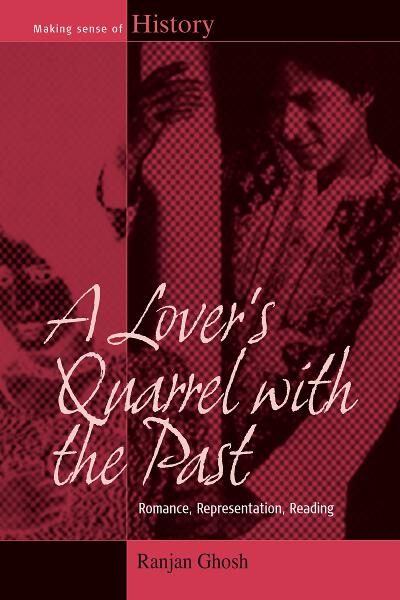 Note: Berghahn recently published Ranjan Ghosh’s A Lover’s Quarrel with the Past: Romance, Representation, Reading, an exploration of the relationship between history and theory. Here the author talks about the origins for the section on dust that appears in the book.
__________________________________
Dust
I suffer from a dust allergy. If I’m really careful, it wouldn’t affect my life in any significant way. For what, after all, are allergies? A few crustaceans managing to live out their lifespan because a gourmet friend of mine suffers from a seafood allergy. Compared to that exchequer, my allergy has almost no exchange value. I can joke about it, although, only in the way a bald stand-up comedian can joke about his hair or lack thereof. For the truth is this: my relationship with dust has affected the way I have done history.
My mother, whose mythical bedtime stories first introduced me to history as a child, was a historian. Her specialisation was numismatics but she eventually gave up teaching history to take over curatorship of the university museum. She was also diagnosed with asthma — a disease for which dust is an enemy — and she suffered especially during the dusty Indian winter months. I subsequently grew up with a psychosomatic hatred for dust: a maid cleaned our house twice a day and I became the subject of much teenage laughter in school, holding, as I did, a hankie to my nose at all times.
Now, why do I say all this? My book, A Lover’s Quarrel with the Past: Romance, Representation, Reading, has a section on dust. When I first read Carolyn Steedman’s fine book, Dust: The Archive and Cultural History (it was published exactly a year after my mother’s death), I was overcome by several strong emotions. Primary among them was a sense of despair. Like my mother who would wheeze at the mention of a furry animal or sandstorm, I read Steedman’s book literally out of breath. My sense of despair came from the realisation that I would never be able to work in an archive — that I would never have a career in dust.
My Lover’s Quarrel is, in that sense, also a quarrel with dust, my private trope for history, the past and the future, beyond the biblical from where we come to where we go.
There is a living, buoyant ligature between a historian and the archival milieux where one encounters the recorded past as much as a ‘history of loss’, where the dust rests as no mere squalid accretions but animated particles that can waft into the historian with differential vibrations….Dust speaks; dust makes us aware of a past that is absent and present at the same time, a temptation to the historian’s reconstructionist desires and a reminder of his or her affiliation to grounded evidence. In a kind of sensory encounter with the past, dust, as a materiality, awaits mediation, conjuring up the ‘presence’ of the past. (102)
My book combines South Asian history with the continental philosophies of history. But my accusative finger is at dust and my physiological condition, which has prevented me from being a ‘proper’ historian. I’ve written on textbooks and pamphlets, and their unique semantics of a propagandist historicising, but I’ve always had to take the help of someone, a kind acquaintance at the library, often my wife or father, to first wipe the dust away from their pages before I could examine them.
That has also become my shorthand for doing history: wiping the dust. In that there is much romance and representation, and of course, always, always, a new reading.
__________________________________
Ranjan Ghosh teaches in the Department of English at the University of North Bengal, India. Featuring lectures and a panel discussion on the book, Lover’s Quarrel will be launched on September 21 at the University of North Bengal.
Hot Off the Presses – New Book Releases
Newly released titles from Berghahn’s anthropology and sociology lists:
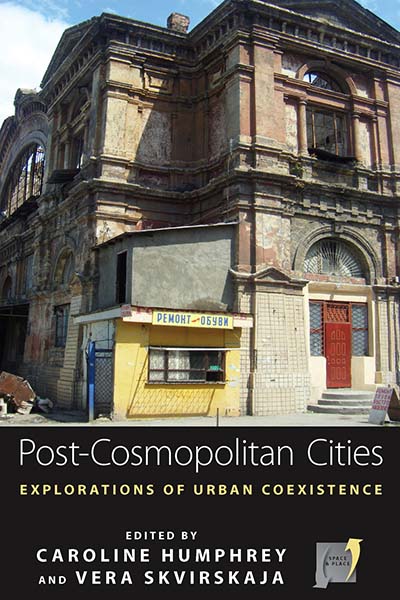 Post-Cosmopolitan Cities: Explorations of Urban Coexistence, edited by Caroline Humphrey and Vera Skvirskaja
Problems of Conception: Issues of Law, Biotechnology, Individuals and Kinship, Marit Melhuus
Patients and Agents: Mental Illness, Modernity and Islam in Sylhet, Bangladesh, Alyson Callan
Islam and Assisted Reproductive Technologies: Sunni and Shia Perspectives, edited by Marcia C. Inhorn and Soraya Tremayne
A Durkheimian Quest: Solidarity and the Sacred, William Watts Miller
Animism in Rainforest and Tundra: Personhood, Animals, Plants and Things in Contemporary Amazonia and Siberia, edited by Marc Brightman, Vanessa Elisa Grotti, and Olga Ulturgasheva
Who Owns the Stock? Collective and Multiple Property Rights in Animals, edited by Anatoly M. Khazanov and Günther Schlee
Environment and Citizenship in Latin America: Natures, Subjects and
Struggles, edited by Alex Latta and Hannah Wittman
Hot Off the Presses: New Journal Releases from Berghahn
New journal releases from Berghahn:


Anthropology in Action
Volume 19, Number 2, Summer 2012
Articles on the post-industrial urban neighbourhoods of the U.S.A., the U.K. and Europe, the visual-anthropological method of participatory video in Northeastern Brazil, and improving obstetric care in Burkina Faso. Also including an open letter to World Bank President Kim.
Contributions to the History of Concepts
Volume 7, Number 1, Summer 2012
This issue includes articles on national histories, democracy in the Swedish Parliamentary Debates during the Interwar Years, conceptual history in Korean, the concept of Unnati (Progress) in Hindi, and the concept of nation in East-Central Europe.
Focaal
Volume 2012, Number 63, Summer 2012
This issue focuses on changing flows in anthropological knowledge, with articles about Western anthropologists and Eastern ethnologists, cosmopolitan anthropology, inequality, labor, citizenship, and more.
French Politics, Culture & Society
Volume 30, Number 2, Summer 2012
Special issue on The Rescue of Jews in France and its Empire during World War II: History and Memory, featuring articles on the French resistance and figures who played key roles in aiding the Jews in France during WWII.
Regions & Cohesion
Volume 2, Number 2, Summer 2012
Focuses on themes of water management in North America, social cohesion and migration, and cohesion and governance.
Sibirica
Volume 11, Number 2, Summer 2012
Featuring two extensive articles on cattle economy and environmental perception of sedentary Sakhas in Central Yakuti, and genre differentiation in spontaneous Koriak storytelling.
Theoria
Volume 59, Number 132, September 2012
Part two of a special issue on Freedom and Power. Articles examine the concepts of freedom and power, the dimensions of freedom in Plato’s Laws, and delves into Plato’s analogy between the structure of the soul and the polis.
Transfers
Volume 2, Number 2, Summer 2012
Featuring a Special Section on Global Cycling examining the local meaning of bicycling in West Africa, Finland, Japan, and China. Articles also include reviews of the Gambiocycle, The National Carriage Gallery at the Cobb + Co Museum, and the movie Drive.



“If there’s a book you really want to read, but it hasn’t been written yet, then you must write it.” Toni Morrison
Quotation of the week
Hot Off the Presses- New Book Releases
 Newly released titles from Berghahn’s history list:
Hitler’s Plans for Global Domination: Nazi Architecture and Ultimate War Aims, Jochen Thies, with a Foreword by Volker R. Berghahn
The Holocaust and Historical Methodology, edited by Dan Stone
Changing Perceptions of the Public Sphere, edited by Christian J. Emden and David Midgley
Reassessing the Nuremberg Military Tribunals: Transitional Justice, Trial Narratives, and Historiography, edited by Kim C. Priemel and Alexa Stiller
Charismatic Leadership and Social Movements: The Revolutionary Power of Ordinary Men and Women, edited by Jan Willem Stutje
Newly released paperbacks from Berghahn’s history list:
Jewish Life in Nazi Germany: Dilemmas and Responses, edited by Francis R. Nicosia and David Scrase
Berlin Divided City, 1945-1989, edited by Philip Broadbent and Sabine Hake
Changing the World, Changing Oneself: Political Protest and Collective Identities in West Germany and the U.S. in the 1960s and 1970s, edited by Belinda Davis, Wilfried Mausbach, Martin Klimke, and Carla MacDougall
An Excerpt from Patients and Agents: Mental Illness, Modernity and Islam in Sylhet, Bangladesh
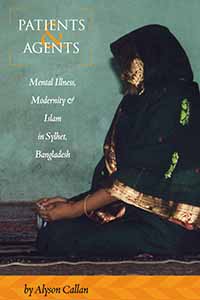 Note: Berghahn has just published Alyson Callan’s Patients and Agents: Mental Illness, Modernity and Islam in Sylhet, Bangladesh, an ethnographic study that explores how changes in the global economy have led to an increase in daughters marrying outside of their local kinship network, which in turn has increased their vulnerability to mental illness. An excerpt with images from Chapter 6 follows an introductory note from the author.
__________________________________________
Bangladesh is one of only five countries in the world where women have a shorter life expectancy than men. The low status of women in Bangladesh is underpinned by the virilocal rule of residence. As daughters leave their natal home to live with their husband’s family at the time of marriage, it is argued that nurturing them is regarded as a relative waste of resources, compared to nurturing sons who will stay and contribute to the wealth of the household.
However, women’s oppression is not experienced in a uniform way. Older women achieve a higher status as mothers, and, as mother-in-laws, may oppress their sons’ wives. The concept ‘woman’ does not occupy a single analytical category and the status of women varies according to the role they occupy. In this excerpt I suggest that the ‘Ma’ icons seen in most rural households provides evidence that the mother is revered on a par with Allah.
The mother in symbolic opposition to Allah
[There is] a tension evident in Bengali culture between the law of the father and the law of the mother. The popular Indian conception of the mother as self-sacrificing overlies an unconscious fantasy of the phallic, castrating mother (Nandy 1990). Bagchi (1990) suggests that Bengali culture is particularly prone to employing this threatening aspect of the mother. The powerful and murderous Kali, who dances on the corpse of her consort Shiva, is a goddess who enjoys greatest popularity amongst Bengalis (Fuller 1992). Wilce (1998a) argues that in Bangladesh mothers are feared and placed in symbolic opposition to Allah. He cites this famous passage from the Hadith: in answer to the question, ‘To whom do I owe the most respect?’ the Prophet replied, ‘Your mother.’ His answer remained the same when pressed to declare the second and third persons deserving respect. ‘Father’ was listed fourth [1998: 108].
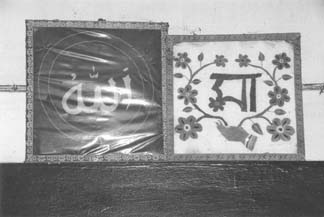
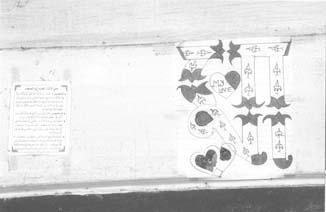
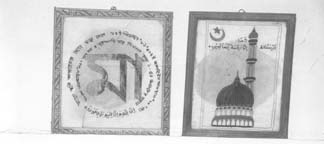
Another quotation commonly recited in Sylhet is ‘Heaven is under the mother’s feet’, meaning that obedience to the mother is the path to heaven. Yet whilst the mother-in-law in Sylhet is feared, conscious representations of the mother portray her to be loving and all-forgiving, if not to say indulgent. This latter attribute seems to me to be diametrically opposed to Allah who takes a meticulous account of his subjects’ good and bad works, doling out punishment and rewards as appropriate on Judgement Day. That the mother is revered on a par with Allah is demonstrated by the prevalence of ‘Ma’ iconography (ma is short for amma – mother). (Muslim) lorry drivers have ‘Ma’ painted on the front of their trucks; posters are sold reproducing poems and pictures celebrating the mother. Most strikingly of all, ‘Ma’ embroidery samplers and other ‘Ma’ icons are hung up on the wall next to Islamic icons – Allah’s name in Arabic, Qur’anic verse, pictures of Mecca. I saw these ‘Ma’ icons in every rural household that had grown-up children present; it was explained that ‘we have maya (love) for Allah and amma above everything else; for amma because she has suffered greatly for us’.
Alyson Callan is a psychiatrist and anthropologist. She currently works as a consultant psychiatrist in Brent for the Central and North West London NHS Foundation Trust.
“What would men be without women? Scarce, sir…mighty scarce.” Mark Twain
Quotation of the Week
“The love of learning, the sequestered nooks, And all the sweet serenity of books.” Henry Wadsworth Longfellow
Quotation of the Week
Interview with the Author – Britta McEwen, author of Sexual Knowledge: Feeling, Fact, and Social Reform in Vienna, 1900-1934
 Britta McEwen is author of Sexual Knowledge: Feeling, Fact, and Social Reform in Vienna, 1900-1934, published earlier this year by Berghahn. Her work uncovers the transformation of sexual knowledge from the realm of specialized medical science to that of social reform for the wider populace. Here she discusses her work, some of the challenges she faced in writing about some of the key historical figures, and how she would utilize her apple pie making skills if she weren’t a historian.
1. What drew you to the study of sexual knowledge in the early twentieth century?
I actually got into this field through architecture! Vienna has these amazing public housing projects from the interwar period, and as I investigated them I learned that they were intended for a new kind of people – upright, moral, hardworking small families. This seemed to entail a new sexual system, starting with birth control at the very least. That, combined with a well-timed read of Isabel Hull’s “Sexuality, State, and Civil Society in Germany,” made me think that there was a story to tell in Vienna’s early twentieth century about attitudes towards sex.
2. Did any perceptions on the subject change from the time you started your research to the time you completed the book?
On of my assumptions at the beginning of my project was that science was always a liberating voice vis-à-vis sexuality. While scientific discourse was used to challenge Church teachings about sex, I found that many authors in the early twentieth century were actually using melodramatic language, rather than scientific language, to express the call to sexual and social justice. At first I thought this was just a trick to popularize complex ideas, but as I went on I came to believe that melodrama offered people writing about sex a way to talk about ignorance, shame, and consequences in a way that would be convincing to a wide audience.
3. What aspect of writing this work did you find most challenging? Most rewarding?
I’ll answer that one by combining the questions and talking about what was both challenging AND rewarding… some of the historical characters I met in my research were so very colorful and compelling that they threatened to overshadow the “knowledge” they sought to impart. Here I’m thinking of Wilhelm Reich, Johann Ferch, and above all, Hugo Bettauer. Bettauer became a personal hero of mine as I wrote, which made it difficult to really focus on his journalism, rather than his person, for the book. In another world, I think I would have ditched the reams of research I had collected and simply written about Bettauer’s humanism and his outrageous career.
4. To what extent do you think the book will contribute to debates among academics within the field?
Although one of the arguments of my book is that Vienna was a special site for the production and distribution of sexual knowledge in the early twentieth century, I think it would be interesting to see comparative work done on this issue. How unusual were places like Vienna, Paris, and Berlin? What made them unique? I also wonder if books like mine will help dispel the belief that there was only one sexual revolution. Finally, the debate in the German-speaking world about the “repressive” sexual regimes of the twentieth century is really heating up, and I think books like mine will help contextualize what sexual “liberation” meant to different historical actors.
5. If you weren’t a historian, what would you have done instead?
Although I am a hardly an entrepreneur, I do think I might have been able to run a public space. Lord knows I waitressed enough to know a good cup of coffee when I see it, and I make a mean apple pie. So some days I fantasize about running a bookstore specializing in science fiction and mysteries, where you could get something sweet to eat and sit all day (just like in Vienna), reading and gabbing. I imagine it to be the kind of place with a bad pun in the title and a standing feminist knitting circle – come to think of it, the kind of place that could be lampooned on “Portlandia.”
Britta McEwen teaches European History at Creighton University in Omaha, Nebraska.