 Join our Email List




Quotation of the Week
In their own words: The broader context of Small Town and Village in Bavaria
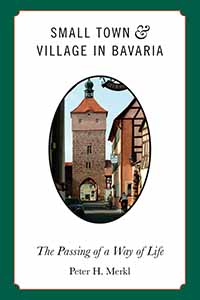 Note: Berghahn recently published Peter H. Merkl’s Small Town and Village in Bavaria: The Passing of a Way of Life, a study of that region’s modernization efforts in the 1970s and 1980s that led to a considerable reduction in the autonomy of its small communities. Here the author discusses how the decline of iconic village life (and the broader implications) motivated his study:
Immense changes have occurred in German agriculture and in the economic and social life of very small towns, which I explore in my work Small Town and Village in Bavaria: The Passing of a Way of Life. In many ways, these changes mirror transformations occurring in small towns across the industrialized world. While many people in today’s urbanized society actually come from small town backgrounds or grew up in the countryside and feel nostalgia for the closeness of small communities or for a family farming way of life, these settings have nearly vanished in the last 100 years or so. Where once a majority of the German population were farmers, only a tiny percentage remain so today and most of them are part-time farmers. The majority of really small places have lost their taverns and other local businesses while both schoolchildren and adults commute daily to distant, larger towns.
While the populations of small places decline, the charms of their old historical structures endure, highlighted in art and literature. When we travel through very old towns we are struck by the medieval walls, gates and turrets, and ancient churches that manifest the venerable age of communities that have witnessed centuries of political and social change. Tourists have discovered such places all over Europe, especially in the United Kingdom, France, and Germany where such well-known medieval towns as Rothenburg on the Tauber River or the small villages along the Romantic Road in Bavaria still enchant the visitor.
My book not only focuses on the long-term changes in German agriculture and in fifteen old Franconian mini-towns but also examines the effects of an ambitious modernization project by the Bavarian state that sought to deprive all communities under a certain size of their autonomy and to force them into “administrative unions” with other small places. It was a process not unfamiliar in the U.S. and many European countries, though usually in a more voluntary form, but resulting in far fewer, modernized local units in either case.
The tension between the preservation of these small communities amid the slow dynamics of social change on the one hand and the massive state intervention to modernize Bavarian local government at the periphery on the other is what drew me to this project. It seemed preposterous to force groups of medieval, independent small towns to merge for the sake of modernization. Through my research, which included several mail surveys of mayors, interviews with state and local officials, and statistical materials, I have created a fuller picture of these micro-towns and placed them within the larger hierarchy of German and European levels of government, providing a clearer context for the changes in these localities.
Peter H. Merkl is Professor Emeritus of Political Science at the University of California, Santa Barbara. He has published extensively on comparative and German government and politics, in particular the origin of the West German Republic and German unification.
Win a Copy of Where Have All the Homeless Gone? The Making and Unmaking of a Crisis
 Berghahn Books is pleased to announce our latest contest. To be entered to win a copy of Anthony Marcus’s Where Have All the Homeless Gone? The Making and Unmaking of a Crisis, follow Berghahn Books on Facebook by 5 p.m. EST Monday. We’ll select a winner at random from our new followers. Check back Tuesday to see if you won.
Drawing on five years of ethnographic research in New York City with African Americans and Latinos living in poverty, Where Have All the Homeless Gone? reveals that the US homeless “crisis” of the late 1980s and early 1990s was driven as much by political misrepresentations of poverty, race, and social difference, as the housing, unemployment, and healthcare problems that caused homelessness and continue to plague American cities.
From Idea to Book- Islam and Assisted Reproductive Technologies: Sunni and Shia Perspectives
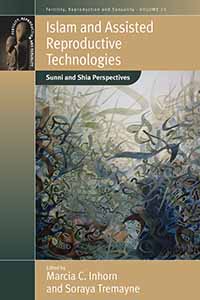 From Idea to Book is an occasional series in which Berghahn authors and Editors discuss the origins of their work. Here, Marcia Inhorn and Soraya Tremayne describe how the volume Islam and Assisted Reproductive Technologies, which was recently published by Berghahn, came about.
Islam and Assisted Reproductive Technologiesis the result of a wonderful conference workshop, held from 18 to 20 September 2009 at Yale University in New Haven, Connecticut, on the theme of “Islam and the Biotechnologies of Human Life.” Following a day of public presentations, the contributors to this volume remained at Yale for an intensive, two-day workshop discussion of their conference papers, which have ultimately become the polished chapters of this edited volume.
To our knowledge, this volume is unique, for it represents the work of nearly all of those scholars whose research focuses on Islam and assisted reproductive technologies (ARTs). Meeting (often for the first time), discussing our work, and producing this volume together has been an immensely rewarding experience. For us as co-conveners, the project and the process have been especially gratifying, for we have been able to bring together our junior colleagues, many of whom are producing nuanced, field-based research on ARTs in a variety of Islamic settings. As a result, all of the chapters in this volume can be said to be original, timely, and “cutting edge,” reflecting the rapidly evolving ART landscape in the Muslim world in the second decade of the new millennium. Continue reading “From Idea to Book- Islam and Assisted Reproductive Technologies: Sunni and Shia Perspectives”
Interview with the Editors- Alex Latta and Hannah Wittman, editors of Environment and Citizenship in Latin America
 Alex Latta and Hannah Wittman are the editors of Environment and Citizenship in Latin America: Natures, Subjects and Struggles, recently published by Berghahn. The work aims to advance debates on environmental citizenship, while simultaneously and systematically addressing broader theoretical and methodological questions related to the particularities of studying environment and citizenship in Latin America. Here, they discuss the origins of their interest in the topic, where they see the work fitting within the field, and the process of putting the volume together.
___________________________
1. What drew you to the study of environmental citizenship?
We were both conducting extensive field research in different parts of Latin America (Wittman mainly in Guatemala and Brazil, Latta in Chile) during the early 2000s, when the field of citizenship studies was really picking up. At the same time, researchers working within a long tradition of “green” social theory started talking about “environmental citizens” and probing questions about what it means to think about ecological questions through the lens of citizenship. In the field we couldn’t help observing the way that struggles over environmental issues were closely bound up with debates over questions of recognition, inclusion, rights and inequality. The connection between environment and citizenship was plain to see in communities’ defense of their land rights, activists’ discourses around biodiversity or pollution, corporate agendas to tap natural wealth and government’s efforts to order and regulate different kinds of human-nature relationships. But as we observed this connection in practice, we were dissatisfied with debates about environmental citizenship amongst scholars from the Global North, which didn’t seem to offer the tools we needed to make sense of what was going on in Latin America. Before we even met we had independently decided to work at conceptual innovation to remedy this shortcoming
2. How did your perceptions of environment and citizenship change from the time you started work on this volume to the time you completed it?
Working on this volume was a good reality check for us. As a scholar it is easy to get wrapped up in one’s own self-referential bubble of theories, case studies and the like. Hearing what other scholars made of this connection between environment and citizenship had two kinds of outcomes. On the one hand, it confirmed our conviction that this is a fruitful intellectual space for thinking about a series of related ecological, social and political questions. There are all kinds of research avenues still to be explored. On the other hand, working with our collaborators during this project also reminded us that the terminology of citizenship, even as an analytical concept, is not innocent nor is there consensus about definitions and meanings. A number of the scholars who participated in the original workshop, including a couple whose pieces found their way into the book, were critical about the way the notion of citizenship potentially imposes a Western political ontology. They also pushed us with respect to the limits of citizenship as an analytical category (compared, for instance, to environmental justice). Even more importantly, these collaborators have demonstrated in their chapters how the discourses and practices of environmental citizenship can and have been mobilized by state and other actors as tools to re-enforce the subordination of politically marginal subjects such as indigenous peoples.
3. Do you think there are aspects of this work that will be controversial to other scholars working in the field?
To the extent that the volume manages to complicate the terms of debate it is definitely our hope that other scholars in the field will feel the need to respond. There is a reason why the book is not titled “Environmental Citizenship in Latin America”. This collection is aimed to decentre the field of study, unsettling the easy union of these terms and putting in their place a more open-ended research agenda around the intersection of environment and citizenship. Obviously, the collection is also meant to stir the pot by reminding scholars that the Global South can’t be ignored as we seek to develop new paradigms of thought around environmental questions.
4. To what extent do you think the book will contribute to debates amongst academics and activists within the Latin American Region?
The fact that the book is in English is a partial barrier to uptake amongst Spanish or Portuguese speaking audiences, though there is an increasing amount of collaboration and cross-fertilization between work conducted in the three different languages, regardless of where it is written and published. Indeed, six of our own contributors are from the region. Moreover, we’ve had excitement about the collection expressed by other Latin American colleagues in research networks to which we belong. There seems to be a hunger amongst scholars and activists in the region for more exploration of the kinds of themes the book’s contributors grapple with. At the same time, in the context of this and other projects we constantly feel that more needs to be done to join up academic debate across the North-South divide, and also to reach out more effectively from the academic sphere into activist circles.
5. Putting together an edited volume is a lot of work. Was it worth it?
The opportunity to collaborate on a volume like this, both in terms of our work together as editors and with respect to the larger network of scholars involved in the project, brings significant rewards. We were lucky to have a really dedicated group of contributors, who worked diligently through numerous rounds of revision. In general there is a lot of good feeling around the collaboration that went into this project, and I think we are all pleased with the outcome.
___________________________
Alex Latta is an Associate Professor in the Department of Global Studies at Wilfrid Laurier University and in the Balsillie School of International Affairs.
Hannah Wittman is an Assistant Professor of Sociology and Associate Member of the Latin American Studies Program at Simon Fraser University.
“Anybody can make history. Only a great man can write it.” Oscar Wilde, The True Function and Value of Criticism
Quotation of the Week
Get to Know Berghahn- Lauren Weiss
 Get to Know Berghahn is a recurring interview feature that introduces the hardworking people behind the scenes at Berghahn. This week’s subject is Editorial Assistant Lauren Weiss.
How long have you been at Berghahn? What did you do before that?
I’ve been at Berghahn for a little over a year now! Before that, I was studying at Columbia University, working just about every publishing internship I could find, and writing up a storm as a Creative Writing major. Continue reading “Get to Know Berghahn- Lauren Weiss”
From Idea to Book- The Cult and Science of Public Health
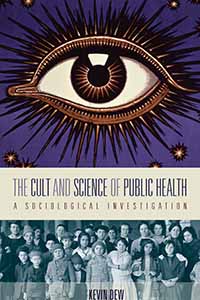 From Idea to Book is an occasional series in which Berghahn authors discuss the origins of their work. Here, Kevin Dew describes how a discussion with a student about Durkheim planted the seed that would eventually become The Cult and Science of Public Health: A Sociological Investigation, which was published by Berghahn this spring.
The impetus to write my book developed over a long period of time, but there were occasions that particularly focused my thinking. A pivotal moment was a discussion I had with a PhD student when I was a lecturer in a Department of Public Health at a medical school. She was using the work of Emile Durkheim to consider the role of neighbourhoods in relation to health. We were throwing around ideas about what sort of social factors foster solidarity or cohesion at a neighbourhood level, and we mentioned religion but moved on quickly as religion does not generally operate at a neighbourhood level. It was then that I had an ‘aha’ moment. Continue reading “From Idea to Book- The Cult and Science of Public Health”
Is There Such Thing as “Low-Brow?” Taking Pop Culture Seriously

by Martha Hoffman, Journals Editorial and Production Manager
Maybe it’s my age, but sometimes I feel like two different people inhabit my mind: there’s the person that was obsessed with sociology in college, reading Critical Race Theory for fun and over-scheduling classes I didn’t need because I was genuinely excited at the thought of learning and figuring out what I was most passionate about. This is the half of me that feels most at home at Berghahn, the intellectually curious and studious parts of me thriving as I help in the production of academic and scholarly journals.
But there’s also the other part of me: the girl that loves reality television, blockbuster movies and popular music. I can spend hours looking for fun dance songs, watching network comedies and am willing to pay NYC movie theatre ticket prices to see a rom-com if a friend is willing to do the same.
The other day, I was working on creating an ad for a new issue of Girlhood Studies. I was looking at the last issue, and an article title caught my eye: “Some Assembly Required: Black Barbie and the Fabrication of Nicki Minaj.” The topic of Minaj has come up in my life from time to time, though it’s usually on the internet, radio or tv, and if anyone’s discussing her it’s usually not her merits or her culture significance but rather her butt, face or the fact that she can’t rap. It’s not that I think Minaj can’t rap, I’ve just noticed that the most vocal commentors of the artist are those insisting she’s not an artist to begin with. With any type of fame, knee-jerk vitriol seems to follow. Admittedly, my comments about her have often fallen into similarly shallow categories, albeit positive: I think she’s beautiful, funny and a decent rapper. However, other than those cursory observations, I don’t think I’ve ever stood back and thought about her in a larger context, whether it be from a gender-, race- or cultural standpoint.
Continue reading “Is There Such Thing as “Low-Brow?” Taking Pop Culture Seriously”
“Not to know what happened before you were born is to remain forever a child.” Cicero
Quotation of the Week