Celebrating International Museum Day

Museum Day


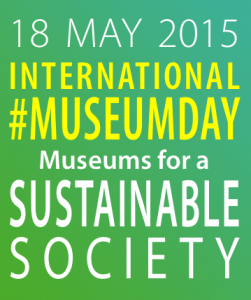
Today is International Museum Day!


Every year since 1977, International Museum Day is coordinated by the International Council of Museums (ICOM) and organised worldwide around May 18. This day is an occasion to raise awareness on how important museums are in the development of society.


The event highlights a specific theme each year that is at the heart of the international museum community’s preoccupations. The theme this year is Museums for a Sustainable Society. In honor of this event, we’d like to offer FREE ACCESS to the article “Assessing Museums Online: The Digital Heritage Sustainability (DHS) Framework” by Ana Luisa Sánchez Laws (from the second volume of the new journal Museum Worlds).

Connect with us on Facebook to access the article.


Continue reading “Celebrating International Museum Day”

Becoming Modern: The Mass Home and the Right to Comfort

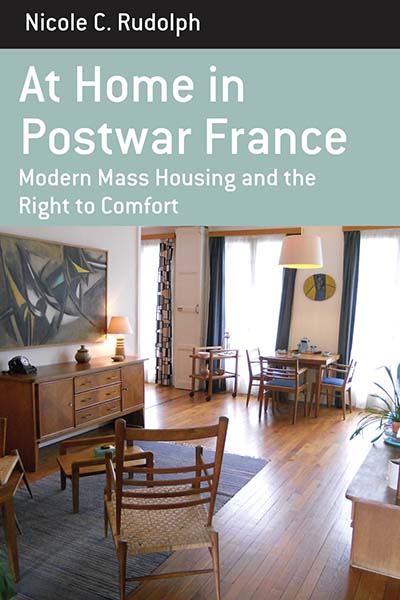
At Home in Postwar FranceAfter World War II, France embarked on a project of modernization, which included the development of the modern mass home. At Home in Postwar France identifies the “right to comfort” as an invention of the postwar period and suggests that the modern mass home played a vital role in shaping new expectations for well-being and happiness. Below, author Nicole C. Rudolph discusses her inspiration for writing this book.

Continue reading “Becoming Modern: The Mass Home and the Right to Comfort”

Association for the Study of Nationalities Conference

Screen shot 2015-04-24 at 10.56.57 AMWe are delighted to inform you that we will be attending the 20th Annual Association for the Study of Nationalities World Convention (23-25 April 2015) at Columbia University in New York City. Berghahn will be exhibiting for one day only! Please stop by our stand on Friday April 24th, and don’t miss your chance to browse our selection of books and pick up FREE journal samples!


For more info about the Association for the Study of Nationalities, click here.


If you are unable to attend, we would like to provide you with a special discount offer. For the next 30 days, receive a 25% discount on any of the titles listed below. Simply enter the code ASN15 at checkout. Visit our website­ for a complete listing of all published and forthcoming titles.


Continue reading “Association for the Study of Nationalities Conference”

Hot Off the Presses – New Journal Issues Published in March


French Politics, Culture & Society
Volume 33, Issue 1
The contributions in this special issue represent a new wave of scholarship that brings the insights of recent post-Revolutionary historiography to the process of colonial transition.


Critical Survey
Volume 26, Issue 2
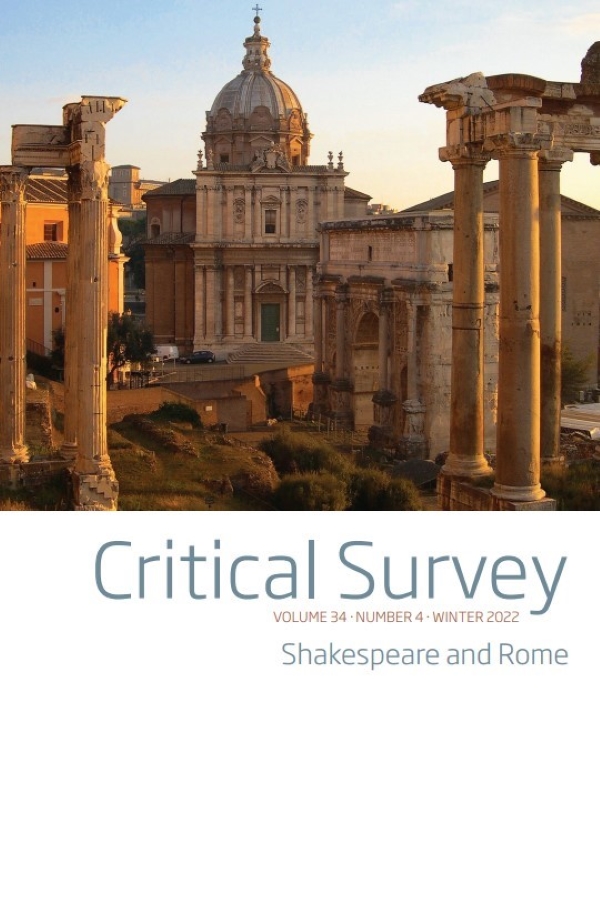
This features articles which explore topics related to the many works of William Shakespeare and ends with an interview with poet and critic Ruth O’Callaghan.


Social Analysis
Volume 59, Issue 1
This special issue is titled “Stategraphy: Toward a Relational Anthropology of the State” and is based in part on papers presented at the conference “Local State and Social Security: Negotiating Deservingness and Avenues to Resources in Rural Areas,” which took place in Halle from 30 June to 2 July 2011.


Landscape as Literary Criticism in Jane Austen’s Fiction

The following is the third in a series of posts on Jane Austen. This is a guest post written by Anne Toner, contributor to a special issue of Critical Survey which is devoted to the subject of Jane Austen. Anne Toner is the author of the article titled “Landscape as Literary Criticism: Jane Austen, Anna Barbauld and the Narratological Application of the Picturesque.” 


We are in the midst of Jane Austen bicentenary celebrations. Formidably, in the six years preceding her death in 1817, when she was only 41, Austen saw four novels published, as well as writing another complete novel (Persuasion) and revising one more (Northanger Abbey), both to be published posthumously.

Continue reading “Landscape as Literary Criticism in Jane Austen’s Fiction”

Celebrate International Women’s Day with a Special Issue!

AspasiaInternational Women’s Day is annually held on March 8 to celebrate women’s achievements. It is also known as the United Nations Day for Women’s Rights and International Peace.


In recognition of this day, Berghahn is pleased to offer a 25% discount on any of our Gender Studies books on orders placed within the next 30 days. At checkout, simply enter the code IWD15.

We would also like to invite you to explore a special issue of Aspasia devoted to International Women’s Day. The year 2010 marked the centennial of International Women’s Day, and the year 2011 marked the centennial of its first celebrations. Inspired by these events, this issue deals with “A Hundred Years of International Women’s Day in Central, Eastern and Southeastern Europe.”


VOLUME 6: Celebrating 100 Years of International Women’s Day


THEME SECTION: A Hundred Years of International Women’s Day in CESEE

From West to East: International Women’s Day, the First Decade
Rochelle Goldberg Ruthchild


Together and Apart: Polish Women’s Rights Activists and the Beginnings of International Women’s Day Around 1911
Iwona Dadej and Angelique Leszczawski-Schwerk


The Different Faces of a Celebration: The Greek Course of International Women’s Day, 1924-2010
Angelika Psarra


THE SOURCE
Kak v revoliutsionnoe vremia Vserossiiskaia Liga Ravnopraviia Zhenshchin dobilas’ izbiratel’nykh prav dlia russkikh zhenshchin (How in the revolutionary time the All-Russian League for Women’s Equal Rights won suffrage for Russian women)
Olga Zakuta


FORUM
Clio on the Margins: Women’s and Gender History in Central, Eastern and Southeastern Europe (Part One)
Edited by Krassimira Daskalova


NEWS AND MISCELLANEA
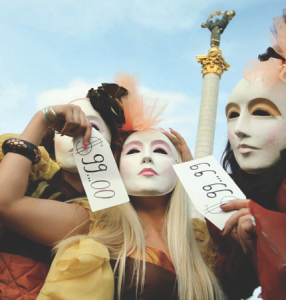
Ukrainian Women Reclaiming the Feminist Meaning of International Women’s Day: A Report about Recent Feminist Activism
Oksana Kis


Getting Reacquainted with The Cambridge Journal of Anthropology

The Cambridge Journal of Anthropology


We are delighted to announce that 2015 marks the fourth volume year that the Cambridge Journal of Anthropology has been published through Berghahn. The original journal of this name was an in-house publication based at Cambridge University, with a remit to provide a space in which innovative material and ideas could be tested.


The new Cambridge Journal of Anthropology builds on that tradition and seeks to produce new analytical tool-kits for anthropology or to take all such intellectual exploration to task. Re-acquaint yourself with the journal by exploring the special sections outlined below.


We hope you’ll be inspired by these innovative approaches that push at the boundaries of anthropology to bring you fresh insights from pioneering scholars in the field.


Volume 32
Number 2, Autumn 2014
Special Section: Risks, Ruptures and Uncertainties: Dealing with Crisis in Asia’s Emerging Economies
Asia’s ongoing economic transformation has created a variety of unexpected ruptures, discontinuities and opportunities in the lives of local citizens across the region. The articles in this section contribute to an understanding of local responses to, and strategies for coping with, risk and uncertainty as multidimensional, interwoven aspects of daily life, guided by social, economic and moral considerations.

  
Volume 32
Number 1, Spring 2014
Special Section: Epidemic Events and Processes
The articles in this collection bring together epidemiology and social anthropology. They take us through epidemics critically distinguished as crises and as events, and through epidemics understood analytically as syndemics and as productive of both proliferating ‘projects’ and a compelling quest for ever-growing intelligence and ‘real-time’ surveillance. In this collection, we see the importance of a social anthropological understanding of the human subjects that epidemics, and responses to them, can constitute–and we glimpse some of the interagentivity in the treatment responses through which the lethal problem of ‘resistance’ can be created. In the case of ‘epidemics’ in this present issue, we see the import of anthropological material as it brings to the fore issues which, in another disciplinary language, are the historically contingent ‘externalities’ of ‘disease events’.

  
Volume 31
Number 1, Spring 2013
Special Section – Climate Histories and Environmental Change: Evidence and its Interpretation. Guest Editor David Sneath
The papers in this special section explore different visions of the environment and how they engender particular ways of seeing evidence of climatic and environmental change. A key aspect of such distinctive understandings seems to be the attribution of agency within conceptions of the environment that in each case are entangled with humans. Notions of the anthropogenic and non-equilibrial environments are explored in several of the papers collected here, along with ongoing debates surrounding the concept of the Anthopocene. An awareness of climate change has brought new urgency to the project of grasping our entangled environments in the diversity of their human understandings.

  
Volume 30
Number 2, Autumn 2012
Special Section
Thisspecial section reconsiders recent anthropological accounts of ‘Naturalism’, a term increasingly used as a shorthand for a bundle of purportedly western attitudes to nature, reality and mind/body distinctions. Anthropologists and others tend to invoke ‘Naturalism’ as a foil for descriptions of alternative ontologies elsewhere (such as animism or perspectivism), or alternatively, as a philosophical account of the world which is belied by Euroamericans’ own practices. By contrast, the papers in this section attempt to take naturalism seriously as an ethnographic object in its own right: who, if anyone, is a ‘naturalist’ and what do naturalist commitments look like and entail in practice?


For a free sample issue of the journal, click here.