European Thought: The ‘Gift’ that Keeps Giving

Is the spread of Western, specifically European, thought truly a gift to the rest of the world, or is this dissemination simply a way of exerting cultural power? Vassos Argyrou seeks an answer to this question in his newly released volume The Gift of European Thought and the Cost of Living. Below, the author explains his inspiration for—and the challenges and rewards of—writing the book, published September 2013.


_________________________________________

 

Berghahn Books: What drew you to the study of “European Thought” and what are some examples of this?


Vassos Argyrou: “European thought” is a term that in a certain sense was imposed on me as it was used to make the highly contentious claim that it’s a gift to the rest of the world. It refers not only to an intellectual tradition but also to a way of life or culture—European or,  more broadly, Western culture.

Continue reading “European Thought: The ‘Gift’ that Keeps Giving”
Opening Cassirer and Arendt’s ‘Hidden Conversation’

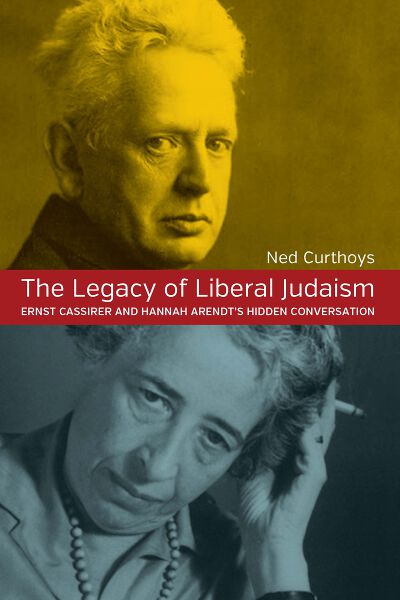
Hannah Arendt was a German-Jewish political theorist; Ernst Cassirer was a German-Jewish philosopher. The ‘liberal Jewish ethics’ of the two come together in Ned Curthoys’ The Legacy of Liberal Judaism: Ernst Cassirer and Hannah Arendt’s Hidden Conversation. The author explains below his fascination of and engagement with the scholars.


_____________________________________

Berghahn Books: What exactly do you mean by the term ‘liberal Judaism’?


Ned Curthoys: Well it’s a diasporic phenomenon, a very interesting response to the twin challenges of secular modernization and inveterate Christian inspired anti-Judaism.

Continue reading “Opening Cassirer and Arendt’s ‘Hidden Conversation’”

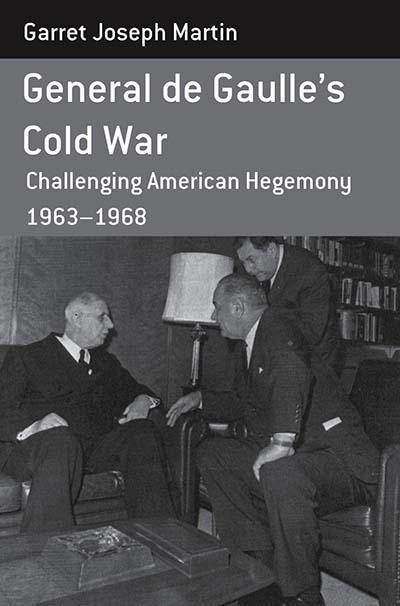
The Man, The Legend: General de Gaulle

If you’ve ever visited France, it is likely you are familiar with the name Charles de Gaulle. The Cold War politics of the widely revered former general and president of France are highlighted in General de Gaulle’s Cold War: Challenging American Hegemony, 1963-68, published this month. Author Garret Joseph Martin writes why these policies—respected by French countrymen and women—so dismayed U.S. leaders of the day. The author shares his thoughts about the figurehead, below.


_________________________________________________


Berghahn Books: What drew you to the study of General Charles de Gaulle?


Garret Martin: More than forty years after his death, General Charles de Gaulle remains a towering figure in France, and he was arguably the most influential Frenchman of the twentieth century. Growing up in France, you simply could not escape his presence and his legacy—see the multiple monuments in his honor and the streets named after him.

Continue reading “The Man, The Legend: General de Gaulle”

Aloha to Beginnings: Writing ‘Legacies of a Hawaiian Generation’

A talk-story, or mo`olelo, is an informal and traditionally Hawaiian way of sharing stories to preserve them for posterity. In The Legacies of a Hawaiian Generation, to be published this month, author Judith Schachter pairs these informal conversations with fieldwork observations to give readers a view into the island culture post-U.S. annexation. Below she shares the story of her beginning in Hawai`i, and how her work took root. 


____________________________________


My work in Hawai`i began “in small,” with the idea of adding a chapter to my book on American kinship, family, and adoption. I intended to see what happened to Polynesian customs when the U.S. brought its legal system to the Pacific Island state.

Continue reading “Aloha to Beginnings: Writing ‘Legacies of a Hawaiian Generation’”

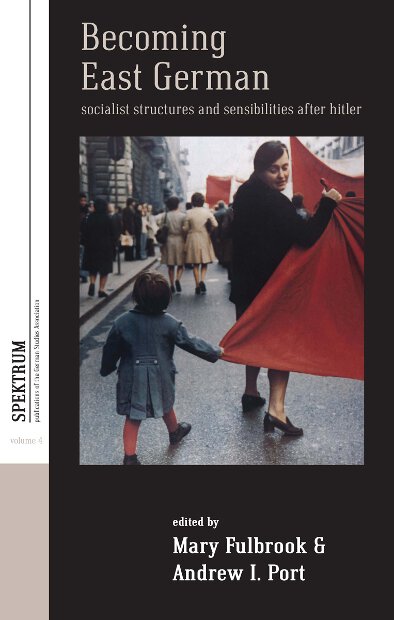
Is All Repression Created Equal?

The recent revelations by Edward Snowden about the extensive online information-gathering activities of the National Security Agency (NSA) have led to a flurry of comparisons in the German media between the American agency and the infamous East German Ministry for State Security, or Stasi. According to a popular statistic, the Stasi could have filled 42,000 filing cabinets with the information it had gathered over 40 years—the NSA 48,000,000,000! Chancellor Angela Merkel, a former East German herself, has rejected such comparisons as crude and misleading. Below, in an excerpt from the introduction to Becoming East German: Structures and Sensibilities after Hitler, to be published this month, co-editor Andrew I. Port discusses the extent to which such comparisons are appropriate and potentially valuable.


___________________________________

Let us pose a rhetorical question that is sure to raise some hackles: was the GDR truly more repressive than the Federal Republic—or other Western states, for that matter?

Continue reading “Is All Repression Created Equal?”

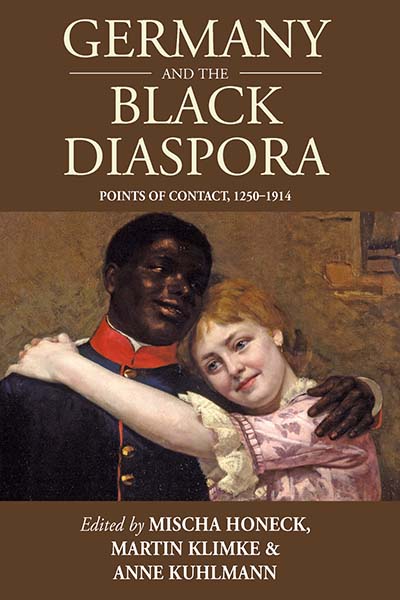
Blackface in Berlin Play: Racism or Tradition?

In January 2012, a white man was cast for the part of an African American man in “I’m Not Rappaport” for the German adaptation of the U.S. play. The plan to use blackface makeup—common in American theater up until the Civil Rights movement—to change the man’s appearance stirred controversy, and was called out as racist. Co-editor of Germany and the Black Diaspora: Points of Contact, 1250-1914, Martin Klimke addresses the sensitive subject of race in Germany in light of this event.

_________________________________________


Germany’s place in the Black Atlantic might have been peripheral in a geographical sense. Intellectually and discursively, however, it played an often underestimated but significant role in the formation of modern social, racial, and national identities.


Continue reading “Blackface in Berlin Play: Racism or Tradition?”

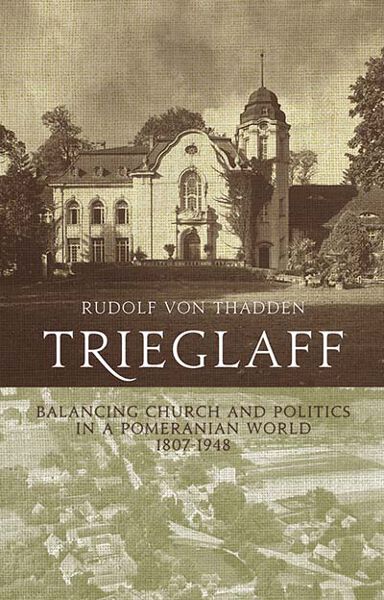
The ‘Life-World’ of Translation

Some words escape translation—a fact Stephen Barlau discovered quickly when he set about translating Rudolph van Thadden’s novel, originally published as Trieglaff. Eine pommersche Lebenswelt zwischen Kirche und Politik 1807-1948. Barlau brought the work into English as Trieglaff: Balancing Church and Politics in a Pomeranian World, 1807-1945, which was published this month by Berghahn. Below, the translator shares the importance of care and nuance when translating five generations worth of stories to English.


_____________________________________


The breadth and depth of meaning of German Lebenswelt, used in the original subtitle of Trieglaff, escapes capture in English.


It refers to the world of daily life in all its elements. Setting is immanent, environment is conjured; life extends beyond daily to happenings for an extended period with its characterizing features; both dynamic living and graphic life are encompassed. All these elements are denoted, not connoted; meaning fails if any are absent—or perhaps the word is all connotation, all shadow implication of meanings.


Continue reading “The ‘Life-World’ of Translation”

Occupy Morality: Soldiering in Conflict Zones

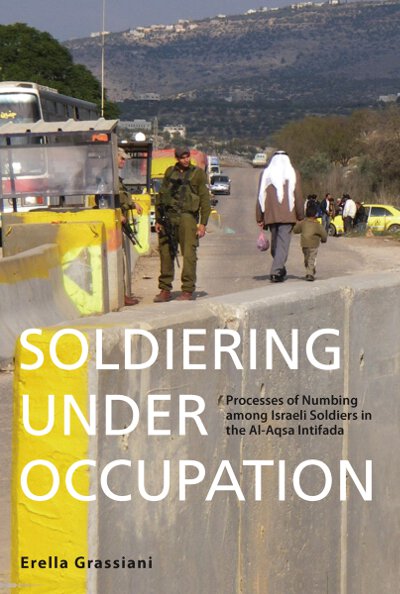
Understanding a soldier is key to understanding the effect of militarism on a broader society, according to Erella Grassiani, author of Soldiering Under Occupation: Processes of Numbing among Israeli Soldiers in the Al-Aqsa Intifada. The volume, published in July, offers insights into the physical and mental effects that operating in occupied zones has on soldiers. Below, Grassiani discusses the volume, her occupation, and how she enjoys her down time.


__________________________________________________

Berghahn Books: What drew you to the study of the Israeli military? And why is this topic important?


Erella Grassiani: I was born in Israel and even though I was raised largely in the Netherlands, Israel stayed close to my heart. When I went back to Israel to study at the Tel Aviv University I came across ideas about militarism for the first time and the way the military influenced civilian life. Continue reading “Occupy Morality: Soldiering in Conflict Zones”

The Rise and Fall of Völkerpsychologie

Before there was cultural psychology, there was Völkerpsychologie. This social science was used as a way of looking at cultures and trying to make sense of them—an attempt often seen as stereotyping. But, in The Mind of the Nation: Völkerpsychologie in Germany, 1851-1955, to be released this month, author Egbert Klautke gives the often-overlooked social science due credit. He shares his thoughts about the volume and this particular form of psychology below.

______________________________________________________


Berghahn Books: How would you define “Folk Psychology” and what drew you to the study of it?


Egbert Klautke: “Folk Psychology” is an awkward translation of the German term Völkerpsychologie. Originally, it referred to attempts to study the psychological make-up of nations, and as such is a forerunner of today’s social psychology. However, in today’s common understanding, Völkerpsychologie equals national prejudice: it is seen as a pseudo-science not worth considering seriously. Continue reading “The Rise and Fall of Völkerpsychologie”

Remembering African-German Points of Contact

Eight centuries of German and African interactions up until World War I are often glossed over in historical literature.  The contributors to Germany and the Black Diaspora: Points of Contact, 1250-1914, published last month, seek to illuminate these intersections and share popular sentiments of the time. Below, co-editor Martin Klimke describes a significant—and still remarkable—relic of this pre-WWI period.


______________________________________________________


For more than ten years now, visitors to the German Historical Museum in Berlin have paused in amazement before a painting unlike any other in the museum’s collection.

Continue reading “Remembering African-German Points of Contact”