Old World Topic, New Discussion: A Look at Migration and Belonging

Who migrates, when they migrate, where they migrate, and why they migrate has a huge effect on cultural identity, acceptance and belonging. This is a hot current topic on news cycles worldwide, but it is certainly not a new phenomenon. Looking from a European perspective, editors Steven King and Anne Winter add an important contribution to this discussion with Migration, Settlement and Belonging in Europe, 1500-1930s: Comparative Perspectives, to be published this month. Below, the editors discuss the volume and their aim to make sense of these experiences across borders of place and time.


________________________________________

 

The British print and online media has for the last year been awash with compelling stories about abuses of the welfare system: the mother who has 11 children and feels the state should fund her life choices; the recent immigrants who are entitled to welfare benefits notwithstanding a lack of accumulated contribution; the ‘disabled’ welfare claimants who are exposed as professional dancers or scuba divers.

Continue reading “Old World Topic, New Discussion: A Look at Migration and Belonging”
An Uprising of Historical Importance

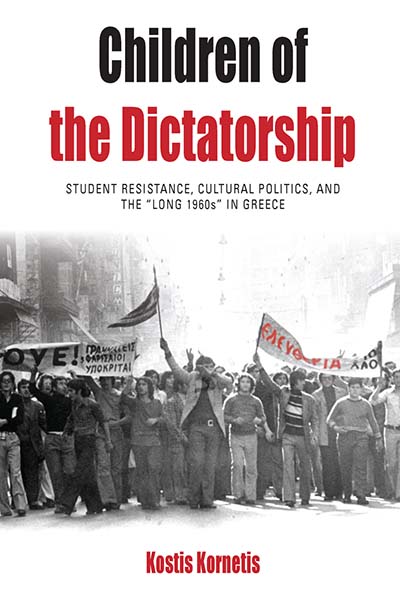
The cyclical course of history comes into sharp focus when one looks at Greek political uprisings. The widely publicized youth dissent in recent years is nothing new, but actually has earlier roots in 1973 — with different players, but with the same activist vigor. This 1970s group — later to be known as the Polytechnic Generation — comes into clear focus in newly published Children of the Dictatorship: Student Resistance, Cultural Politics and the “Long 1960s” in Greece, by Kostis Kornetis. Following is the opening to the volume’s introduction. 


___________________________________

In 2010 the well-known British Pakistani writer and political activist Tariq Ali commented that “were there a Michelin Great Protest guide, France would still be top with three stars, with Greece a close second with two stars.” Ali did not only refer to the 2005 riots in France and the 2008 civil disturbances in Greece, but to a longue durée structure of civil disobedience in the two countries that dates back to the 1960s and 1970s.


Continue reading “An Uprising of Historical Importance”

Understanding Europe before, after 1945

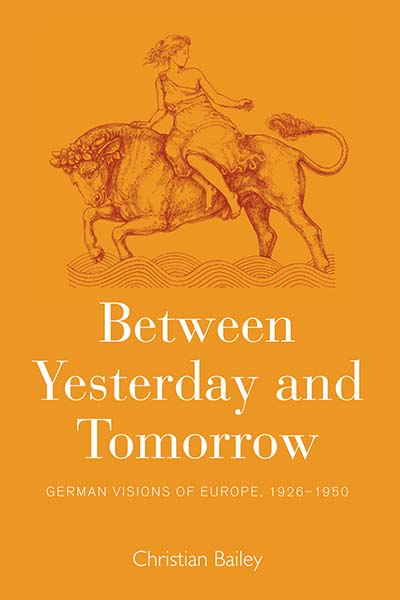
In Between Yesterday and Tomorrow: German Visions of Europe, 1926-1950, published last month, author Christian Bailey seeks to understand how Germans became such “good Europeans” after 1945. Whereas many histories of European integration tend to largely focus on the diplomatic goings-on between elites, this book focuses on how support for a united Europe was cultivated in civil society. Below, the author and his colleague Benno Gammerl share a dialogue about Bailey’s recent volume.


________________________________________


Benno Gammerl: Your book convincingly challenges what one could call the negative founding myth of post-1945 European integration. According to this well-established narrative the European Union ultimately resulted from the wish to once and for all prevent falling back into the perils of fascism and total war. You highlight earlier visions of Europe instead that date back to the interwar period and that have at times commanded much wider popular support than the let-us-avoid-our-earlier-mistakes-rhetoric. Which positive aims and motivations sustained these European projects?

Continue reading “Understanding Europe before, after 1945”

Care and Anti-Care in Greece

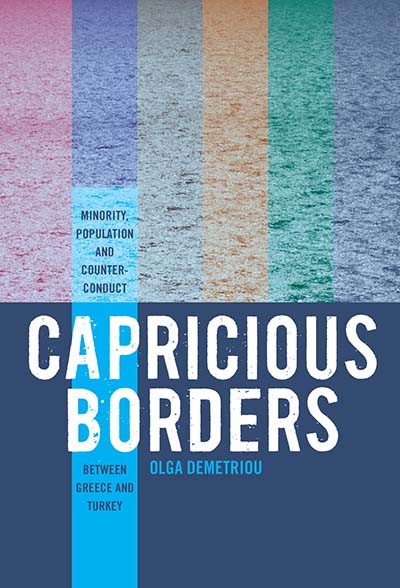
In her book Capricious Borders: Minority, Population, and Counter-conduct between Greece and Turkey, published earlier this year, Olga Demetriou examines the mechanisms through which particular groups of people are turned into “minorities.” At the center of these processes she identifies naming, genealogy and state care, as key modes of governmentality. Discussing a recent incident of biopolitical policing, the author shows here how “state care” continues to have more relevance as a repressive rather than an empowering mechanism in the minoritization context.


 ______________________________________


In Greece, the “management of population” (in the sense of a Foucauldian biopolitics of demography, spatial order, classification, and knowledge production) has long been racialized.


This racialism has fluctuated through different political conjunctures yielding differing policies of birth rate monitoring and incentivization. Last month “care” emerged as a tool of biopolitical policing in a discussion that went well beyond the bounds of Greece, after authorities arrested a couple raising a child who was “not their own.” The couple was Roma, the child at first assumed not, and much of the racialized presentation of the incident turned on the stereotypical discourse about “Gypsies stealing children.”

Continue reading “Care and Anti-Care in Greece”

SETI: An Alien Concept?

If there is extra-terrestrial life in the Universe, how might it communicate? In Science, SETI, and Mathematics, to be published this month, author Carl DeVito seeks to answer this question in a conversational way, explaining the role of mathematics in the Search for Extra-Terrestrial Intelligence (SETI). DeVito explores the science and history behind the search, and shares the many questions associated with it, especially those regarding language and communication.


_________________________________


The early workers in the search for extra-terrestrial intelligence were concerned with the technical problems of sending and receiving radio signals across inter-stellar distances.

 

Slowly, however, the deeper questions inherent in this endeavor rose to prominence: questions about the nature of intelligence, the nature of language, and the philosophical/psychological motivation behind this search.

Continue reading “SETI: An Alien Concept?”

Are Law-Maker, Law-Breaker So Different?

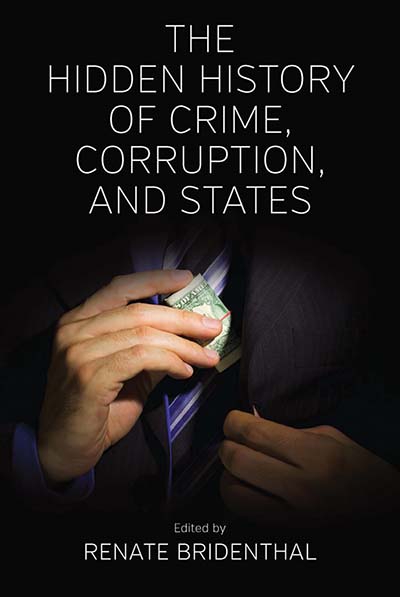
In the past, the world’s political economy has not always been built through honorable dealings. In fact, not much may have been, according to the recently published volume The Hidden History of Crime, Corruption, and States, which sheds light on such shadowy parts of economic history. Below, editor Renate Bridenthal develops this idea to share how those in power and those illicitly taking power may not be so different after all.


____________________________________


A specter is haunting history. The ghostly presence of economic crime as political power has been all but absent in history writing, but not in history itself.


Like dark matter, its synergy has been palpable if not always visible. Yet in our time, more and more emerges from the shadows, exposed in newspapers and tried in courts, and compels us to consider the history of the illicit political economy and its effects in past and present.

Continue reading “Are Law-Maker, Law-Breaker So Different?”

Good Borders Make Good Neighbors

What are the social impacts as European political borders are being redefined? Using a variety of case studies, editors William Kavanagh and Jutta Lauth Bacas seek to answer that question in Border Encounters: Asymmetry and Proximity at Europe’s Frontiersto be published this month. The editors and contributors examine the implications as borders are strengthened in some parts of the continent, and weakened in others. Below, Kavanagh and Lauth Bacas share their thoughts on the volume.


________________________________________________


Berghahn Books: What drew you to the study of political and social borders? Why is this study important?

 

Jutta Lauth Bacas: The core experience which triggered my interest in border studies and in the topic of irregular crossing at a maritime border was my encounter with destroyed inflatable dinghies having been used by refugees to enter a Greek border island clandestinely.

Continue reading “Good Borders Make Good Neighbors”

Key to Transformation is Understanding the ‘Fatherland’

The parallels between the political environment of the “Arab Spring” countries and Cold War Germany can be striking, according to Alexander Clarkson, author of Fragmented Fatherland: Immigration and Cold War Conflict in the Federal Republic of Germany, 1945-1980. In these cases, when diaspora communities returned to their countries of origin, there was an energy for activism and a flurry of political activity. Following, Clarkson notes that taking a page from West German history could prove useful in modern Libyan, Syrian and Tunisian politics.


____________________________________________


In the chaotic days after the Ghadaffi regime lost control of the city of Benghazi in February 2011, hundreds of exiled Libyans returned to the liberated parts of their country to help play a role in the transformation of a state that had been under authoritarian rule for more than forty years.

Continue reading “Key to Transformation is Understanding the ‘Fatherland’”

Looking ‘Against the Grain’ at German-Jewish Intellectuals

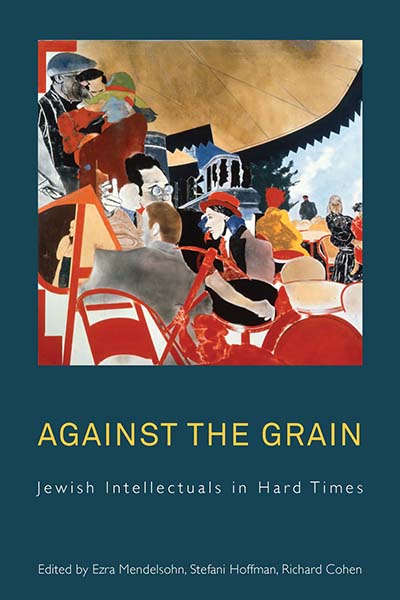
German-Jewish intellectuals in the twentieth century are the focus of Against the Grain: Jewish Intellectuals in Hard Times, published this month. The volume, edited by Ezra Mendelsohn, Stefani Hoffman, and Richard I. Cohen, looks at the key figures of German-Jewish thought: Scholem, Strauss, and Kohn, and examines how such thinkers reacted to, and were impacted by, the collection of crises lived by Central European Jews. Below, co-editor Mendelsohn speaks about the volume’s potential to “stir” the field and what brought him to the study in the first place.


____________________________________________


Berghahn Books: What drew you to the study of the trials and tribulations of Jewish men and women in the twentieth century?


Ezra Mendelsohn: The main reason resides in my  interest in the history of my own family.  Both my parents were born in Tsarist Russia, and both ended up in the United States, having lived for some time in British Palestine. 

Continue reading “Looking ‘Against the Grain’ at German-Jewish Intellectuals”

Reconstructing the Measure and Meaning of Obesity

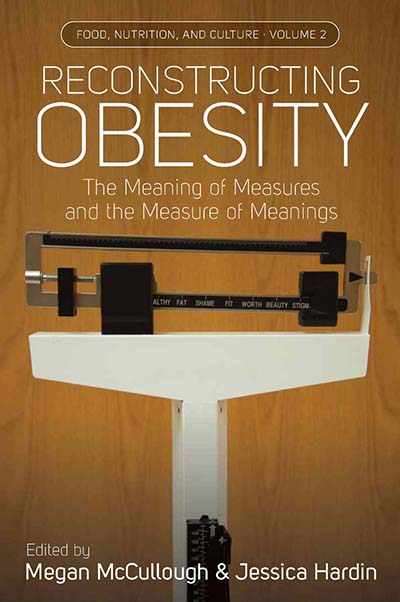
Obesity is a worldwide problem, and affecting more people all the time. In their timely collection, editors Jessica Hardin and Megan McCullough examine this growing epidemic in their soon-to-be-released book, Reconstructing Obesity: The Meaning of Measures and the Measure of Meanings.The editors analyze the cultural causes and effects to open a new discussion about fatness and obesity.

_________________________________

I asked my students, fresh off a lively discussion about dieting and religious fasting, if any of them would consider taking a new course I was designing called,“Fatness and Obesities.” Only one student raised her hand. What if I change the course’s title – but not its content – to “The Politics of Body Size”? At this suggestion, they all raised their hands. What is the difference?

-Jessica Hardin

Continue reading “Reconstructing the Measure and Meaning of Obesity”