A ‘Privileged’ Prisoner is Still a Prisoner

In German concentration camps, some Jewish prisoners were selected by their Nazi captors to hold more-advantaged positions within the population of the camp. This not only allowed them some protections, but also made them targets of disdain from other victims. Author Adam Brown sheds light on these “privileged” few in his volume Judging “Privileged” Jews: Holocaust Ethics, Representation, and the “Grey Zone,” published in July of last year. Following, Brown discusses about the origins of his interest in the Holocaust in general, and in this inspirational “Grey Zone,” in particular.


________________________________________________
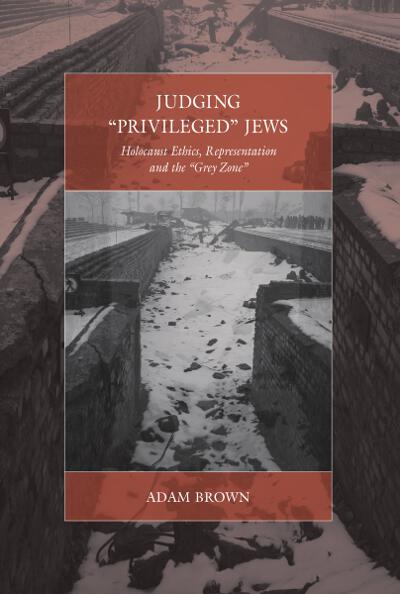
 

The evolution of my book, Judging “Privileged” Jews: Holocaust Ethics, Representation and the “Grey Zone,” was – like most books no doubt – somewhat long and complex. To take the long-term view, the project began when I heard the moving personal stories spoken by survivor guides on a high school trip to the Jewish Holocaust Centre in 1999. As a non-Jewish teenager with next to no background knowledge of the event, the visit to the JHC inspired a lasting curiosity and sense of obligation to find out more.

Continue reading “A ‘Privileged’ Prisoner is Still a Prisoner”
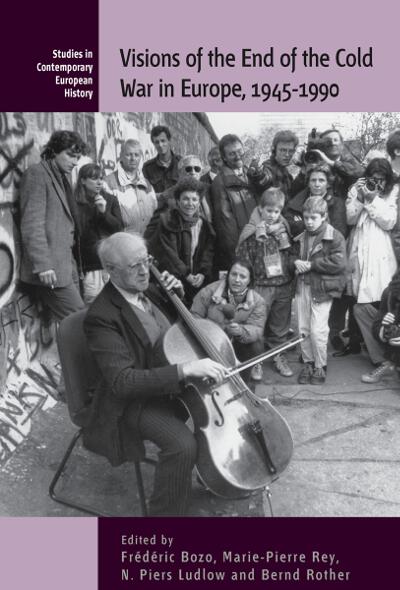
In the Beginning, There Were ‘Visions of the End’

When WWII drew to a close in the late 1940s, the fighting may have stopped, but the tension was just building. This sustained Cold War friction lasted longer than four decades, the whole time of which, the main players had ideas of how it would look when it ended. The editors and contributors of Visions of the End of the Cold War in Europe, 1945-1990, to be published next month, explore these ‘conceived programmes’ and ‘utopian aspirations.’ Below, an excerpt from the Introduction sets the scene, starting at the end, with the fall of the Wall.


___________________________________________

The fall of the Berlin Wall on 9 November 1989 quickly came to symbolize the end of the Cold War as a whole, including the liberation of Eastern Europe from Soviet rule in 1989, the unification of Germany in 1990 and the break-up of the Soviet Union in 1991. Its twentieth anniversary in autumn 2009 was therefore an opportunity to celebrate not just that particular event – however meaningful – but an extraordinary period that in barely two years led from the dismantling of the Iron Curtain to the liquidation of the whole ‘Yalta’ order.


Continue reading “In the Beginning, There Were ‘Visions of the End’”

Unfree, but not Exploited in Eurasia

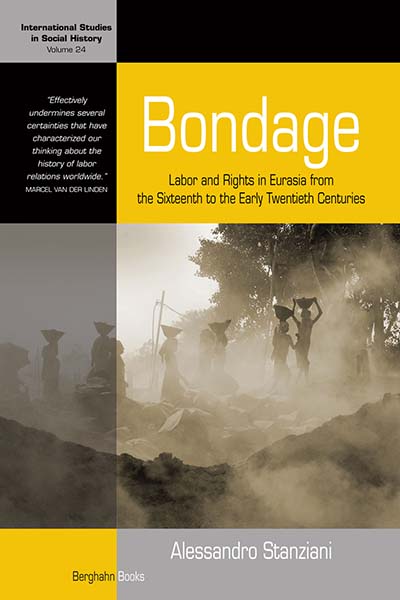
Is “unfree labor” good for business? Is it good for the unfree? Author Alessandro Stanziani aims to answer questions of labor, rights and freedoms in a comparison of Russian labor and business practices with those in Asia, Europe, and the Indian subcontinent. He covers this topic extensively in his new book, Bondage: Labor and Rights in Eurasia from the Sixteenth to the Early Twentieth Centuries, to be published this month. Below, in an excerpt from the volume, Stanziani gives an glimpse into nearly four centuries of Eurasian labor.

_____________________________________________


This book is about the evolution of labor and labor institutions in Russia as compared with Europe, Central Asia, and the Indian Ocean region, between the sixteenth and early twentieth centuries. It questions common ideas about the origin of labor institutions and market economies—their evolution and transformation in the early-modern and modern world.

Continue reading “Unfree, but not Exploited in Eurasia”

How the ‘Legacies of Two World Wars’ Compare to Current Conflict

In an excerpt from the Introduction, the editors explain the point of origin for The Legacies of Two World Wars: European Societies in the Twentieth Century. In the volume, published last month in paperback, contributors follow the European zeitgeist as the continent was plunged first into one war, then a second. Editors Lothar Kettenacker and Torsten Riotte pit the public feeling surrounding these World Wars with that of the U.S. people when the government invaded Iraq in 2003.


_______________________________________


The aim of this book is to trace the moods and attitudes of the people of four Western countries before, during and after the First and Second World Wars. The contributions examine public opinion in Great Britain, France, Germany and Italy during the crucial moments of the two major conflicts of the twentieth century (in their differences and similarities). The inspiration to look again at the attitudes of ordinary Europeans to the two wars came from the controversy surrounding the US invasion of Iraq in 2003.

Continue reading “How the ‘Legacies of Two World Wars’ Compare to Current Conflict”

Author Becomes Subject: Droysen as Topic of Historical Volume

Scholarship has come full circle for Johann Gustav Droysen — a historian lauded for his much-cited volume on Alexander the Great — as the author-historian is now the subject of study. Author Arthur Alfaix Assis delves into the historical theories of Droysen in What is History For? Johann Gustav Droysen and the Functions of Historiography, to be published later this month. Assis precedes the publication by sharing the root of his interest in the scholar, why he believes Droysen is important, and what Assis might have done if he did not follow the path of academia.


______________________________________________


Berghahn Books: What drew you to the study of Johann Gustav Droysen?


Arthur Alfaix Assis: I like to think that part of it has to do with the great impression left on me by the very first text I read as an undergraduate: Max Weber’s ‘Science as a Vocation’. I was a freshman at a provincial university in central Brazil, and was very eager to get in touch with serious historical and philosophical literature. But after a single week of lectures came a three-month-long strike, and the only reading assignment left was Weber’s text.

Continue reading “Author Becomes Subject: Droysen as Topic of Historical Volume”

Old World Topic, New Discussion: A Look at Migration and Belonging

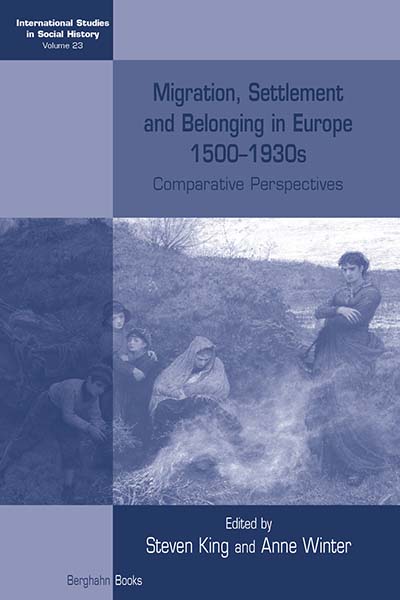
Who migrates, when they migrate, where they migrate, and why they migrate has a huge effect on cultural identity, acceptance and belonging. This is a hot current topic on news cycles worldwide, but it is certainly not a new phenomenon. Looking from a European perspective, editors Steven King and Anne Winter add an important contribution to this discussion with Migration, Settlement and Belonging in Europe, 1500-1930s: Comparative Perspectives, to be published this month. Below, the editors discuss the volume and their aim to make sense of these experiences across borders of place and time.


________________________________________


The British print and online media has for the last year been awash with compelling stories about abuses of the welfare system: the mother who has 11 children and feels the state should fund her life choices; the recent immigrants who are entitled to welfare benefits notwithstanding a lack of accumulated contribution; the ‘disabled’ welfare claimants who are exposed as professional dancers or scuba divers.
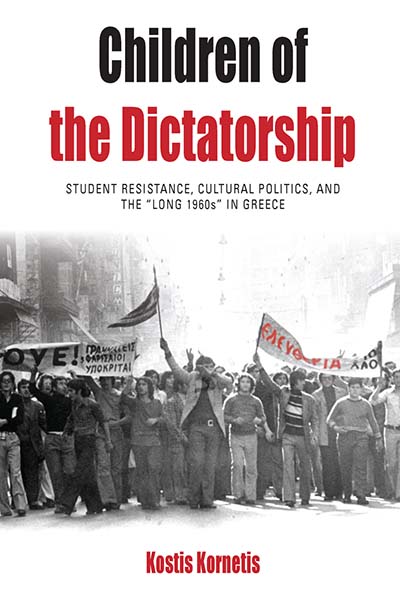
Continue reading “Old World Topic, New Discussion: A Look at Migration and Belonging”

An Uprising of Historical Importance

The cyclical course of history comes into sharp focus when one looks at Greek political uprisings. The widely publicized youth dissent in recent years is nothing new, but actually has earlier roots in 1973 — with different players, but with the same activist vigor. This 1970s group — later to be known as the Polytechnic Generation — comes into clear focus in newly published Children of the Dictatorship: Student Resistance, Cultural Politics and the “Long 1960s” in Greece, by Kostis Kornetis. Following is the opening to the volume’s introduction. 


___________________________________

In 2010 the well-known British Pakistani writer and political activist Tariq Ali commented that “were there a Michelin Great Protest guide, France would still be top with three stars, with Greece a close second with two stars.” Ali did not only refer to the 2005 riots in France and the 2008 civil disturbances in Greece, but to a longue durée structure of civil disobedience in the two countries that dates back to the 1960s and 1970s.


Continue reading “An Uprising of Historical Importance”

Understanding Europe before, after 1945

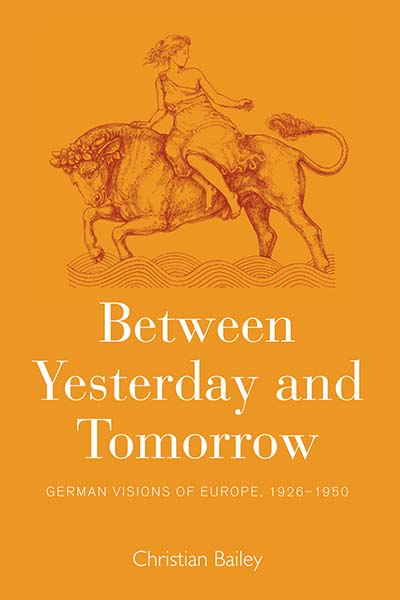
In Between Yesterday and Tomorrow: German Visions of Europe, 1926-1950, published last month, author Christian Bailey seeks to understand how Germans became such “good Europeans” after 1945. Whereas many histories of European integration tend to largely focus on the diplomatic goings-on between elites, this book focuses on how support for a united Europe was cultivated in civil society. Below, the author and his colleague Benno Gammerl share a dialogue about Bailey’s recent volume.


________________________________________


Benno Gammerl: Your book convincingly challenges what one could call the negative founding myth of post-1945 European integration. According to this well-established narrative the European Union ultimately resulted from the wish to once and for all prevent falling back into the perils of fascism and total war. You highlight earlier visions of Europe instead that date back to the interwar period and that have at times commanded much wider popular support than the let-us-avoid-our-earlier-mistakes-rhetoric. Which positive aims and motivations sustained these European projects?

Continue reading “Understanding Europe before, after 1945”

Are Law-Maker, Law-Breaker So Different?

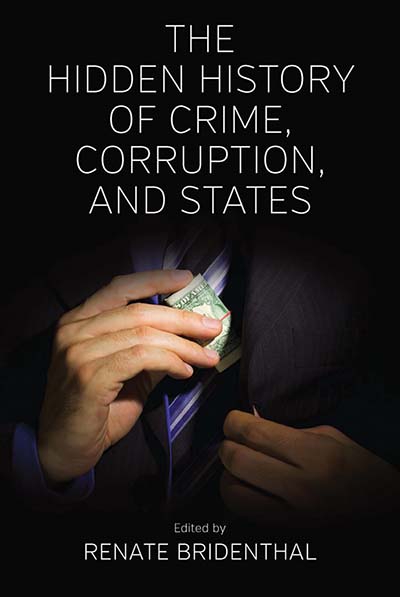
In the past, the world’s political economy has not always been built through honorable dealings. In fact, not much may have been, according to the recently published volume The Hidden History of Crime, Corruption, and States, which sheds light on such shadowy parts of economic history. Below, editor Renate Bridenthal develops this idea to share how those in power and those illicitly taking power may not be so different after all.


____________________________________


A specter is haunting history. The ghostly presence of economic crime as political power has been all but absent in history writing, but not in history itself.


Like dark matter, its synergy has been palpable if not always visible. Yet in our time, more and more emerges from the shadows, exposed in newspapers and tried in courts, and compels us to consider the history of the illicit political economy and its effects in past and present.

Continue reading “Are Law-Maker, Law-Breaker So Different?”

Looking ‘Against the Grain’ at German-Jewish Intellectuals

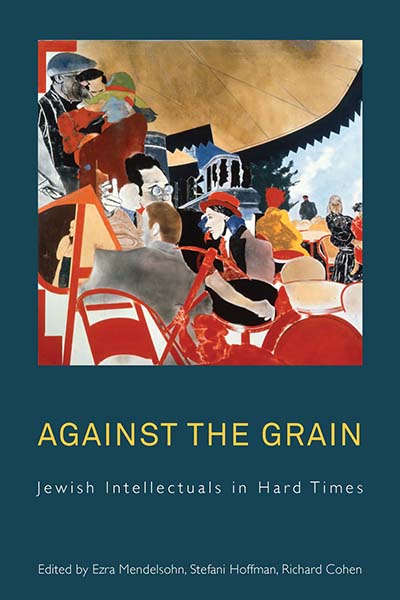
German-Jewish intellectuals in the twentieth century are the focus of Against the Grain: Jewish Intellectuals in Hard Times, published this month. The volume, edited by Ezra Mendelsohn, Stefani Hoffman, and Richard I. Cohen, looks at the key figures of German-Jewish thought: Scholem, Strauss, and Kohn, and examines how such thinkers reacted to, and were impacted by, the collection of crises lived by Central European Jews. Below, co-editor Mendelsohn speaks about the volume’s potential to “stir” the field and what brought him to the study in the first place.


____________________________________________


Berghahn Books: What drew you to the study of the trials and tribulations of Jewish men and women in the twentieth century?


Ezra Mendelsohn: The main reason resides in my  interest in the history of my own family.  Both my parents were born in Tsarist Russia, and both ended up in the United States, having lived for some time in British Palestine. 

Continue reading “Looking ‘Against the Grain’ at German-Jewish Intellectuals”