Photographed History: Exposing the Holocaust


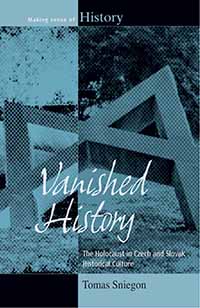
In an earlier post (which can be read here), author Tomas Sniegon shared the events that led him to study the Holocaust in a post-World War II context, a course of study which has led to a publication of Vanished History: The Holocaust in Czech and Slovak Historical Culture. Following is a selection of his photographs from his travels during his study to illuminate this hidden Holocaust history. 

Continue reading “Photographed History: Exposing the Holocaust”

Propaganda and Prostitution Reform During Germany’s Weimar Republic

Historical ReflectionsThis is the second in a series of posts dedicated to celebrating the 40th volume of our journal Historical Reflections/Réflexions Historiques.


The latest issue of Historical Reflections/Réflexions historiques is devoted to the special topic of “War, Occupation, and Empire in France and Germany.” This post is the transcript of an electronic interview between the issue’s Guest Editor, Jean Elisabeth Pedersen, and one of the six contributors, Julia Roos.


Pedersen: What first drew you to the study of the “black horror” campaign?

Roos: My first book focuses on conflicts over prostitution reform during Germany’s Weimar Republic (1919-1933). It was in this context that I first came across the issue of the brothels for colonial French troops established in the occupied Rhineland during the 1920s. Middle-class German feminists and their conservative allies appealed to racialist fears and nationalist resentment over these brothels to discredit Germany’s own system of police-controlled prostitution. I realized that the protest against the brothels was an important facet of the broader propaganda campaign against France’s colonial occupation troops, which used the racist epithet, “black horror on the Rhine.” What fascinates me about the “black horror” campaign is the fresh light it sheds on the different ways in which World War I unsettled established racial stereotypes and hierarchies between whites/Europeans, on the one hand, and Africans and other colonized peoples, on the other hand. It also offers rich possibilities for exploring the legacies and postwar permutations of wartime propaganda discourses centered on women’s and children’s sexual victimization by racial “Others.”

Continue reading “Propaganda and Prostitution Reform During Germany’s Weimar Republic”

Researching Relevance, or How Sociology Preserved the Church

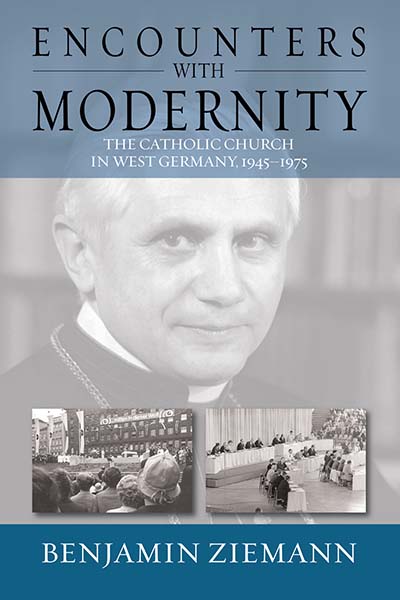
In Benjamin Ziemann’s historical account Encounters with Modernity: The Catholic Church in West Germany 1945-1975, to be published next month, the author explains how the church attempted to systematically — using the tools of social science — maintain its relevance in post-war German society. Following, the author explains how he, almost completely by accident, happened upon this research that would lead to his future book.

_____________________________

Rather than being the result of meticulous planning, I stumbled over this topic by chance. Originally, I had an interest in writing about the Catholic milieu in 1950s West Germany, and thought that starting with the miners at the Ruhr would be a good idea, not least because I taught at Bochum at the time. One of the challenges that I faced was to gather data on the practiced piety of Catholic workers such as church attendance or Easter Communions, which I thought were difficult to obtain. While I spent time pursuing other hints in the Essen municipal library, I found reports by the “Pastoral Sociological Institute of the Diocese in Essen” (PSI) for the late 1950s. This institute had broken down a count of churchgoers in Essen according to social strata, gender and other social characteristics. Here, I had all the data that I seemed to need.

Continue reading “Researching Relevance, or How Sociology Preserved the Church”

Revealing the ‘Vanished History’ of the Holocaust

Although in Slovakia, Bohemia and Moravia (parts of Czechoslovakia), more than a quarter million lives were claimed during the Holocaust, these deaths have been mostly concealed in post-World War II Czech and Slovak history. A Czech native himself, author Tomas Sniegon shines a light on this cover up in Vanished History: The Holocaust in Czech and Slovak Historical Culture, to be published this month. Following, Sniegon uses the example of Oskar Schindler — famous as the protagonist of the 1993 film Schindler’s List — to explain just how much was hidden from citizens of the Czech Republic and Slovakia.


_____________________________

Film hero Oskar Schindler, played by Liam Neeson, entered the 1990s in the Steven Spielberg’s film Schindler’s List as a new symbol of a so-called “Good citizen of the Third Reich,” which provoked both positive and negative reactions worldwide. However, very few at the same time knew that the real Oskar Schindler — far more complicated than the film character — had never lived in Germany until the World War II and thus actually had never been a “genuine-German German.”

Continue reading “Revealing the ‘Vanished History’ of the Holocaust”

Storms, Sickness, Suspicions: The Darker Side of Migration

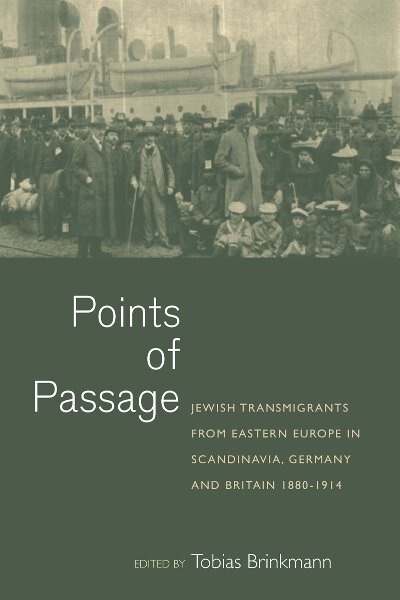
In Points of Passage: Jewish Migrants from Eastern Europe in Scandinavia, Germany, and Britain 1880-1914, published last October, contributors reveal some of the less-savory aspects of immigration (of which there were many). Following, in an excerpt from the newly published volume, editor Tobias Brinkmann gives two examples of passengers enduring misery before arriving on the supposed paradise of North American soil. This is the second entry about the book; read the former here.
_______________________________________

The essay collection “Points of Passage” seeks to shift attention from the well-known success story of Jewish immigration in the United States to the journey. On which paths did Jewish (and other) migrants travel from Eastern Europe to the ports on the North Sea and across the Atlantic between the 1880s and the 1920s, and which obstacles did they face? Researching the paths of migration can be much more challenging than studying immigration.

Continue reading “Storms, Sickness, Suspicions: The Darker Side of Migration”

Egress and Ingress: Exploring ‘Points of Passage’

Ellis Island in New York City is a historically recognized entrance point for European migrants to the United States. But if this is so well-known, then why do we know so little about the points of departure? This is one of many research questions that informed the writing of Points of Passage: Jewish Migrants from Eastern Europe in Scandinavia, Germany, and Britain 1880-1914, published last October. Following, an excerpt from the volume — bookended by comments from editor Tobias Brinkmann — delves deeper into these queries.


 _________________________________________


When I began researching the history of Jewish migrations in the 1990s I concentrated on immigrants. I collected sources on the settlement of Jewish immigrants from small villages in the Central and Eastern European countryside in Chicago between 1840 and 1900. Within a few years the immigrants built a Jewish community, prospered economically and became respected members of Chicago’s social and political circles. My first book concentrated on two major research questions that continue to drive immigration studies: the impact of forces strengthening or weakening ethnic communities, and the impact of assimilation processes on immigrants.

Continue reading “Egress and Ingress: Exploring ‘Points of Passage’”

Vienna, Dream City within a ‘Paradoxical Republic’

For the next three weeks, New York City will resonate with the energy of Austria. Vienna: City of Dreams will feature a slate of events presented by Carnegie Hall. Capping the festival will be symphony performances of the Vienna Philharmonic, an orchestra which has been celebrated since its first concert in 1842. This arrangement of musicians became a cultural beacon in post-World War II Austria, the subject of Oliver Rathkolb’s The Paradoxical Republic: Austria 1945-2005. Following, in an excerpt from the volume, which will soon be published as a paperback, Rathkolb discusses the Philharmonic’s presence in a discordant time.


_________________________________________________

In 1953 . . . neither the Vienna Staatsoper nor the Burgtheater had yet been rebuilt; they were not yet functional as memory sites. However, this did not detract from the importance of the aesthetic role music, notably classical music, played in the postwar era. The sense of purpose felt when the old and new political and economic elites gathered for the first Philharmonic concerts on 27 and 28 April 1945 was highly significant. There was a strong admixture of the Soviet military in the audience, deliberately encouraged by the liberal dispensation of free tickets by the Philharmonic.


Continue reading “Vienna, Dream City within a ‘Paradoxical Republic’”

A ‘Privileged’ Prisoner is Still a Prisoner

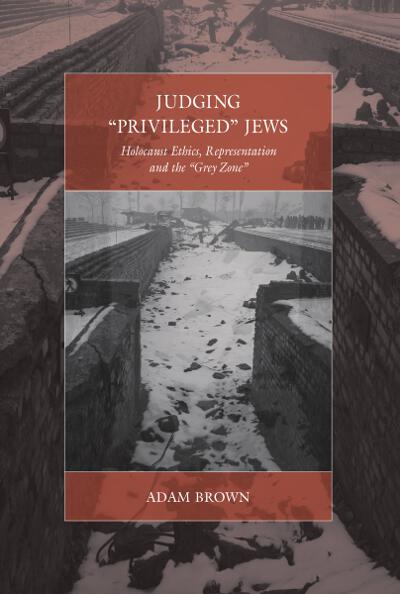
In German concentration camps, some Jewish prisoners were selected by their Nazi captors to hold more-advantaged positions within the population of the camp. This not only allowed them some protections, but also made them targets of disdain from other victims. Author Adam Brown sheds light on these “privileged” few in his volume Judging “Privileged” Jews: Holocaust Ethics, Representation, and the “Grey Zone,” published in July of last year. Following, Brown discusses about the origins of his interest in the Holocaust in general, and in this inspirational “Grey Zone,” in particular.


________________________________________________


The evolution of my book, Judging “Privileged” Jews: Holocaust Ethics, Representation and the “Grey Zone,” was – like most books no doubt – somewhat long and complex. To take the long-term view, the project began when I heard the moving personal stories spoken by survivor guides on a high school trip to the Jewish Holocaust Centre in 1999. As a non-Jewish teenager with next to no background knowledge of the event, the visit to the JHC inspired a lasting curiosity and sense of obligation to find out more.

Continue reading “A ‘Privileged’ Prisoner is Still a Prisoner”

In the Beginning, There Were ‘Visions of the End’

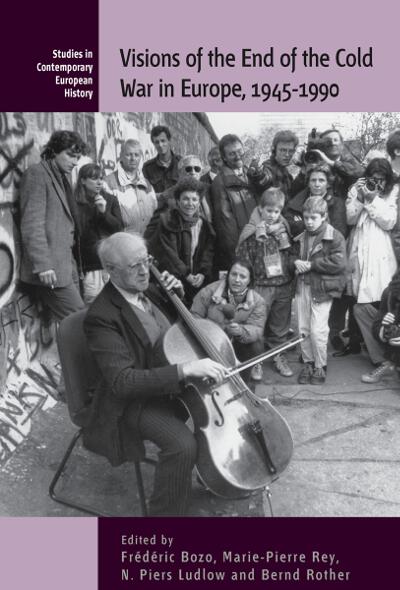
When WWII drew to a close in the late 1940s, the fighting may have stopped, but the tension was just building. This sustained Cold War friction lasted longer than four decades, the whole time of which, the main players had ideas of how it would look when it ended. The editors and contributors of Visions of the End of the Cold War in Europe, 1945-1990, to be published next month, explore these ‘conceived programmes’ and ‘utopian aspirations.’ Below, an excerpt from the Introduction sets the scene, starting at the end, with the fall of the Wall.


___________________________________________

The fall of the Berlin Wall on 9 November 1989 quickly came to symbolize the end of the Cold War as a whole, including the liberation of Eastern Europe from Soviet rule in 1989, the unification of Germany in 1990 and the break-up of the Soviet Union in 1991. Its twentieth anniversary in autumn 2009 was therefore an opportunity to celebrate not just that particular event – however meaningful – but an extraordinary period that in barely two years led from the dismantling of the Iron Curtain to the liquidation of the whole ‘Yalta’ order.


Continue reading “In the Beginning, There Were ‘Visions of the End’”

Unfree, but not Exploited in Eurasia

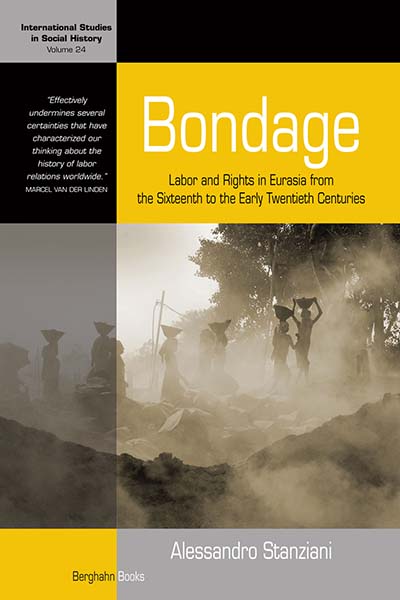
Is “unfree labor” good for business? Is it good for the unfree? Author Alessandro Stanziani aims to answer questions of labor, rights and freedoms in a comparison of Russian labor and business practices with those in Asia, Europe, and the Indian subcontinent. He covers this topic extensively in his new book, Bondage: Labor and Rights in Eurasia from the Sixteenth to the Early Twentieth Centuries, to be published this month. Below, in an excerpt from the volume, Stanziani gives an glimpse into nearly four centuries of Eurasian labor.

_____________________________________________


This book is about the evolution of labor and labor institutions in Russia as compared with Europe, Central Asia, and the Indian Ocean region, between the sixteenth and early twentieth centuries. It questions common ideas about the origin of labor institutions and market economies—their evolution and transformation in the early-modern and modern world.

Continue reading “Unfree, but not Exploited in Eurasia”