Join our Email List




Some words escape translation—a fact Stephen Barlau discovered quickly when he set about translating Rudolph van Thadden’s novel, originally published as Trieglaff. Eine pommersche Lebenswelt zwischen Kirche und Politik 1807-1948. Barlau brought the work into English as Trieglaff: Balancing Church and Politics in a Pomeranian World, 1807-1945, which was published this month by Berghahn. Below, the translator shares the importance of care and nuance when translating five generations worth of stories to English.
_____________________________________
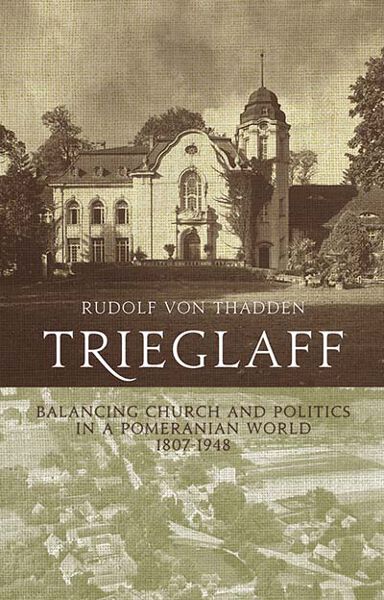
The breadth and depth of meaning of German Lebenswelt, used in the original subtitle of Trieglaff, escapes capture in English.
It refers to the world of daily life in all its elements. Setting is immanent, environment is conjured; life extends beyond daily to happenings for an extended period with its characterizing features; both dynamic living and graphic life are encompassed. All these elements are denoted, not connoted; meaning fails if any are absent—or perhaps the word is all connotation, all shadow implication of meanings.
 Until now, research on the Second World War in Europe has focused on two main areas: on the one hand, the individual countries, and on the other, the two big “blocs”: the Allies and the Axis Powers. On the part of the Allies, historians made the point very early that states with different political systems and values managed to cooperate temporarily while still striving to achieve their respective goals. Awareness of this was heightened by the sudden shift from the partnerships in the Second World War, to the reality of the Cold War between previous allies the United States and the Soviet Union and the East/West division of the European continent by the Iron Curtain.
 In the collection
 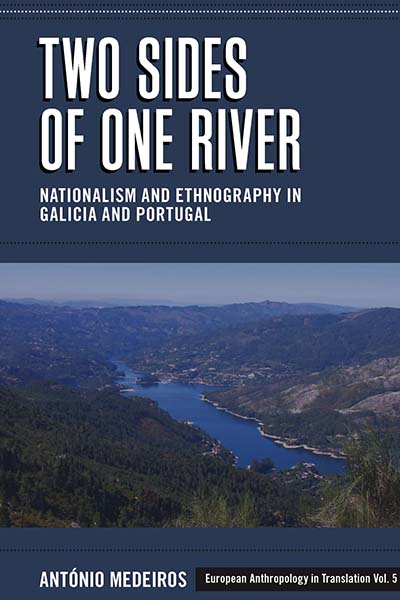 Berghahn has just released Two Sides of One River: Nationalism and Ethnography in Galicia and Portugal, an English translation by Martin Earl of the original Portuguese volume by António Medeiros. This book explores the historical intersections between nationalism and the emergence of ethnographic traditions in Portugal and Galicia, and plays this history against the author’s own ethnographic research in both places at the turn of the 20th century.