Souvenir of the Right: Reexamining Twentieth-Century French Politics

The French Right Between the Wars: Political and Intellectual Movements from Conservatism to Fascism, to be published this month, re-opens the history books on  France between World Wars I and II. In this collection of essays, scholars take a look at the polarized political scene, especially the right, within the country. Below, in an interview with editors Samuel Kalman and Sean Kennedy, the scholars speak to the challenges of compiling the collection as well as the potential controversy of writing on such a politically charged topic.


__________________________________________
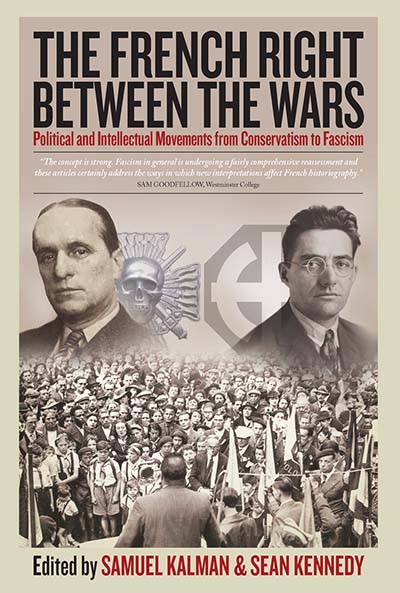
Berghahn Books: What aspect of compiling an edited collection did you find most challenging?  Most rewarding?


Sean Kennedy: When we began this project I was anxious that coordinating thirteen different contributions – in terms of deadlines and ensuring consistency in format – would be a major challenge. I should not have worried so much. Our contributors did a fine job of sticking to the production schedule and carrying out editorial work.

Continue reading “Souvenir of the Right: Reexamining Twentieth-Century French Politics”

How the ‘Legacies of Two World Wars’ Compare to Current Conflict

In an excerpt from the Introduction, the editors explain the point of origin for The Legacies of Two World Wars: European Societies in the Twentieth Century. In the volume, published last month in paperback, contributors follow the European zeitgeist as the continent was plunged first into one war, then a second. Editors Lothar Kettenacker and Torsten Riotte pit the public feeling surrounding these World Wars with that of the U.S. people when the government invaded Iraq in 2003.


_______________________________________


The aim of this book is to trace the moods and attitudes of the people of four Western countries before, during and after the First and Second World Wars. The contributions examine public opinion in Great Britain, France, Germany and Italy during the crucial moments of the two major conflicts of the twentieth century (in their differences and similarities). The inspiration to look again at the attitudes of ordinary Europeans to the two wars came from the controversy surrounding the US invasion of Iraq in 2003.

Continue reading “How the ‘Legacies of Two World Wars’ Compare to Current Conflict”

Author Becomes Subject: Droysen as Topic of Historical Volume

Scholarship has come full circle for Johann Gustav Droysen — a historian lauded for his much-cited volume on Alexander the Great — as the author-historian is now the subject of study. Author Arthur Alfaix Assis delves into the historical theories of Droysen in What is History For? Johann Gustav Droysen and the Functions of Historiography, to be published later this month. Assis precedes the publication by sharing the root of his interest in the scholar, why he believes Droysen is important, and what Assis might have done if he did not follow the path of academia.


______________________________________________


Berghahn Books: What drew you to the study of Johann Gustav Droysen?


Arthur Alfaix Assis: I like to think that part of it has to do with the great impression left on me by the very first text I read as an undergraduate: Max Weber’s ‘Science as a Vocation’. I was a freshman at a provincial university in central Brazil, and was very eager to get in touch with serious historical and philosophical literature. But after a single week of lectures came a three-month-long strike, and the only reading assignment left was Weber’s text.

Continue reading “Author Becomes Subject: Droysen as Topic of Historical Volume”

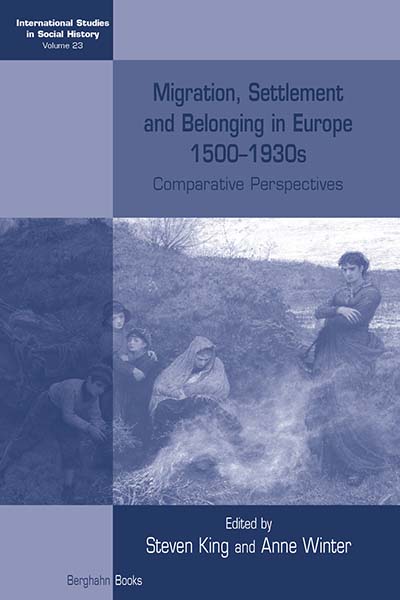
Old World Topic, New Discussion: A Look at Migration and Belonging

Who migrates, when they migrate, where they migrate, and why they migrate has a huge effect on cultural identity, acceptance and belonging. This is a hot current topic on news cycles worldwide, but it is certainly not a new phenomenon. Looking from a European perspective, editors Steven King and Anne Winter add an important contribution to this discussion with Migration, Settlement and Belonging in Europe, 1500-1930s: Comparative Perspectives, to be published this month. Below, the editors discuss the volume and their aim to make sense of these experiences across borders of place and time.


________________________________________


The British print and online media has for the last year been awash with compelling stories about abuses of the welfare system: the mother who has 11 children and feels the state should fund her life choices; the recent immigrants who are entitled to welfare benefits notwithstanding a lack of accumulated contribution; the ‘disabled’ welfare claimants who are exposed as professional dancers or scuba divers.
Continue reading “Old World Topic, New Discussion: A Look at Migration and Belonging”

An Uprising of Historical Importance

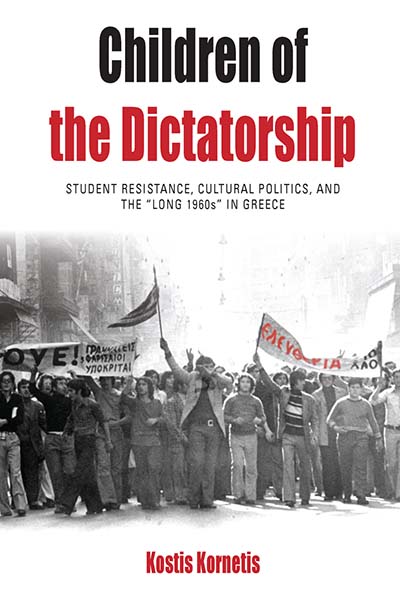
The cyclical course of history comes into sharp focus when one looks at Greek political uprisings. The widely publicized youth dissent in recent years is nothing new, but actually has earlier roots in 1973 — with different players, but with the same activist vigor. This 1970s group — later to be known as the Polytechnic Generation — comes into clear focus in newly published Children of the Dictatorship: Student Resistance, Cultural Politics and the “Long 1960s” in Greece, by Kostis Kornetis. Following is the opening to the volume’s introduction. 


___________________________________

In 2010 the well-known British Pakistani writer and political activist Tariq Ali commented that “were there a Michelin Great Protest guide, France would still be top with three stars, with Greece a close second with two stars.” Ali did not only refer to the 2005 riots in France and the 2008 civil disturbances in Greece, but to a longue durée structure of civil disobedience in the two countries that dates back to the 1960s and 1970s.


Continue reading “An Uprising of Historical Importance”

Understanding Europe before, after 1945

In Between Yesterday and Tomorrow: German Visions of Europe, 1926-1950, published last month, author Christian Bailey seeks to understand how Germans became such “good Europeans” after 1945. Whereas many histories of European integration tend to largely focus on the diplomatic goings-on between elites, this book focuses on how support for a united Europe was cultivated in civil society. Below, the author and his colleague Benno Gammerl share a dialogue about Bailey’s recent volume.


________________________________________


Benno Gammerl: Your book convincingly challenges what one could call the negative founding myth of post-1945 European integration. According to this well-established narrative the European Union ultimately resulted from the wish to once and for all prevent falling back into the perils of fascism and total war. You highlight earlier visions of Europe instead that date back to the interwar period and that have at times commanded much wider popular support than the let-us-avoid-our-earlier-mistakes-rhetoric. Which positive aims and motivations sustained these European projects?

Continue reading “Understanding Europe before, after 1945”

Key to Transformation is Understanding the ‘Fatherland’

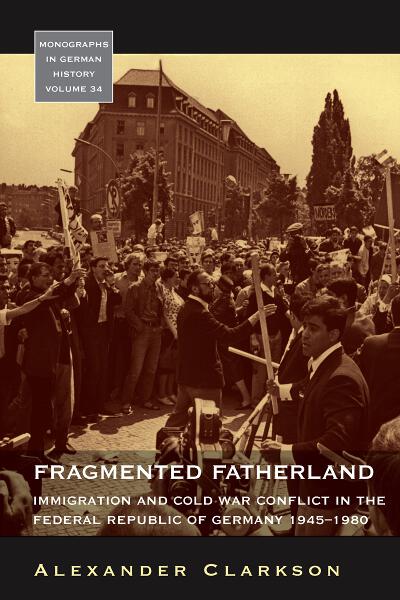
The parallels between the political environment of the “Arab Spring” countries and Cold War Germany can be striking, according to Alexander Clarkson, author of Fragmented Fatherland: Immigration and Cold War Conflict in the Federal Republic of Germany, 1945-1980. In these cases, when diaspora communities returned to their countries of origin, there was an energy for activism and a flurry of political activity. Following, Clarkson notes that taking a page from West German history could prove useful in modern Libyan, Syrian and Tunisian politics.


____________________________________________


In the chaotic days after the Ghadaffi regime lost control of the city of Benghazi in February 2011, hundreds of exiled Libyans returned to the liberated parts of their country to help play a role in the transformation of a state that had been under authoritarian rule for more than forty years.

Continue reading “Key to Transformation is Understanding the ‘Fatherland’”

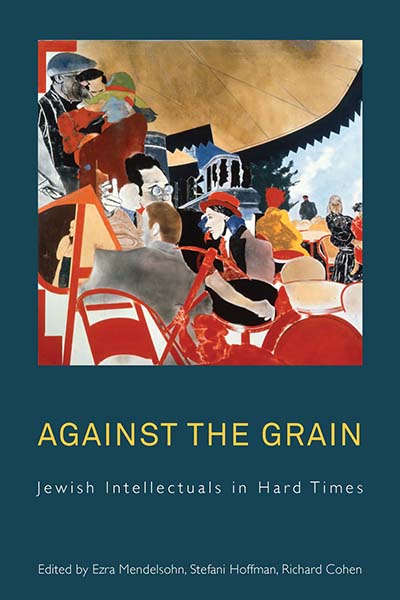
Looking ‘Against the Grain’ at German-Jewish Intellectuals

German-Jewish intellectuals in the twentieth century are the focus of Against the Grain: Jewish Intellectuals in Hard Times, published this month. The volume, edited by Ezra Mendelsohn, Stefani Hoffman, and Richard I. Cohen, looks at the key figures of German-Jewish thought: Scholem, Strauss, and Kohn, and examines how such thinkers reacted to, and were impacted by, the collection of crises lived by Central European Jews. Below, co-editor Mendelsohn speaks about the volume’s potential to “stir” the field and what brought him to the study in the first place.


____________________________________________


Berghahn Books: What drew you to the study of the trials and tribulations of Jewish men and women in the twentieth century?


Ezra Mendelsohn: The main reason resides in my  interest in the history of my own family.  Both my parents were born in Tsarist Russia, and both ended up in the United States, having lived for some time in British Palestine. 

Continue reading “Looking ‘Against the Grain’ at German-Jewish Intellectuals”

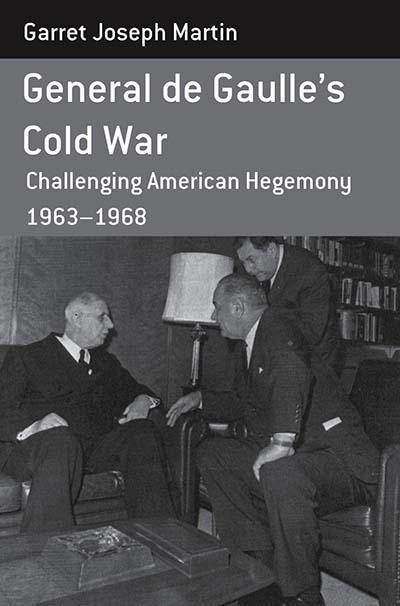
The Man, The Legend: General de Gaulle

If you’ve ever visited France, it is likely you are familiar with the name Charles de Gaulle. The Cold War politics of the widely revered former general and president of France are highlighted in General de Gaulle’s Cold War: Challenging American Hegemony, 1963-68, published this month. Author Garret Joseph Martin writes why these policies—respected by French countrymen and women—so dismayed U.S. leaders of the day. The author shares his thoughts about the figurehead, below.


_________________________________________________


Berghahn Books: What drew you to the study of General Charles de Gaulle?


Garret Martin: More than forty years after his death, General Charles de Gaulle remains a towering figure in France, and he was arguably the most influential Frenchman of the twentieth century. Growing up in France, you simply could not escape his presence and his legacy—see the multiple monuments in his honor and the streets named after him.

Continue reading “The Man, The Legend: General de Gaulle”

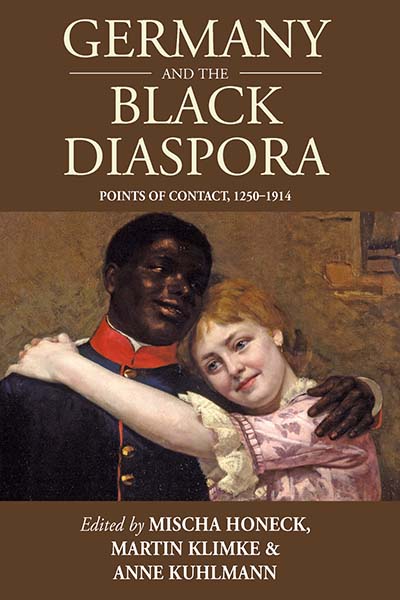
Blackface in Berlin Play: Racism or Tradition?

In January 2012, a white man was cast for the part of an African American man in “I’m Not Rappaport” for the German adaptation of the U.S. play. The plan to use blackface makeup—common in American theater up until the Civil Rights movement—to change the man’s appearance stirred controversy, and was called out as racist. Co-editor of Germany and the Black Diaspora: Points of Contact, 1250-1914, Martin Klimke addresses the sensitive subject of race in Germany in light of this event.

_________________________________________


Germany’s place in the Black Atlantic might have been peripheral in a geographical sense. Intellectually and discursively, however, it played an often underestimated but significant role in the formation of modern social, racial, and national identities.


Continue reading “Blackface in Berlin Play: Racism or Tradition?”