Lanes of Trade and Belonging in London

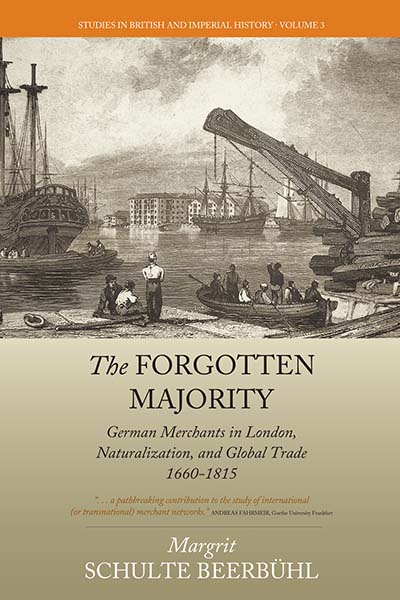
Though their significance in London society is not much discussed in historical study, German merchants had a major impact on social and commercial life in England from the seventeenth through nineteenth centuries. Author Margrit Schulte Beerbühl explores this topic in The Forgotten Majority: German Merchants in London, Naturalization, and Global Trade 1660-1815. Following, the author gives a bit more insight into her love of subject and the work to turn this enthusiasm into a book.


________________________________________


What drew you to the study of German merchants in London during this specific time frame (1660-1815)?


That period was a black hole in historical research. Academic studies on Germans in London ended with the closure of the Hanseatic Steelyard about 1600 and did not set in again before the end of the Napoleonic Wars.
Continue reading “Lanes of Trade and Belonging in London”

25th Anniversary of the Fall of the Wall

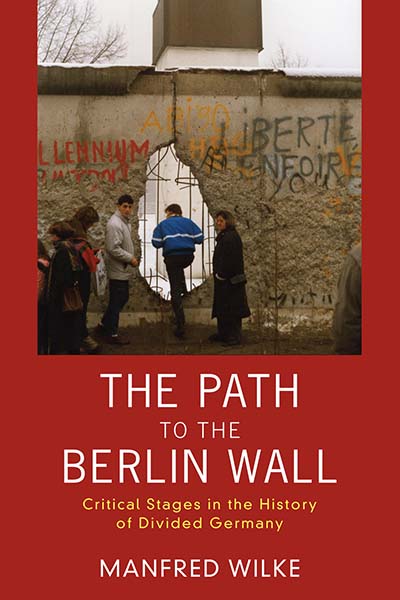
From 1961 to 1989, the city of Berlin was divided by the most visible sign of the Cold War: a wall more than 140km (87 miles) long. On 9 November 1989, East German authorities announced they would allow free access between east and west Berlin. Crowds of euphoric East Germans crossed and climbed on to the wall, leading to a reunited Germany.


Berlin is marking the 25th anniversary of the fall of the wall by “rebuilding” it with glowing white balloons. Some 8,000 illuminated helium balloons will trace a 15km-long section of the wall, snaking around the city, for just one weekend (7 to 9 November). The installation will come to an end on the evening of 9 November, when volunteers will release the balloons and set them free, soaring into the night sky to the strains of Beethoven’s 9th Symphony, played by the European Youth Orchestra. The balloons are made out of a biodegradable material so will not harm the environment. For a full story and more information on the event please visit ibtimes.co.uk


———————————————————————————————————

Browse Berghahn relevant titles:


THE PATH TO THE BERLIN WALL
Critical Stages in the History of Divided Germany
Manfred Wilke
Translated from the German by Sophie Perl

Continue reading “25th Anniversary of the Fall of the Wall”

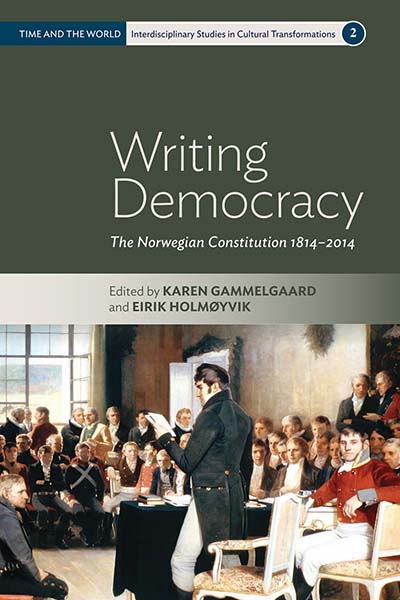
The Norwegian Constitution, A ‘Living Document’


When it was signed May 17, 1814, the Constitution of Norway was considered one of the most radical Constitutions of the day. To celebrate the 200th year since it was first enacted, editors Karen Gammelgaard and Eirik Holmøyvik and their contributors have written a collection of historical accounts about the document. Their book Writing Democracy: The Norwegian Constitution 1814-2014 was published this month. Following, the editors provide more information about the history of this guiding document as well as the history of the volume.


What drew you to the study of the Norwegian Constitution?


For researchers in Norway it has been impossible not to be drawn to the Norwegian Constitution these last few years due to the bicentenary in 2014.

Continue reading “The Norwegian Constitution, A ‘Living Document’”

Hearing History of the 19th and 20th Centuries

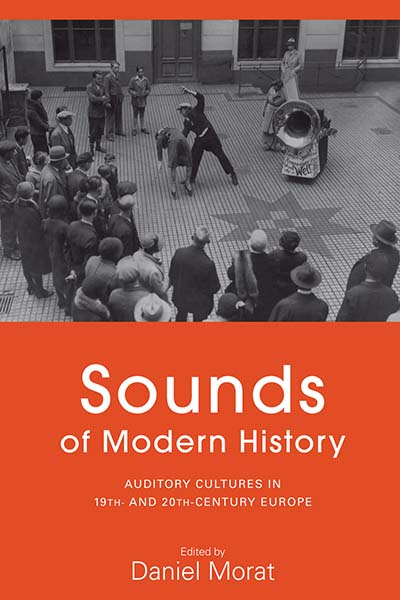
In a newly published collection, editor Daniel Morat and his contributors approach historical analysis in an uncommon way — by using their sense of hearing. The authors examine the way modern history sounds in Sounds of Modern History: Auditory Cultures in 19th- and 20th-Century Europe. Following, the editor gives a brief introduction and shares an excerpt from his chapter. The excerpt is accompanied by a recording from 1914 Germany.


_______________________________


When Europe went to war in the summer of 1914, scenes of vociferous war enthusiasm have been reported from many European cities. Historiographic research of the last twenty years has shown that these scenes were not representative of the general mood in the warring nations. Still, they have long dominated our perception of the outbreak of World War I.

Continue reading “Hearing History of the 19th and 20th Centuries”

Simulated Shelves: Browse September’s New Books

We are delighted to present a selection of our newly published, and soon to be published, September titles from our core subjects of Conflict Studies, Film Studies, Gender Studies, Genocide Studies, History and Religious Studies along with a selection of our New in Paperback titles.

——————————————————————————————————————–


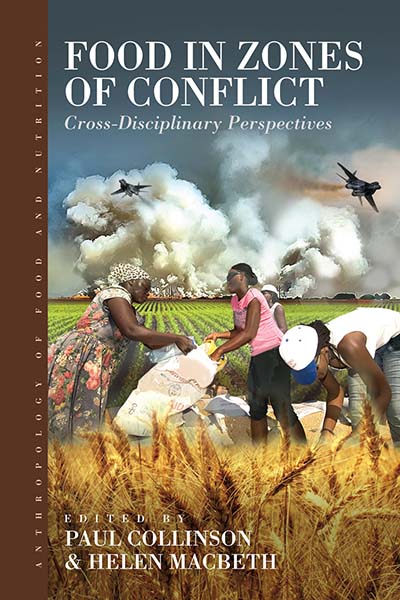
FOOD IN ZONES OF CONFLICT
Cross-Disciplinary Perspectives
Edited by Paul Collinson and Helen Macbeth
Foreword by Hugo Slim

Volume 8, Anthropology of Food & Nutrition Continue reading “Simulated Shelves: Browse September’s New Books”

Celebrate Women with Aspasia!

Today, September 4th, is the anniversary of the Fourth World Conference on Women in Beijing, where over 4,750 delegates from several countries were in attendance. Issues discussed at the conference included poverty, education, health, economic rights, and more.

From UNWomen.org: “The United Nations has organized four world conferences on women. These took place in Mexico City in 1975, Copenhagen in 1980, Nairobi in 1985 and Beijing in 1995. The last was followed by a series of five-year reviews. The 1995 Fourth World Conference on Women in Beijing marked a significant turning point for the global agenda for gender equality. The Beijing Declaration and the Platform for Action, adopted unanimously by 189 countries, is an agenda for women’s empowerment and considered the key global policy document on gender equality.”


To celebrate the anniversary of this historic conference and its benefit to women worldwide, we’d like to invite you to glance a free sample issue of Aspasiaor sign up for a 60-day free trial by clicking here.


About Aspasia

Aspasia is the international peer-reviewed annual of women’s and gender history of Central, Eastern, and Southeastern Europe (CESEE). It aims to transform European women’s and gender history by expanding comparative research on women and gender to all parts of Europe, creating a European history of women and gender that encompasses more than the traditional Western European perspective. Aspasia particularly emphasizes research that examines the ways in which gender intersects with other categories of social organization and advances work that explores transnational aspects of women’s and gender histories within, to, and from CESEE. The journal also provides an important outlet for the publication of articles by scholars working in CESEE itself. Its contributions cover a rich variety of topics and historical eras, as well as a wide range of methodologies and approaches to the history of women and gender.

Read the founding statement from the first issue of Aspasia here.


Unmasking the Visages of Ukrainian Women

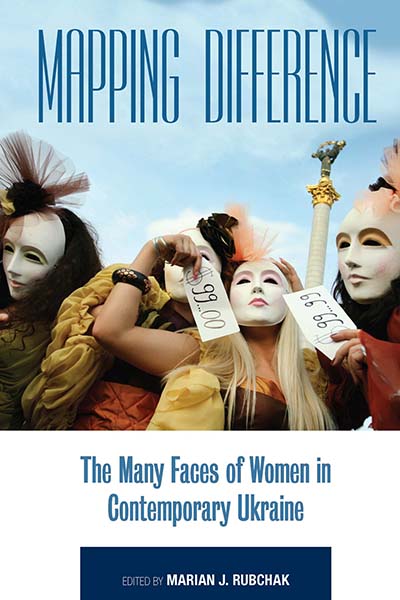
A look into the life of post-Soviet Ukrainian women, Mapping Difference: The Many Faces of Women in Contemporary Ukraine is now available in paperback. This book uncovers the virtues of women that sometimes lie just beneath negative gender stereotypes. Following, editor of the collection, Marian Rubchak, gives readers a deeper look into the volume via the book’s cover.


_________________________________


Since the demise of the Soviet “Empire of Nations”[i] in 1991 Ukraine’s women have lived in a world largely shaped by the rejection of communist values and efforts to transform a moribund socialist system into an open democratic society. Early in the transformative period this society gave rise to a small core of female activists who chose to work within the existing system, with its traditional values, to effect the changes that would return their voice to women. Although they disavowed the label of feminist as a self-descriptor their agendas clearly reflected feminist principles.

Continue reading “Unmasking the Visages of Ukrainian Women”

A Swiss Interpretation of the American Park

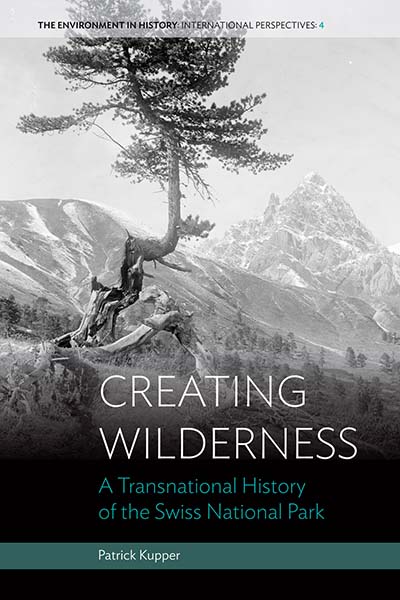
The Swiss National Park is a re-figuring of the American National Park, but with an emphasis on science. This idea of a scientific park is the focus of Patrick Kupper’s Creating Wilderness: A Transnational History of the Swiss National Park, published this month. Below, read an excerpt from the author’s Turku Book Prize-winning book.


______________________________


Today’s national parks differ vastly around the globe, not only in appearance but also in purpose: they shall protect biodiversity, landscape, or wilderness and serve for tourism, edification, or research. The term “national park” provides a common denominator for all this diversity, yet the denominator itself is indistinct. How shall one cope with this irritating complexity?


Continue reading “A Swiss Interpretation of the American Park”

Today In History


Statehood Day is a holiday that takes place on June 25th in Slovenia & Croatia to commemorate both countries’ declaration of independence from Yugoslavia in 1991.

On related subjects from Berghahn Central & Eastern Europe List:


______________________________

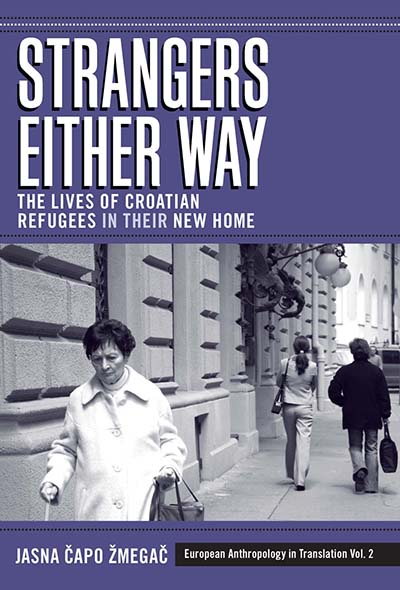
STRANGERS EITHER WAY
The Lives of Croatian Refugees in their New Home
Jasna Čapo Žmegač
Translated by Nina H. Antoljak and Mateusz M. Stanojević


Croatia gained the world’s attention during the break-up of Yugoslavia in the early 1990s. In this context its image has been overshadowed by visions of ethnic conflict and cleansing, war crimes, virulent nationalism, and occasionally even emergent regionalism. Instead of the norm, this book offers a diverse insight into Croatia in the 1990s by dealing with one of the consequences of the war: the more or less forcible migration of Croats from Serbia and their settlement in Croatia, their “ethnic homeland.” This important study shows that at a time in which Croatia was perceived as a homogenized nation-in-the-making, there were tensions and ruptures within Croatian society caused by newly arrived refugees and displaced persons from Serbia and Bosnia and Herzegovina. Refugees who, in spite of their common ethnicity with the homeland population, were treated as foreigners; indeed, as unwanted aliens. Continue reading “Today In History”

In History

June 6th marked the 70th anniversary of The Normandy landings, the day when Western Allies landed in northern France, opening the long-awaited “Second Front” against Nazi Germany. The largest seaborne invasion in history, the operation began the invasion of German-occupied Western Europe, led to the restoration of the French Republic, and contributed to an Allied victory in the war.


On related topic, please take a look at some of Berghahn’s WWII books.


_________________________________________


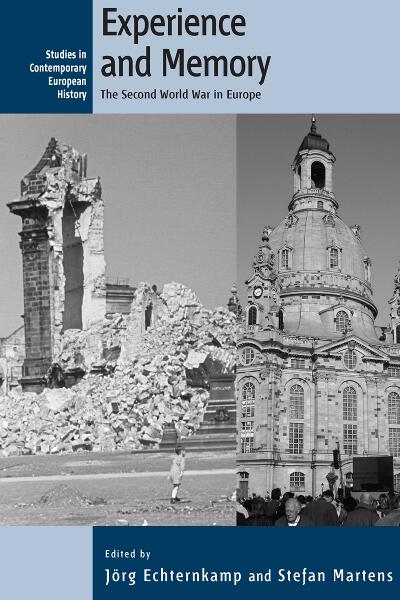
EXPERIENCE AND MEMORY
The Second World War in Europe
Edited by Jörg Echternkamp and Stefan Martens

Modern military history, inspired by social and cultural historical approaches, increasingly puts the national histories of the Second World War to the test. New questions and methods are focusing on aspects of war and violence that have long been neglected. What shaped people’s experiences and memories? What differences and what similarities existed in Eastern and Western Europe? How did the political framework influence the individual and the collective interpretations of the war? Finally, what are the benefits of Europeanizing the history of the Second World War? Experts from Belgium, Germany, France, Great Britain, Italy, Luxembourg, Poland, and Russia discuss these and other questions in this comprehensive volume.


Continue reading “In History”