The Life of Policy in Canada and New Zealand

Policies have their own lives, and these lives are not “a-cultural, rational, and straightforwardly technical,” puts forth Catherine Kingfisher in her volume, A Policy Travelogue: Tracing Welfare Reform in Aotearoa/New Zealand and Canada, published in September. Following is an excerpt from the monograph’s Introduction in which the author sets the scene for her discussion of how policy lives within welfare reform in two distinct countries.


______________________________________

 

I use the frames of translation and assemblage to gain insight into a range of policy-related phenomena in particular spaces and contexts of occurrence. First, I explore the transformation of objects as they are translated from one philosophical and political framework—Keynesianism—into another—neoliberalism. Brodie (2002:100) points out in this regard that the privatization characteristic of neoliberalism: “[i]nvolves much more than simply removing things from one sector and placing them in another….the thing moved is itself transformed into something quite different. Objects become differently understood and regulated.”

Continue reading “The Life of Policy in Canada and New Zealand”
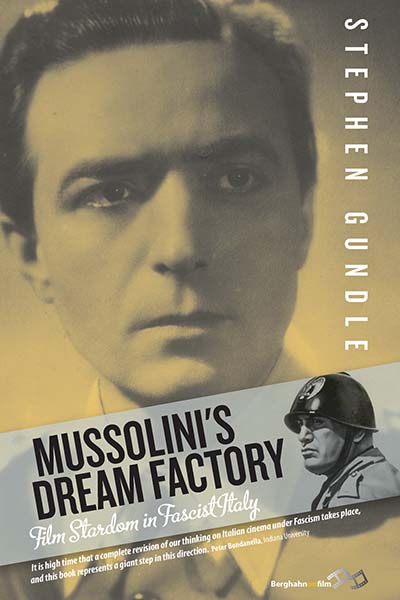
Star-Studded Regime: A Look at Film Celebrity in Fascist Italy

Celebrities today can perform political functions by sponsoring causes, supporting or opposing governments and shaping opinion. In Fascist Italy, celebrities also played an important role and the regime was well aware of the possible uses and dangers of their popularity. This important connection has been overlooked by scholars of both film and of Italian political history. Focusing on a period from the 1920s through 1945, Mussolini’s Dream Factory: Film Stardom in Fascist Italy looks at the star power of these often-overlooked celebrities and the fate of their careers after WWII. Author Stephen Gundle expands on these ideas and shares his thoughts on the subject, below.


_______________________________________________


Berghahn Books: What drew you to the study of film and film stardom in Fascist Italy?


Stephen Gundle: There are lots of books written about fascist Italy and it seems to be a topic that endlessly fascinates.  In the last few years books have appeared on topics such as the police force, diplomacy, road-building, women’s fashions and everyday life. Yet there are few books on fascist cinema – which is largely ignored by historians and neglected by film scholars who tend to concentrate on neorealism or other aspects of postwar cinema.

Continue reading “Star-Studded Regime: A Look at Film Celebrity in Fascist Italy”

An Uprising of Historical Importance

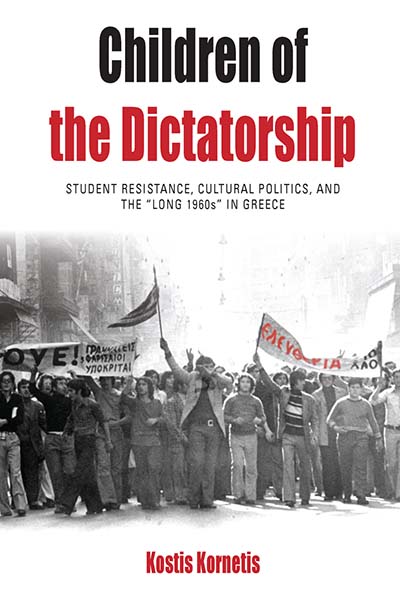
The cyclical course of history comes into sharp focus when one looks at Greek political uprisings. The widely publicized youth dissent in recent years is nothing new, but actually has earlier roots in 1973 — with different players, but with the same activist vigor. This 1970s group — later to be known as the Polytechnic Generation — comes into clear focus in newly published Children of the Dictatorship: Student Resistance, Cultural Politics and the “Long 1960s” in Greece, by Kostis Kornetis. Following is the opening to the volume’s introduction. 


___________________________________

In 2010 the well-known British Pakistani writer and political activist Tariq Ali commented that “were there a Michelin Great Protest guide, France would still be top with three stars, with Greece a close second with two stars.” Ali did not only refer to the 2005 riots in France and the 2008 civil disturbances in Greece, but to a longue durée structure of civil disobedience in the two countries that dates back to the 1960s and 1970s.


Continue reading “An Uprising of Historical Importance”

Understanding Europe before, after 1945

In Between Yesterday and Tomorrow: German Visions of Europe, 1926-1950, published last month, author Christian Bailey seeks to understand how Germans became such “good Europeans” after 1945. Whereas many histories of European integration tend to largely focus on the diplomatic goings-on between elites, this book focuses on how support for a united Europe was cultivated in civil society. Below, the author and his colleague Benno Gammerl share a dialogue about Bailey’s recent volume.


________________________________________


Benno Gammerl: Your book convincingly challenges what one could call the negative founding myth of post-1945 European integration. According to this well-established narrative the European Union ultimately resulted from the wish to once and for all prevent falling back into the perils of fascism and total war. You highlight earlier visions of Europe instead that date back to the interwar period and that have at times commanded much wider popular support than the let-us-avoid-our-earlier-mistakes-rhetoric. Which positive aims and motivations sustained these European projects?

Continue reading “Understanding Europe before, after 1945”

Care and Anti-Care in Greece

In her book Capricious Borders: Minority, Population, and Counter-conduct between Greece and Turkey, published earlier this year, Olga Demetriou examines the mechanisms through which particular groups of people are turned into “minorities.” At the center of these processes she identifies naming, genealogy and state care, as key modes of governmentality. Discussing a recent incident of biopolitical policing, the author shows here how “state care” continues to have more relevance as a repressive rather than an empowering mechanism in the minoritization context.


 ______________________________________


In Greece, the “management of population” (in the sense of a Foucauldian biopolitics of demography, spatial order, classification, and knowledge production) has long been racialized.


This racialism has fluctuated through different political conjunctures yielding differing policies of birth rate monitoring and incentivization. Last month “care” emerged as a tool of biopolitical policing in a discussion that went well beyond the bounds of Greece, after authorities arrested a couple raising a child who was “not their own.” The couple was Roma, the child at first assumed not, and much of the racialized presentation of the incident turned on the stereotypical discourse about “Gypsies stealing children.”

Continue reading “Care and Anti-Care in Greece”

The New Namibia: Building a Nation after Apartheid

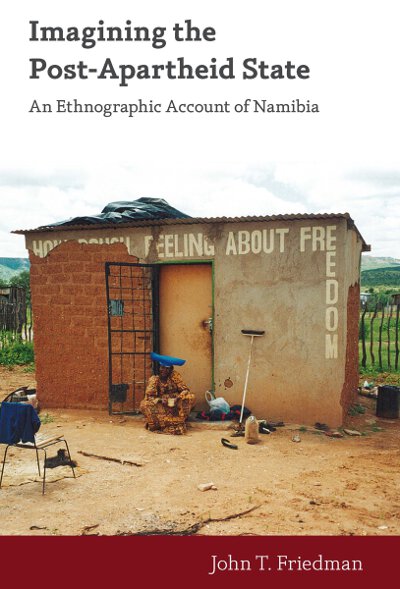
In 1990, Namibia gained its independence as a democratic state from the South African apartheid regime. Author John T. Friedman reflects on what this realistically meant and currently means for the making of a Namibian state in Imagining the Post-Apartheid State: An Ethnographic Account of Namibia, the paperback version of which was published last month after the original was published July 2011. Below the author explains his ethnographic method in an excerpt from the Introduction.


___________________________________


http://www.berghahnbooks.com/covers/FriedmanImagining.jpg

At first reading, the title of this book is likely to arouse some scepticism. How is it possible for an anthropologist to present an ethnographic account of Namibia, of an entire country? As anthropologists we are accustomed to investigate the localised, the small-scale, the village community. We are specifists, not generalists. The critic will thus be quick to suggest that any such attempt can yield only two possible outcomes: either a generalised account of ‘the Namibian people’, or a superficial survey of Namibia’s ethnic groups.

Continue reading “The New Namibia: Building a Nation after Apartheid”

Key to Transformation is Understanding the ‘Fatherland’

The parallels between the political environment of the “Arab Spring” countries and Cold War Germany can be striking, according to Alexander Clarkson, author of Fragmented Fatherland: Immigration and Cold War Conflict in the Federal Republic of Germany, 1945-1980. In these cases, when diaspora communities returned to their countries of origin, there was an energy for activism and a flurry of political activity. Following, Clarkson notes that taking a page from West German history could prove useful in modern Libyan, Syrian and Tunisian politics.


____________________________________________


In the chaotic days after the Ghadaffi regime lost control of the city of Benghazi in February 2011, hundreds of exiled Libyans returned to the liberated parts of their country to help play a role in the transformation of a state that had been under authoritarian rule for more than forty years.

Continue reading “Key to Transformation is Understanding the ‘Fatherland’”

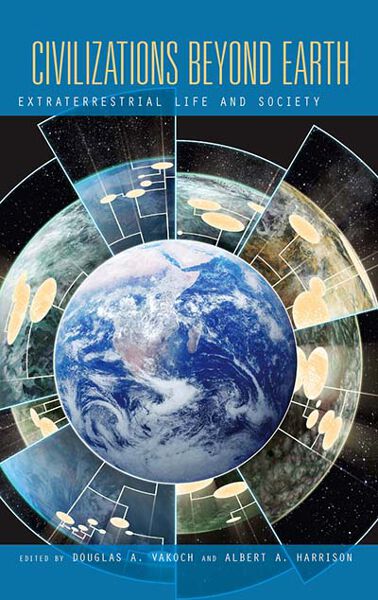
Likelihood of Contact Depends on the Lifetimes of Civilizations

If alien civilizations are anything like terrestrial civilizations, earthly beings may never encounter beings from outer space. Civilizations Beyond Earth contributor Alan J. Penny says our greatest chance for interaction will hinge on the longevity and attention span of an alien society — which must be long enough to give us a chance to interact.


________________________________________

To consider the number of extraterrestrial civilizations that may be out there and which we can detect by their emission of radio signals, we need to think about the likelihood that a star may host a planet with a civilization that can broadcast such signals.


But we also need to think about how long such civilizations last.

Continue reading “Likelihood of Contact Depends on the Lifetimes of Civilizations”

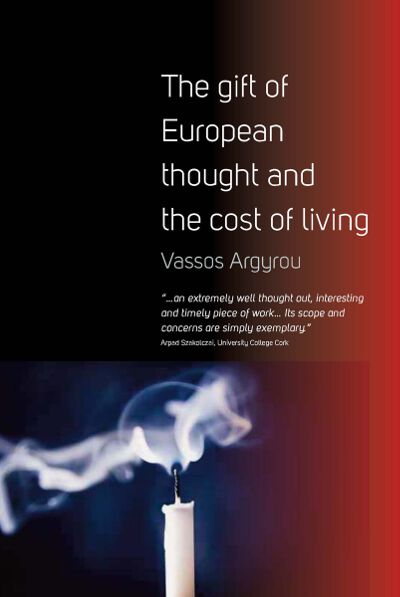
European Thought: The ‘Gift’ that Keeps Giving

Is the spread of Western, specifically European, thought truly a gift to the rest of the world, or is this dissemination simply a way of exerting cultural power? Vassos Argyrou seeks an answer to this question in his newly released volume The Gift of European Thought and the Cost of Living. Below, the author explains his inspiration for—and the challenges and rewards of—writing the book, published September 2013.


_________________________________________


Berghahn Books: What drew you to the study of “European Thought” and what are some examples of this?


Vassos Argyrou: “European thought” is a term that in a certain sense was imposed on me as it was used to make the highly contentious claim that it’s a gift to the rest of the world. It refers not only to an intellectual tradition but also to a way of life or culture—European or,  more broadly, Western culture.

Continue reading “European Thought: The ‘Gift’ that Keeps Giving”

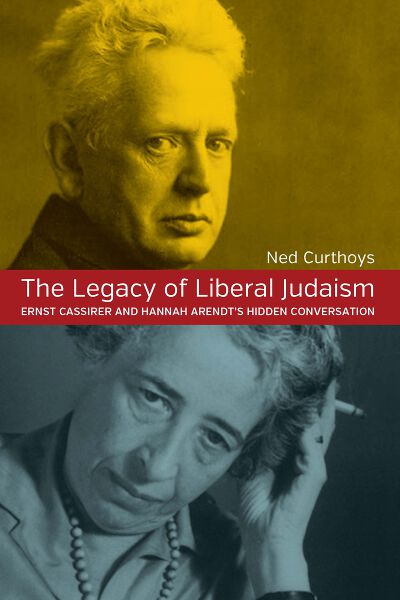
Opening Cassirer and Arendt’s ‘Hidden Conversation’

Hannah Arendt was a German-Jewish political theorist; Ernst Cassirer was a German-Jewish philosopher. The ‘liberal Jewish ethics’ of the two come together in Ned Curthoys’ The Legacy of Liberal Judaism: Ernst Cassirer and Hannah Arendt’s Hidden Conversation. The author explains below his fascination of and engagement with the scholars.


_____________________________________

Berghahn Books: What exactly do you mean by the term ‘liberal Judaism’?


Ned Curthoys: Well it’s a diasporic phenomenon, a very interesting response to the twin challenges of secular modernization and inveterate Christian inspired anti-Judaism.

Continue reading “Opening Cassirer and Arendt’s ‘Hidden Conversation’”