‘Wrapped in the Flag of Israel’ Author Earns Heart at East Award

On May 21, 2013, in Tel Aviv, the Heart at East Lifetime Achievement Plaque was bestowed upon Prof. Smadar Lavie. Her scholarly and activist voice for the rights of Mizrahi Jewish women living in Israel received formal recognition. Lavie’s two decades of ethnographic research and community leadership to better the lives of those within these populations not only earned her the award, but also led her to write Wrapped in the Flag of Israel, to be published in April 2014. Below, Lavie explains why Heart at East is significant—both within the State of Israel and for herself.


________________________________________________________


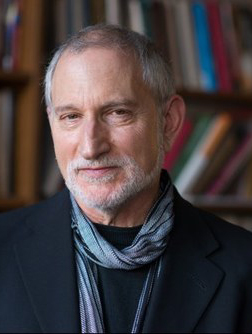
Smadar Lavie
— Photo by Jutta Henglein-Bildau

I was so thrilled to receive Facebook messages from Reuven Abarjel, co-founder of the Jerusalem Black Panthers, and Shira Ohayon, a longtime Mizrahi feminist and educational director of Israel’s Andalusian Orchestra, that I was to be awarded the Heart at East Lifetime Achievement Plaque in May 2013.

Continue reading “‘Wrapped in the Flag of Israel’ Author Earns Heart at East Award”

The Man, The Legend: General de Gaulle

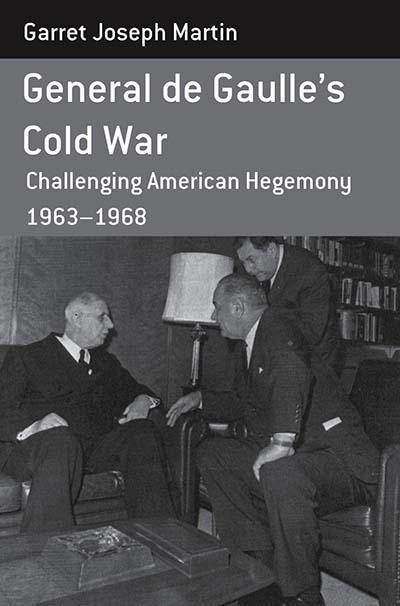
If you’ve ever visited France, it is likely you are familiar with the name Charles de Gaulle. The Cold War politics of the widely revered former general and president of France are highlighted in General de Gaulle’s Cold War: Challenging American Hegemony, 1963-68, published this month. Author Garret Joseph Martin writes why these policies—respected by French countrymen and women—so dismayed U.S. leaders of the day. The author shares his thoughts about the figurehead, below.


_________________________________________________


Berghahn Books: What drew you to the study of General Charles de Gaulle?


Garret Martin: More than forty years after his death, General Charles de Gaulle remains a towering figure in France, and he was arguably the most influential Frenchman of the twentieth century. Growing up in France, you simply could not escape his presence and his legacy—see the multiple monuments in his honor and the streets named after him.

Continue reading “The Man, The Legend: General de Gaulle”

Aloha to Beginnings: Writing ‘Legacies of a Hawaiian Generation’

A talk-story, or mo`olelo, is an informal and traditionally Hawaiian way of sharing stories to preserve them for posterity. In The Legacies of a Hawaiian Generation, to be published this month, author Judith Schachter pairs these informal conversations with fieldwork observations to give readers a view into the island culture post-U.S. annexation. Below she shares the story of her beginning in Hawai`i, and how her work took root. 


____________________________________


My work in Hawai`i began “in small,” with the idea of adding a chapter to my book on American kinship, family, and adoption. I intended to see what happened to Polynesian customs when the U.S. brought its legal system to the Pacific Island state.

Continue reading “Aloha to Beginnings: Writing ‘Legacies of a Hawaiian Generation’”

Down, Not Out: Ethiopian Youth on the Street

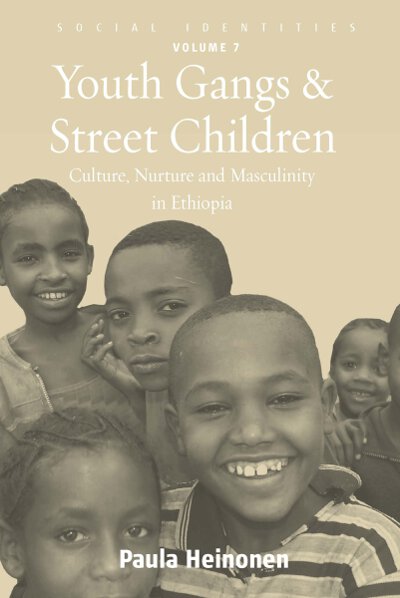
Paula Heinonen’s decade of research and reflection led to the publication of Youth Gangs and Street Children: Culture, Nurture, and Masculinity in Ethiopia, which was published as a paperback in June 2013. Based on careful observations and interviews, the volume provides insight into common misconceptions of why  Ethiopian boys and girls take to the street.  


______________________________________________

Before embarking on my six years longitudinal field research and four years of follow-up enquiry and reflection, I read extensively on the street children phenomena worldwide.

Continue reading “Down, Not Out: Ethiopian Youth on the Street”

Occupy Morality: Soldiering in Conflict Zones

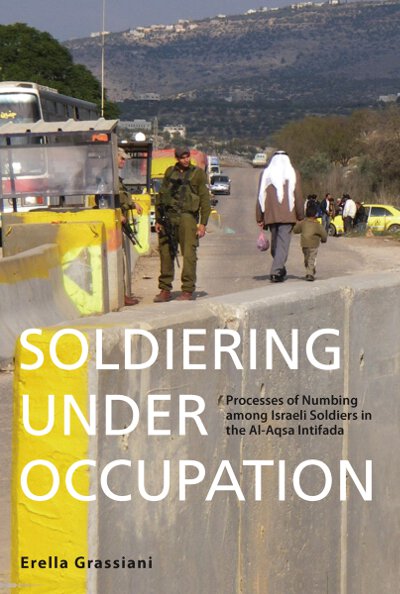
Understanding a soldier is key to understanding the effect of militarism on a broader society, according to Erella Grassiani, author of Soldiering Under Occupation: Processes of Numbing among Israeli Soldiers in the Al-Aqsa Intifada. The volume, published in July, offers insights into the physical and mental effects that operating in occupied zones has on soldiers. Below, Grassiani discusses the volume, her occupation, and how she enjoys her down time.


__________________________________________________

Berghahn Books: What drew you to the study of the Israeli military? And why is this topic important?


Erella Grassiani: I was born in Israel and even though I was raised largely in the Netherlands, Israel stayed close to my heart. When I went back to Israel to study at the Tel Aviv University I came across ideas about militarism for the first time and the way the military influenced civilian life. Continue reading “Occupy Morality: Soldiering in Conflict Zones”

Paul Stoller: Retzius Reflections

Paul Stoller, whose article “Embodying Knowledge: Finding a Path in the Village of the Sick” appeared in Ways of Knowing, edited by Mark Harris, earned the 2013 Anders Retzius medal for excellence in anthropology—an honor bestowed every three years—April 24. Below, Stoller reflects on his life’s work that helped him earn the award.


__________________________________________


stoller
Paul Stoller

Milestones in life compel you to think about where you’ve been, where you are and where you are going.


In 2012 I received an email, marked as “possible spam,” that invited me to Stockholm in April 2013 to receive the Anders Retzius Gold Medal in Anthropology, which is given once every three years.

Continue reading “Paul Stoller: Retzius Reflections”

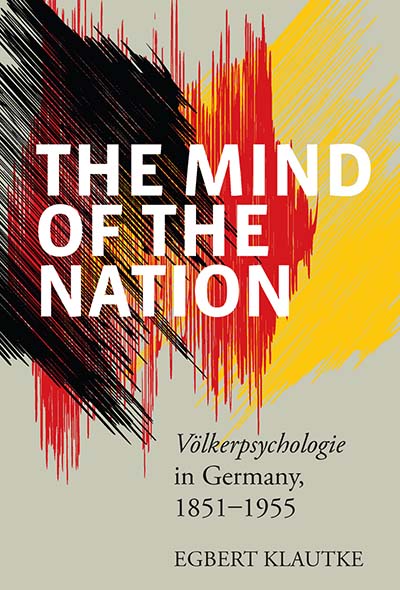
The Rise and Fall of Völkerpsychologie

Before there was cultural psychology, there was Völkerpsychologie. This social science was used as a way of looking at cultures and trying to make sense of them—an attempt often seen as stereotyping. But, in The Mind of the Nation: Völkerpsychologie in Germany, 1851-1955, to be released this month, author Egbert Klautke gives the often-overlooked social science due credit. He shares his thoughts about the volume and this particular form of psychology below.

______________________________________________________


Berghahn Books: How would you define “Folk Psychology” and what drew you to the study of it?


Egbert Klautke: “Folk Psychology” is an awkward translation of the German term Völkerpsychologie. Originally, it referred to attempts to study the psychological make-up of nations, and as such is a forerunner of today’s social psychology. However, in today’s common understanding, Völkerpsychologie equals national prejudice: it is seen as a pseudo-science not worth considering seriously. Continue reading “The Rise and Fall of Völkerpsychologie”

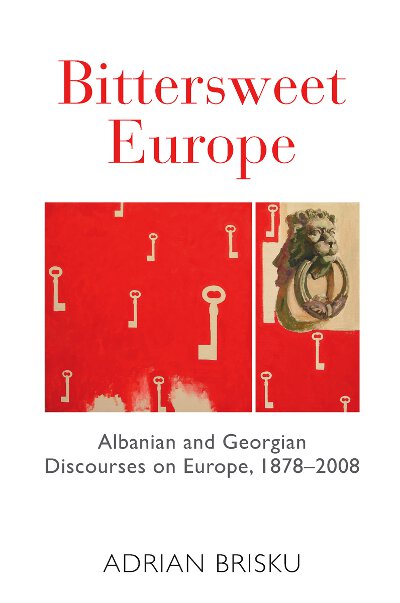
Bittersweet Europe: A Study of Albania and Georgia

Adrian Brisku connects two seemingly disconnected European experiences—those of Georgia and Albania—in Bittersweet Europe: Albanian and Georgian Discourses on Europe, 1878-2008, to be published this month. Brisku shares the triumphs and difficulties of the writing process, and what interested him in the area to begin with, below.

______________________________________________

Berghahn Books: What drew you to the study of Albania and Georgia, especially as they exist within the larger European framework?


Adrian Brisku: I had written about Albanian debates on ‘Europe’ while living in Georgia—from the year 2001 to 2005.

Continue reading “Bittersweet Europe: A Study of Albania and Georgia”

Knowledge, an Anthropological Commodity

Within the pages of his newly published book, An Anthropological Trompe L’Oeil for a Common World: An Essay On The Economy Of Knowledge, published by Berghahn last month, Alberto Corsín Jiménez addresses the value and framework of knowledge, theory, and scholarship. Below the author discusses the sources of inspiration for the book, the commodity of knowledge, and the trick that not everything is exactly as it first appears.

__________________________________________________

Although I did not quite know it at the time, I began writing this book roughly at the time of my appointment to a university lectureship at the University of Manchester in 2003.


The university had only just merged with the University of Manchester Institute of Science and Technology — a merger hailed in various contexts as a harbinger of the changes to come in UK higher education. Continue reading “Knowledge, an Anthropological Commodity”

Interview with the Author – Britta McEwen, author of Sexual Knowledge: Feeling, Fact, and Social Reform in Vienna, 1900-1934

Britta McEwen is author of Sexual Knowledge: Feeling, Fact, and Social Reform in Vienna, 1900-1934, published earlier this year by Berghahn. Her work uncovers the transformation of sexual knowledge from the realm of specialized medical science to that of social reform for the wider populace. Here she discusses her work, some of the challenges she faced in writing about some of the key historical figures, and how she would utilize her apple pie making skills if she weren’t a historian.

1. What drew you to the study of sexual knowledge in the early twentieth century?

I actually got into this field through architecture!  Vienna has these amazing public housing projects from the interwar period, and as I investigated them I learned that they were intended for a new kind of people – upright, moral, hardworking small families.  This seemed to entail a new sexual system, starting with birth control at the very least.  That, combined with a well-timed read of Isabel Hull’s “Sexuality, State, and Civil Society in Germany,” made me think that there was a story to tell in Vienna’s early twentieth century about attitudes towards sex.

2. Did any perceptions on the subject change from the time you started your research to the time you completed the book?

On of my assumptions at the beginning of my project was that science was always a liberating voice vis-à-vis sexuality.  While scientific discourse was used to challenge Church teachings about sex, I found that many authors in the early twentieth century were actually using melodramatic language, rather than scientific language, to express the call to sexual and social justice.  At first I thought this was just a trick to popularize complex ideas, but as I went on I came to believe that melodrama offered people writing about sex a way to talk about ignorance, shame, and consequences in a way that would be convincing to a wide audience.

3. What aspect of writing this work did you find most challenging?  Most rewarding?

I’ll answer that one by combining the questions and talking about what was both challenging AND rewarding…  some of the historical characters I met in my research were so very colorful and compelling that they threatened to overshadow the “knowledge” they sought to impart.  Here I’m thinking of Wilhelm Reich, Johann Ferch, and above all, Hugo Bettauer.  Bettauer became a personal hero of mine as I wrote, which made it difficult to really focus on his journalism, rather than his person, for the book.  In another world, I think I would have ditched the reams of research I had collected and simply written about Bettauer’s humanism and his outrageous career.

4. To what extent do you think the book will contribute to debates among academics within the field?

Although one of the arguments of my book is that Vienna was a special site for the production and distribution of sexual knowledge in the early twentieth century, I think it would be interesting to see comparative work done on this issue.  How unusual were places like Vienna, Paris, and Berlin?  What made them unique?  I also wonder if books like mine will help dispel the belief that there was only one sexual revolution.  Finally, the debate in the German-speaking world about the “repressive” sexual regimes of the twentieth century is really heating up, and I think books like mine will help contextualize what sexual “liberation” meant to different historical actors.

5. If you weren’t a historian, what would you have done instead?

Although I am a hardly an entrepreneur, I do think I might have been able to run a public space.  Lord knows I waitressed enough to know a good cup of coffee when I see it, and I make a mean apple pie.  So some days I fantasize about running a bookstore specializing in science fiction and mysteries, where you could get something sweet to eat and sit all day (just like in Vienna), reading and gabbing.  I imagine it to be the kind of place with a bad pun in the title and a standing feminist knitting circle – come to think of it, the kind of place that could be lampooned on “Portlandia.”

Britta McEwen teaches European History at Creighton University in Omaha, Nebraska.