Join our Email List




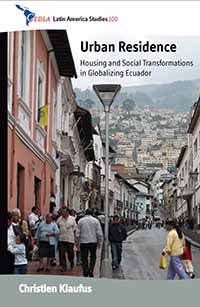 Christien Klaufus is the author of Urban Residence: Housing and Social Transformations in Urbanizing Ecuador, published this spring by Berghahn. Her work examines two contrasting populations in Ecuador’s cities: popular-settlement residents and professionals in the planning and construction sector to understand how they shape the city itself. Here she discusses her work, how she came to it, and her many varied interests outside the academy.
1. What drew you to the study of urban spaces in Ecuador?
My fascination for Latin America started when I was a child. I used to collect clippings about Peru, Bolivia, Mexico and Guatemala from the National Geographic journals that my father brought home. After graduating in Architecture in 1993, I travelled through South America for a few months. It was during that trip that I decided I wanted to switch careers from working in architectural design to becoming an academic researcher on urban spaces and architecture, preferably in Latin America. Ecuador became my favorite destination. So I applied for a BA and MA in Cultural Anthropology at the University of Amsterdam, which later resulted in a PhD dissertation on that topic. The book was a logical outcome of my multidisciplinary academic background and a long-lasting fascination for Latin America. Continue reading “Interview with the Author- Christien Klaufus, Author of Urban Residence: Housing and Social Transformations in Globalizing Ecuador”