‘Youth Bulge’ and Social Change in Tajikistan

It is common for a society’s population to grow exponentially after a war. In the U.S., the best example of this “youth bulge” is the population of post-World War II “Baby Boomers.” In her soon-to-be-released volume, Domesticating Youth: Youth Bulges and their Socio-political Implications in Tajikistan, Sophie Roche explores this phenomenon in post-civil war Tajikistan and what its implications may be. Following, the author reflects on her fieldwork, and shares how it felt to return to her site after a decade of absence.


_____________________________________________
 

With an ethnographic book a story is out in the world that has been documented for a while but that does not stop with the last page but continues to develop. Often after reading an ethnographic study I wonder what happened to the actors in the book, some of whom we are introduced very intimately; what happened to the place, the village, the authorities, the children? Where they really just living to be examples of a theory? How does the story of the people develop after the book?

Continue reading “‘Youth Bulge’ and Social Change in Tajikistan”
Not So Different After All: Connecting British and Bengali Education Systems

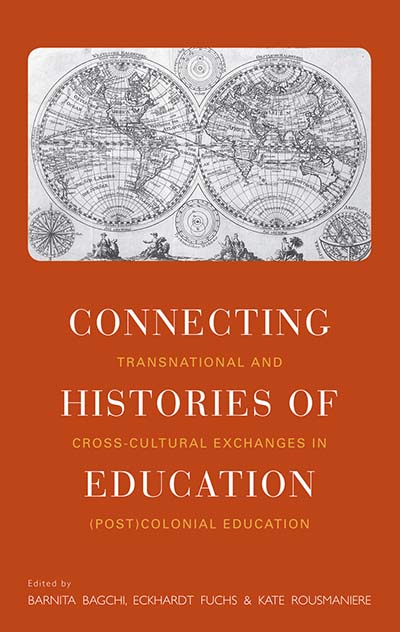
Connecting Histories of Education: Transnational and Cross-Cultural Exchanges in (Post)Colonial Education, edited by Barnita Bagchi, Eckhardt Fuchs and Kate Rousmaniere, has recently been published by Berghahn. The editors previously shared an excerpt from the volume’s Introduction, which can be read here. A second extract, this one from Mary Hilton’s chapter “A Transcultural Transaction: William Carey’s Baptist Mission, the Monitorial Method and the Bengali Renaissance,” gives readers insight into the education system shared between Britain and Bengal.


__________________________________________

To understand the early-nineteenth-century reforming mentality that drove change in both Britain and Bengal, we must first sketch those systems of basic education that prevailed in their traditional rural communities before the English industrial revolution and before the development of the fully evangelical, self-righteous and reforming mercantile thrust of English imperialism.

Continue reading “Not So Different After All: Connecting British and Bengali Education Systems”

Uzbekistan, Social Network of Choice

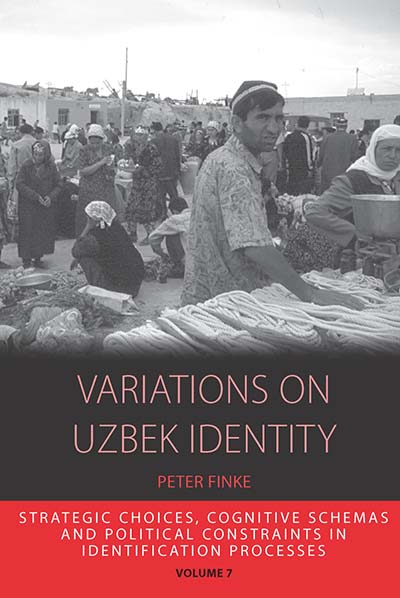
In the Republic of Uzbekistan, being Uzbek has less to do with one’s lineage and more to do with one’s allegiance to a society. The advantages of this voluntary membership within the Uzbek “social network” are explored in Variations on Uzbek Identity: Strategic Choices, Cognitive Schemas and Political Constraints in Identification Processes. Below, Peter Finke discusses his attraction to Uzbekistan, his writing process, and the volume’s potentially controversial reception.


_____________________________________________

Berghahn Books: What drew you to the study of Uzbekistan, specifically “Uzbek Identity”?


Peter Finke: My general interest in Central Asia goes back a long way into childhood fantasies of roaming horse riders and the like. Most of Uzbekistan does not really fit that well into this and indeed my early research in the region was on nomadic pastoralists in Western Mongolia. It was after I took up a postdoc at the Max Planck Institute to work on identity issues that I not only switched topics but also field sites.

Continue reading “Uzbekistan, Social Network of Choice”

Love in the Time of Ethnography

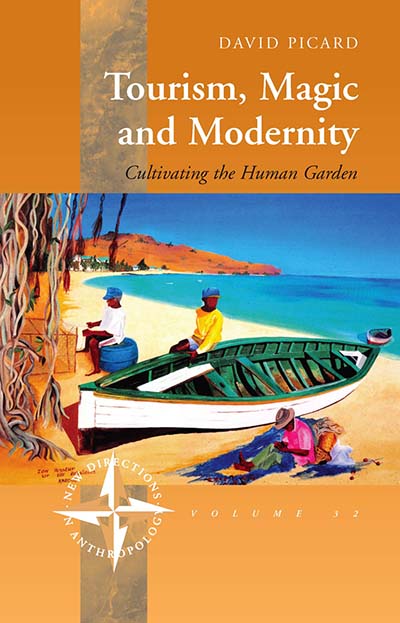
In David Picard’s Tourism, Magic and Modernity: Cultivating the Human Garden, the author uses analogy to shed light on life in La Réunion, a tropical tourist destination in the Indian Ocean. The volume, recently published in paperback, shows that, like plants in a garden, local life is pruned — using the shears of development and nature initiatives — to become a dazzling display for travelers to behold. Following, Picard once again embraces literary technique — on this occasion using a story of lovers — to enchant and delight the reader with the study of anthropology.


____________________________________________


Eve-Marie and Adamsky are 20 when they first meet. They are students at the university of La Réunion, in the Western Indian Ocean. They party together, discover life and love, and progressively turn into adults. They fall in love. As with most couples, through their relationship, the two meet different worlds and family histories, and have to grapple with these differences. Their love gets entangled with the aspirations of their respective milieus.


Continue reading “Love in the Time of Ethnography”

A ‘Privileged’ Prisoner is Still a Prisoner

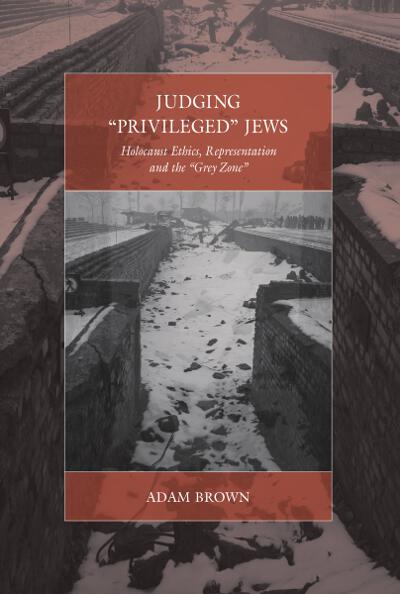
In German concentration camps, some Jewish prisoners were selected by their Nazi captors to hold more-advantaged positions within the population of the camp. This not only allowed them some protections, but also made them targets of disdain from other victims. Author Adam Brown sheds light on these “privileged” few in his volume Judging “Privileged” Jews: Holocaust Ethics, Representation, and the “Grey Zone,” published in July of last year. Following, Brown discusses about the origins of his interest in the Holocaust in general, and in this inspirational “Grey Zone,” in particular.


________________________________________________


The evolution of my book, Judging “Privileged” Jews: Holocaust Ethics, Representation and the “Grey Zone,” was – like most books no doubt – somewhat long and complex. To take the long-term view, the project began when I heard the moving personal stories spoken by survivor guides on a high school trip to the Jewish Holocaust Centre in 1999. As a non-Jewish teenager with next to no background knowledge of the event, the visit to the JHC inspired a lasting curiosity and sense of obligation to find out more.

Continue reading “A ‘Privileged’ Prisoner is Still a Prisoner”

A Class Issue: Language and Education in India

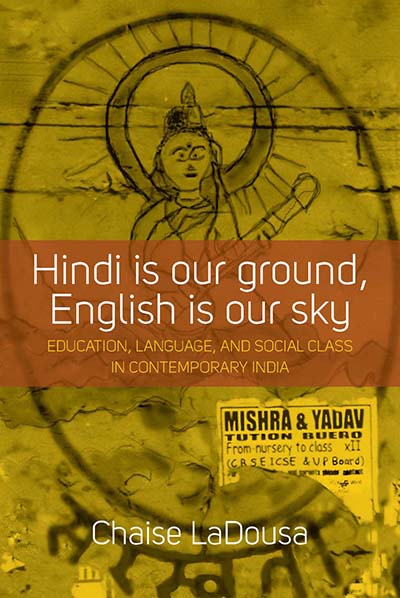
In the past three decades within India, a knowledge of the English language has become more important for economic advantage. All the while, Hindi is essential to those who wish to pursue class mobility. These “mediums” form a divide within the country’s educational system, which come to the forefront in Chaise LaDousa’s Hindi is our Ground, English is our Sky: Education, Language, and Social Class in Contemporary India, published this month. Following are two excerpts from the book, the first from the Foreword by Krishna Kumar, and the second from the Preface.

__________________________________________________


[Chaise LaDousa] has studied India’s vertical language divide in the North Indian city of Varanasi. The study takes us well beyond the shibboleths proffered about India’s linguistic plurality. The key word that enables LaDousa to enter the separate yet interwoven milieus of Varanasi is “medium.” The term is so omnipresent in the Indian urban environment that no one marvels at the versatile service it renders to India’s society and state. It resides securely in the phrase “medium of instruction” that is used across India as a public code to identify two types of schools and the opportunity markets to which they promise access.

Continue reading “A Class Issue: Language and Education in India”

Author Becomes Subject: Droysen as Topic of Historical Volume

Scholarship has come full circle for Johann Gustav Droysen — a historian lauded for his much-cited volume on Alexander the Great — as the author-historian is now the subject of study. Author Arthur Alfaix Assis delves into the historical theories of Droysen in What is History For? Johann Gustav Droysen and the Functions of Historiography, to be published later this month. Assis precedes the publication by sharing the root of his interest in the scholar, why he believes Droysen is important, and what Assis might have done if he did not follow the path of academia.


______________________________________________


Berghahn Books: What drew you to the study of Johann Gustav Droysen?


Arthur Alfaix Assis: I like to think that part of it has to do with the great impression left on me by the very first text I read as an undergraduate: Max Weber’s ‘Science as a Vocation’. I was a freshman at a provincial university in central Brazil, and was very eager to get in touch with serious historical and philosophical literature. But after a single week of lectures came a three-month-long strike, and the only reading assignment left was Weber’s text.

Continue reading “Author Becomes Subject: Droysen as Topic of Historical Volume”

Policy-Tracing Up, Down, Sideways

In an excerpt from the Introduction of A Policy Travelogue: Tracing Welfare Reform in Aotearoa/New Zealand and Canada, published in September, Catherine Kingfisher explains just how she came to be interested in the subject of welfare policy, and its existence as a living, working idea.


____________________________________

My interest in tracing policy began in the summer of 2000, when I was writing grant applications to work with welfare mothers in southern Alberta, where I had recently moved from Aotearoa/New Zealand. I discovered that in the early 1990s the Alberta provincial government of premier Ralph Klein, in the process of reforming its governing structures and welfare systems, had been heavily influenced by Roger Douglas, the former Finance Minister of New Zealand.

Continue reading “Policy-Tracing Up, Down, Sideways”

Forest Protection Fail: How ‘Things Fall Apart’

Pauline von Hellermann seeks the root causes of African deforestation in Things Fall Apart? The Political Ecology of Forest Governance in Southern Nigeria, published in September. The volume stems from Hellermann’s ethnographic and historic research within the tropical forest of Nigeria’s Edo State as she digs to uncover the failings of forest protection. The following is an excerpt from the Introduction.


____________________________________________

To international foresters and conservationists, there are clear links between recent management failure and deforestation in Nigeria. The Conservation Atlas of Tropical Forests, for example, states that Nigeria’s ‘natural forests were carefully managed in the early part of the century, [but] they have since been severely over-exploited’ (Lowe, et al. 1992: 230; see also Oates 1999). Nigerians themselves routinely blame corruption and greed amongst foresters and politicians for forest loss and the depletion of timber. Such accounts fit smoothly into the broader perception of Nigerian governments as corrupt and inefficient; into the constant refrain that ‘things fall apart’ in Nigeria.

Continue reading “Forest Protection Fail: How ‘Things Fall Apart’”

Jünger in Paris: A Writer’s Wartime Account in the City of Lights

Allan Mitchell takes a look at Ernst Jünger, an under-appreciated twentieth century writer, but an important social figure. The Devil’s Captain: Ernst Jünger in Nazi Paris, 1941-1944 follows the writer at wartime, where he spent his stint in Paris as a military officer whose chief duty was to “mingle with French intellectuals.” Below is an excerpt from the volume, which was originally published in May 2011 and is soon to be released in ebook format.


________________________________________

Very few, if any, critics of German literature would rank Ernst Jünger among the greatest writers of the twentieth century. He simply does not compare, as a novelist, with giants like Thomas Mann, Franz Kafka, or Robert Musil. His signature work, Auf den Marmorklippen, has been often justly praised for its chiseled language and allegorical imagination. But for later generations raised on soaring flights of science fiction, Jünger’s 1939 work must seem brief, rather stilted, and now somewhat dated. In any event, it pales beside Buddenbrooks and Der Zauberberg, Das Urteil and Das Schloss, or Der Mann ohne Eigenschaften.

Continue reading “Jünger in Paris: A Writer’s Wartime Account in the City of Lights”