The Life of a Religious Movement: Steps in a Trajectory

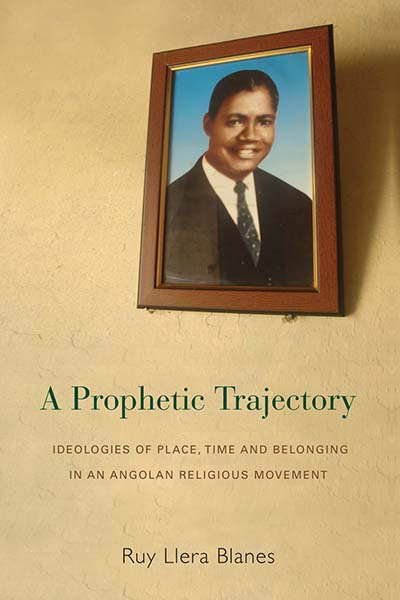
Ruy Blanes’ A Prophetic Trajectory follows the life of Simão Toko and the dissemination of the religious movement he founded. While conducting his research, the author worked in Angola, Portugal, and the United Kingdom, where he gathered facts and a collection of photographs — which are introduced and displayed below.


_______________________________


My recently published book, A Prophetic Trajectory, highlights the life and memory of an Angolan prophet, Simão Gonçalves Toko (1918-1984). Continue reading “The Life of a Religious Movement: Steps in a Trajectory”

Cultivating Communication between Cultures

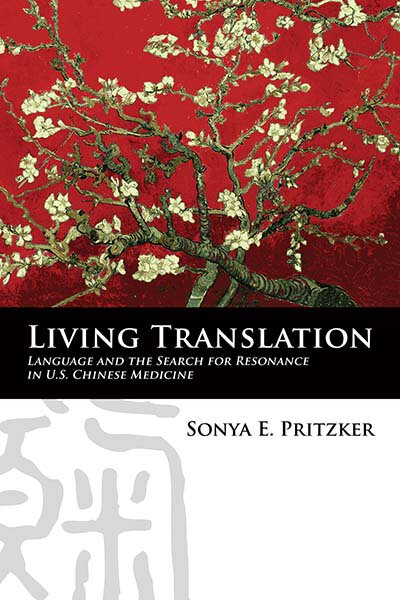
Later this month, Sonya Pritzker’s monograph Living Translation: Language and the Search for Resonance in U.S. Chinese Medicine will be published. Within this volume, Pritzker explains that translation is not a static exercise, but is instead a variable and experiential undertaking. Following, the author shares how she became enamored of Chinese culture and discovered the life of language.


____________________________________


I went to China for the first time in 1995. I was 19. The skies in Beijing were blue then, and the remnants of a stark and closed era were everywhere. I look back on the things of that time with nostalgia, the ever-present red thermoses with flowers, cheap rubber shoes, mian bao che or “bread box” cars, flying pigeon bicycles. My passion for China, in particular the Chinese language, had arisen over time.


Continue reading “Cultivating Communication between Cultures”

Researching Relevance, or How Sociology Preserved the Church

In Benjamin Ziemann’s historical account Encounters with Modernity: The Catholic Church in West Germany 1945-1975, to be published next month, the author explains how the church attempted to systematically — using the tools of social science — maintain its relevance in post-war German society. Following, the author explains how he, almost completely by accident, happened upon this research that would lead to his future book.

_____________________________
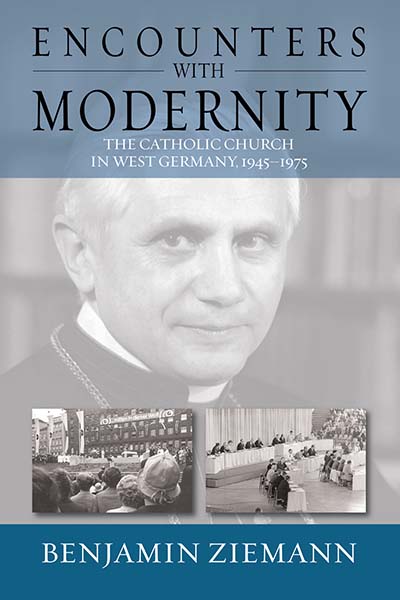
Rather than being the result of meticulous planning, I stumbled over this topic by chance. Originally, I had an interest in writing about the Catholic milieu in 1950s West Germany, and thought that starting with the miners at the Ruhr would be a good idea, not least because I taught at Bochum at the time. One of the challenges that I faced was to gather data on the practiced piety of Catholic workers such as church attendance or Easter Communions, which I thought were difficult to obtain. While I spent time pursuing other hints in the Essen municipal library, I found reports by the “Pastoral Sociological Institute of the Diocese in Essen” (PSI) for the late 1950s. This institute had broken down a count of churchgoers in Essen according to social strata, gender and other social characteristics. Here, I had all the data that I seemed to need.

Continue reading “Researching Relevance, or How Sociology Preserved the Church”

The Historic Influence of Intellectuals

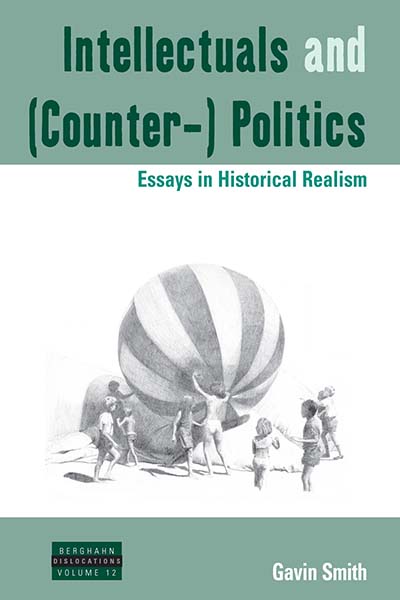
In Gavin Smith’s Intellectuals and (Counter-) Politics: Essays in Historical Realism, which was published earlier this month, the author takes a look at the role of the intellectual (specifically the social scientist) in three important areas — studying capitalism, making histories, and producing places. According to the author, “Reflexivity for the social scientist, Bourdieu argued, involves an objectivist ethnography of ethnographers,” a task Smith himself undertook in both Spain and Peru. Following, he reflects on his time spent conducting ethnographic research in Peru.


Continue reading “The Historic Influence of Intellectuals”

Tracing the Path Toward and Away From Genocide

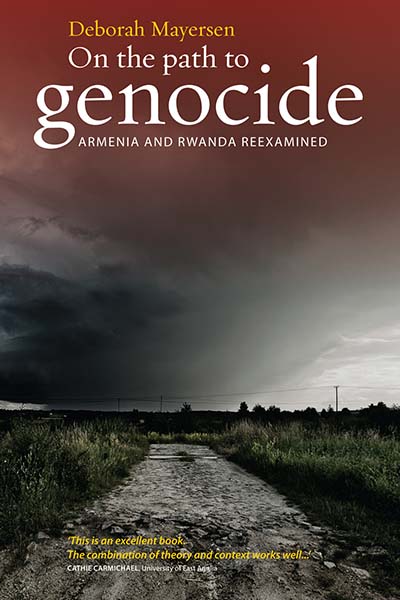
How and why does genocide occur, and how can we identify these warning signs to prevent it in the future? In On the Path to Genocide: Armenia and Rwanda Reexamined, Deborah Mayersen looks to conflicts in 1915 Turkey and 1994 Rwanda to answer these difficult questions. Following, the author explains the path to her study of genocide, traces her steps to the book, and points to where her research will take her in the future.


__________________________________________


Berghahn Books: What attracted you to study the genocide of Armenian and Rwandan peoples?


Deborah Mayersen: As a school student, I learned about the Holocaust and the international promise of ‘Never Again’ in its wake. Yet at University, I learned about the betrayal of this promise, with the genocides in Cambodia and Rwanda for example. I wanted to understand more about the history of genocide, and why it has become so prevalent in the modern world. This led me to examine in greater detail these two genocides, at the opening and closing of the twentieth century.

Continue reading “Tracing the Path Toward and Away From Genocide”

Conception to Delivery: Sharing an Account of Mizrahi Mothers

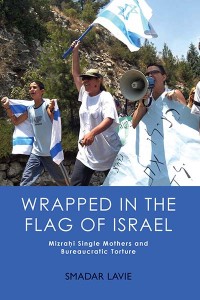
Smadar Lavie’s soon-to-be-published book Wrapped in the Flag of Israel: Mizrahi Single Mothers and Bureaucratic Torture is a personally inspired account that  stems from her own life as a single mother in Israel. Following, the author reveals how this inspiration became a book, and speculates about how this account will be received. This is the second of the author’s reflections on the Berghahn blog, read the first here.


_________________________________


http://berghahnbooks.com/blog/wp-content/uploads/2014/04/LavieWrapped-e1397829882448.jpgBerghahn Books: What inspired your love of your subject? When?
 

Smadar Lavie: My years in Israel as a welfare mother forced me to become my own informant. Those years were full of hardship. I am using the privilege of my U. C. Berkeley education and the power and proficiency of my English words to call attention to the plight of all Mizrahi single mothers in the State of Israel.

Continue reading “Conception to Delivery: Sharing an Account of Mizrahi Mothers”

A Lived Journey: Tracing ‘The Path to the Berlin Wall’

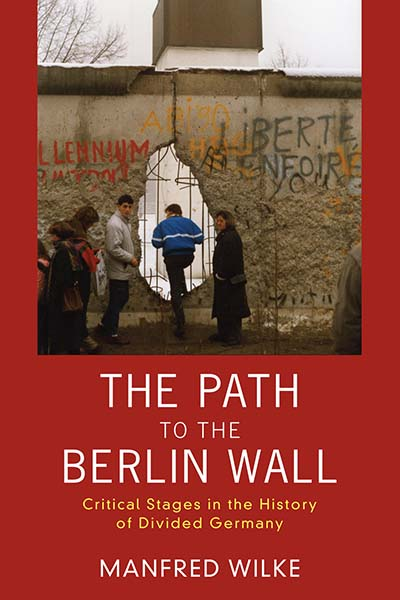
The Berlin Wall may have been erected in 1961, but the figurative foundation was laid in 1945, as the Soviet Union’s Communist Party and its allies made selections of their areas of influence. In The Path to the Berlin Wall: Critical Stages in the History of Divided Germany, author Manfred Wilke traces the events that led to the eventual construction of the Berliner Mauer. Wilke’s original volume was translated from German into English by Sophie Perl. Following is Perl’s interview with the author about his book.

Continue reading “A Lived Journey: Tracing ‘The Path to the Berlin Wall’”

Examining ‘Public Health’: A Reflection on Reception

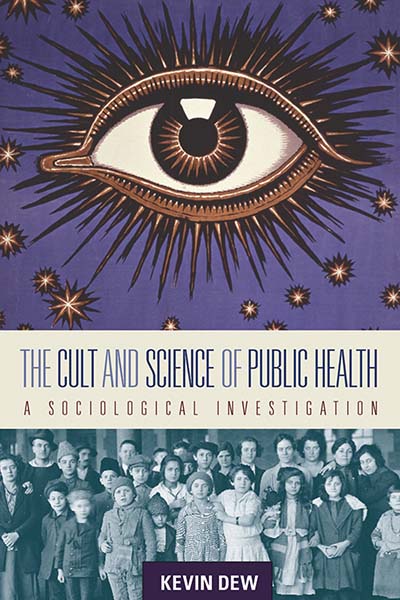
With World Health Day coming up April 7, the paperback release of Kevin Dew’s exploration of public health is quite timely. The Cult and Science of Public Health: A Sociological Investigation was published originally in February 2012 and will be published as a paperback this month. Below is a brief description of the book, and the author’s reflection on its reception since the initial publication.

________________________________________________


As a cult of humanity, public health provides a moral force in society that replaces ‘traditional’ religions in times of great diversity or heterogeneity of peoples, activities and desires. This is in contrast to public health’s foundation in science, particularly the science of epidemiology. The rigid rules of ‘scientific evidence’ used to determine the cause of illness and disease can work against the most vulnerable in society by putting sectors of the population at a disadvantage.

Continue reading “Examining ‘Public Health’: A Reflection on Reception”

Doubly Disenfranchised: A Firsthand Account of Life as a Mizrahi Woman

The largest population of Mizrahi Jews, those with origins in Middle Eastern countries, lives in Israel. However, in this country Mizrahim are historically and currently disenfranchised, with preference given to Jews of European descent, or Ashkenazi. In Wrapped in the Flag of Israel: Mizrahi Single Mothers and Bureaucratic Torture, to be published this month, Smadar Lavie, herself a Mizrahi Jewish woman, explores the Israeli bureaucratic system and Mizrahi women’s relationship with it. Following, the author answers the question: What aspect of writing Wrapped in the Flag of Israel did you find most challenging? Most rewarding?


_____________________________________


Most challenging was weaving a text out of two decades worth of fieldwork data. Though I started my research efforts in 1990 as a tenured professor at U. C. Davis, the bulk of the fieldwork was collected during my years as a Mizrahi single mother on welfare between 1999-2007. For a typical book-length ethnography, most scholars spend a total of around two years in the field collecting data, supported by grants and sabbaticals. Afterward, they return to their home university and write the book manuscript, also supported by grants and sabbaticals.

Continue reading “Doubly Disenfranchised: A Firsthand Account of Life as a Mizrahi Woman”

Storms, Sickness, Suspicions: The Darker Side of Migration

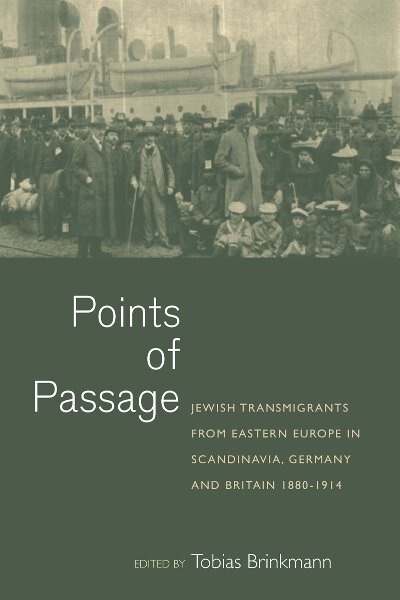
In Points of Passage: Jewish Migrants from Eastern Europe in Scandinavia, Germany, and Britain 1880-1914, published last October, contributors reveal some of the less-savory aspects of immigration (of which there were many). Following, in an excerpt from the newly published volume, editor Tobias Brinkmann gives two examples of passengers enduring misery before arriving on the supposed paradise of North American soil. This is the second entry about the book; read the former here.
_______________________________________

The essay collection “Points of Passage” seeks to shift attention from the well-known success story of Jewish immigration in the United States to the journey. On which paths did Jewish (and other) migrants travel from Eastern Europe to the ports on the North Sea and across the Atlantic between the 1880s and the 1920s, and which obstacles did they face? Researching the paths of migration can be much more challenging than studying immigration.

Continue reading “Storms, Sickness, Suspicions: The Darker Side of Migration”