Helping without Harming and Minding the Balance

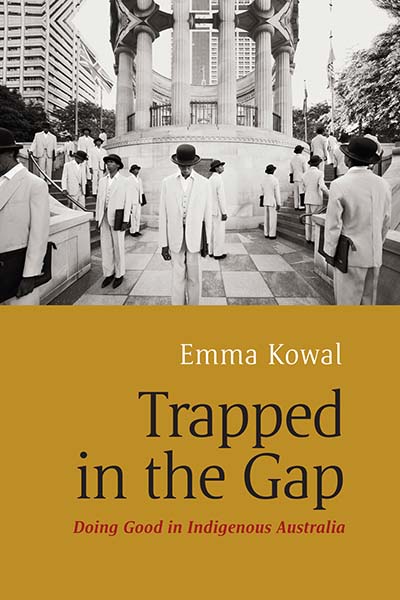
Author Emma Kowal explores the “good” that well-meaning White Australians are doing for Indigenous Australians. This path to help is charted in Trapped in the Gap: Doing Good in Indigenous Australia, a recently published book that asks the question: How can one help without harming? Following, Kowal explains the origins and reception of her work studying this group of “White anti-racists.”


___________________________________


‘You’re an anthropologist and you study… White people?’ I regularly receive a puzzled look from people when I tell them what I do. Anthropologists are supposed to study Indigenous tribes in remote locations, aren’t they? Or at least something exciting, like drug addicts or slum dwellers.


Continue reading “Helping without Harming and Minding the Balance”
Making-Over Northern Ireland by Changing Facades & Perceptions

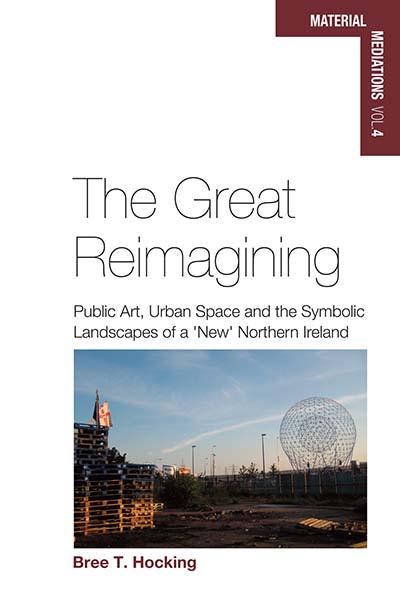
Through art, architecture, and “symbolic landscapes,” post-conflict Northern Ireland is changing the “face” it shows the world. Bree T. Hocking explores this new identity in The Great Reimagining: Public Art, Urban Space, and the Symbolic Landscapes of a ‘New’ Northern Ireland. In the following short essay, the author explains some of actual and perceived changes, by way of the words exchanged with a young Protestant man.


On a recent visit to Northern Ireland, I met a young Protestant man from the Shankill Road heading home after dropping off his daughter at a nearby crèche. It was hardly an extraordinary encounter—save for the fact that the man had just left his toddler at a nursery on the Catholic side of one of Belfast’s largest and oldest peace walls. (These walls, sometimes up to eight metres tall, separate many working-class neighborhoods across the city along ethno-national lines.)

Continue reading “Making-Over Northern Ireland by Changing Facades & Perceptions”

Visions of The Other: Swiss & Malagasy See, But Do They Understand?

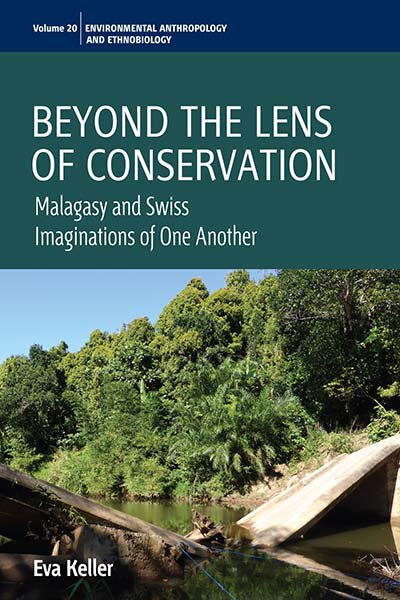
Where do Switzerland and Madagascar meet, and what do the people of each place think of those in the other? Eva Keller, in her recently published Beyond the Lens of Conservation: Malagasy and Swiss Imaginations of One Another, in seeking to connect these two places winds up highlighting the disconnect between them. Following, the author offers a brief glimpse into the volume from two directions: from a Swiss classroom looking at Madagascar and from a Malagasy man looking at a national park.


_______________________________


Read the following extract of a conversation which took place in a Swiss classroom with pupils aged between 11 and 12. My questions are in italics.


What do you know about Madagascar?


Takschan: I think there are cannibals there, I think, the people, like they eat the flesh.

Continue reading “Visions of The Other: Swiss & Malagasy See, But Do They Understand?”

Supercinematic Projection: Author Looks toward Future of Film Studies

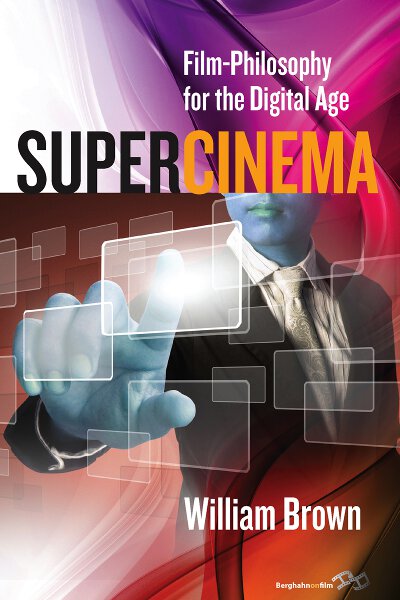
Supercinema: Film-Philosophy for the Digital Age, originally published in May 2013, is now available in paperback. Following, author William Brown reflects on the book as a launching pad for his own studies and what he perceives as the forward trajectory of film studies. This post pairs with his reflection on the book’s initial release, which can be read here.


______________________________________


The argument in Supercinema: Film-Philosophy for the Digital Age is about the depiction and possible meanings of the continuous times and spaces that contemporary mainstream cinema often seems to depict thanks to the aesthetic possibilities opened up to, or at the very least made more easily achievable by, cinema as a result of digital technology.

Continue reading “Supercinematic Projection: Author Looks toward Future of Film Studies”

Author of ‘Jesus Reclaimed’ Earns German Decoration

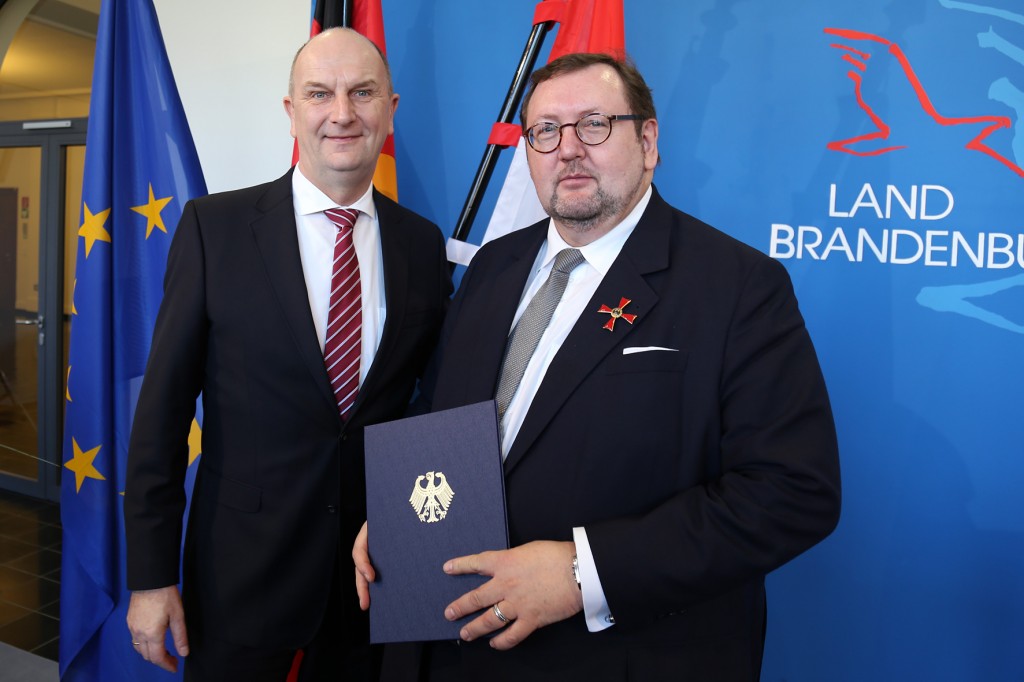
The President of the Federal Republic of Germany, Joachim Gauck, honoured Rabbi Walter Homolka with the Officers Cross of the Federal Merit Order.


On February 27, 2015, the Prime Minister of the State of Brandenburg, Dr. Dietmar Woidke, handed over the insignia in the state chancellery in Potsdam.


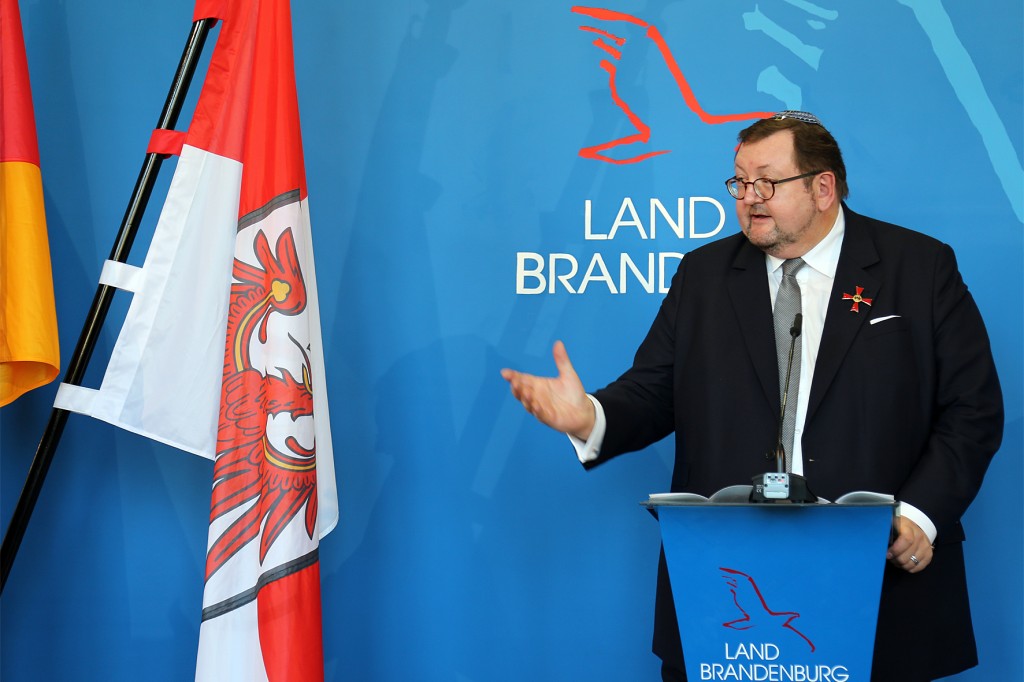
Woidke thanked Rabbi Homolka for the establishment of the Abraham Geiger  College in 1999 as the first rabbinical school in Continental Europe after the Holocaust.
Homolka’s initiative in 2013 also formed the School of Jewish Theology of the University of Potsdam, Germany’s Jewish Divinity School. Rabbi Homolka is a professor of Modern Jewish Thought there.


On the day of the honour Germany’s nationwide tabloid BILD voted Homolka “winner of the day.”


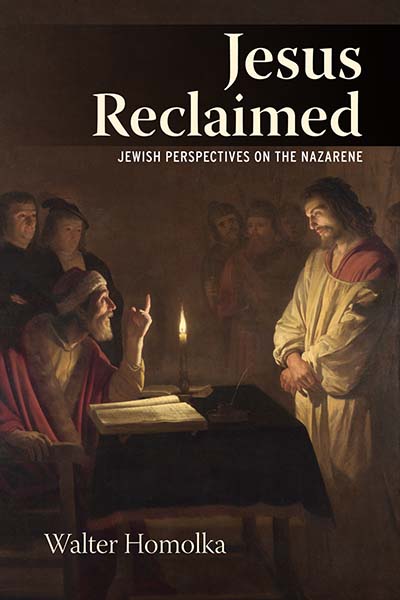
Rabbi Walter Homolka is author of Jewish Identity in Modern Times: Leo Baeck and German Protestantism (1995) and Jesus Reclaimed: Jewish Perspectives on the Nazarene (2015), and co-editor, with Albert Friedlander, of The Gate to Perfection: The Idea of Peace in Jewish Thought (1994). He is the rector of the Abraham Geiger College, Germany’s first rabbinical seminary after the Holocaust, and a professor of Modern Jewish Thought at the School of Jewish Theology of the University of Potsdam in Germany.


Seeing is Feeling: Tangible Emotion in the Work of Aronofsky


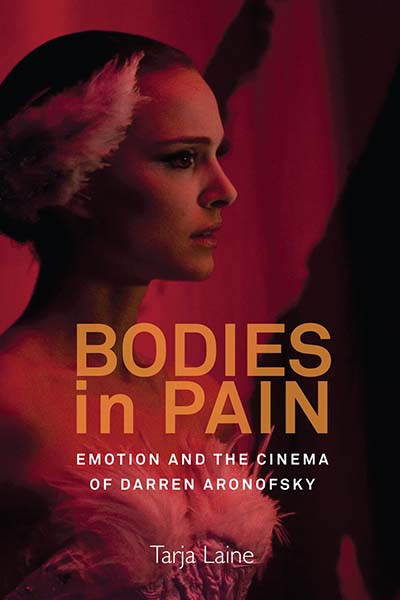
In Bodies in Pain: The Emotion and Cinema of Darren Aronofsky,  Laine explores the emotionally engaging nature of this prominent director’s work, which includes Requiem for a Dream and Black Swan, Pi and The Fountain. Following, the author explains how she came to write this book, as well as some emotional nuances in the director’s oeuvre.


In 2011 when I was asked by Mark Stanton, then-senior editor at Berghahn Books to write a book about emotion and film aesthetics in the cinema of Darren Aronofsky, my book entitled Feeling Cinema had just been released a month before. At that point I was not planning to start a new book project any time soon, and nor did I have a clue where the next idea for a book would come from, so his proposal almost appeared to me as a gift from the universe. Furthermore, since Aronofsky as a filmmaker was not an obvious choice for me to write about, it was an extra challenge to come up with an aesthetically meaningful starting point, without falling into the trap of cheap auteurism.

Continue reading “Seeing is Feeling: Tangible Emotion in the Work of Aronofsky”

‘Healing Roots’: Author Traces Life of Wild Plant from Farm to Pharm

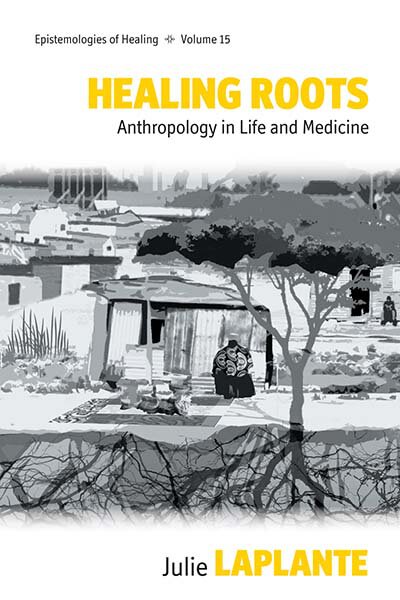
The healing powers of a plant in sub-Saharan Africa, long used for indigenous medicine, are now being harnessed as a pharmaceutical to be more widely produced and sold. Author Julie Laplante follows this path of production of Artemesia Afra from a wild-growing bush to a processed, controlled substance in her soon-to-be-published monograph, Healing Roots: Anthropology in Life and Medicine. Following, Laplante shares how her own path led her from researcher to author.


_________________________________


The journey told in the book began in August 2006 within the Biomedicine in Africa research group at the Max Planck Institute für etnologische forshung in Halle (Saale), Germany, as we were invited to explore how biomedicine is both shaping and being shaped through its practices in Africa. My own research project entitled ‘South African Roots towards Global Knowledge’ namely intended to find out how this is done through the practices of clinical trials as they aim to ‘recognize’ indigenous medicine.

Continue reading “‘Healing Roots’: Author Traces Life of Wild Plant from Farm to Pharm”

Meeting of Minds and Disciplines: Authors Discuss ‘Anthropology & Political Science’

Myron J. Aronoff and Jan Kubik’s  Anthropology and Political Science: A Convergent Approach was published in paperback last November. Following, the co-authors reflect on the conception of the book and their writing process, as well as its reception since the initial publication.


I lived abroad for a dozen years from 1965-1977 having earned a Ph.D. in social anthropology from Manchester University and in political science from UCLA. The Chair of the Department of Political Science at Tel Aviv University, where I had taught for eight years, asked me what I would write about when I returned to the US to take up my position at Rutgers University. I told him that, among other topics, I intended to write an analysis of the convergent approach bridging anthropology and political science that I was developing. I then wrote my third book on Israel and updated and expanded my earlier book on the Israel Labor Party.

Continue reading “Meeting of Minds and Disciplines: Authors Discuss ‘Anthropology & Political Science’”

Prose and Economic Development in an African Village

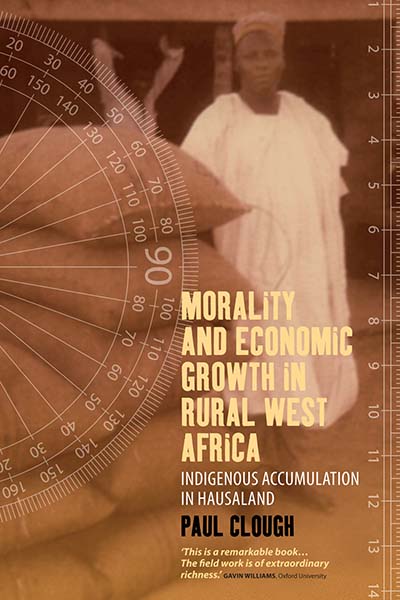
Paul Clough spent many years studying the economic situation of the Marmara village, in Hausaland, northern Nigeria. His work there began in 1977-1979, then was followed by stints in 1985, 1996, and 1998. In Morality and Economic Growth in Rural West Africa: Indigenous Accumulation in Hausaland, his book based on that fieldwork, the author explores the economic growth and accumulation of this non-capitalistic, polygynous society through boom and bust periods. Following is the author’s reflection on his book, fieldwork, and forged relationships.


________________________________


What drew you to the field of African studies? Specifically, what drew you to Hausaland in Nigeria?


All of this happened by accident when I was very young. I wanted to be a volunteer, to work in the field of development. Since the Peace Corps in early 1970 would not send me to Latin America (perhaps because I had no Spanish), I managed through other channels to find a teaching post in northern Nigeria. I arrived at Kano Airport in late 1970, when I was only twenty-two, knowing next to nothing about Africa or Hausaland.


But I fell in love immediately.

Continue reading “Prose and Economic Development in an African Village”