

Journal of Romance Studies
Volume 15, Issue 1
This issue includes articles on a range of topics.
Continue reading “Hot Off the Presses – New Journal Issues Published in April”
 Join our Email List





Berghahn Journals content
Journal of Romance Studies
Volume 15, Issue 1
This issue includes articles on a range of topics.
Continue reading “Hot Off the Presses – New Journal Issues Published in April”
 We are delighted to inform you that we will be attending the 20th Annual Association for the Study of Nationalities World Convention (23-25 April 2015) at Columbia University in New York City. Berghahn will be exhibiting for one day only! Please stop by our stand on Friday April 24th, and don’t miss your chance to browse our selection of books and pick up FREE journal samples!
For more info about the Association for the Study of Nationalities, click here.
If you are unable to attend, we would like to provide you with a special discount offer. For the next 30 days, receive a 25% discount on any of the titles listed below. Simply enter the code ASN15 at checkout. Visit our website for a complete listing of all published and forthcoming titles.
Continue reading “Association for the Study of Nationalities Conference”

French Politics, Culture & Society
Volume 33, Issue 1
The contributions in this special issue represent a new wave of scholarship that brings the insights of recent post-Revolutionary historiography to the process of colonial transition.
Critical Survey
Volume 26, Issue 2
This features articles which explore topics related to the many works of William Shakespeare and ends with an interview with poet and critic Ruth O’Callaghan.
Social Analysis
Volume 59, Issue 1
This special issue is titled “Stategraphy: Toward a Relational Anthropology of the State” and is based in part on papers presented at the conference “Local State and Social Security: Negotiating Deservingness and Avenues to Resources in Rural Areas,” which took place in Halle from 30 June to 2 July 2011.
The following is the third in a series of posts on Jane Austen. This is a guest post written by Anne Toner, contributor to a special issue of Critical Survey which is devoted to the subject of Jane Austen. Anne Toner is the author of the article titled “Landscape as Literary Criticism: Jane Austen, Anna Barbauld and the Narratological Application of the Picturesque.”
We are in the midst of Jane Austen bicentenary celebrations. Formidably, in the six years preceding her death in 1817, when she was only 41, Austen saw four novels published, as well as writing another complete novel (Persuasion) and revising one more (Northanger Abbey), both to be published posthumously.
Continue reading “Landscape as Literary Criticism in Jane Austen’s Fiction”
Transfers
Volume 5, Issue 1
This issue features a special text, this time a translation by Guillermo Giucci of some pages of his new work in Spanish. This issue also features a special section on road representation.
Continue reading “Hot Off the Presses – New Journal Issues for February”
International Women’s Day is annually held on March 8 to celebrate women’s achievements. It is also known as the United Nations Day for Women’s Rights and International Peace.
In recognition of this day, Berghahn is pleased to offer a 25% discount on any of our Gender Studies books on orders placed within the next 30 days. At checkout, simply enter the code IWD15.
We would also like to invite you to explore a special issue of Aspasia devoted to International Women’s Day. The year 2010 marked the centennial of International Women’s Day, and the year 2011 marked the centennial of its first celebrations. Inspired by these events, this issue deals with “A Hundred Years of International Women’s Day in Central, Eastern and Southeastern Europe.”
VOLUME 6: Celebrating 100 Years of International Women’s Day
THEME SECTION: A Hundred Years of International Women’s Day in CESEE
From West to East: International Women’s Day, the First Decade
Rochelle Goldberg Ruthchild
Together and Apart: Polish Women’s Rights Activists and the Beginnings of International Women’s Day Around 1911
Iwona Dadej and Angelique Leszczawski-Schwerk
The Different Faces of a Celebration: The Greek Course of International Women’s Day, 1924-2010
Angelika Psarra
FORUM
Clio on the Margins: Women’s and Gender History in Central, Eastern and Southeastern Europe (Part One)
Edited by Krassimira Daskalova
NEWS AND MISCELLANEA
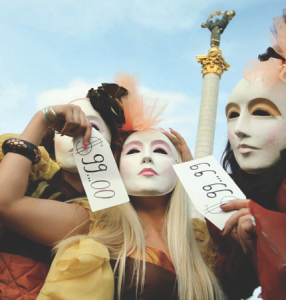
Ukrainian Women Reclaiming the Feminist Meaning of International Women’s Day: A Report about Recent Feminist Activism
Oksana Kis

We are delighted to announce that 2015 marks the fourth volume year that the Cambridge Journal of Anthropology has been published through Berghahn. The original journal of this name was an in-house publication based at Cambridge University, with a remit to provide a space in which innovative material and ideas could be tested.
The new Cambridge Journal of Anthropology builds on that tradition and seeks to produce new analytical tool-kits for anthropology or to take all such intellectual exploration to task. Re-acquaint yourself with the journal by exploring the special sections outlined below.
We hope you’ll be inspired by these innovative approaches that push at the boundaries of anthropology to bring you fresh insights from pioneering scholars in the field.
Volume 32
Number 2, Autumn 2014
Special Section: Risks, Ruptures and Uncertainties: Dealing with Crisis in Asia’s Emerging Economies
Asia’s ongoing economic transformation has created a variety of unexpected ruptures, discontinuities and opportunities in the lives of local citizens across the region. The articles in this section contribute to an understanding of local responses to, and strategies for coping with, risk and uncertainty as multidimensional, interwoven aspects of daily life, guided by social, economic and moral considerations.
Volume 32
Number 1, Spring 2014
Special Section: Epidemic Events and Processes
The articles in this collection bring together epidemiology and social anthropology. They take us through epidemics critically distinguished as crises and as events, and through epidemics understood analytically as syndemics and as productive of both proliferating ‘projects’ and a compelling quest for ever-growing intelligence and ‘real-time’ surveillance. In this collection, we see the importance of a social anthropological understanding of the human subjects that epidemics, and responses to them, can constitute–and we glimpse some of the interagentivity in the treatment responses through which the lethal problem of ‘resistance’ can be created. In the case of ‘epidemics’ in this present issue, we see the import of anthropological material as it brings to the fore issues which, in another disciplinary language, are the historically contingent ‘externalities’ of ‘disease events’.
Volume 31
Number 1, Spring 2013
Special Section – Climate Histories and Environmental Change: Evidence and its Interpretation. Guest Editor David Sneath
The papers in this special section explore different visions of the environment and how they engender particular ways of seeing evidence of climatic and environmental change. A key aspect of such distinctive understandings seems to be the attribution of agency within conceptions of the environment that in each case are entangled with humans. Notions of the anthropogenic and non-equilibrial environments are explored in several of the papers collected here, along with ongoing debates surrounding the concept of the Anthopocene. An awareness of climate change has brought new urgency to the project of grasping our entangled environments in the diversity of their human understandings.
Volume 30
Number 2, Autumn 2012
Special Section
Thisspecial section reconsiders recent anthropological accounts of ‘Naturalism’, a term increasingly used as a shorthand for a bundle of purportedly western attitudes to nature, reality and mind/body distinctions. Anthropologists and others tend to invoke ‘Naturalism’ as a foil for descriptions of alternative ontologies elsewhere (such as animism or perspectivism), or alternatively, as a philosophical account of the world which is belied by Euroamericans’ own practices. By contrast, the papers in this section attempt to take naturalism seriously as an ethnographic object in its own right: who, if anyone, is a ‘naturalist’ and what do naturalist commitments look like and entail in practice?
Today, the American Anthropological Association celebrates the first National Anthropology Day, which has been set to recognize the field of anthropology and the work of anthropologists within it. Continue reading “Celebrate National Anthropology Day with Berghahn!”


Anthropology of the Middle East
Volume 9, Issue 1
This issue focuses on the critical political anthropology of the Middle East.
Continue reading “Hot Off the Presses – New Journal Issues for January”

The following is the second in a series of posts on Jane Austen. This is a guest post written by James Brown, contributor to a special issue of Critical Survey which is devoted to the subject of Jane Austen. James Brown is the author of the article titled “Jane Austen’s Mental Maps.”
The idea of mental maps was planted in my mind when I was a research student in Oxford. It comes from geography, especially from Peter Gould and Rodney White’s 1974 book, Mental Maps.
I’d also been an undergraduate at Oxford – one of Terry Eagleton’s students. I followed up the ideas he threw out about all manner of topics besides English literature. But as a postgraduate, things were different. I was writing about seventeenth-century drama, and Emrys Jones was my supervisor.
Emrys’s interests were wide-ranging. In the faculty’s list of research expertise, Emrys’s entry was ‘English literature 1500 to 1800’, with some later topics thrown in for good measure. He was an expert on Byron, for example. Though there were no degrees in drama at Oxford, Emrys took an obvious delight and interest in theatre. He could look forbiddingly donnish (as he does in Al Pacino’s Looking For Richard), but if he was talking about a performance he’d liked, his delight was infectious. At one of our meetings we got onto the topic of farce, and Emrys thought of a show in which Sheila Steafel had made an entrance that was side-splittingly funny because she was wearing sensible shoes. I can’t remember exactly how or why the sensible shoes were funny, but I do remember Emrys, in his book-lined room in New College, succumbing to a fit of giggles, struggling to gasp out the words ‘sensible shoes’, and wiping away tears of laughter.
Emrys proposed all manner of connections between the drama I was researching and other literature and theatre. But, to me at any rate, he seldom suggested reading something from quite another discipline. So when he recommended Gould and White’s Mental Maps the title lodged in my mind. I thought of using it in my doctoral work as a way of understanding late seventeenth-century playgoers’ perceptions of London. But in the end I didn’t use it in my thesis. So the idea remained filed away at the back of my mind, waiting for its cue. The cue was just over twenty years coming. When I saw the call for papers for the ‘Locations of Austen’ conference at Hatfield a couple of years ago, the phrase ‘mental maps’ popped back up.
As it happens, the way I’ve used the concept shows the influence of Terry Eagleton as well as of Emrys Jones. Though they were both Oxford professors of English, I suspect they felt they had little in common. Even though he’d been at Oxford for 14 years when I met him, and would remain for another 18, Terry gave the impression he was just passing through, and he’s since left. Emrys, on the other hand, seemed wedded to the place. Having been C.S. Lewis’s student, in 1955 he had been chosen by Lewis as his successor at Magdalen, and he only left Magdalen in 1984 to take up the Goldsmiths’ Chair at New College a quarter of a mile away, just the other side of Longwall Street. Yet it dawned on me, as I revised ‘Jane Austen’s Mental Maps’ for Penny Pritchard’s special issue of Critical Survey on Austen, that I had finally succeeded in bringing the two of them together. Emrys had alerted me to the idea of mental maps. But the way I describe them in my essay as performative – as being about what one can do with them rather than simply reflecting false consciousness – goes back to what I learned about ideology from Terry. Having struggled as postgraduate to reconcile what I learned from each of them, there’s a private satisfaction in finally bringing them together.
___________________________________________________________________________
James Brown is an associate research fellow in the Department of Politics at Birkbeck, and a lecturer in theatre at IES Abroad, having previously taught politics and sociology at Birkbeck and film and literature at Middlesex University.