Starting with Place: Understanding Characters and Experiences in Jane Austen’s Final Novel

Critical Survey

The following is the first in a series of posts on Jane Austen. This is a guest post written by Rebecca Posusta, contributor to a special issue of Critical Survey which is devoted to the subject of Jane Austen. Rebecca Posusta is the author of the article titled “Architecture of the Mind and Place in Jane Austen’s Persuasion.”


“Architecture of the Mind and Place in Jane Austen’s Persuasion” is in essence a project that explores how the characters of Jane Austen’s final novel understand their physical, social, and psychological place. But, it is also about how the places in which they live tell the story about who they are. It is a project that began to germinate long ago, early in my scholarly career, and is the product of my earliest ideas about myself and how I fit in the world. I grew up in New Orleans, Louisiana; and, it is in New Orleans that I first met Jane Austen and found a connection to the ordinary ideas of humanness with which her novels deal. New Orleans is an old city filled with the physical remnants of a luminous past which fascinate me and ground me in my personal history.


I am descended from a long line of French Creoles on my mother’s side who arrived in New Orleans in the late eighteenth and early nineteenth century. Growing up, I remember stories my mother and grandmother used to tell of the big house on Esplanade Avenue that was lost after the Civil War, the dashing young man who dabbled in vaudeville and scandalous womanizing, the house on Verbena Street with the mom-and-pop grocery at the back, and the new house on Dodge Avenue with its cinderblock siding, fish pond, and summer house meant for sleeping in on hot summer nights prior to the advent of central air conditioning. Walking through the red-bricked French Quarter with its wrought-iron balconies and cool shaded courtyards, or along the River Road amongst the crumbling façades of the antebellum plantations, I am reminded of a troubled and turbulent past, and have often wondered about my ancestors who once walked the same streets and along the same shelled drives as I have. Who were they? What were they like? Few have told their stories, but the walls and bricks, balconies and flying staircases of the places they lived echo with their lives and experiences.


It occurs to me that even fictional characters, particularly those of Austen, are a product of the place in which they live, or at least a product of the place in which their creator lives. This may be why fiction is so appealing to us; we can see our own experiences in the experiences of others. If I start to tell my story, I begin with a place, as I have done here. Austen’s novels often begin with place as well. We meet her characters as they face a disruption in their normal domestic routine and move, change, or accept unpleasant alterations to the place in which they live. At the beginning of Persuasion, Anne Elliot defines herself by her place at Kellynch, but when she moves away from that place and can look back at it with a more critical and detached eye, she learns to define herself and her future. She learns to tell her story by the new places she occupies just like I know myself by both where I have been and where I am headed.

___________________________________________________________________________

Rebecca Posusta, M.A., is a Senior Instructor in the English Department at University of Colorado, Colorado Springs.

access Rebecca Posusta’s Article here

Get a free sample issue of critical survey here  



Announcing 3 New Journals!

AnnouncementBerghahn Journals is delighted to announce that we will begin publishing three new journals in 2015!
 

These new publications will cover a range of topics across disciplines and promote academic discussion through articles, reviews, interviews, special sections, and more. For more information, please see below or click through to access the journals’ respective websites.

Boyhood Studies – An Interdisciplinary Journal

Boyhood Studies: An Interdisciplinary Journal is a peer-reviewed journal providing a forum for the discussion of boyhood, young masculinities, and boys’ lives by exploring the full scale of intricacies, challenges, and legacies that inform male and masculine developments. Boyhood Studies is committed to a critical and international scope and solicits both articles and special issue proposals from a variety of research fields including, but not limited to, the social and psychological sciences, historical and cultural studies, philosophy, and social, legal, and health studies.

One of the core missions of the journal is to initiate conversation among disciplines, research angles, and intellectual viewpoints. Both theoretical and empirical contributions fit the journal’s scope with critical literature reviews and review essays also welcomed. Possible topics include boyish and tomboyish genders; boys and schooling; boys and (post)feminisms; the folklore, mythology, and poetics of “male development”; son-parent and male student-teacher relations; young masculinities in the digital and postdigital ages; young sexualities; as well as representations of boyhoods across temporalities, geographies, and cultures.

Conflict and Society – Advances in Research

Organized violence — war, armed revolt, genocide, lynching, targeted killings, torture, routine discrimination, terrorism, trauma and suffering — is a daily reality for some while for others it is a sound bite or news clip seen in passing and easily forgotten. Rigorous scholarly research of the social and cultural conditions of organized violence, its genesis, dynamic, and impact, is fundamental to addressing questions of local and global conflict and its impact on the human condition.

Publishing peer-reviewed articles by international scholars, Conflict and Society expands the field of conflict studies by using ethnographic inquiry to establish new fields of research and interdisciplinary collaboration. An opening special section presents general articles devoted to a topic or region followed by a section featuring conceptual debates on key problems in the study of organized violence. Review articles and topical overviews offer navigational assistance across the vast and varied terrain of conflict research and comprehensive reviews of new books round out each volume. With special attention paid to ongoing debates on the politics and ethics of conflict studies research, including military-academic cooperation, Conflict and Society will be an essential forum for scholars, researchers, and policy makers in the fields of anthropology, sociology, political science, and development studies.

Screen Bodies

Screen Bodies is a peer-reviewed journal focusing on the intersection of Screen Studies and Body Studies across disciplines, institutions, and media. It is a forum promoting the discussion of research and practices through articles, reviews, and interviews that investigate various aspects of embodiment on and in front of screens. The journal considers moving and still images, whether as entertainment or for information through cinema, television, and the Internet; through the private experiences of portable and personal devices; or in institutional settings such as medical and surveillance imaging. Screen Bodies considers the portrayal, function, and reception of the body presented and conceptualized through the lenses of gender and sexuality, feminism and masculinity, trans* studies, queer theory, critical race theory, cyborg studies, and dis/ability studies.


Celebrating ‘Shakeshafte’ by Rowan Williams


ShakespeareBerghahn recently published the play ‘Shakeshafte‘ by Rowan Williams in the journal Critical Survey. Williams, who was the 104th Archbishop of Canterbury, is a highly-regarded poet and theologian whose play has been getting significant attention since its publication. To both honor the author and celebrate the publication of his play, we’ve linked to several articles about his work below. We hope you enjoy.

Continue reading “Celebrating ‘Shakeshafte’ by Rowan Williams”

Join us at AAA2014!

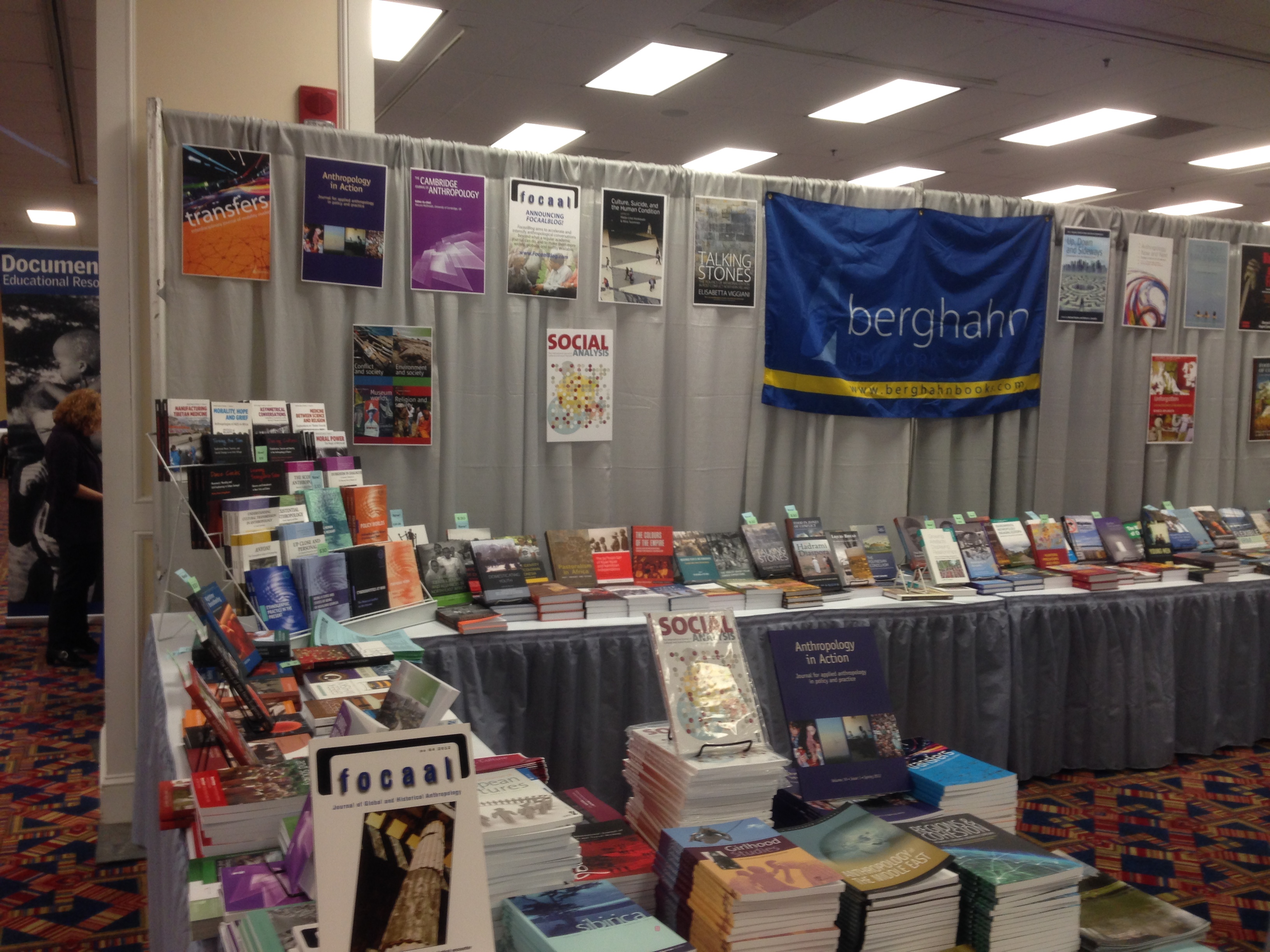
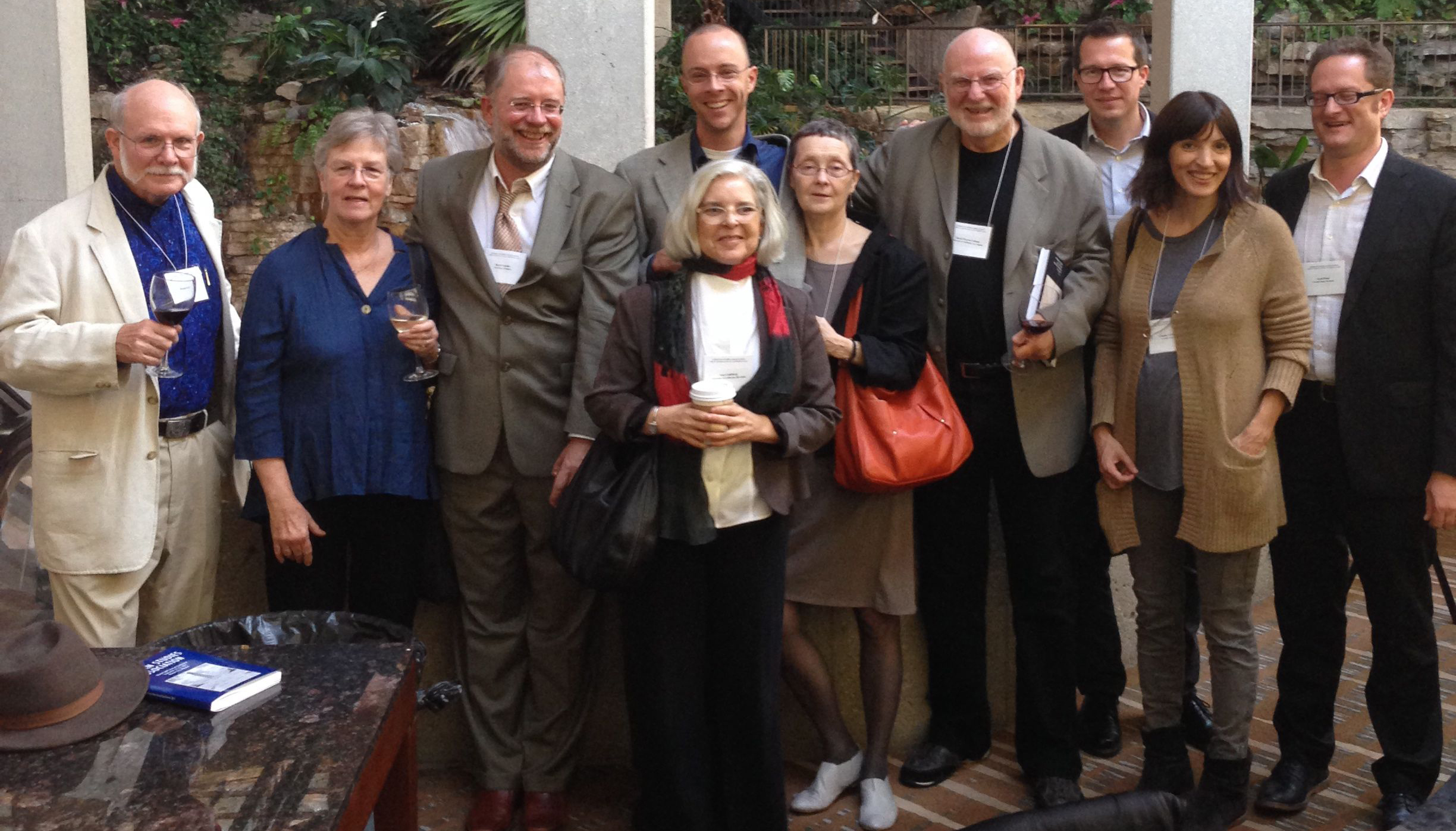
IMG_7569We are delighted to inform you that we’re at the 113th Annual Meeting of the American Anthropological Association Conference in Washington DC! Please stop by booths 409 & 411 to browse our selection of books for purchase and pick up journals samples.


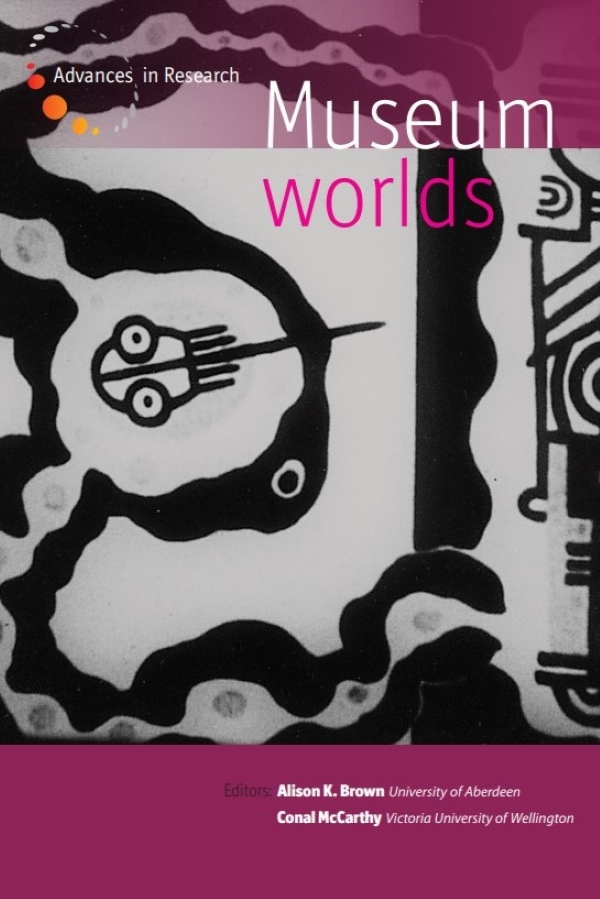
Please join Berghahn on Friday, December 7th at 4pm in the exhibit hall for a wine reception to be held at our booth to celebrate some of our newly published titles. We’ll also be celebrating the launch of our latest journal initiatives, which include these new blog and multi-media companion sites: Focaal Blog, Museum Worlds Companion, and EnviroSociety (coming soon).


We are also delighted to announce that, on the evening of Wednesday 3rd December, Marion Berghahn received an Executive Director’s Award for Excellence from the AAA to acknowledge Berghahn’s 20th anniversary in publishing. Congratulations, Marion! For pictures from the receiving, see below.


If you are unable to attend the conference, we would like to extend a special discount offer. This month, receive a 25% discount on all Anthropology titles. Visit our website and use discount code AAA14 at checkout.


– See more at: http://berghahnbooks.tumblr.com/post/104328582046/marion-berghahn-receives-award-at-aaa2014#sthash.c9kDE5zT.dpuf

– See more at: http://berghahnbooks.tumblr.com/post/104328582046/marion-berghahn-receives-award-at-aaa2014#sthash.c9kDE5zT.dpuf

– See more at: http://berghahnbooks.tumblr.com/post/104328582046/marion-berghahn-receives-award-at-aaa2014#sthash.c9kDE5zT.dpuf

– See more at: http://berghahnbooks.tumblr.com/post/104328582046/marion-berghahn-receives-award-at-aaa2014#sthash.c9kDE5zT.dpuf

Homage to a Historian: A Festschrift for David Warren Sabean

This post was submitted to Berghahn by the authors of Kinship, Community, and Self: Essays in Honor of David Warren Sabeanforthcoming in December 2014.


5


A Festschrift celebrates a scholar’s entire career. A collection of essays written by students or those inspired by the academic’s work, a Festschrift is typically presented to the honoree on the occasion of her or his 75th birthday.

Continue reading “Homage to a Historian: A Festschrift for David Warren Sabean”