Photographed History: Exposing the Holocaust


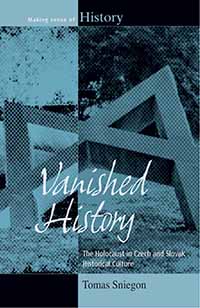
In an earlier post (which can be read here), author Tomas Sniegon shared the events that led him to study the Holocaust in a post-World War II context, a course of study which has led to a publication of Vanished History: The Holocaust in Czech and Slovak Historical Culture. Following is a selection of his photographs from his travels during his study to illuminate this hidden Holocaust history. 

Continue reading “Photographed History: Exposing the Holocaust”

Revealing the ‘Vanished History’ of the Holocaust

Although in Slovakia, Bohemia and Moravia (parts of Czechoslovakia), more than a quarter million lives were claimed during the Holocaust, these deaths have been mostly concealed in post-World War II Czech and Slovak history. A Czech native himself, author Tomas Sniegon shines a light on this cover up in Vanished History: The Holocaust in Czech and Slovak Historical Culture, to be published this month. Following, Sniegon uses the example of Oskar Schindler — famous as the protagonist of the 1993 film Schindler’s List — to explain just how much was hidden from citizens of the Czech Republic and Slovakia.


_____________________________

Film hero Oskar Schindler, played by Liam Neeson, entered the 1990s in the Steven Spielberg’s film Schindler’s List as a new symbol of a so-called “Good citizen of the Third Reich,” which provoked both positive and negative reactions worldwide. However, very few at the same time knew that the real Oskar Schindler — far more complicated than the film character — had never lived in Germany until the World War II and thus actually had never been a “genuine-German German.”

Continue reading “Revealing the ‘Vanished History’ of the Holocaust”

Simulated Shelves: Browse May’s New-Book Library

This month, Berghahn’s library will expand by eleven books. The soon-to-be-published titles make up a distinct lot, ranging from Abigail Loxham’s Cinema at the Edges to Anne Eriksen’s Antiquities to Heritage to Philip Ther’s The Dark Side of Nation-States. The following list of new volumes is complete with brief descriptions of the books and a peek at each cover.

_____________________________


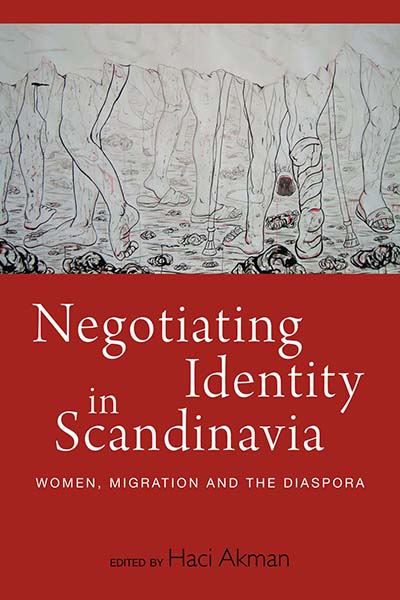
NEGOTIATING IDENTITY IN SCANDINAVIA

Women, Migration and the Disaspora

Edited by Haci Akman

Continue reading “Simulated Shelves: Browse May’s New-Book Library”

How the ‘Legacies of Two World Wars’ Compare to Current Conflict

In an excerpt from the Introduction, the editors explain the point of origin for The Legacies of Two World Wars: European Societies in the Twentieth Century. In the volume, published last month in paperback, contributors follow the European zeitgeist as the continent was plunged first into one war, then a second. Editors Lothar Kettenacker and Torsten Riotte pit the public feeling surrounding these World Wars with that of the U.S. people when the government invaded Iraq in 2003.


_______________________________________


The aim of this book is to trace the moods and attitudes of the people of four Western countries before, during and after the First and Second World Wars. The contributions examine public opinion in Great Britain, France, Germany and Italy during the crucial moments of the two major conflicts of the twentieth century (in their differences and similarities). The inspiration to look again at the attitudes of ordinary Europeans to the two wars came from the controversy surrounding the US invasion of Iraq in 2003.

Continue reading “How the ‘Legacies of Two World Wars’ Compare to Current Conflict”

Jünger in Paris: A Writer’s Wartime Account in the City of Lights

Allan Mitchell takes a look at Ernst Jünger, an under-appreciated twentieth century writer, but an important social figure. The Devil’s Captain: Ernst Jünger in Nazi Paris, 1941-1944 follows the writer at wartime, where he spent his stint in Paris as a military officer whose chief duty was to “mingle with French intellectuals.” Below is an excerpt from the volume, which was originally published in May 2011 and is soon to be released in ebook format.


________________________________________
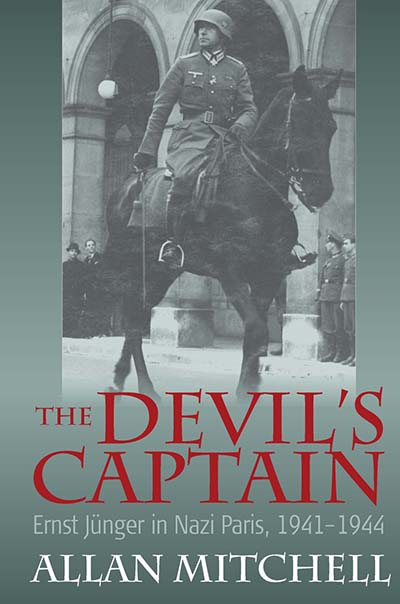
Very few, if any, critics of German literature would rank Ernst Jünger among the greatest writers of the twentieth century. He simply does not compare, as a novelist, with giants like Thomas Mann, Franz Kafka, or Robert Musil. His signature work, Auf den Marmorklippen, has been often justly praised for its chiseled language and allegorical imagination. But for later generations raised on soaring flights of science fiction, Jünger’s 1939 work must seem brief, rather stilted, and now somewhat dated. In any event, it pales beside Buddenbrooks and Der Zauberberg, Das Urteil and Das Schloss, or Der Mann ohne Eigenschaften.

Continue reading “Jünger in Paris: A Writer’s Wartime Account in the City of Lights”

Hot Off the Presses – New Book Releases

Newly released titles from Berghahn’s Anthropology, Colonialism, Economics, Politics, and HistoryCorsinAnthropological lists:

Creating a Nation with Cloth: Women, Wealth, and Tradition in the Tongan Diaspora, Ping-Ann Addo

Slavery and Antislavery in Spain’s Atlantic Empire, Josep M. Fradera and Christopher Schmidt-Nowara

An Anthropological Trompe L’Oeil for a Common World: An Essay on the Economy of Knowledge, Alberto Corsín Jiménez

Framing Africa Portrayals of a Continent in Contemporary Mainstream Cinema, Nigel Eltringham

Tax Justice and the Political Economy of Global Capitalism, 1945 to the Present, Jeremy Leaman and Attiya Waris

Routes into the Abyss Coping with Crises in the 1930s, Helmut Konrad and Wolfgang Maderthaner

Bedouin of Mount Sinai: An Anthropological Study of their Political Economy, Emanuel Marx

Empire, Global Coloniality and African Subjectivity, Sabelo J. Ndlovu-Gatsheni

Family Upheaval Generation, Mobility and Relatedness among Pakistani Migrants in Denmark, Mikkel Rytter

Up Close and Personal: On Peripheral Perspectives and the Production of Anthropological Knowledge, Cris Shore and Susanna Trnka

Astonishment and Evocation: The Spell of Culture in Art and Anthropology, Ivo Strecker and Markus Verne

The Gaddi Beyond Pastoralism: Making Place in the Indian Himalayas, Anja Wagner

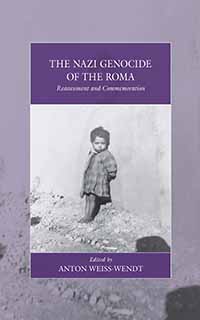
The Nazi Genocide of the Roma: Reassessment and Commemoration, Anton Weiss-Wendt

The Nazi Genocide of the Roma: Activism or Scholarship?

The Nazi Genocide of the Roma: Reassessment and Commemoration, to be published this month, gives voice to the plight of the lesser-studied but still widely persecuted population of the Roma in Nazi-occupied Europe. Below, editor Anton Weiss-Wendt addresses the reception of the collection, which he says begs the question: “Is this scholarship or is it activism?” 

__________________________

Weiss-WendtThe mass murder of Jews and the mass murder of Roma during the Second World War are closely interrelated.

Continue reading “The Nazi Genocide of the Roma: Activism or Scholarship?”

New Perspectives on World War II and Central Europe

Territorial Revisionism and the Allies of Germany in the Second World War: Goals, Expectations, Practices is a collection of essays edited by Marina Cattaruzza, Stefan Dyroff, and Dieter  Langewiesche, and published by Berghahn Books in December 2012. In this blog post, the editors explain how the collection sheds new light on our understanding of Germany’s European allies during the Second World War.

Until now, research on the Second World War in Europe has focused on two main areas: on the one hand, the individual countries, and on the other, the two big “blocs”: the Allies and the Axis Powers. On the part of the Allies, historians made the point very early that states with different political systems and values managed to cooperate temporarily while still striving to achieve their respective goals. Awareness of this was heightened by the sudden shift from the partnerships in the Second World War, to the reality of the Cold War between previous allies the United States and the Soviet Union and the East/West division of the European continent by the Iron Curtain.
 

Continue reading “New Perspectives on World War II and Central Europe”

Hot Off the Presses- New Book Releases

Newly released titles from Berghahn’s history list:
Hitler’s Plans for Global Domination: Nazi Architecture and Ultimate War Aims, Jochen Thies, with a Foreword by Volker R. Berghahn
The Holocaust and Historical Methodology, edited by Dan Stone
Changing Perceptions of the Public Sphere, edited by Christian J. Emden and David Midgley
Reassessing the Nuremberg Military Tribunals: Transitional Justice, Trial Narratives, and Historiography, edited by Kim C. Priemel and Alexa Stiller
Charismatic Leadership and Social Movements: The Revolutionary Power of Ordinary Men and Women, edited by Jan Willem Stutje

Newly released paperbacks from Berghahn’s history list:
Jewish Life in Nazi Germany: Dilemmas and Responses, edited by Francis R. Nicosia and David Scrase
Berlin Divided City, 1945-1989, edited by Philip Broadbent and Sabine Hake
Changing the World, Changing Oneself: Political Protest and Collective Identities in West Germany and the U.S. in the 1960s and 1970s, edited by Belinda Davis, Wilfried Mausbach, Martin Klimke, and Carla MacDougall