Fertility, Reproduction and Sexuality

Today (March 18th) is Goddess of Fertility Day, a time when Aphrodite and other gods and goddesses of fertility are honored by pagans throughout the world in celebration of life and fertility.

———————————————————————————————————————————–

Understanding the complex and multifaceted issue of human reproduction has been, and remains, of great interest both to academics and practitioners. Fertility, Reproduction and Sexuality series includes studies by specialists in the field of social, cultural, medical, and biological anthropology, medical demography, psychology, and development studies. Current debates and issues of global relevance on the changing dynamics of fertility, human reproduction and sexuality are addressed. Below is a selection of forthcoming & newly published titles within the series:

 

Volume 30 Forthcoming!

THAI IN VITRO
Gender, Culture and Assisted Reproduction
Andrea Whittaker
 

Continue reading “Fertility, Reproduction and Sexuality”

Roots and Recovery: Anthropologists Study Anorexia from all Angles

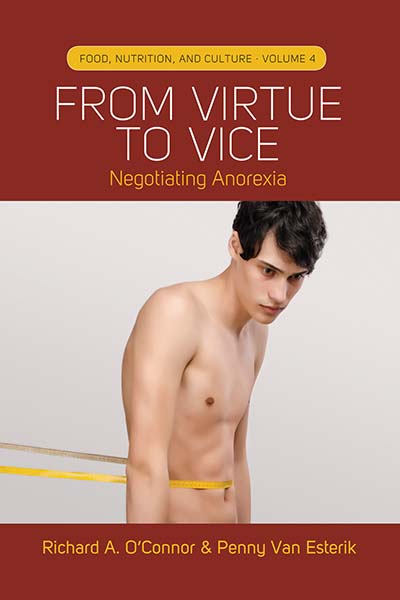
How do sufferers of anorexia recover? Richard A. O’Connor and Penny Van Esterik seek answers to this question, first by identifying root causes of the disease and then by sharing the stories of those who have made a full recovery.  From Virtue to Vice: Negotiating Anorexia, the book that resulted from their research, does not look at the affliction of anorexia from behind a glass, in fact, O’Connor’s connection to the work is deeply personal. He explains in his own words below.
 

_______________________


Every book has a back story. Mine is no big secret. When my daughter Amorn became anorexic it turned our family upside down. Carolyn [my wife] and I desperately wanted answers. We got a great counselor but nothing worked. The explanations we got made no sense. That wasn’t our daughter. Of course we worried we were in denial—that we just didn’t want to face the truth—and that silenced me at the time. I understood clinicians have to put people in categories and few fit perfectly. So I settled into accepting my daughter was an exception, an outlier. What mattered most was working with her caregivers for recovery.


Continue reading “Roots and Recovery: Anthropologists Study Anorexia from all Angles”

National Women’s History Month

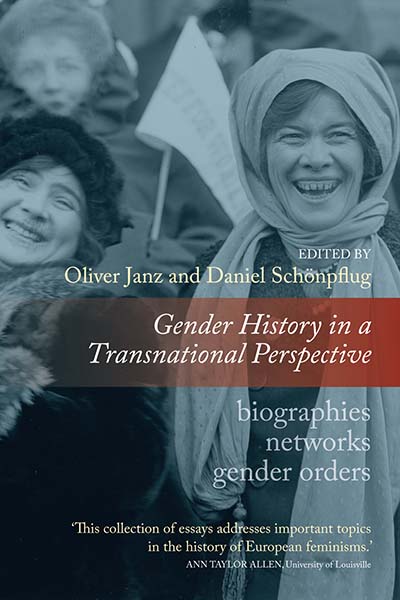
Women’s History Month is an annual declared month that highlights the contributions of women to events in history and contemporary society. It is celebrated during March in the United States, and across Europe, corresponding with International Women’s Day on March 8. All around the world, National Women’s History Month & International Women’s day present an opportunity to celebrate the achievements of women while calling for greater equality!


Berghahn invites you to explore a special issue of Aspasia devoted to International Women’s Day. The year 2010 marked the centennial of International Women’s Day, and the year 2011 marked the centennial of its first celebrations. Inspired by these events, this issue deals with “A Hundred Years of International Women’s Day in Central, Eastern and Southeastern Europe.” Read more.


Berghahn is also pleased to offer a 25% discount on any of our Gender Studies books on orders placed within the next 30 days. At checkout, simply enter the code IWD15.


GENDER HISTORY IN A TRANSNATIONAL PERSPECTIVE
Networks, Biographies, Gender Orders
Edited by Oliver Janz and Daniel Schönpflug


Continue reading “National Women’s History Month”

Author of ‘Jesus Reclaimed’ Earns German Decoration

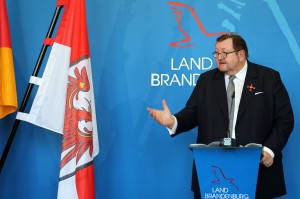
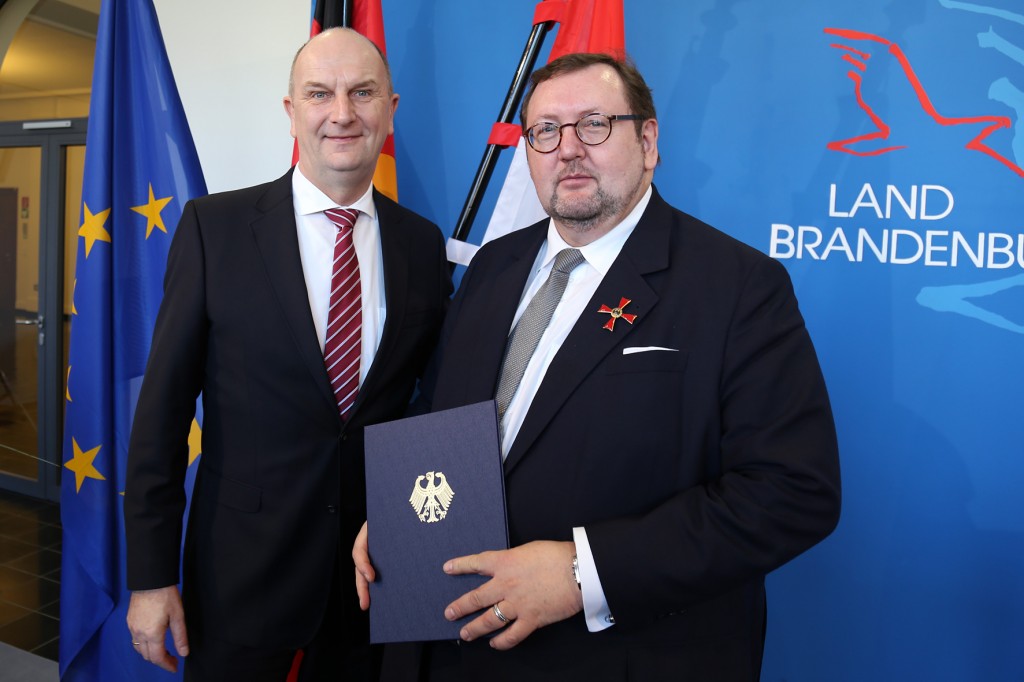
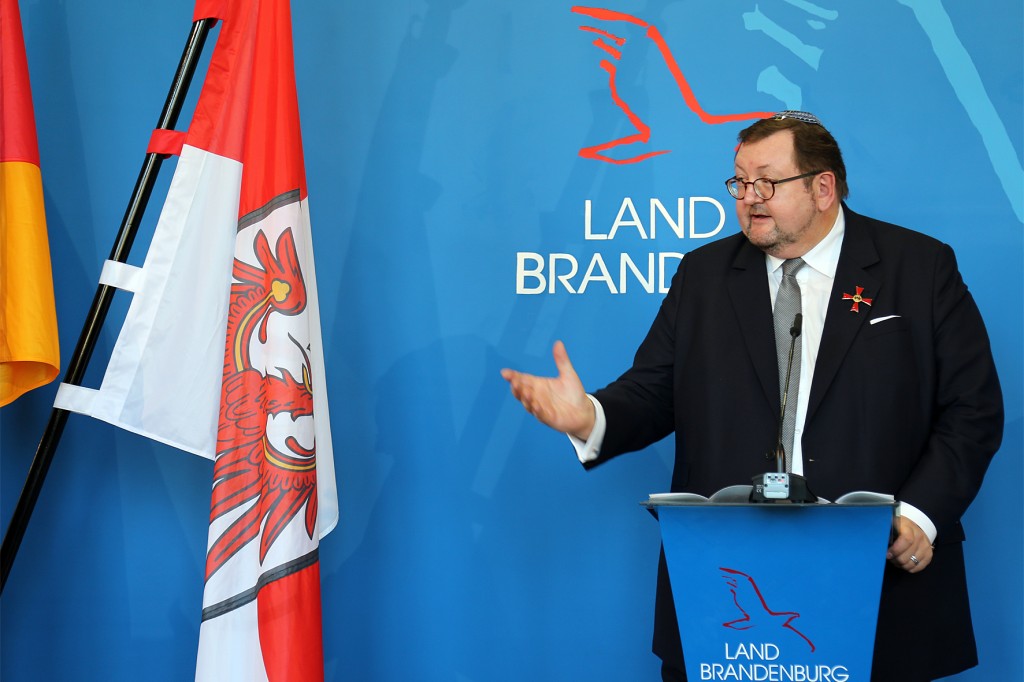
The President of the Federal Republic of Germany, Joachim Gauck, honoured Rabbi Walter Homolka with the Officers Cross of the Federal Merit Order.


On February 27, 2015, the Prime Minister of the State of Brandenburg, Dr. Dietmar Woidke, handed over the insignia in the state chancellery in Potsdam.


Woidke thanked Rabbi Homolka for the establishment of the Abraham Geiger  College in 1999 as the first rabbinical school in Continental Europe after the Holocaust.
Homolka’s initiative in 2013 also formed the School of Jewish Theology of the University of Potsdam, Germany’s Jewish Divinity School. Rabbi Homolka is a professor of Modern Jewish Thought there.


On the day of the honour Germany’s nationwide tabloid BILD voted Homolka “winner of the day.”


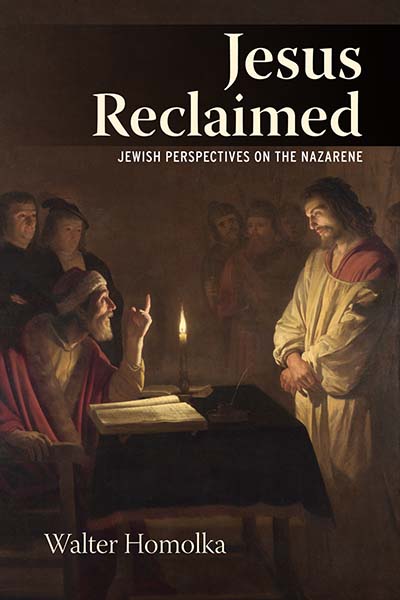
Rabbi Walter Homolka is author of Jewish Identity in Modern Times: Leo Baeck and German Protestantism (1995) and Jesus Reclaimed: Jewish Perspectives on the Nazarene (2015), and co-editor, with Albert Friedlander, of The Gate to Perfection: The Idea of Peace in Jewish Thought (1994). He is the rector of the Abraham Geiger College, Germany’s first rabbinical seminary after the Holocaust, and a professor of Modern Jewish Thought at the School of Jewish Theology of the University of Potsdam in Germany.


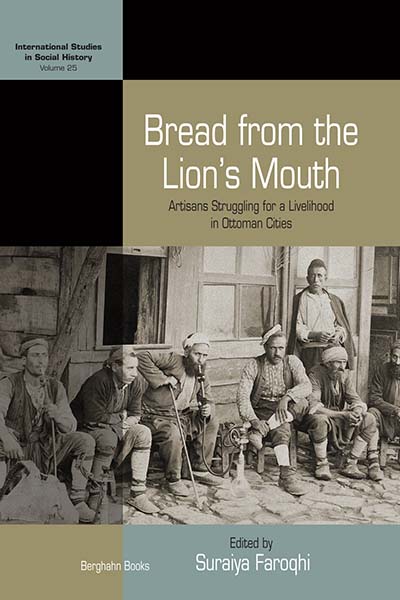
Artisan Society and Struggles in the Ottoman Empire

In recent years, there has been renewed interest in the history of the lives and work of middle eastern artisans. Bread from the Lion’s Mouth: Artisans Struggling for a Livelihood in Ottoman Cities, soon to be published, uses archival documents to re-create a scene of life in the Ottoman Empire from the fifteenth through twentieth centuries. Following, editor Suraiya Faroqhi discusses the history of this project and her interest in this region.


__________________________


What drew you to the study of artisans in Ottoman cities? Why do you think there is a renewed interest in this field today?


Perhaps because I am fond of my own work, as a historian I have for a long time been interested in people that work – as opposed to those that pray, govern, or fight. Moreover I like to see the things that artisans/artists have made; and we must keep in mind that the beautiful things we admire in museums did not come into being ‘just like that’ but are the product of human work, especially that of artisans and artists.

Continue reading “Artisan Society and Struggles in the Ottoman Empire”

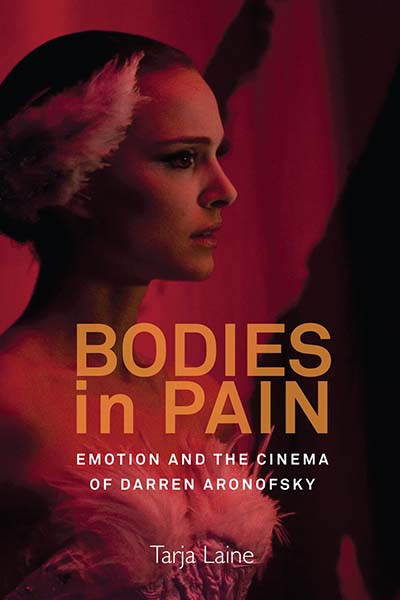
Seeing is Feeling: Tangible Emotion in the Work of Aronofsky


In Bodies in Pain: The Emotion and Cinema of Darren Aronofsky,  Laine explores the emotionally engaging nature of this prominent director’s work, which includes Requiem for a Dream and Black Swan, Pi and The Fountain. Following, the author explains how she came to write this book, as well as some emotional nuances in the director’s oeuvre.


In 2011 when I was asked by Mark Stanton, then-senior editor at Berghahn Books to write a book about emotion and film aesthetics in the cinema of Darren Aronofsky, my book entitled Feeling Cinema had just been released a month before. At that point I was not planning to start a new book project any time soon, and nor did I have a clue where the next idea for a book would come from, so his proposal almost appeared to me as a gift from the universe. Furthermore, since Aronofsky as a filmmaker was not an obvious choice for me to write about, it was an extra challenge to come up with an aesthetically meaningful starting point, without falling into the trap of cheap auteurism.

Continue reading “Seeing is Feeling: Tangible Emotion in the Work of Aronofsky”

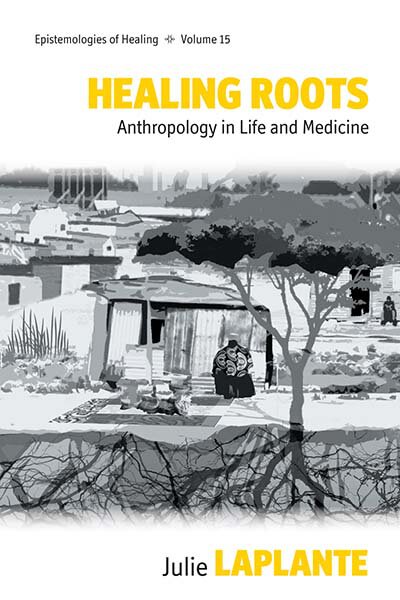
‘Healing Roots’: Author Traces Life of Wild Plant from Farm to Pharm

The healing powers of a plant in sub-Saharan Africa, long used for indigenous medicine, are now being harnessed as a pharmaceutical to be more widely produced and sold. Author Julie Laplante follows this path of production of Artemesia Afra from a wild-growing bush to a processed, controlled substance in her soon-to-be-published monograph, Healing Roots: Anthropology in Life and Medicine. Following, Laplante shares how her own path led her from researcher to author.


_________________________________


The journey told in the book began in August 2006 within the Biomedicine in Africa research group at the Max Planck Institute für etnologische forshung in Halle (Saale), Germany, as we were invited to explore how biomedicine is both shaping and being shaped through its practices in Africa. My own research project entitled ‘South African Roots towards Global Knowledge’ namely intended to find out how this is done through the practices of clinical trials as they aim to ‘recognize’ indigenous medicine.

Continue reading “‘Healing Roots’: Author Traces Life of Wild Plant from Farm to Pharm”

Simulated Shelves: Browse January 2015 New Books

We are delighted to present a selection of our newly published January 2015 titles from our core subjects of Anthropology, Economics, Environmental Studies, Film Studies, History, Jewish Studies, Medical Anthropology, and Politics, along with a selection of our New in Paperback titles.


We are especially excited to announce the publication of JESUS RECLAIMED: Jewish Perspectives on the Nazarene by Walter Homolka

“This book offers a constructive contribution to the debates on the theological significance of Jewish and Christian approaches to the historical Jesus. The author’s knowledge of Jewish and Christian discourses on both sides of the Atlantic is impressive.” · Werner G. Jeanrond, University of Oxford

———————————————————————————————————————————–


JESUS RECLAIMED
Jewish Perspectives on the Nazarene
Walter Homolka
Translated by Ingrid Shafer


Continue reading “Simulated Shelves: Browse January 2015 New Books”

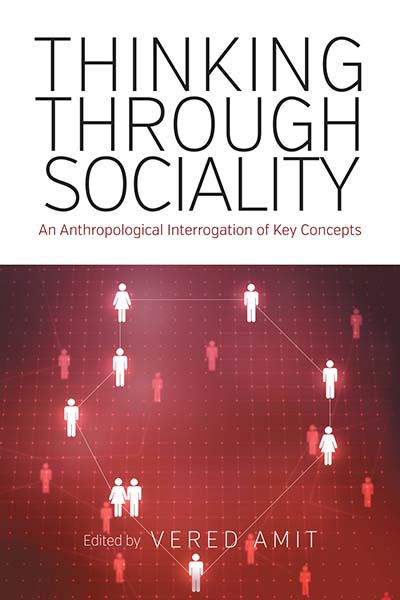
Social Exchange and Conceptual Query

Combining classic and contemporary theory, Thinking through Sociality: An Anthropological Interrogation of Key Concepts is an exploration of concepts from disjuncture to social space and field to sociability. In advance of the volume’s publication later this month, editor Vered Amit discusses its origins and purpose.


________________________________


This volume is the outcome of a continuing series of exchanges among the contributors, which took place over several years. When I initiated the first of these exchanges in 2006, I wondered why anthropologists had often resorted uncritically to relatively few, familiar concepts of sociality—such as community—in spite of the availability of a much broader range of ideas that might be effectively applied to the varied contemporary situations they were seeking to apprehend.


Continue reading “Social Exchange and Conceptual Query”

Writing for Goffman: Coincidence Drives Idea behind ‘Vehicles’

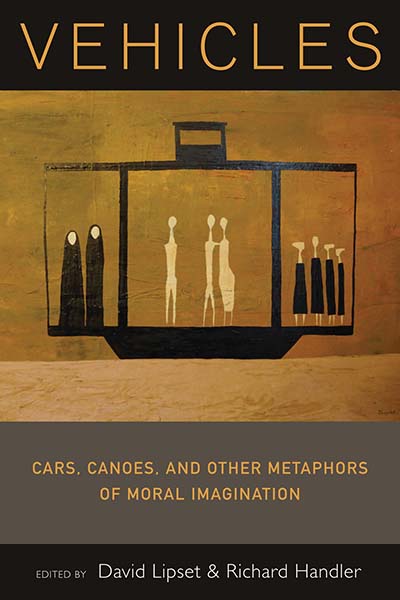
Recently published Vehicles: Cars, Canoes and other Metaphors of Moral Imagination, edited by David Lipset and Richard Handler, offers insight into the vehicle as an object that can move not only people, but also ideas. Following, Handler discusses the origination of the volume, which all came about by way of an interesting connection of coincidence.


______________________________


This volume came about serendipitously.


My friend David Lipset emailed me in the summer of 2008 with the standard “what are you working on” question. I replied that I was working on a series of essays about the great American sociologist, Erving Goffman. David wrote back to tell me the rather astounding story about his first car, a late-1950s VW Beetle that his father had bought from Goffman, in Berkeley, California, where both of them taught.


The fact that Goffman was an “early adopter” (in the U.S.) of the Beetle explained, I thought, some cryptic comments in Behavior in Public Places, where Goffman described the interactional contempt that drivers of small cars endured.


Continue reading “Writing for Goffman: Coincidence Drives Idea behind ‘Vehicles’”