Today in History

Vladimir Ilyich Ulyanov, alias Lenin (Russian: Ле́нин) died of a brain hemorrhage on January 21st, 1924 at the age of 54. Lenin was one of the Russian leading political figures and revolutionary thinkers of the 20th century. He masterminded the Bolshevik take-over of power in Russia in 1917 serving as head of government of the Russian Soviet Federative Socialist Republic, and of the Soviet Union from 1922 until his death. Under his administration, the Russian Empire was replaced by the Soviet Union and all wealth including land, industry and business was nationalized.

Lenin had a significant influence not only on the history of Russia but on the international Communist movement and was one of the most influential and controversial figures of the 20th century. Following the dissolution of the USSR in 1991, reverence for Lenin declined among the post-Soviet generations, yet he remains an important historical figure for the Soviet-era generations.

———————————————————————————————————————————–

Berghahn Books presents a selection of titles on Russian & Soviet history and culture:
 

Forthcoming in Paperback!

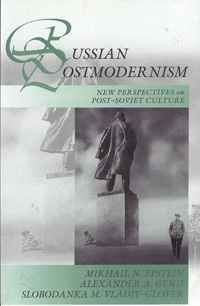
RUSSIAN POSTMODERNISM
New Perspectives on Post-Soviet Culture
Mikhail N. Epstein, Alexander A. Genis, and Slobodanka M. Vladiv-Glover
With an Introduction by Thomas Epstein
Continue reading “Today in History”

Space and Place

Unlike a painting or a sculpture, architectural sites cannot be work of a single artist. They arise from collaborations among historical figures, architects, engineers, bankers, and many more. Some structures become much more than just a place to live, work, worship or be entertained, instead they become symbols embedded with cultural knowledge, history and social value.


Berghahn is delighted to bring Space and Place Series to your attention. This series provides ethnographically rich analyses of the cultural organization and meanings of these sites of space, architecture, landscape, and places of the body. Contributions examine the symbolic meanings of space and place, the cultural and historical processes involved in their construction and contestation, and how they communicate with wider political, religious, social, and economic institutions.

———————————————————————————————————————————-


Volume 15 Forthcoming! 

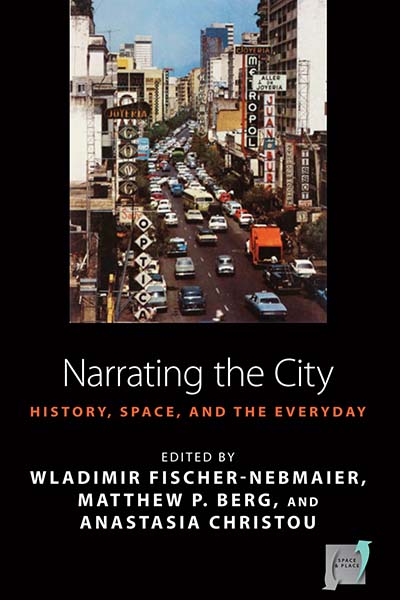
NARRATING THE CITY
Histories, Space and the Everyday
Edited by Wladimir Fischer-Nebmaier, Matthew P. Berg, and Anastasia Christou

Continue reading “Space and Place”

The Social Impact of Economic Growth

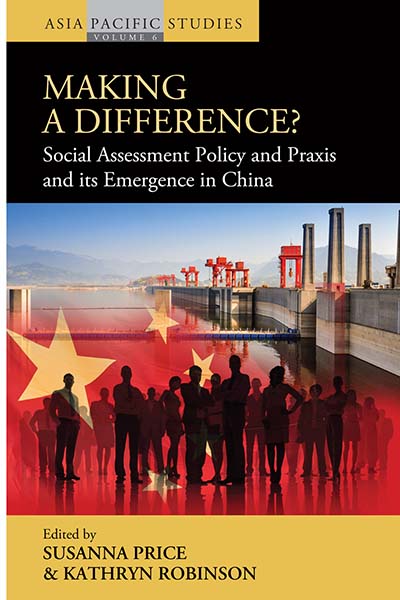
Editors Susanna Price and Kathryn Robinson explore the social aspects of Chinese economic growth in their soon-to-be-published book, Making a Difference? Social Assessment Policy and Praxis and its Emergence in China. Following, Susanna Price offers further insight into the book’s origins and the impact the book may have on the field of Asian development studies.


_______________________________


Why did we write this book?


We are all familiar with the striking, sometimes wildly exaggerated, news headlines on China’s rapid economic growth, its geo-political consequences and – perhaps less frequently − the possible flow-on implications for liberal democratic governance. We felt that such headlines, focusing on growth, overshadowed an alternative narrative, on the social dimensions of that growth and transformation. It came down to a simple wish: we wanted to tell a different China story that reflected our own experience and practice.

Continue reading “The Social Impact of Economic Growth”

Simulated Shelves: Browse December’s New Books

We are delighted to present a selection of our newly published December titles from our core subjects of Cultural Studies, History and Politics, along with a selection of our New in Paperback titles.

———————————————————————————————————————————–


CLAUSEWITZ IN HIS TIME
Essays in the Cultural and Intellectual History of Thinking about War
Peter Paret

Continue reading “Simulated Shelves: Browse December’s New Books”

Looking Back through Anthropology

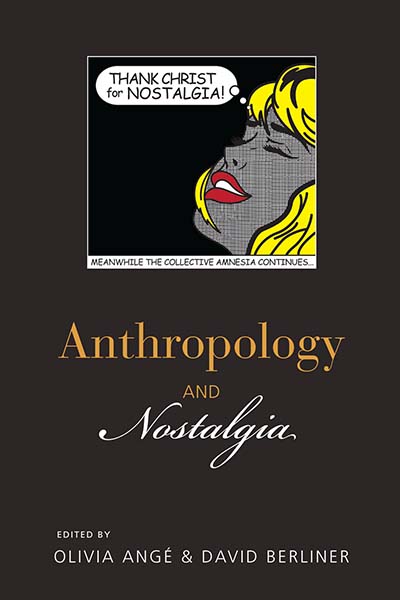
Although nostalgia seems to permeate much of modern (especially Western) society, there are few detailed anthropological accounts of this longing for the past. Editors Olivia Angé and David Berliner seek to fill this gap and explore this phenomenon in their newly published volume, Anthropology and Nostalgia. Following, the editors look back on the creation of their volume and look forward to its reception within the social science community.
 

_______________________________________


What drew you to the study of nostalgia, especially as it relates to the social sciences?


Well, nostalgia is a central notion that permeates present-day discourses and practices. In many parts of the world, there seems to be a current overdose of nostalgia, a reaction to the modern acceleration deployed in universes as diverse as nationalism, heritage policies, vintage consumerism, the tourism industry, and religious and ecological movements.

Continue reading “Looking Back through Anthropology”

International Migrants Day

On December 18, the international community recognizes and celebrates the rights of migrants around the world. In 1990 the UN General Assembly approved the International Convention on the Protection of the Rights of All Migrant Workers and Members of Their Families (commonly referred to as the Migrant Worker’s Convention or Migrant Rights Convention). This is the day to express our support and solidarity with all immigrants.

———————————————————————————————————————————–

In honor of this observance, Berghahn Journals presents a special virtual issue dedicated to migration with hope that this will contribute to the overall discussion of the lives of migrants.

Click Here to Access the Special Virtual Issue! 

———————————————————————————————————————————–

Berghahn is also delighted to present a selection of titles on Refugee & Migration Studies:


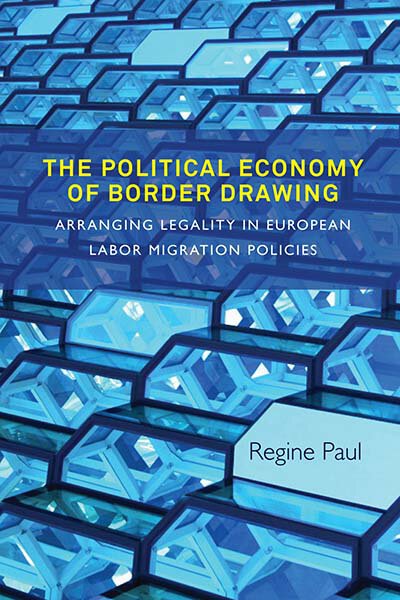
THE POLITICAL ECONOMY OF BORDER DRAWING
Arranging Legality in European Labor Migration Policies
Regine Paul

Continue reading “International Migrants Day”

Simulated Shelves: Browse November’s New Books

We are delighted to present a selection of our newly published November titles from our core subjects of History, Media Studies, Medical Anthropology, Sociology and Urban Studies, along with a selection of our New in Paperback titles.

———————————————————————————————————————————–


U.S. FOREIGN POLICY AND THE OTHER
Edited by Michael Patrick Cullinane and David Ryan

Continue reading “Simulated Shelves: Browse November’s New Books”

Dilemma after Dark: Balancing Sleep and Breastfeeding

In her newly published book, author Cecília Tomori explores a major challenge for new parents, the nighttime balance of sleep and breastfeeding. Nighttime Breastfeeding: An American Cultural Dilemma, published in October, is the result of her long-term ethnographic study alongside new parents and how they cope with the pressures of parenthood. Following, the author gives insight into this in-depth study which eventually became her book.


As an anthropologist seeking to learn about breastfeeding, I had the privilege of visiting new parents who had just returned home from the hospital after the birth of their first child. During these visits, the joy of becoming parents was visible in the way parents gazed upon one another and held their newborns in their arms. Their joy, however, was often complicated by exhaustion and uncertainty over some fundamental concerns: breastfeeding and sleeping at night.

Continue reading “Dilemma after Dark: Balancing Sleep and Breastfeeding”

Today in History of Performance Art

On this day in 1947, first-ever performance of Tennessee Williams’ play A Streetcar Named Desire thrilled the audience during it’s opening on the Broadway stage of Ethel Barrymore Theatre.

Produced by Irene Mayer Selznick and directed by Elia Kazan, the play shocked mid-century audiences with its frank depiction of sexuality and brutality onstage. When the curtain went down on opening night, there was a moment of stunned silence before the crowd erupted into a round of applause that lasted 30 minutes. On December 17, the cast left New York to go on the road. The show would run for more than 800 performances, winning numerous prizes and in 1951 was made into a movie.

———————————————————————————————————————————–

In relevance to the event Berghahn is delighted to offer an array of titles on Performance Studies:


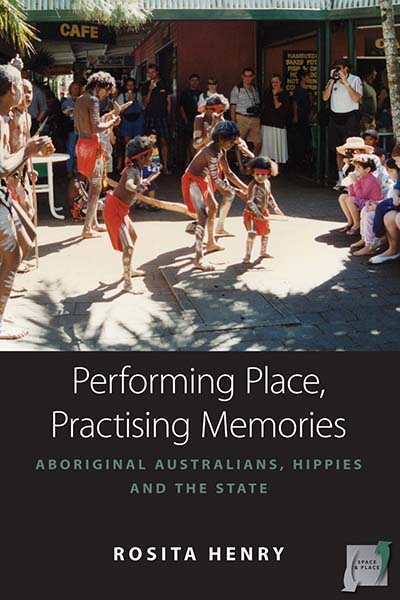
PERFORMING PLACE, PRACTISING MEMORIES
Aboriginal Australians, Hippies and the State
Rosita HenryDuring the 1970s a wave of ‘counter-culture’ people moved into rural communities in many parts of Australia. This study focuses in particular on the town of Kuranda in North Queensland and the relationship between the settlers and the local Aboriginal population, concentrating on a number of linked social dramas that portrayed the use of both public and private space. Through their public performances and in their everyday spatial encounters, these people resisted the bureaucratic state but, in the process, they also contributed to the cultivation and propagation of state effects.

Continue reading “Today in History of Performance Art”

Holdings of the Kingdom of Norway


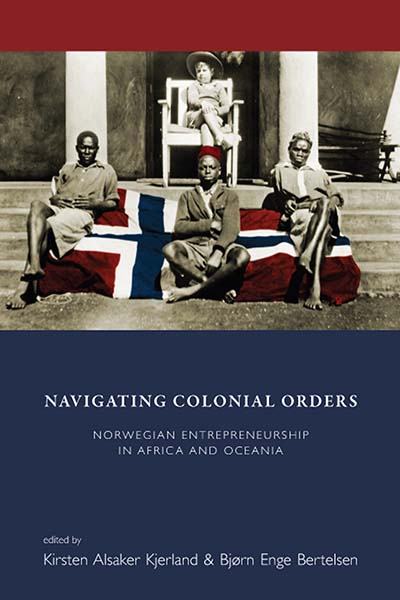
When considering powerhouses of colonization, most do not rank Norway among the likes of England and France. However, this country did have numerous outposts and much influence in Africa and Oceania. These territories come into focus in Navigating Colonial Orders: Norwegian Entrepreneurship in Africa and Oceania, which was published this month. Following, editors Kirsten Alsaker Kjerland and Bjørn Enge Bertelsen share insights into their book.


_______________________________


What drew you to the study of the entrepreneurial efforts of Norwegians in colonial Africa and Oceania? How was Norway’s involvement different from its counterparts in the rest of Europe at the time? How were they the same?


When looking at classical representations of colonial Africa, Oceania or, also, Latin America, one is struck by how the large colonizing countries have monopolized history. What struck us when starting to follow Norwegians that went abroad in the late 1800s and early 1900s was that this was simply not the case: The various colonial settings that we have examined have uncovered great diversity in terms of non-indigenous inhabitants and, thus, revealed different forms of colonial dynamics than what has often been contained in colonial histories of the major countries.

Continue reading “Holdings of the Kingdom of Norway”