Revealing the ‘Vanished History’ of the Holocaust

Although in Slovakia, Bohemia and Moravia (parts of Czechoslovakia), more than a quarter million lives were claimed during the Holocaust, these deaths have been mostly concealed in post-World War II Czech and Slovak history. A Czech native himself, author Tomas Sniegon shines a light on this cover up in Vanished History: The Holocaust in Czech and Slovak Historical Culture, to be published this month. Following, Sniegon uses the example of Oskar Schindler — famous as the protagonist of the 1993 film Schindler’s List — to explain just how much was hidden from citizens of the Czech Republic and Slovakia.


_____________________________
Film hero Oskar Schindler, played by Liam Neeson, entered the 1990s in the Steven Spielberg’s film Schindler’s List as a new symbol of a so-called “Good citizen of the Third Reich,” which provoked both positive and negative reactions worldwide. However, very few at the same time knew that the real Oskar Schindler — far more complicated than the film character — had never lived in Germany until the World War II and thus actually had never been a “genuine-German German.”

Continue reading “Revealing the ‘Vanished History’ of the Holocaust”
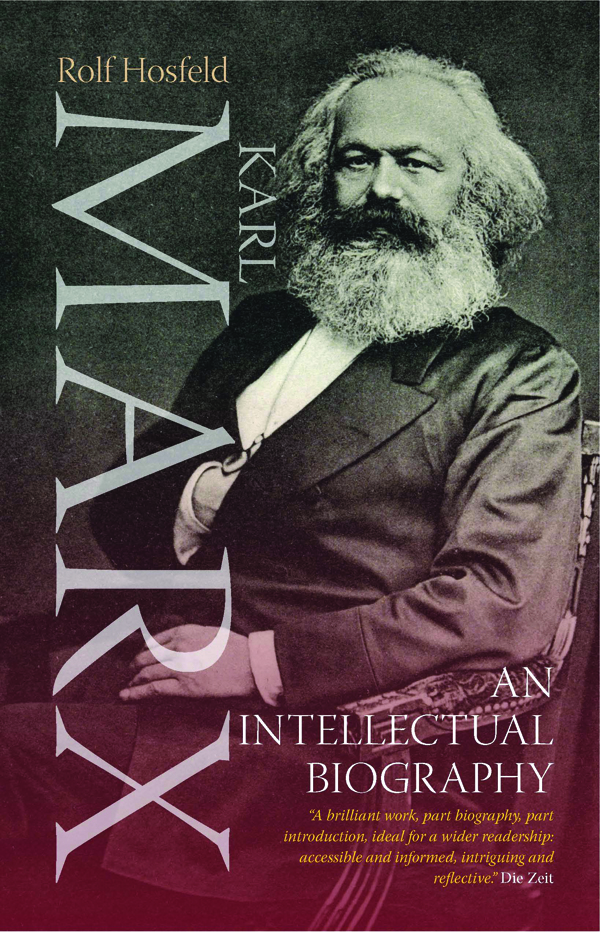
Marx is the New Black

HosfeldKarlWere he still alive, the philosopher behind The Communist Manifesto and Das Kapital would be celebrating his 196th birthday today.

Marx has made a comeback recently, with new books on his life and ideas popping up more frequently, and a new wave of “Millennial Marxists” taking to social media to discuss the original socialist’s ideas in a more modern light.

In honor of the undeniable influence Karl Marx has had on economic and political discourse over the years, we invite you to take a look at our intellectual biography of the philosopher himself.


Here’s what the critics are saying about Karl Marx: An Intellectual Biography by Rolf Hosfeld:

“…an elegant compact study [that] explores Marx’s ideas in all their messy complexity.” —Times Literary Supplement

“This 200 page compendium is a deftly written biography offering an informed and informative presentation of Marx’s turbulent personal and professional life. A seminal work of impressive scholarship, [this book] is enhanced by the inclusion of an extensive bibliography making it an especially useful and highly recommended contribution to academic library reference collections and Marxist Studies supplemental reading lists.” —The Midwest Book Review

“This book is a delightful gain: biography, theory, revolutionary history, modern history—altogether convincing and gripping. The lively portrait of a brilliant, eternally radical, and strictly speaking rather apolitical, philosopher is illustrated here by Rolf Hosfeld—A great achievement.” —DeutschlandRadio


Click here to learn more!


Simulated Shelves: Browse May’s New-Book Library

This month, Berghahn’s library will expand by eleven books. The soon-to-be-published titles make up a distinct lot, ranging from Abigail Loxham’s Cinema at the Edges to Anne Eriksen’s Antiquities to Heritage to Philip Ther’s The Dark Side of Nation-States. The following list of new volumes is complete with brief descriptions of the books and a peek at each cover.

_____________________________


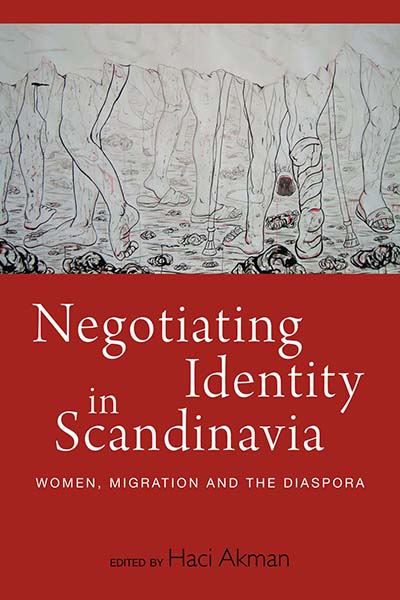
NEGOTIATING IDENTITY IN SCANDINAVIA

Women, Migration and the Disaspora

Edited by Haci Akman

Continue reading “Simulated Shelves: Browse May’s New-Book Library”

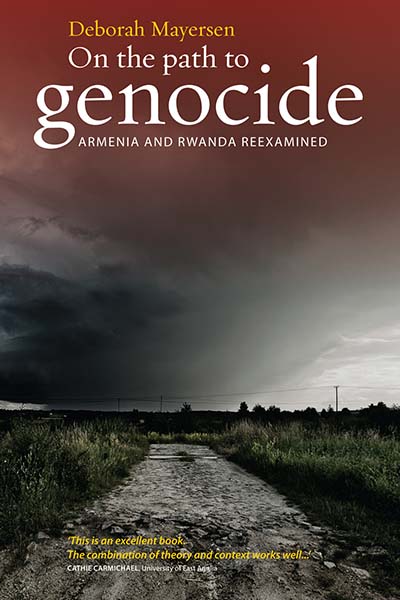
Tracing the Path Toward and Away From Genocide

How and why does genocide occur, and how can we identify these warning signs to prevent it in the future? In On the Path to Genocide: Armenia and Rwanda Reexamined, Deborah Mayersen looks to conflicts in 1915 Turkey and 1994 Rwanda to answer these difficult questions. Following, the author explains the path to her study of genocide, traces her steps to the book, and points to where her research will take her in the future.


__________________________________________


Berghahn Books: What attracted you to study the genocide of Armenian and Rwandan peoples?


Deborah Mayersen: As a school student, I learned about the Holocaust and the international promise of ‘Never Again’ in its wake. Yet at University, I learned about the betrayal of this promise, with the genocides in Cambodia and Rwanda for example. I wanted to understand more about the history of genocide, and why it has become so prevalent in the modern world. This led me to examine in greater detail these two genocides, at the opening and closing of the twentieth century.

Continue reading “Tracing the Path Toward and Away From Genocide”

Transnational Ahead of Its Time: Author Examines Council of Women

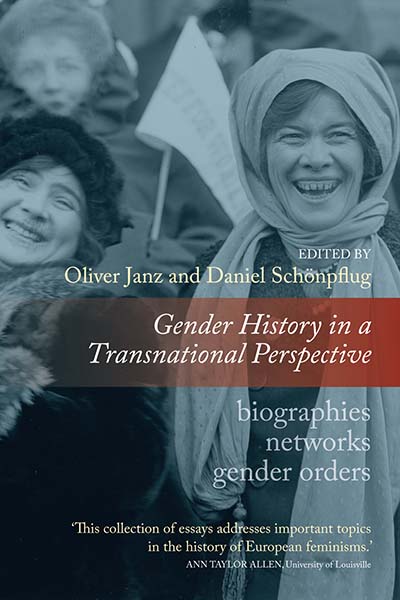
National borders are broken down in Oliver Janz and Daniel Schönpflug’s soon-to-be-released collection Gender History in a Transnational Perspective: Networks, Biographies, Gender Orders. The contributors examine historic cross-continent networks of European feminists. Following a short introduction from the author is a excerpt from Karen Offen’s chapter, in which the author examines the International Council of Women, which she considers “transnational” before the term was coined.

____________________________________


Karen Offen introduces this first part of the volume with reflections on a fundamental question: Can the category “transnational” be applied to the early international women’s movement, even though its representatives did not yet employ the term.


Historical scholarship is pressed to justify anachronistic terminology. It seems, though, that its use is often unavoidable, since historians’ implicit and explicit questions about the past always stem from their own present. Also, from a theoretical and methodological point of view, employing anachronistic terms allows for clearer analytical terminology as the linguistic horizon of the contemporaries is often ambivalent, contradictory and multifold. 

Continue reading “Transnational Ahead of Its Time: Author Examines Council of Women”

A Lived Journey: Tracing ‘The Path to the Berlin Wall’

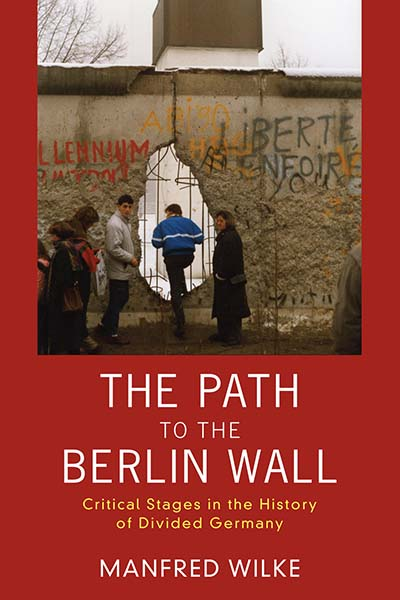
The Berlin Wall may have been erected in 1961, but the figurative foundation was laid in 1945, as the Soviet Union’s Communist Party and its allies made selections of their areas of influence. In The Path to the Berlin Wall: Critical Stages in the History of Divided Germany, author Manfred Wilke traces the events that led to the eventual construction of the Berliner Mauer. Wilke’s original volume was translated from German into English by Sophie Perl. Following is Perl’s interview with the author about his book.

Continue reading “A Lived Journey: Tracing ‘The Path to the Berlin Wall’”

Marking Museum Week: #AskTheCurator or View the Book

This week hundreds of museums across the United Kingdom and Europe are participating in Twitter’s first Museum Week campaign. Each day during this week is associated with a hashtag, from #DayInTheLife to #MuseumMemories, all intended to hit on various delightful aspects of the museum world. Today’s hashtag, #AskTheCurator is an opportunity to engage with museum experts. But for those who prefer to engage with experts the classic way — by way of their books — we have curated a collection of some of our Museum Studies titles in the following gallery.

_______________________________________

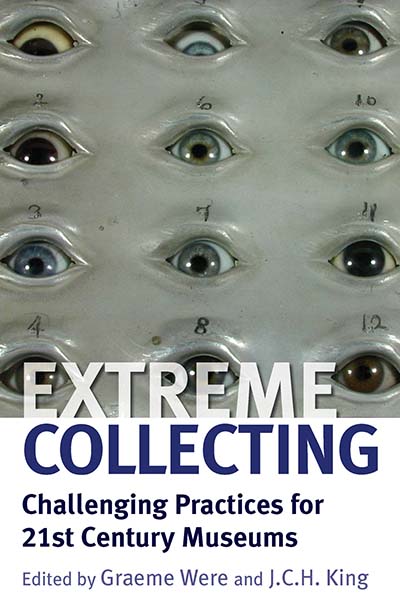
EXTREME COLLECTING

Challenging Practices for 21st Century Museums

Edited by Graeme Were and J. C. H. King

By exploring the processes of collecting, which challenge the bounds of normally acceptable practice, this book debates the practice of collecting ‘difficult’ objects, from a historical and contemporary perspective; and discusses the acquisition of objects related to war and genocide, and those purchased from the internet, as well as considering human remains, mass produced objects and illicitly traded antiquities. Much of the book engages with the question of the limits to the practice of collecting as a means to think through the implementation of new strategies. Continue reading “Marking Museum Week: #AskTheCurator or View the Book”

Storms, Sickness, Suspicions: The Darker Side of Migration

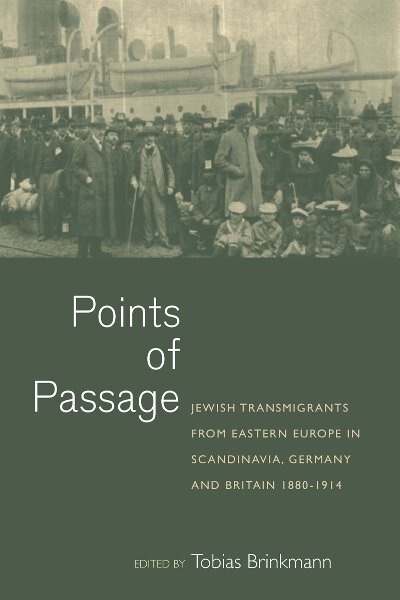
In Points of Passage: Jewish Migrants from Eastern Europe in Scandinavia, Germany, and Britain 1880-1914, published last October, contributors reveal some of the less-savory aspects of immigration (of which there were many). Following, in an excerpt from the newly published volume, editor Tobias Brinkmann gives two examples of passengers enduring misery before arriving on the supposed paradise of North American soil. This is the second entry about the book; read the former here.
_______________________________________

The essay collection “Points of Passage” seeks to shift attention from the well-known success story of Jewish immigration in the United States to the journey. On which paths did Jewish (and other) migrants travel from Eastern Europe to the ports on the North Sea and across the Atlantic between the 1880s and the 1920s, and which obstacles did they face? Researching the paths of migration can be much more challenging than studying immigration.

Continue reading “Storms, Sickness, Suspicions: The Darker Side of Migration”

Egress and Ingress: Exploring ‘Points of Passage’

Ellis Island in New York City is a historically recognized entrance point for European migrants to the United States. But if this is so well-known, then why do we know so little about the points of departure? This is one of many research questions that informed the writing of Points of Passage: Jewish Migrants from Eastern Europe in Scandinavia, Germany, and Britain 1880-1914, published last October. Following, an excerpt from the volume — bookended by comments from editor Tobias Brinkmann — delves deeper into these queries.


 _________________________________________


When I began researching the history of Jewish migrations in the 1990s I concentrated on immigrants. I collected sources on the settlement of Jewish immigrants from small villages in the Central and Eastern European countryside in Chicago between 1840 and 1900. Within a few years the immigrants built a Jewish community, prospered economically and became respected members of Chicago’s social and political circles. My first book concentrated on two major research questions that continue to drive immigration studies: the impact of forces strengthening or weakening ethnic communities, and the impact of assimilation processes on immigrants.

Continue reading “Egress and Ingress: Exploring ‘Points of Passage’”

Uzbekistan, Social Network of Choice

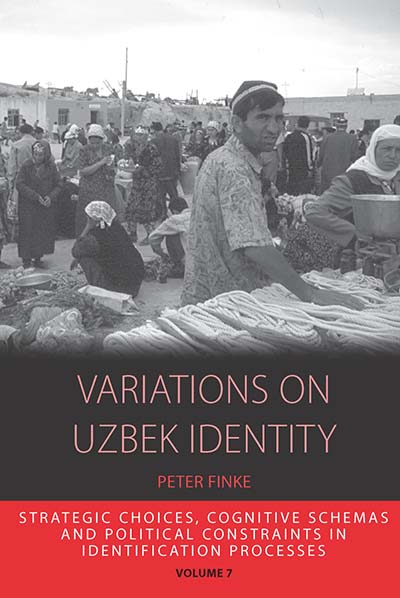
In the Republic of Uzbekistan, being Uzbek has less to do with one’s lineage and more to do with one’s allegiance to a society. The advantages of this voluntary membership within the Uzbek “social network” are explored in Variations on Uzbek Identity: Strategic Choices, Cognitive Schemas and Political Constraints in Identification Processes. Below, Peter Finke discusses his attraction to Uzbekistan, his writing process, and the volume’s potentially controversial reception.


_____________________________________________

Berghahn Books: What drew you to the study of Uzbekistan, specifically “Uzbek Identity”?


Peter Finke: My general interest in Central Asia goes back a long way into childhood fantasies of roaming horse riders and the like. Most of Uzbekistan does not really fit that well into this and indeed my early research in the region was on nomadic pastoralists in Western Mongolia. It was after I took up a postdoc at the Max Planck Institute to work on identity issues that I not only switched topics but also field sites.

Continue reading “Uzbekistan, Social Network of Choice”