 Join our Email List




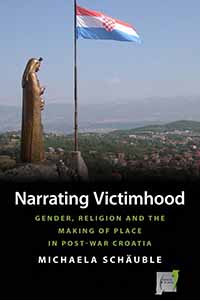 In Michaela Schäuble’s ethnographic account, Narrating Victimhood: Gender, Religion and the Making of Place in Post-War Croatia, she examines religion, gender relations, and nation building in the newly independent country. Following, the author gives readers a photographic glimpse into the Republic of Croatia after its war for independence. See the other photos in the gallery here.
Tag: Gender studies and Sexuality
Simulated Shelves: Browse May’s New-Book Library
This month, Berghahn’s library will expand by eleven books. The soon-to-be-published titles make up a distinct lot, ranging from Abigail Loxham’s Cinema at the Edges to Anne Eriksen’s Antiquities to Heritage to Philip Ther’s The Dark Side of Nation-States. The following list of new volumes is complete with brief descriptions of the books and a peek at each cover.
_____________________________
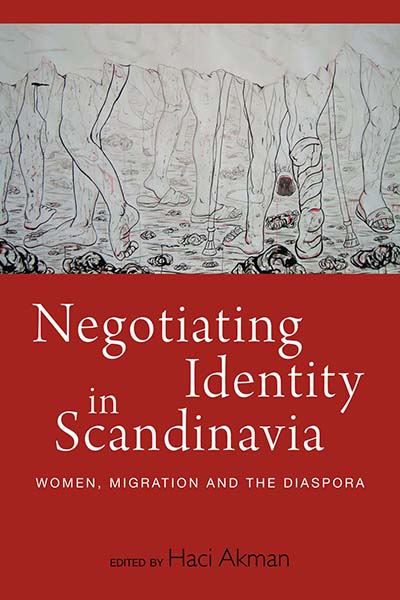
NEGOTIATING IDENTITY IN SCANDINAVIA
Women, Migration and the Disaspora
Edited by Haci Akman
Continue reading “Simulated Shelves: Browse May’s New-Book Library”
Visual Voice: ‘Narrating Victimhood’ in Photos
The 1991-1995 war following the dissolution of socialist Yugoslavia is referred to as “Homeland War” (Domovinski rat) in Croatia. It is narrated both as a struggle of independence and a defense against aggression and occupation by Serbia. Postwar social and political processes continue to be dominated by competing nationalisms, aspects of which come into focus in Narrating Victimhood: Gender, Religion and the Making of Place in Post-War Croatia, published earlier this month. In the following photo essay, author Michaela Schäuble gives readers a visual glimpse into the role religion, and Marian veneration in particular, plays in these processes in contemporary post-war Croatia.
______________________________
Continue reading “Visual Voice: ‘Narrating Victimhood’ in Photos”
Transnational Ahead of Its Time: Author Examines Council of Women
National borders are broken down in Oliver Janz and Daniel Schönpflug’s soon-to-be-released collection Gender History in a Transnational Perspective: Networks, Biographies, Gender Orders. The contributors examine historic cross-continent networks of European feminists. Following a short introduction from the author is a excerpt from Karen Offen’s chapter, in which the author examines the International Council of Women, which she considers “transnational” before the term was coined.
____________________________________
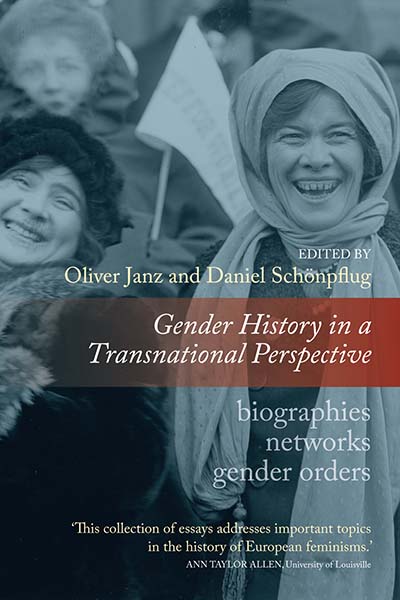
Karen Offen introduces this first part of the volume with reflections on a fundamental question: Can the category “transnational” be applied to the early international women’s movement, even though its representatives did not yet employ the term.
Historical scholarship is pressed to justify anachronistic terminology. It seems, though, that its use is often unavoidable, since historians’ implicit and explicit questions about the past always stem from their own present. Also, from a theoretical and methodological point of view, employing anachronistic terms allows for clearer analytical terminology as the linguistic horizon of the contemporaries is often ambivalent, contradictory and multifold.
Continue reading “Transnational Ahead of Its Time: Author Examines Council of Women”
Berghahn Author Asks: ‘Quo Vadis FEMEN?’
FEMEN is a Ukrainian feminist protest group that has become infamous for its topless protests against patriarchy. The group, founded in 2008, has since grown to be a worldwide phenomenon, and not simply because its protests are often seen as “sextreme.” Marian Rubchak, editor of Mapping Difference: The Many Faces of Women in Contemporary Ukraine, takes a look into the history and meaning of the movement, and asks: Where is it going?
________________________________________

The year was 2008; 17 years had passed since Ukraine declared its independence and early advocates of change began to espouse high-minded ideals designed to promote women’s rights. These incipient feminists laid the groundwork for raising an awareness of discrimination against women, and were instrumental in advancing the passage of some of the most progressive pro-women legislation Ukraine had yet seen. Fast forward to 2008 — the promising beginnings were moving very slowly, too slowly. Clearly the work of reform would need to proceed to a higher level.
Down, Not Out: Ethiopian Youth on the Street
Paula Heinonen’s decade of research and reflection led to the publication of Youth Gangs and Street Children: Culture, Nurture, and Masculinity in Ethiopia, which was published as a paperback in June 2013. Based on careful observations and interviews, the volume provides insight into common misconceptions of why Ethiopian boys and girls take to the street.
______________________________________________
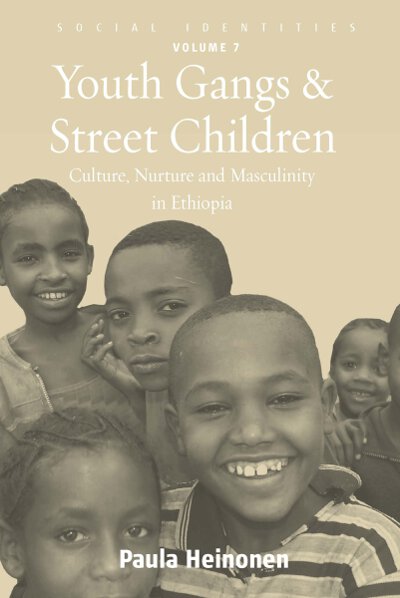
Before embarking on my six years longitudinal field research and four years of follow-up enquiry and reflection, I read extensively on the street children phenomena worldwide.
Continue reading “Down, Not Out: Ethiopian Youth on the Street”
Hot Off the Presses – New Paperback Releases
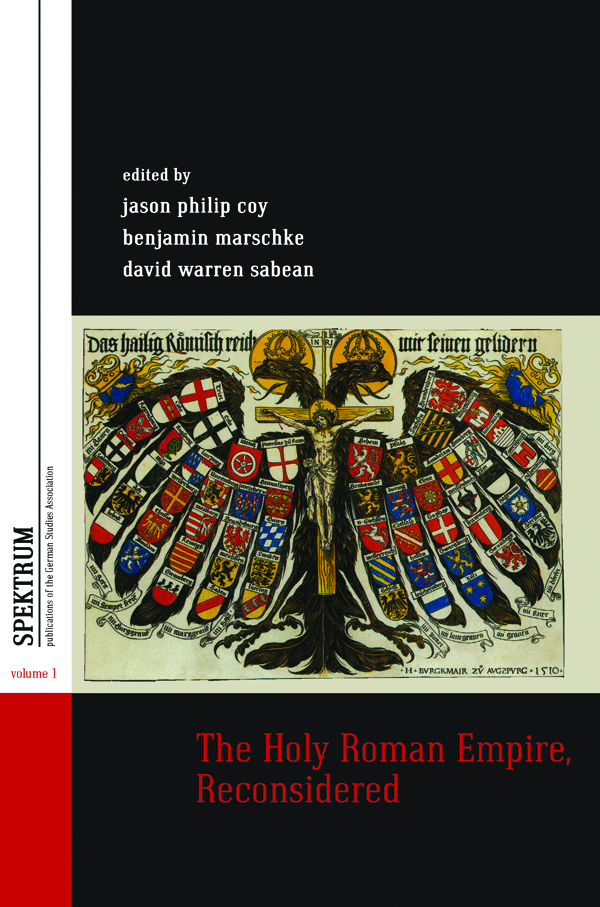 Newly released paperbacks from Berghahn:
Foodways and Empathy: Relatedness in a Ramu River Society, Papua New Guinea, Anita von Poser
Weimar Publics/Weimar Subjects: Rethinking the Political Culture of Germany in the 1920s, Kathleen Canning, Kerstin Barndt, and Kristin McGuire
The Holy Roman Empire, Reconsidered, Jason Philip Coy, Benjamin Marschke, and David Warren Sabean
Power and Society in the GDR, 1961-1979: The ‘Normalization of Rule’?, Mary Fulbrook
“Vienna is Different”: Jewish Writers in Austria from the fin de siècle to the Present, Hillary Hope Herzog
Divided, but not Disconnected: German Experiences of the Cold War, Tobias Hochscherf, Christoph Laucht, and Andrew Plowman
Hot Off the Presses – New Paperback Releases
Newly released paperbacks from Berghahn:
Youth Gangs and Street Children: Culture, Nurture and Masculinity in Ethiopia, Paula Heinonen
Funerals in Africa: Explorations of a Social Phenomenon, Michael Jindra and Joël Noret
Gardening the World: Agency, Identity and the Ownership of Water, Veronica Strang
Growing Up in Central Australia: New Anthropological Studies of Aboriginal Children and Adolescence, Ute Eickelkamp
Hot Off the Presses – New Book Releases
Newly released titles from Berghahn’s Anthropology, Colonialism, Economics, Politics, and History lists:
Creating a Nation with Cloth: Women, Wealth, and Tradition in the Tongan Diaspora, Ping-Ann Addo
Slavery and Antislavery in Spain’s Atlantic Empire, Josep M. Fradera and Christopher Schmidt-Nowara
An Anthropological Trompe L’Oeil for a Common World: An Essay on the Economy of Knowledge, Alberto Corsín Jiménez
Framing Africa Portrayals of a Continent in Contemporary Mainstream Cinema, Nigel Eltringham
Tax Justice and the Political Economy of Global Capitalism, 1945 to the Present, Jeremy Leaman and Attiya Waris
Routes into the Abyss Coping with Crises in the 1930s, Helmut Konrad and Wolfgang Maderthaner
Bedouin of Mount Sinai: An Anthropological Study of their Political Economy, Emanuel Marx
Empire, Global Coloniality and African Subjectivity, Sabelo J. Ndlovu-Gatsheni
Family Upheaval Generation, Mobility and Relatedness among Pakistani Migrants in Denmark, Mikkel Rytter
Up Close and Personal: On Peripheral Perspectives and the Production of Anthropological Knowledge, Cris Shore and Susanna Trnka
Astonishment and Evocation: The Spell of Culture in Art and Anthropology, Ivo Strecker and Markus Verne
The Gaddi Beyond Pastoralism: Making Place in the Indian Himalayas, Anja Wagner
The Nazi Genocide of the Roma: Reassessment and Commemoration, Anton Weiss-Wendt
What is “Militant Lactivism?”
More than a simple parenting choice, breastfeeding becomes a matter of feminist and activist discussion in Charlotte Faircloth’s book Militant Lactivism? published in March 2013 by Berghahn Books. Below, the author introduces us to the movement for public breastfeeding with an excerpt from her book.
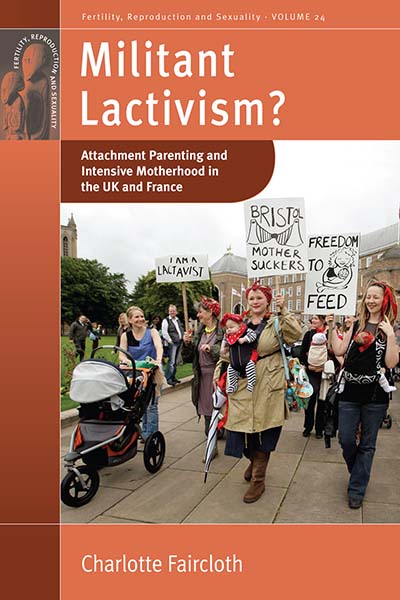 Militant Lactivism? is a book based on research with women in London and Paris who are members of La Leche League (LLL), an international breastfeeding support organisation. The text focuses on the accounts of a small but significant population of mothers within LLL who practise ‘attachment parenting’. This is a style of care which endorses close parent-child proximity and typically involves long-term, on-cue breastfeeding, baby ‘wearing’ and co-sleeping as part of a ‘family bed’ philosophy. It is becoming increasingly popular in both the US and the UK, and has recently received a lot of publicity following a particularly provocative TIME magazine feature, amongst other coverage.