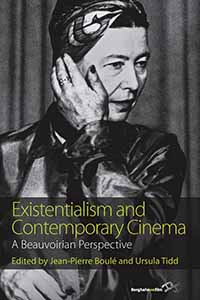
Interview with the editors of Existentialism and Contemporary Cinema: A Beauvoirian Perspective

What inspired the project?

Ursula Tidd: As far as I was concerned, I was keen to show the immense relevance of Beauvoir’s thought to film studies and hence, to take her work more deeply into the area of film studies. I have noticed that Beauvoir’s work is often implied in discussions in film studies about ‘the male gaze’ and on the topic of gender relations more broadly, but not always made explicit in what it contributes to the debates.

Jean-Pierre Boulé: A desire to use The Second Sex to show that Beauvoir still has a lot to say about human relationships.


How did you hope it might influence the field?

J-PB: For people to go back to or discover Beauvoir and realise that she has a place in film studies.

UT: I hope that this volume will inspire more people to look at film through Beauvoirean eyes, so to speak! And to engage more closely with her phenomenologically-based philosophy on gender and ageing.


Which aspect of co-editing did you find most difficult?

J-PB: Not difficult as such, but bearing in mind a student readership, making the volume accessible to them. And choosing the front cover photograph.

UT: Yes, it’s important to keep in mind the future readership of a volume like this – although one can’t please everyone…


Would the films discussed be the kind of films Simone de Beauvoir would be interested in?

UT: For sure! Beauvoir was highly eclectic in her cultural interests and an avid film-goer, at least for most of her life. She enjoyed art house as well as Hollywood cinema so I think that all the films discussed would have engaged her.

J-PB: Absolutely! I like to think she would have liked the various genres under study, as she herself wrote in a variety of genres. I think she would have loved Revolutionary Road, set in 1955, with its story of oppression and liberation.

______________________________

Jean-Pierre Boulé is Professor of Contemporary French Studies at Nottingham Trent University.


Ursula Tidd is Senior Lecturer in French Studies at the University of Manchester.


Existentialism and Contemporary Cinema: A Beauvoirian Perspective was published by Berghahn Books in September 2012.  A companion volume, Existentialism and Contemporary Cinema: A Sartrean Perspectiveedited by Jean-Pierre Boulé and Enda McCaffrey, is also available from Berghahn Books.
The fantasy of a historical source

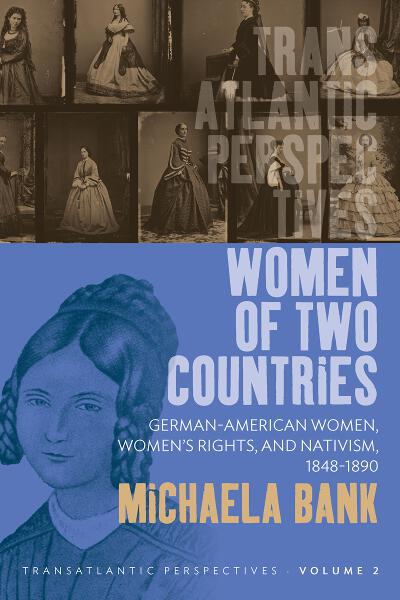
Michaela Bank’s Women of Two Countries: German-American Women, Women’s Rights and Nativism, 1848-1890 has just been released by Berghahn. The second volume in our new series Transatlantic Perspectives, it focuses on the challenges faced by three German-American feminists not only with the US women’s rights movement itself but also within their own ethnic community. In the following post, the author recounts the discovery of a seemingly significant event while undertaking her research.

_______________________________

When I first spent long days in libraries and archives to find out more about German-American women’s participation in the US women’s rights movement I stumbled over an extensive report of a German women’s rights convention that took place in 1868 near Boston. Reading the report, which had been published in a German-language paper by Karl Heinzen, who was one of the rather more radical political editors of the time, I found the presented ideas clear and expressed in sharp language. To give an example, here is what one female speaker is recorded as having said to the audience:

“I predict that, if women are granted the right to vote, the political party that seeks to limit the freedom of social life by moral police and seeks to expand the authority of the clerics by religious coercion will be significantly strengthened. What it has not achieved so far, it will conceivably achieve now with the help of American women who are generally more dependent on the representatives of religion than American men. This party’s goal will be achieved if those women’s additional votes are not made powerless by a pull in the opposite direction. And who shall and will provide this pull? Only the German women!”

Such an openly aggressive opposition to the US-American women’s rights movement among German-American women struck me as rather exceptional. I was thrilled as this convention report was a marvelous source for my study on German-American women, nativism and women’s rights in this period, and so I continued to dig deeper into the sources to find out more about it. How did the grand ladies of the US-American movement, Elizabeth Cady Stanton, Lucy Stone and other prominent advocates of women’s rights, react to this opposition?

…Yet, not all paths in historical research lead to success: I could not find any records of the Roxbury convention anywhere. Then, a few weeks later, I found a short note revealing that Karl Heinzen’s report had actually been a fictional one. Suddenly the shockingly clear and sharp language made sense to me.

Although a fantasy, it remained a fascinating report for me because it illustrated pointedly what a group of German-Americans interested in reform politics thought of the women’s rights movement and why conflict arose so often between the two groups. As I discovered, only a few German-American women were willing to stand up and raise their voice strongly and even aggressively. Such were the women who could endure the tension between their ethnic community, which was often at odds with the US-American women’s rights movement because of its nativist and prohibition stances, and the women’s rights movement that they wanted to be a part of. The efforts of Clara Neymann, Mathilde Wendt, and Mathilde Franziska Anneke for an idea of equal women’s rights are special – special, because they were not at all common while still being powerful and influential. In the end, I was still more than happy that I had found the report of the fictional convention even if it was just a „Hirngespinst“ – a pipe-dream – as a newspaper article called it.

_______________________________

 Michaela Bank received her doctoral degree in American Studies from Goethe-University in Frankfurt/Main, Germany in 2009. She was a fellow in the graduate research training group “Public Spheres and Gender Relations” funded by the German Research Foundation from 2005 to 2008. From 2008 to 2010 she was a Lecturer of American History and Gender Studies at Goethe-University in Frankfurt/Main.


Hot Off the Presses – New Book Releases

Newly released titles from Berghahn’s anthropology and sociology lists:

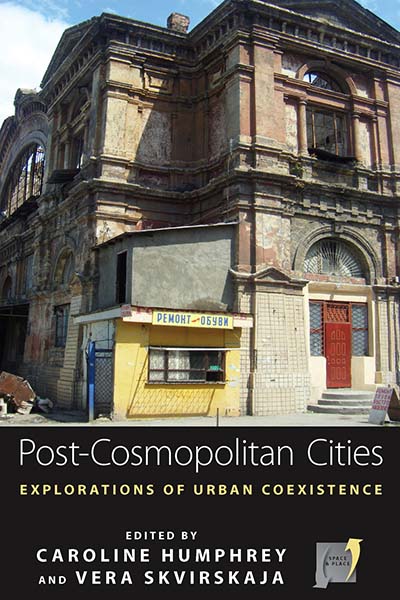
Post-Cosmopolitan Cities: Explorations of Urban Coexistence, edited by Caroline Humphrey and Vera Skvirskaja
Problems of Conception: Issues of Law, Biotechnology, Individuals and Kinship, Marit Melhuus

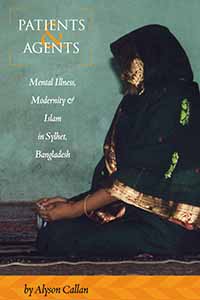
Patients and Agents: Mental Illness, Modernity and Islam in Sylhet, Bangladesh, Alyson Callan

Islam and Assisted Reproductive Technologies: Sunni and Shia Perspectives, edited by Marcia C. Inhorn and Soraya Tremayne

A Durkheimian Quest: Solidarity and the Sacred, William Watts Miller

Animism in Rainforest and Tundra: Personhood, Animals, Plants and Things in Contemporary Amazonia and Siberia, edited by Marc Brightman, Vanessa Elisa Grotti, and Olga Ulturgasheva

Who Owns the Stock? Collective and Multiple Property Rights in Animals, edited by Anatoly M. Khazanov and Günther Schlee

Environment and Citizenship in Latin America: Natures, Subjects and
Struggles
, edited by Alex Latta and Hannah Wittman

An Excerpt from Patients and Agents: Mental Illness, Modernity and Islam in Sylhet, Bangladesh

Note: Berghahn has just published Alyson Callan’s Patients and Agents: Mental Illness, Modernity and Islam in Sylhet, Bangladesh, an ethnographic study that explores how changes in the global economy have led to an increase in daughters marrying outside of their local kinship network, which in turn has increased their vulnerability to mental illness. An excerpt with images from Chapter 6 follows an introductory note from the author.

__________________________________________

Bangladesh is one of only five countries in the world where women have a shorter life expectancy than men. The low status of women in Bangladesh is underpinned by the virilocal rule of residence. As daughters leave their natal home to live with their husband’s family at the time of marriage, it is argued that nurturing them is regarded as a relative waste of resources, compared to nurturing sons who will stay and contribute to the wealth of the household.

However, women’s oppression is not experienced in a uniform way. Older women achieve a higher status as mothers, and, as mother-in-laws, may oppress their sons’ wives.  The concept ‘woman’ does not occupy a single analytical category and the status of women varies according to the role they occupy.  In this excerpt I suggest that the ‘Ma’ icons seen in most rural households provides evidence that the mother is revered on a par with Allah.

The mother in symbolic opposition to Allah
[There is] a tension evident in Bengali culture between the law of the father and the law of the mother. The popular Indian conception of the mother as self-sacrificing overlies an unconscious fantasy of the phallic, castrating mother (Nandy 1990). Bagchi (1990) suggests that Bengali culture is particularly prone to employing this threatening aspect of the mother. The powerful and murderous Kali, who dances on the corpse of her consort Shiva, is a goddess who enjoys greatest popularity amongst Bengalis (Fuller 1992). Wilce (1998a) argues that in Bangladesh mothers are feared and placed in symbolic opposition to Allah. He cites this famous passage from the Hadith: in answer to the question, ‘To whom do I owe the most respect?’ the Prophet replied, ‘Your mother.’ His answer remained the same when pressed to declare the second and third persons deserving respect. ‘Father’ was listed fourth [1998: 108].

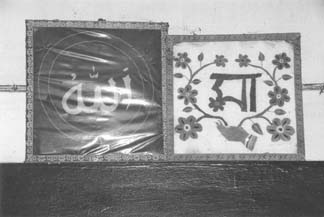
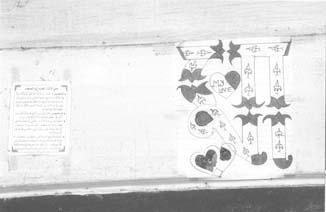
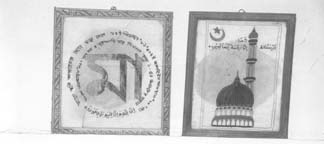
Another quotation commonly recited in Sylhet is ‘Heaven is under the mother’s feet’, meaning that obedience to the mother is the path to heaven. Yet whilst the mother-in-law in Sylhet is feared, conscious representations of the mother portray her to be loving and all-forgiving, if not to say indulgent. This latter attribute seems to me to be diametrically opposed to Allah who takes a meticulous account of his subjects’ good and bad works, doling out punishment and rewards as appropriate on Judgement Day. That the mother is revered on a par with Allah is demonstrated by the prevalence of ‘Ma’ iconography (ma is short for amma – mother). (Muslim) lorry drivers have ‘Ma’ painted on the front of their trucks; posters are sold reproducing poems and pictures celebrating the mother. Most strikingly of all, ‘Ma’ embroidery samplers and other ‘Ma’ icons are hung up on the wall next to Islamic icons – Allah’s name in Arabic, Qur’anic verse, pictures of Mecca. I saw these ‘Ma’ icons in every rural household that had grown-up children present; it was explained that ‘we have maya (love) for Allah and amma above everything else; for amma because she has suffered greatly for us’.


Figure 6.1: A ‘Ma’ embroidery sampler is hung to the right of Allah’s name in Arabic


Figure 6.2. Lines from the Qur’an on the left; handwritten ‘Ma’ decoration on the right


Figure 6.3. Left: Ma icon commemorating the date of death of the household’s mother; the Arabic reads: ‘Allah, we came from you and we will return to you’. Right: the mosque at Madina with lines from the Qur’an.


Alyson Callan is a psychiatrist and anthropologist. She currently works as a consultant psychiatrist in Brent for the Central and North West London NHS Foundation Trust.

Hot Off the Presses- New Book Releases

New in print from Berghahn:
After The History of Sexuality: German Genealogies with and beyond Foucault, edited by Scott Spector, Helmut Puff, and Dagmar Herzog

Cinema of Choice: Optional Thinking and Narrative Movies, by Nitzan Ben Shaul

Hitler’s Volksgemeinschaft and the Dynamics of Racial Exclusion: Violence against Jews in Provincial Germany, 1919-1939, by Michael Wildt, translated from German by Bernard Heise

Sharing the Sacra: The Politics and Pragmatics of Intercommunal Relations around Holy Places, edited by Glenn Bowman

Hot Off the Presses- New Book Releases

European Foundations of the Welfare State, by Franz-Xavier Kaufmann, translated by John Veit-Wilson, foreword by Anthony B. Atkinson

Fortune and the Cursed, the Sliding Scale of Time in Mongolian Divination, by Katherine Swancutt

Investigating Srebrenica: Institutions, Facts, Responsibilities, edited by Isabelle Delpla, Xavier Bougarel, and Jean-Louis Fourn

Journeys into Madness: Mapping Mental Illness in the Austro-Hungarian Empire, edited by Gemma Blackshaw and Sabine Wieber

Learning from the Children: Childhood, Identity and Culture in a Changing World, edited by Jacqueline Waldren and Ignacy-Marek Kaminski

A Lover’s Quarrel with the Past: Romance, Representation, Reading, by Ranjan Ghosh

The Making of the Pentecostal Melodrama: Religion, Gender and Media in Kinshasa, by Katrien Pype

Ordinary Lives and Grand Schemes: An Anthropology of Everyday Religion, edited by Samuli Schielke and Liza Debevec

The Politics of Educational Reform in the Middle East: Self and Other in Textbooks and Curricula, edited by Samira Alayan and Achim Rohde, and Sarhan Dhouib

Revisiting Feminist Approaches to Art Therapy, edited by Susan Hogan

Susan Hogan on Revisiting Her Groundbreaking Work on Feminist Art Therapy

Berghahn recently published Revisiting Feminists Approaches to Art Therapy, edited by Susan Hogan. It is both an update and an expansion of the earlier work Feminist Approaches to Art Therapy, first published in 1994. Here, Hogan addresses her reasons for revisiting her seminal work and explains why the topic is just as relevant today.

“Why do we need a book about women’s issues?” I am often still asked. Feminism is the principle of advocating social, political, and other rights of women as equal to those of men. It is necessarily interested in the question of equality. Creating a deep understanding of women’s conditions and women’s experience is one rationale for a volume specifically addressing this subject.

Another raison d’être of all my work in the field of art therapy is to challenge the reductive, and potentially damaging use of psychological ideas in art therapy practice. Continue reading “Susan Hogan on Revisiting Her Groundbreaking Work on Feminist Art Therapy”

Hot Off the Presses- New Book Releases

Recent Releases from Berghahn Books:
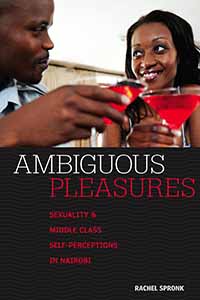
Ambiguous Pleasures: Sexuality and Middle-Class Self-Perceptions in Nairobi, by Rachel Spronk
Collaborators Collaborating: Counterparts in Anthropological Knowledge and International Research Relations
, edited by Monica Konrad
Conversion and the Politics of Religion in Early Modern Germany, edited by David M. Luebke, Jared Poley, Daniel C. Riley, and Warren Sabean
Cultures of Colour: Visual, Material, Textual, edited by Chris Horrocks
Czechs, Germans, Jews: National Identity and the Jews of Bohemia
, by Kate?ina ?apková, translated by Derek and Marzia Paton
Dark Trophies: Hunting and the Enemy Body in Modern War, by Simon Harrison
Marginal at the Center: The Life Story of a Public Sociologist
,
by Baruch Kimmerling, translated by Diana Kimmerling
Moving Subjects, Moving Objects: Transnationalism, Cultural Production and Emotions, edited by Maruška Svašek
Postcolonial Migrants and Identity Politics: Europe, Russia, Japan, and the United States in Comparison, edited by Ulbe Bosma, Jan Lucassen, Gert Oostindie
Walls, Borders, Boundaries: Spatial and Cultural Practices in Europe, edited by Marc Silberman, Karen E. Till, and Janet Ward