NEW & NOTABLE BOOKS
Continue reading “New and Notable Titles from Berghahn Books & Journals”
 Join our Email List





Continue reading “New and Notable Titles from Berghahn Books & Journals”
We’re delighted to offer a selection of latest releases from our core subjects of Anthropology, Applied Anthropology, Education, Film Studies, History, Media Studies, Refugee & Migration Studies, Socio-Legal Studies, and Sociology, along with a selection of our New in Paperback titles.
We are especially excited to announce the publication of TELEVISION’S MOMENT by Christina von Hodenberg.
“… A very interesting analysis of how sitcoms negotiated the ‘culture wars,’ paying particular attention to discussions of gender, race, and sexuality. Particularly effective here is the ability to set the text—the sitcom—into the larger context of politics, culture, and society in the three national cases the author compares… The book makes an important methodological contribution … it will make a splash with historians … and students of film and media studies.” · Robert Moeller, University of California, Irvine
———————————————————————————————————————————–
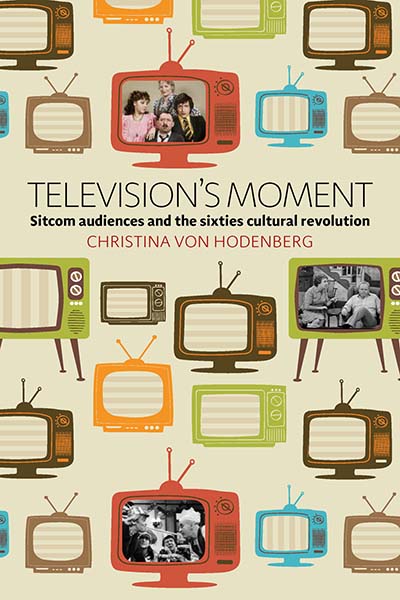 TELEVISION’S MOMENT
Sitcom Audiences and the Sixties Cultural Revolution
Christina von Hodenberg
Continue reading “Simulated Shelves: Browse July 2015 New Books”
We are delighted to present a selection of our newly published May 2015 titles from our core subjects of Anthropology, Environmental Studies, File & Media Studies, History, and Urban Studies, along with a selection of our New in Paperback titles.
We are especially excited to announce the publication of Militant Around the Clock? by Nikolaos Papadogiannis.
“An original, well-researched book that provides a fresh perspective on youth and leisure in contemporary history by looking at Greece in the 1970s.” · Frank Trentmann, Birkbeck College, University of London
———————————————————————————————————————————–
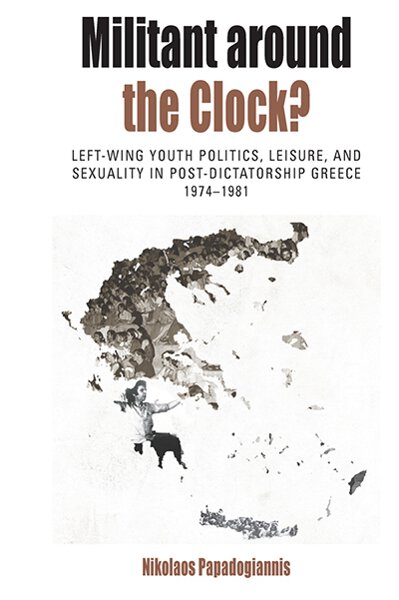 MILITANT AROUND THE CLOCK?
Left-Wing Youth Politics, Leisure, and Sexuality in Post-Dictatorship Greece, 1974-1981
Nikolaos Papadogiannis
Volume 13, Protest, Culture & Society
Continue reading “Simulated Shelves: Browse May 2015 New Books”

Today is International Museum Day!
Every year since 1977, International Museum Day is coordinated by the International Council of Museums (ICOM) and organised worldwide around May 18. This day is an occasion to raise awareness on how important museums are in the development of society.
The event highlights a specific theme each year that is at the heart of the international museum community’s preoccupations. The theme this year is Museums for a Sustainable Society. In honor of this event, we’d like to offer FREE ACCESS to the article “Assessing Museums Online: The Digital Heritage Sustainability (DHS) Framework” by Ana Luisa Sánchez Laws (from the second volume of the new journal Museum Worlds).
 We are delighted to inform you that we will be attending the 20th Annual Association for the Study of Nationalities World Convention (23-25 April 2015) at Columbia University in New York City. Berghahn will be exhibiting for one day only! Please stop by our stand on Friday April 24th, and don’t miss your chance to browse our selection of books and pick up FREE journal samples!
For more info about the Association for the Study of Nationalities, click here.
If you are unable to attend, we would like to provide you with a special discount offer. For the next 30 days, receive a 25% discount on any of the titles listed below. Simply enter the code ASN15 at checkout. Visit our website for a complete listing of all published and forthcoming titles.
Continue reading “Association for the Study of Nationalities Conference”
Supercinema: Film-Philosophy for the Digital Age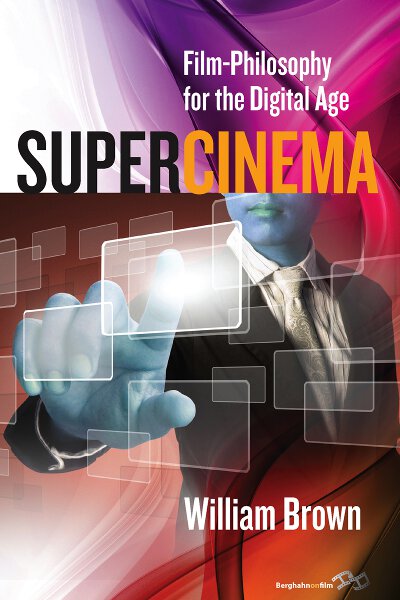 , originally published in May 2013, is now available in paperback. Following, author William Brown reflects on the book as a launching pad for his own studies and what he perceives as the forward trajectory of film studies. This post pairs with his reflection on the book’s initial release, which can be read here.
______________________________________
The argument in Supercinema: Film-Philosophy for the Digital Age is about the depiction and possible meanings of the continuous times and spaces that contemporary mainstream cinema often seems to depict thanks to the aesthetic possibilities opened up to, or at the very least made more easily achievable by, cinema as a result of digital technology.
Continue reading “Supercinematic Projection: Author Looks toward Future of Film Studies”
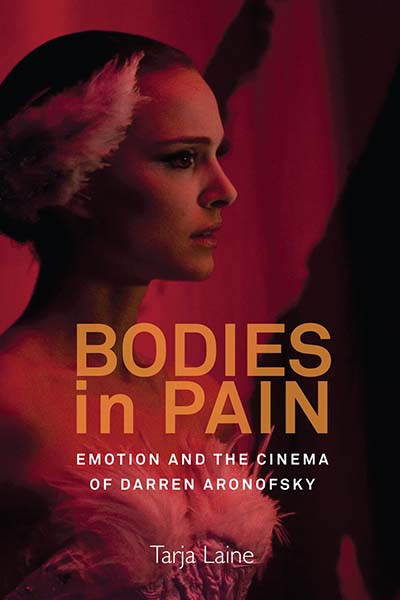
In Bodies in Pain: The Emotion and Cinema of Darren Aronofsky, Laine explores the emotionally engaging nature of this prominent director’s work, which includes Requiem for a Dream and Black Swan, Pi and The Fountain. Following, the author explains how she came to write this book, as well as some emotional nuances in the director’s oeuvre.
In 2011 when I was asked by Mark Stanton, then-senior editor at Berghahn Books to write a book about emotion and film aesthetics in the cinema of Darren Aronofsky, my book entitled Feeling Cinema had just been released a month before. At that point I was not planning to start a new book project any time soon, and nor did I have a clue where the next idea for a book would come from, so his proposal almost appeared to me as a gift from the universe. Furthermore, since Aronofsky as a filmmaker was not an obvious choice for me to write about, it was an extra challenge to come up with an aesthetically meaningful starting point, without falling into the trap of cheap auteurism.
Continue reading “Seeing is Feeling: Tangible Emotion in the Work of Aronofsky”

The following is the second in a series of posts on Jane Austen. This is a guest post written by James Brown, contributor to a special issue of Critical Survey which is devoted to the subject of Jane Austen. James Brown is the author of the article titled “Jane Austen’s Mental Maps.”
The idea of mental maps was planted in my mind when I was a research student in Oxford. It comes from geography, especially from Peter Gould and Rodney White’s 1974 book, Mental Maps.
I’d also been an undergraduate at Oxford – one of Terry Eagleton’s students. I followed up the ideas he threw out about all manner of topics besides English literature. But as a postgraduate, things were different. I was writing about seventeenth-century drama, and Emrys Jones was my supervisor.
Emrys’s interests were wide-ranging. In the faculty’s list of research expertise, Emrys’s entry was ‘English literature 1500 to 1800’, with some later topics thrown in for good measure. He was an expert on Byron, for example. Though there were no degrees in drama at Oxford, Emrys took an obvious delight and interest in theatre. He could look forbiddingly donnish (as he does in Al Pacino’s Looking For Richard), but if he was talking about a performance he’d liked, his delight was infectious. At one of our meetings we got onto the topic of farce, and Emrys thought of a show in which Sheila Steafel had made an entrance that was side-splittingly funny because she was wearing sensible shoes. I can’t remember exactly how or why the sensible shoes were funny, but I do remember Emrys, in his book-lined room in New College, succumbing to a fit of giggles, struggling to gasp out the words ‘sensible shoes’, and wiping away tears of laughter.
Emrys proposed all manner of connections between the drama I was researching and other literature and theatre. But, to me at any rate, he seldom suggested reading something from quite another discipline. So when he recommended Gould and White’s Mental Maps the title lodged in my mind. I thought of using it in my doctoral work as a way of understanding late seventeenth-century playgoers’ perceptions of London. But in the end I didn’t use it in my thesis. So the idea remained filed away at the back of my mind, waiting for its cue. The cue was just over twenty years coming. When I saw the call for papers for the ‘Locations of Austen’ conference at Hatfield a couple of years ago, the phrase ‘mental maps’ popped back up.
As it happens, the way I’ve used the concept shows the influence of Terry Eagleton as well as of Emrys Jones. Though they were both Oxford professors of English, I suspect they felt they had little in common. Even though he’d been at Oxford for 14 years when I met him, and would remain for another 18, Terry gave the impression he was just passing through, and he’s since left. Emrys, on the other hand, seemed wedded to the place. Having been C.S. Lewis’s student, in 1955 he had been chosen by Lewis as his successor at Magdalen, and he only left Magdalen in 1984 to take up the Goldsmiths’ Chair at New College a quarter of a mile away, just the other side of Longwall Street. Yet it dawned on me, as I revised ‘Jane Austen’s Mental Maps’ for Penny Pritchard’s special issue of Critical Survey on Austen, that I had finally succeeded in bringing the two of them together. Emrys had alerted me to the idea of mental maps. But the way I describe them in my essay as performative – as being about what one can do with them rather than simply reflecting false consciousness – goes back to what I learned about ideology from Terry. Having struggled as postgraduate to reconcile what I learned from each of them, there’s a private satisfaction in finally bringing them together.
___________________________________________________________________________
James Brown is an associate research fellow in the Department of Politics at Birkbeck, and a lecturer in theatre at IES Abroad, having previously taught politics and sociology at Birkbeck and film and literature at Middlesex University.
We are delighted to present a selection of our newly published January 2015 titles from our core subjects of Anthropology, Economics, Environmental Studies, Film Studies, History, Jewish Studies, Medical Anthropology, and Politics, along with a selection of our New in Paperback titles.
We are especially excited to announce the publication of JESUS RECLAIMED: Jewish Perspectives on the Nazarene by Walter Homolka
“This book offers a constructive contribution to the debates on the theological significance of Jewish and Christian approaches to the historical Jesus. The author’s knowledge of Jewish and Christian discourses on both sides of the Atlantic is impressive.” · Werner G. Jeanrond, University of Oxford
———————————————————————————————————————————–
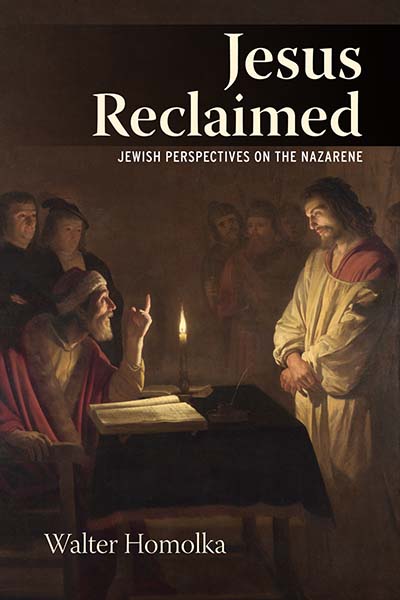 JESUS RECLAIMED
Jewish Perspectives on the Nazarene
Walter Homolka
Translated by Ingrid Shafer
Continue reading “Simulated Shelves: Browse January 2015 New Books”
 Berghahn Journals is delighted to announce that we will begin publishing three new journals in 2015!
These new publications will cover a range of topics across disciplines and promote academic discussion through articles, reviews, interviews, special sections, and more. For more information, please see below or click through to access the journals’ respective websites.
Boyhood Studies – An Interdisciplinary Journal
Boyhood Studies: An Interdisciplinary Journal is a peer-reviewed journal providing a forum for the discussion of boyhood, young masculinities, and boys’ lives by exploring the full scale of intricacies, challenges, and legacies that inform male and masculine developments. Boyhood Studies is committed to a critical and international scope and solicits both articles and special issue proposals from a variety of research fields including, but not limited to, the social and psychological sciences, historical and cultural studies, philosophy, and social, legal, and health studies.
One of the core missions of the journal is to initiate conversation among disciplines, research angles, and intellectual viewpoints. Both theoretical and empirical contributions fit the journal’s scope with critical literature reviews and review essays also welcomed. Possible topics include boyish and tomboyish genders; boys and schooling; boys and (post)feminisms; the folklore, mythology, and poetics of “male development”; son-parent and male student-teacher relations; young masculinities in the digital and postdigital ages; young sexualities; as well as representations of boyhoods across temporalities, geographies, and cultures.
Conflict and Society – Advances in Research
Organized violence — war, armed revolt, genocide, lynching, targeted killings, torture, routine discrimination, terrorism, trauma and suffering — is a daily reality for some while for others it is a sound bite or news clip seen in passing and easily forgotten. Rigorous scholarly research of the social and cultural conditions of organized violence, its genesis, dynamic, and impact, is fundamental to addressing questions of local and global conflict and its impact on the human condition.
Publishing peer-reviewed articles by international scholars, Conflict and Society expands the field of conflict studies by using ethnographic inquiry to establish new fields of research and interdisciplinary collaboration. An opening special section presents general articles devoted to a topic or region followed by a section featuring conceptual debates on key problems in the study of organized violence. Review articles and topical overviews offer navigational assistance across the vast and varied terrain of conflict research and comprehensive reviews of new books round out each volume. With special attention paid to ongoing debates on the politics and ethics of conflict studies research, including military-academic cooperation, Conflict and Society will be an essential forum for scholars, researchers, and policy makers in the fields of anthropology, sociology, political science, and development studies.
Screen Bodies is a peer-reviewed journal focusing on the intersection of Screen Studies and Body Studies across disciplines, institutions, and media. It is a forum promoting the discussion of research and practices through articles, reviews, and interviews that investigate various aspects of embodiment on and in front of screens. The journal considers moving and still images, whether as entertainment or for information through cinema, television, and the Internet; through the private experiences of portable and personal devices; or in institutional settings such as medical and surveillance imaging. Screen Bodies considers the portrayal, function, and reception of the body presented and conceptualized through the lenses of gender and sexuality, feminism and masculinity, trans* studies, queer theory, critical race theory, cyborg studies, and dis/ability studies.