A Reflection on ‘Japanese Tourism’

Carolin Funck and Malcolm Cooper’s Japanese Tourism: Spaces, Places and Structures, published this month, explains the nuances of Japanese tourism, both by the Japanese and within Japan by tourists from around the world. Below, the editors recall what drew them to this fascinating field of study, how the field has changed since they started writing, and how they predict it will continue to change in the future.


__________________________________________

 

Berghahn Books: When were you drawn to the study of Japanese tourism? What inspired your love of your subject?


Malcolm Cooper: The lack of a readily available text that brought together the several elements of Japanese tourism and chronicled its form and function over the years when I first started to teach this subject more than 10 years ago.
Continue reading “A Reflection on ‘Japanese Tourism’”

An Uprising of Historical Importance

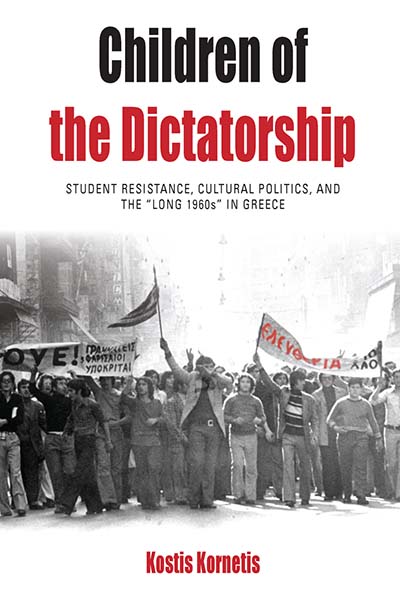
The cyclical course of history comes into sharp focus when one looks at Greek political uprisings. The widely publicized youth dissent in recent years is nothing new, but actually has earlier roots in 1973 — with different players, but with the same activist vigor. This 1970s group — later to be known as the Polytechnic Generation — comes into clear focus in newly published Children of the Dictatorship: Student Resistance, Cultural Politics and the “Long 1960s” in Greece, by Kostis Kornetis. Following is the opening to the volume’s introduction. 


___________________________________

In 2010 the well-known British Pakistani writer and political activist Tariq Ali commented that “were there a Michelin Great Protest guide, France would still be top with three stars, with Greece a close second with two stars.” Ali did not only refer to the 2005 riots in France and the 2008 civil disturbances in Greece, but to a longue durée structure of civil disobedience in the two countries that dates back to the 1960s and 1970s.


Continue reading “An Uprising of Historical Importance”

Care and Anti-Care in Greece

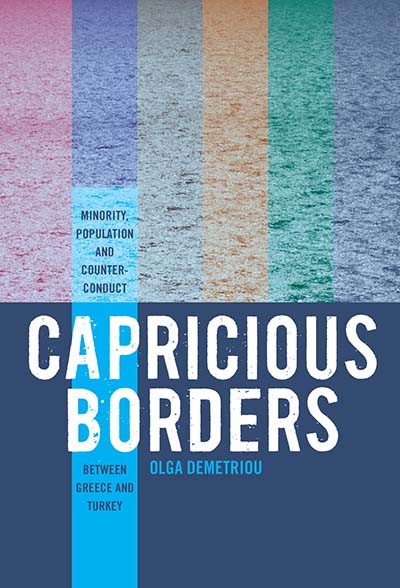
In her book Capricious Borders: Minority, Population, and Counter-conduct between Greece and Turkey, published earlier this year, Olga Demetriou examines the mechanisms through which particular groups of people are turned into “minorities.” At the center of these processes she identifies naming, genealogy and state care, as key modes of governmentality. Discussing a recent incident of biopolitical policing, the author shows here how “state care” continues to have more relevance as a repressive rather than an empowering mechanism in the minoritization context.


 ______________________________________


In Greece, the “management of population” (in the sense of a Foucauldian biopolitics of demography, spatial order, classification, and knowledge production) has long been racialized.


This racialism has fluctuated through different political conjunctures yielding differing policies of birth rate monitoring and incentivization. Last month “care” emerged as a tool of biopolitical policing in a discussion that went well beyond the bounds of Greece, after authorities arrested a couple raising a child who was “not their own.” The couple was Roma, the child at first assumed not, and much of the racialized presentation of the incident turned on the stereotypical discourse about “Gypsies stealing children.”

Continue reading “Care and Anti-Care in Greece”

SETI: An Alien Concept?

If there is extra-terrestrial life in the Universe, how might it communicate? In Science, SETI, and Mathematics, to be published this month, author Carl DeVito seeks to answer this question in a conversational way, explaining the role of mathematics in the Search for Extra-Terrestrial Intelligence (SETI). DeVito explores the science and history behind the search, and shares the many questions associated with it, especially those regarding language and communication.


_________________________________


The early workers in the search for extra-terrestrial intelligence were concerned with the technical problems of sending and receiving radio signals across inter-stellar distances.

 

Slowly, however, the deeper questions inherent in this endeavor rose to prominence: questions about the nature of intelligence, the nature of language, and the philosophical/psychological motivation behind this search.

Continue reading “SETI: An Alien Concept?”

Likelihood of Contact Depends on the Lifetimes of Civilizations

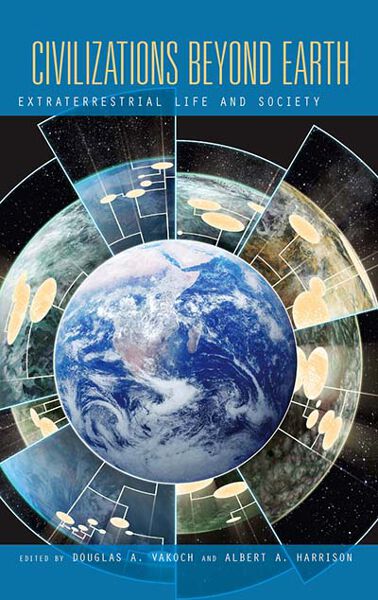
If alien civilizations are anything like terrestrial civilizations, earthly beings may never encounter beings from outer space. Civilizations Beyond Earth contributor Alan J. Penny says our greatest chance for interaction will hinge on the longevity and attention span of an alien society — which must be long enough to give us a chance to interact.


________________________________________

To consider the number of extraterrestrial civilizations that may be out there and which we can detect by their emission of radio signals, we need to think about the likelihood that a star may host a planet with a civilization that can broadcast such signals.


But we also need to think about how long such civilizations last.

Continue reading “Likelihood of Contact Depends on the Lifetimes of Civilizations”

Looking ‘Against the Grain’ at German-Jewish Intellectuals

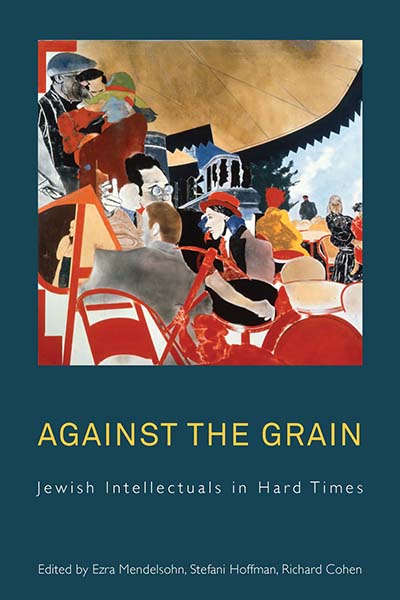
German-Jewish intellectuals in the twentieth century are the focus of Against the Grain: Jewish Intellectuals in Hard Times, published this month. The volume, edited by Ezra Mendelsohn, Stefani Hoffman, and Richard I. Cohen, looks at the key figures of German-Jewish thought: Scholem, Strauss, and Kohn, and examines how such thinkers reacted to, and were impacted by, the collection of crises lived by Central European Jews. Below, co-editor Mendelsohn speaks about the volume’s potential to “stir” the field and what brought him to the study in the first place.


____________________________________________


Berghahn Books: What drew you to the study of the trials and tribulations of Jewish men and women in the twentieth century?


Ezra Mendelsohn: The main reason resides in my  interest in the history of my own family.  Both my parents were born in Tsarist Russia, and both ended up in the United States, having lived for some time in British Palestine. 

Continue reading “Looking ‘Against the Grain’ at German-Jewish Intellectuals”

Reconstructing the Measure and Meaning of Obesity

Obesity is a worldwide problem, and affecting more people all the time. In their timely collection, editors Jessica Hardin and Megan McCullough examine this growing epidemic in their soon-to-be-released book, Reconstructing Obesity: The Meaning of Measures and the Measure of Meanings.The editors analyze the cultural causes and effects to open a new discussion about fatness and obesity.

_________________________________

I asked my students, fresh off a lively discussion about dieting and religious fasting, if any of them would consider taking a new course I was designing called,“Fatness and Obesities.” Only one student raised her hand. What if I change the course’s title – but not its content – to “The Politics of Body Size”? At this suggestion, they all raised their hands. What is the difference?

-Jessica Hardin

Continue reading “Reconstructing the Measure and Meaning of Obesity”

European Thought: The ‘Gift’ that Keeps Giving

Is the spread of Western, specifically European, thought truly a gift to the rest of the world, or is this dissemination simply a way of exerting cultural power? Vassos Argyrou seeks an answer to this question in his newly released volume The Gift of European Thought and the Cost of Living. Below, the author explains his inspiration for—and the challenges and rewards of—writing the book, published September 2013.


_________________________________________


Berghahn Books: What drew you to the study of “European Thought” and what are some examples of this?


Vassos Argyrou: “European thought” is a term that in a certain sense was imposed on me as it was used to make the highly contentious claim that it’s a gift to the rest of the world. It refers not only to an intellectual tradition but also to a way of life or culture—European or,  more broadly, Western culture.

Continue reading “European Thought: The ‘Gift’ that Keeps Giving”

‘Wrapped in the Flag of Israel’ Author Earns Heart at East Award

On May 21, 2013, in Tel Aviv, the Heart at East Lifetime Achievement Plaque was bestowed upon Prof. Smadar Lavie. Her scholarly and activist voice for the rights of Mizrahi Jewish women living in Israel received formal recognition. Lavie’s two decades of ethnographic research and community leadership to better the lives of those within these populations not only earned her the award, but also led her to write Wrapped in the Flag of Israel, to be published in April 2014. Below, Lavie explains why Heart at East is significant—both within the State of Israel and for herself.


________________________________________________________


Smadar Lavie
— Photo by Jutta Henglein-Bildau

I was so thrilled to receive Facebook messages from Reuven Abarjel, co-founder of the Jerusalem Black Panthers, and Shira Ohayon, a longtime Mizrahi feminist and educational director of Israel’s Andalusian Orchestra, that I was to be awarded the Heart at East Lifetime Achievement Plaque in May 2013.

Continue reading “‘Wrapped in the Flag of Israel’ Author Earns Heart at East Award”

Aloha to Beginnings: Writing ‘Legacies of a Hawaiian Generation’

A talk-story, or mo`olelo, is an informal and traditionally Hawaiian way of sharing stories to preserve them for posterity. In The Legacies of a Hawaiian Generation, to be published this month, author Judith Schachter pairs these informal conversations with fieldwork observations to give readers a view into the island culture post-U.S. annexation. Below she shares the story of her beginning in Hawai`i, and how her work took root. 


____________________________________


My work in Hawai`i began “in small,” with the idea of adding a chapter to my book on American kinship, family, and adoption. I intended to see what happened to Polynesian customs when the U.S. brought its legal system to the Pacific Island state.

Continue reading “Aloha to Beginnings: Writing ‘Legacies of a Hawaiian Generation’”