Marking Museum Week: #AskTheCurator or View the Book

This week hundreds of museums across the United Kingdom and Europe are participating in Twitter’s first Museum Week campaign. Each day during this week is associated with a hashtag, from #DayInTheLife to #MuseumMemories, all intended to hit on various delightful aspects of the museum world. Today’s hashtag, #AskTheCurator is an opportunity to engage with museum experts. But for those who prefer to engage with experts the classic way — by way of their books — we have curated a collection of some of our Museum Studies titles in the following gallery.

_______________________________________

EXTREME COLLECTING

Challenging Practices for 21st Century Museums

Edited by Graeme Were and J. C. H. King

By exploring the processes of collecting, which challenge the bounds of normally acceptable practice, this book debates the practice of collecting ‘difficult’ objects, from a historical and contemporary perspective; and discusses the acquisition of objects related to war and genocide, and those purchased from the internet, as well as considering human remains, mass produced objects and illicitly traded antiquities. Much of the book engages with the question of the limits to the practice of collecting as a means to think through the implementation of new strategies. Continue reading “Marking Museum Week: #AskTheCurator or View the Book”
Not So Different After All: Connecting British and Bengali Education Systems

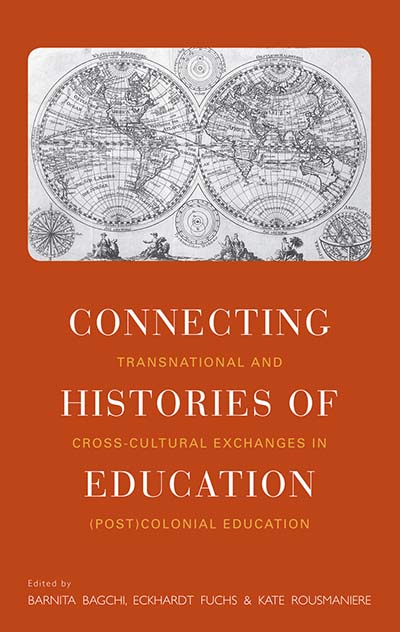
Connecting Histories of Education: Transnational and Cross-Cultural Exchanges in (Post)Colonial Education, edited by Barnita Bagchi, Eckhardt Fuchs and Kate Rousmaniere, has recently been published by Berghahn. The editors previously shared an excerpt from the volume’s Introduction, which can be read here. A second extract, this one from Mary Hilton’s chapter “A Transcultural Transaction: William Carey’s Baptist Mission, the Monitorial Method and the Bengali Renaissance,” gives readers insight into the education system shared between Britain and Bengal.


__________________________________________

To understand the early-nineteenth-century reforming mentality that drove change in both Britain and Bengal, we must first sketch those systems of basic education that prevailed in their traditional rural communities before the English industrial revolution and before the development of the fully evangelical, self-righteous and reforming mercantile thrust of English imperialism.

Continue reading “Not So Different After All: Connecting British and Bengali Education Systems”

The Reciprocal Relationship of Media and Movement

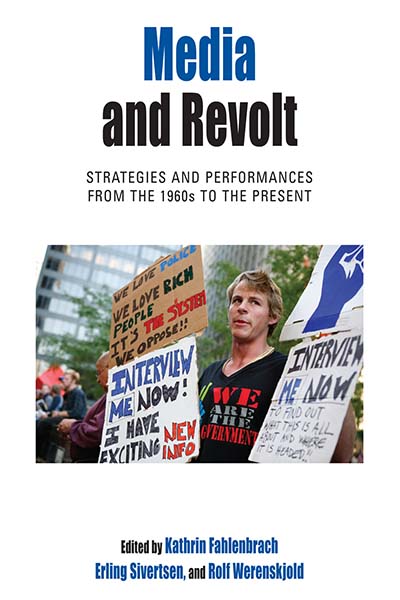
Editors Kathrin Fahlenbrach, Erling Sivertsen and Rolf Werenskjold’s volume Media and Revolt: Strategies and Performances from the 1960s to the Present was published last month. Following, the editors introduce the timely volume and share an excerpt from the Introduction. 


__________________________________________________


Looking at journals, television, or on the internet in these days, news dealing with protests abounds: the upheavals around the Euro-Maidan in the Ukraine, anti-governmental protests in Bangkok, the “Occupy-Gezi-Park”-manifestations in Istanbul or protest actions of NGOs like Greenpeace against oil companies or whale hunters. Obviously protest has an enormous “news value”: it offers spectacular pictures, it makes evident political conflicts and decisions by polarizing their actors, and it offers media the chance to perform as center of society.

Continue reading “The Reciprocal Relationship of Media and Movement”

Variations on an Educational Theme

When the traditional educational system of colonizing societies was disseminated to indigenous societies, it was not accepted by the colonized “as-is,” but was adopted as merely an underlying framework. This hybridization led to a multitude of varied, yet similar, educational systems across the post-imperialized world. In the following excerpt from the Introduction of Connecting Histories of Education: Transnational and Cross-Cultural Exchanges in (Post)Colonial Education, to be published this month, editors Barnita Bagchi, Eckhardt Fuchs and Kate Rousmaniere further explain the connections within modern educational culture.


______________________________

Connecting Histories of Education bears a double meaning. The volume connects historians of education from South Asia and other parts of the world to enhance a comparative perspective and create a wider research network beyond the Euro-Western world. In addition, it presents local, regional, national and transnational research, with the goal of highlighting the interconnectedness of histories of education in the modern world.

Continue reading “Variations on an Educational Theme”

Vienna, Dream City within a ‘Paradoxical Republic’

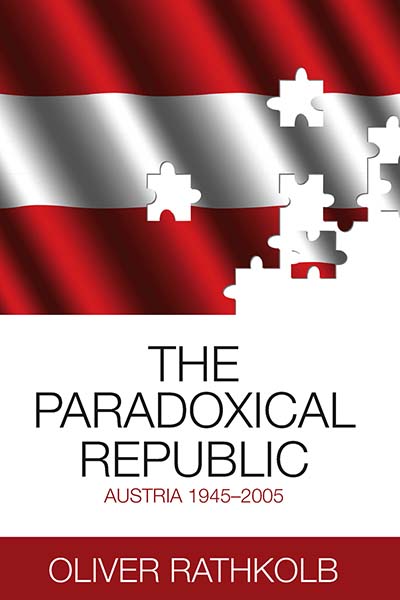
For the next three weeks, New York City will resonate with the energy of Austria. Vienna: City of Dreams will feature a slate of events presented by Carnegie Hall. Capping the festival will be symphony performances of the Vienna Philharmonic, an orchestra which has been celebrated since its first concert in 1842. This arrangement of musicians became a cultural beacon in post-World War II Austria, the subject of Oliver Rathkolb’s The Paradoxical Republic: Austria 1945-2005. Following, in an excerpt from the volume, which will soon be published as a paperback, Rathkolb discusses the Philharmonic’s presence in a discordant time.


_________________________________________________

In 1953 . . . neither the Vienna Staatsoper nor the Burgtheater had yet been rebuilt; they were not yet functional as memory sites. However, this did not detract from the importance of the aesthetic role music, notably classical music, played in the postwar era. The sense of purpose felt when the old and new political and economic elites gathered for the first Philharmonic concerts on 27 and 28 April 1945 was highly significant. There was a strong admixture of the Soviet military in the audience, deliberately encouraged by the liberal dispensation of free tickets by the Philharmonic.


Continue reading “Vienna, Dream City within a ‘Paradoxical Republic’”

A Note on the Influence of ‘Rhetoric and Culture’

 Astonishment and Evocation: The Spell of Culture in Art and Anthropology, edited by Ivo Strecker and Markus Verne, was published earlier this year as the newest volume within the Studies of Rhetoric and Culture series. The volume and series have gained attention within the academic community, one such supporter being Michał Mokrzan, a future collaborator within the series and a scholar of rhetoric. In response to the newest volume, Mokrzan writes an entry of his own interactions with the series, series editors, and series volumes.

StreckerAstonishment
___________________________________________


Due to the fact that the Rhetoric Culture Project develops at a rapid pace – Astonishment + Evocation is the fifth volume of the Berghahn Books series Studies in Rhetoric and Culture – one can risk the thesis that we are now witnessing a crystallization of a new theoretical and methodological trend in anthropology, which can be described as a ‘rhetorical turn in anthropology’.


Continue reading “A Note on the Influence of ‘Rhetoric and Culture’”

‘Screening Nature’ Turns the Cinematic Gaze to Mother Earth

Flora, fauna and film are the foci of Screening Nature: Cinema Beyond the Human, published in November 2013. The collection, edited by Anat Pick and Guinevere Narraway, hopes to open the film-viewers’ gaze to the often-overlooked nonhuman living subjects in film. The following is an interview with Pick and Narraway on the mission of Screening Nature, and on the environmental and ecocritical challenges to the discipline of Film Studies.


________________________________


Berghahn Books: What is the idea behind the collection and how did it come about?


Anat Pick and Guinevere Narraway: Screening Nature is one installment in a bigger project to push Film Studies to engage more closely with the natural world and with issues of ecology. It is fair to say that there is currently an “ecological turn” in Film Studies, and the book is part of what we hope will be a significant paradigm shift in the way we think and talk about film. But despite the growing interest in the ecological dimensions of cinema, both in terms of cinema’s representation of nonhuman nature and animals, and in terms of cinema’s ecological impact as a consumer and emitter of fossil fuels, Film Studies departments remain staunchly humanist and anthropocentric, with most courses theorizing and making films with little regard—in the literal sense of the word—to more-than-human concerns.

Continue reading “‘Screening Nature’ Turns the Cinematic Gaze to Mother Earth”

Jünger in Paris: A Writer’s Wartime Account in the City of Lights

Allan Mitchell takes a look at Ernst Jünger, an under-appreciated twentieth century writer, but an important social figure. The Devil’s Captain: Ernst Jünger in Nazi Paris, 1941-1944 follows the writer at wartime, where he spent his stint in Paris as a military officer whose chief duty was to “mingle with French intellectuals.” Below is an excerpt from the volume, which was originally published in May 2011 and is soon to be released in ebook format.


________________________________________

Very few, if any, critics of German literature would rank Ernst Jünger among the greatest writers of the twentieth century. He simply does not compare, as a novelist, with giants like Thomas Mann, Franz Kafka, or Robert Musil. His signature work, Auf den Marmorklippen, has been often justly praised for its chiseled language and allegorical imagination. But for later generations raised on soaring flights of science fiction, Jünger’s 1939 work must seem brief, rather stilted, and now somewhat dated. In any event, it pales beside Buddenbrooks and Der Zauberberg, Das Urteil and Das Schloss, or Der Mann ohne Eigenschaften.

Continue reading “Jünger in Paris: A Writer’s Wartime Account in the City of Lights”

How Social Movements in Reality (Hopefully) Revitalize Theory

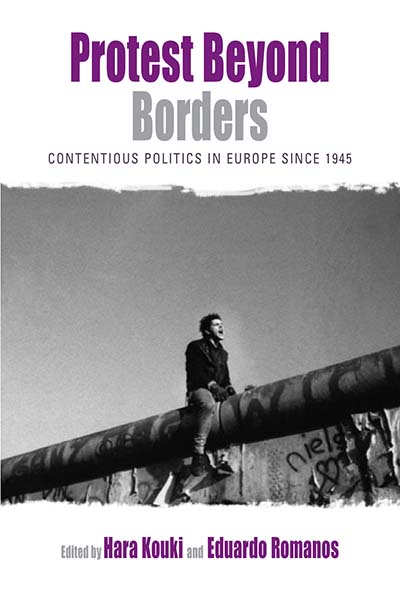
Protest beyond Boders: Contentious Politics in Europe since 1945, recently published in paperback, examines protest culture since the second World War from a variety of angles — historical, political, social, and cultural. But much has changed in worldwide politics since the volume’s original March 2011 publication. Below, the editors reflect on how the reality of the political protest sphere has renewed interest in studying the underlying theories of social movements.


___________________________________________________


In recent years, we have been all caught by surprise. A sudden outbreak of confrontations and protests erupted in unrelated places, such as Bulgaria, Spain, Greece, Hungary and beyond Europe, in Tunisia, Egypt, Thailand, United States and Brazil. Most often lacking clarity in terms of organization, membership, protest demands and goals, this rise of contention erupting across the globe is far from completed. Something new is unfolding, which could not have been predicted and cannot easily fit in our categories of thinking and classifying the world.

Continue reading “How Social Movements in Reality (Hopefully) Revitalize Theory”

The Myriad Measures of Achievement

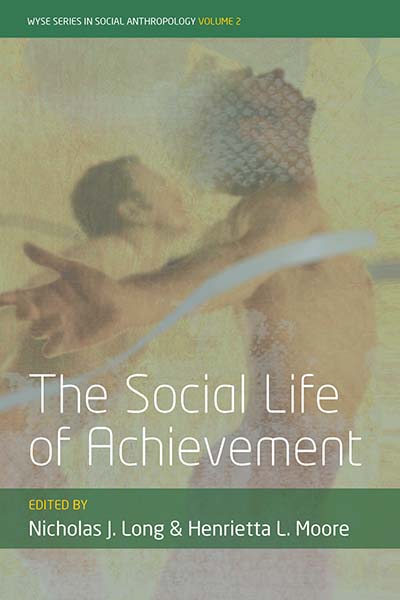
Achievement is commonly defined as a successful completion of a given undertaking, but what it means to “achieve” is not a static idea the world over. Contributors to The Social Life of Achievement, published last month, examine meanings of achievement in countries and cultures throughout the world. Below, co-editor Nicholas J. Long addresses the term and provides insight into the background of the volume, from its inception to its subjects to its methodology.


_______________________________________________


Berghahn Books: What drew you to the study of achievement? And what inspired you to research and write about it?


Nicholas J. Long: Fieldwork! In the Riau Islands – the region of Indonesia where I’ve conducted most my research – people talk and think about achievement all the time. It’s become an integral component of the citizenship syllabus: students are taught that a good Indonesian should try to seize any opportunities for ‘achievement’ that they can. And it’s an incredibly widespread trope in public culture. I quickly realised that I wasn’t going to be able to write a good ethnography of the region without engaging in some way with this achievement discourse and how it was shaping people’s lives.

Continue reading “The Myriad Measures of Achievement”