Roots and Recovery: Anthropologists Study Anorexia from all Angles

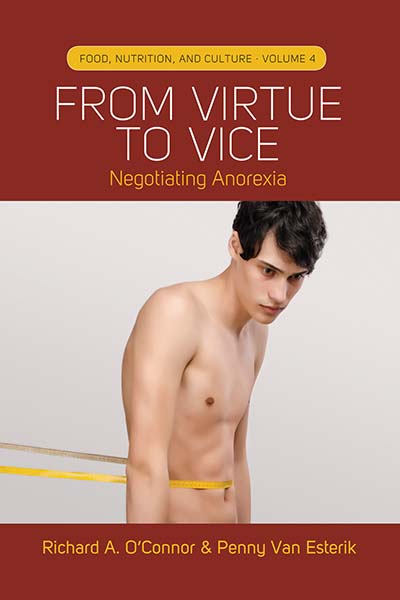
How do sufferers of anorexia recover? Richard A. O’Connor and Penny Van Esterik seek answers to this question, first by identifying root causes of the disease and then by sharing the stories of those who have made a full recovery.  From Virtue to Vice: Negotiating Anorexia, the book that resulted from their research, does not look at the affliction of anorexia from behind a glass, in fact, O’Connor’s connection to the work is deeply personal. He explains in his own words below.


_______________________


Every book has a back story. Mine is no big secret. When my daughter Amorn became anorexic it turned our family upside down. Carolyn [my wife] and I desperately wanted answers. We got a great counselor but nothing worked. The explanations we got made no sense. That wasn’t our daughter. Of course we worried we were in denial—that we just didn’t want to face the truth—and that silenced me at the time. I understood clinicians have to put people in categories and few fit perfectly. So I settled into accepting my daughter was an exception, an outlier. What mattered most was working with her caregivers for recovery.


Continue reading “Roots and Recovery: Anthropologists Study Anorexia from all Angles”

Supercinematic Projection: Author Looks toward Future of Film Studies

Supercinema: Film-Philosophy for the Digital Age, originally published in May 2013, is now available in paperback. Following, author William Brown reflects on the book as a launching pad for his own studies and what he perceives as the forward trajectory of film studies. This post pairs with his reflection on the book’s initial release, which can be read here.


______________________________________


The argument in Supercinema: Film-Philosophy for the Digital Age is about the depiction and possible meanings of the continuous times and spaces that contemporary mainstream cinema often seems to depict thanks to the aesthetic possibilities opened up to, or at the very least made more easily achievable by, cinema as a result of digital technology.

Continue reading “Supercinematic Projection: Author Looks toward Future of Film Studies”

Seeing is Feeling: Tangible Emotion in the Work of Aronofsky


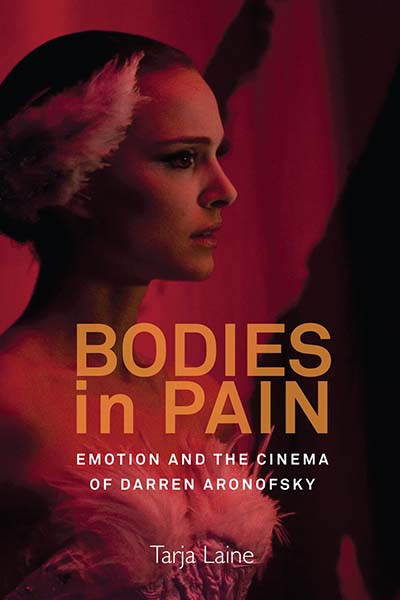
In Bodies in Pain: The Emotion and Cinema of Darren Aronofsky,  Laine explores the emotionally engaging nature of this prominent director’s work, which includes Requiem for a Dream and Black Swan, Pi and The Fountain. Following, the author explains how she came to write this book, as well as some emotional nuances in the director’s oeuvre.


In 2011 when I was asked by Mark Stanton, then-senior editor at Berghahn Books to write a book about emotion and film aesthetics in the cinema of Darren Aronofsky, my book entitled Feeling Cinema had just been released a month before. At that point I was not planning to start a new book project any time soon, and nor did I have a clue where the next idea for a book would come from, so his proposal almost appeared to me as a gift from the universe. Furthermore, since Aronofsky as a filmmaker was not an obvious choice for me to write about, it was an extra challenge to come up with an aesthetically meaningful starting point, without falling into the trap of cheap auteurism.

Continue reading “Seeing is Feeling: Tangible Emotion in the Work of Aronofsky”

Using Mental Maps to Locate Austen

The following is the second in a series of posts on Jane Austen. This is a guest post written by James Brown, contributor to a special issue of Critical Survey which is devoted to the subject of Jane Austen. James Brown is the author of the article titled “Jane Austen’s Mental Maps.”


The idea of mental maps was planted in my mind when I was a research student in Oxford. It comes from geography, especially from Peter Gould and Rodney White’s 1974 book, Mental Maps.


I’d also been an undergraduate at Oxford – one of Terry Eagleton’s students. I followed up the ideas he threw out about all manner of topics besides English literature. But as a postgraduate, things were different. I was writing about seventeenth-century drama, and Emrys Jones was my supervisor.


Emrys’s interests were wide-ranging. In the faculty’s list of research expertise, Emrys’s entry was ‘English literature 1500 to 1800’, with some later topics thrown in for good measure. He was an expert on Byron, for example. Though there were no degrees in drama at Oxford, Emrys took an obvious delight and interest in theatre. He could look forbiddingly donnish (as he does in Al Pacino’s Looking For Richard), but if he was talking about a performance he’d liked, his delight was infectious. At one of our meetings we got onto the topic of farce, and Emrys thought of a show in which Sheila Steafel had made an entrance that was side-splittingly funny because she was wearing sensible shoes. I can’t remember exactly how or why the sensible shoes were funny, but I do remember Emrys, in his book-lined room in New College, succumbing to a fit of giggles, struggling to gasp out the words ‘sensible shoes’, and wiping away tears of laughter.


Emrys proposed all manner of connections between the drama I was researching and other literature and theatre. But, to me at any rate, he seldom suggested reading something from quite another discipline. So when he recommended Gould and White’s Mental Maps the title lodged in my mind. I thought of using it in my doctoral work as a way of understanding late seventeenth-century playgoers’ perceptions of London. But in the end I didn’t use it in my thesis. So the idea remained filed away at the back of my mind, waiting for its cue. The cue was just over twenty years coming. When I saw the call for papers for the ‘Locations of Austen’ conference at Hatfield a couple of years ago, the phrase ‘mental maps’ popped back up.


As it happens, the way I’ve used the concept shows the influence of Terry Eagleton as well as of Emrys Jones. Though they were both Oxford professors of English, I suspect they felt they had little in common. Even though he’d been at Oxford for 14 years when I met him, and would remain for another 18, Terry gave the impression he was just passing through, and he’s since left. Emrys, on the other hand, seemed wedded to the place. Having been C.S. Lewis’s student, in 1955 he had been chosen by Lewis as his successor at Magdalen, and he only left Magdalen in 1984 to take up the Goldsmiths’ Chair at New College a quarter of a mile away, just the other side of Longwall Street. Yet it dawned on me, as I revised ‘Jane Austen’s Mental Maps’ for Penny Pritchard’s special issue of Critical Survey on Austen, that I had finally succeeded in bringing the two of them together. Emrys had alerted me to the idea of mental maps. But the way I describe them in my essay as performative – as being about what one can do with them rather than simply reflecting false consciousness  goes back to what I learned about ideology from Terry. Having struggled as postgraduate to reconcile what I learned from each of them, there’s a private satisfaction in finally bringing them together.


___________________________________________________________________________

James Brown is an associate research fellow in the Department of Politics at Birkbeck, and a lecturer in theatre at IES Abroad, having previously taught politics and sociology at Birkbeck and film and literature at Middlesex University.

ACCESS JAMES BROWN’S ARTICLE HERE

GET A FREE SAMPLE ISSUE OF CRITICAL SURVEY HERE  


‘Healing Roots’: Author Traces Life of Wild Plant from Farm to Pharm

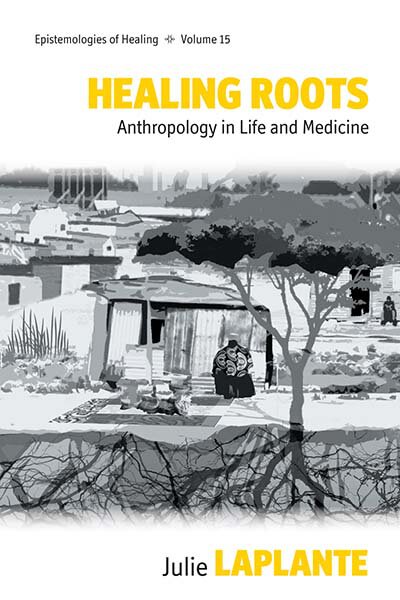
The healing powers of a plant in sub-Saharan Africa, long used for indigenous medicine, are now being harnessed as a pharmaceutical to be more widely produced and sold. Author Julie Laplante follows this path of production of Artemesia Afra from a wild-growing bush to a processed, controlled substance in her soon-to-be-published monograph, Healing Roots: Anthropology in Life and Medicine. Following, Laplante shares how her own path led her from researcher to author.


_________________________________


The journey told in the book began in August 2006 within the Biomedicine in Africa research group at the Max Planck Institute für etnologische forshung in Halle (Saale), Germany, as we were invited to explore how biomedicine is both shaping and being shaped through its practices in Africa. My own research project entitled ‘South African Roots towards Global Knowledge’ namely intended to find out how this is done through the practices of clinical trials as they aim to ‘recognize’ indigenous medicine.

Continue reading “‘Healing Roots’: Author Traces Life of Wild Plant from Farm to Pharm”

Starting with Place: Understanding Characters and Experiences in Jane Austen’s Final Novel

Critical Survey

The following is the first in a series of posts on Jane Austen. This is a guest post written by Rebecca Posusta, contributor to a special issue of Critical Survey which is devoted to the subject of Jane Austen. Rebecca Posusta is the author of the article titled “Architecture of the Mind and Place in Jane Austen’s Persuasion.”


“Architecture of the Mind and Place in Jane Austen’s Persuasion” is in essence a project that explores how the characters of Jane Austen’s final novel understand their physical, social, and psychological place. But, it is also about how the places in which they live tell the story about who they are. It is a project that began to germinate long ago, early in my scholarly career, and is the product of my earliest ideas about myself and how I fit in the world. I grew up in New Orleans, Louisiana; and, it is in New Orleans that I first met Jane Austen and found a connection to the ordinary ideas of humanness with which her novels deal. New Orleans is an old city filled with the physical remnants of a luminous past which fascinate me and ground me in my personal history.


I am descended from a long line of French Creoles on my mother’s side who arrived in New Orleans in the late eighteenth and early nineteenth century. Growing up, I remember stories my mother and grandmother used to tell of the big house on Esplanade Avenue that was lost after the Civil War, the dashing young man who dabbled in vaudeville and scandalous womanizing, the house on Verbena Street with the mom-and-pop grocery at the back, and the new house on Dodge Avenue with its cinderblock siding, fish pond, and summer house meant for sleeping in on hot summer nights prior to the advent of central air conditioning. Walking through the red-bricked French Quarter with its wrought-iron balconies and cool shaded courtyards, or along the River Road amongst the crumbling façades of the antebellum plantations, I am reminded of a troubled and turbulent past, and have often wondered about my ancestors who once walked the same streets and along the same shelled drives as I have. Who were they? What were they like? Few have told their stories, but the walls and bricks, balconies and flying staircases of the places they lived echo with their lives and experiences.


It occurs to me that even fictional characters, particularly those of Austen, are a product of the place in which they live, or at least a product of the place in which their creator lives. This may be why fiction is so appealing to us; we can see our own experiences in the experiences of others. If I start to tell my story, I begin with a place, as I have done here. Austen’s novels often begin with place as well. We meet her characters as they face a disruption in their normal domestic routine and move, change, or accept unpleasant alterations to the place in which they live. At the beginning of Persuasion, Anne Elliot defines herself by her place at Kellynch, but when she moves away from that place and can look back at it with a more critical and detached eye, she learns to define herself and her future. She learns to tell her story by the new places she occupies just like I know myself by both where I have been and where I am headed.

___________________________________________________________________________

Rebecca Posusta, M.A., is a Senior Instructor in the English Department at University of Colorado, Colorado Springs.

access Rebecca Posusta’s Article here

Get a free sample issue of critical survey here  


Meeting of Minds and Disciplines: Authors Discuss ‘Anthropology & Political Science’

Myron J. Aronoff and Jan Kubik’s  Anthropology and Political Science: A Convergent Approach was published in paperback last November. Following, the co-authors reflect on the conception of the book and their writing process, as well as its reception since the initial publication.


I lived abroad for a dozen years from 1965-1977 having earned a Ph.D. in social anthropology from Manchester University and in political science from UCLA. The Chair of the Department of Political Science at Tel Aviv University, where I had taught for eight years, asked me what I would write about when I returned to the US to take up my position at Rutgers University. I told him that, among other topics, I intended to write an analysis of the convergent approach bridging anthropology and political science that I was developing. I then wrote my third book on Israel and updated and expanded my earlier book on the Israel Labor Party.

Continue reading “Meeting of Minds and Disciplines: Authors Discuss ‘Anthropology & Political Science’”

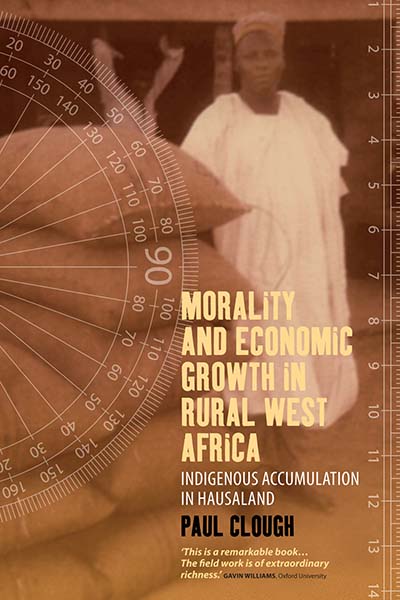
Prose and Economic Development in an African Village

Paul Clough spent many years studying the economic situation of the Marmara village, in Hausaland, northern Nigeria. His work there began in 1977-1979, then was followed by stints in 1985, 1996, and 1998. In Morality and Economic Growth in Rural West Africa: Indigenous Accumulation in Hausaland, his book based on that fieldwork, the author explores the economic growth and accumulation of this non-capitalistic, polygynous society through boom and bust periods. Following is the author’s reflection on his book, fieldwork, and forged relationships.


________________________________


What drew you to the field of African studies? Specifically, what drew you to Hausaland in Nigeria?


All of this happened by accident when I was very young. I wanted to be a volunteer, to work in the field of development. Since the Peace Corps in early 1970 would not send me to Latin America (perhaps because I had no Spanish), I managed through other channels to find a teaching post in northern Nigeria. I arrived at Kano Airport in late 1970, when I was only twenty-two, knowing next to nothing about Africa or Hausaland.


But I fell in love immediately.

Continue reading “Prose and Economic Development in an African Village”

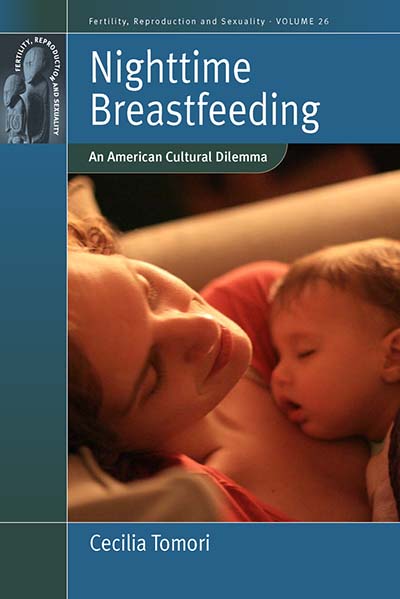
Dilemma after Dark: Balancing Sleep and Breastfeeding

In her newly published book, author Cecília Tomori explores a major challenge for new parents, the nighttime balance of sleep and breastfeeding. Nighttime Breastfeeding: An American Cultural Dilemma, published in October, is the result of her long-term ethnographic study alongside new parents and how they cope with the pressures of parenthood. Following, the author gives insight into this in-depth study which eventually became her book.


As an anthropologist seeking to learn about breastfeeding, I had the privilege of visiting new parents who had just returned home from the hospital after the birth of their first child. During these visits, the joy of becoming parents was visible in the way parents gazed upon one another and held their newborns in their arms. Their joy, however, was often complicated by exhaustion and uncertainty over some fundamental concerns: breastfeeding and sleeping at night.

Continue reading “Dilemma after Dark: Balancing Sleep and Breastfeeding”

Mathematics, A Fundamental Communication Tool

Two days after the United States announced its intention to launch an artificial satellite, on July 31, 1956, the Soviet Union announced its intention to do the same. Sputnik 1 was launched on October 4, 1957, beating the United States and stunning people all over the world. According to Carl L. Devito’s Science, SETI, and Mathematics, we have come a long way since then. Following is the author’s reflection on his volume.


__________________________


Mathematics is as much a part of our humanity as music and art.

Continue reading “Mathematics, A Fundamental Communication Tool”