Lanes of Trade and Belonging in London

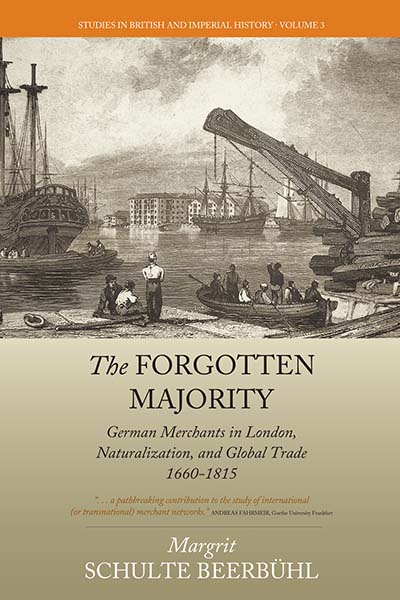
Though their significance in London society is not much discussed in historical study, German merchants had a major impact on social and commercial life in England from the seventeenth through nineteenth centuries. Author Margrit Schulte Beerbühl explores this topic in The Forgotten Majority: German Merchants in London, Naturalization, and Global Trade 1660-1815. Following, the author gives a bit more insight into her love of subject and the work to turn this enthusiasm into a book.


________________________________________


What drew you to the study of German merchants in London during this specific time frame (1660-1815)?


That period was a black hole in historical research. Academic studies on Germans in London ended with the closure of the Hanseatic Steelyard about 1600 and did not set in again before the end of the Napoleonic Wars.
Continue reading “Lanes of Trade and Belonging in London”

Religion, TV Drama, and Life in Africa


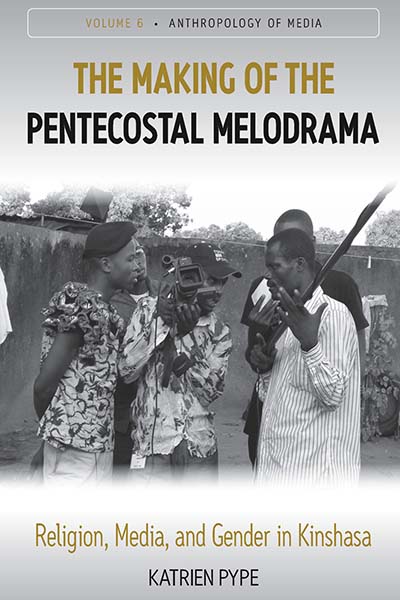
Television dramas set in Kinshasa, capital of the Democratic Republic of Congo, offer viewers interesting commentaries on life in the African city, according to Katrien Pype. The connection between real-life and filmic melodrama, conversion narratives, Christian songs and testimonies are described in her book, The Making of the Pentecostal Melodrama: Religion, Media and Gender in Kinshasa, now available in paperback. Following, the author gives a synopsis of two popular TV shows in Kinshasa, Kalaonga and The Heritage of Death. These descriptions are followed by clips from each serial.


Kalaonga

(produced between March 2004 and November 2005)


The serial opens in the Dark World. Baaba, the Devil, accompanied by two demons, is listening to his daughter, the siren Kalaonga.

Continue reading “Religion, TV Drama, and Life in Africa”

If Monuments Could Talk

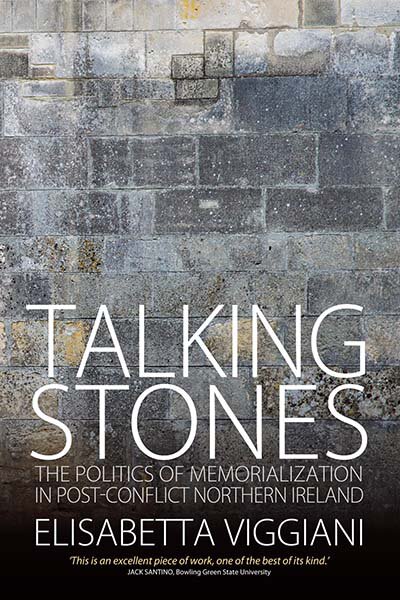
War memorials are more than a simple, objective way to commemorate the past; they can also, as a visual message, guide the memory of a society in certain political and ideological directions. Author Elisabetta Viggiani looks at and into war memorials in Northern Ireland — and what these say about the broader culture — in her just-published Talking Stones: The Politics of Memorialization in Post-Conflict Northern IrelandBelow, the author gives an introduction to her work, followed by an excerpt from the volume.


____________________________


If memory was simply about the past, why would governments and public authorities be prepared to put their ever-shrinking budgets at its service? The answer is because memory is seldom about the past, rather it is about the present moment; as Pierre Nora puts it, ‘through the past, we venerate above all ourselves’. Talking Stones investigates how collective memory and material culture are used to support present political and ideological needs in contemporary society.


Continue reading “If Monuments Could Talk”

Ruins of a Religion: ‘The Polynesian Iconoclasm’ in Photos

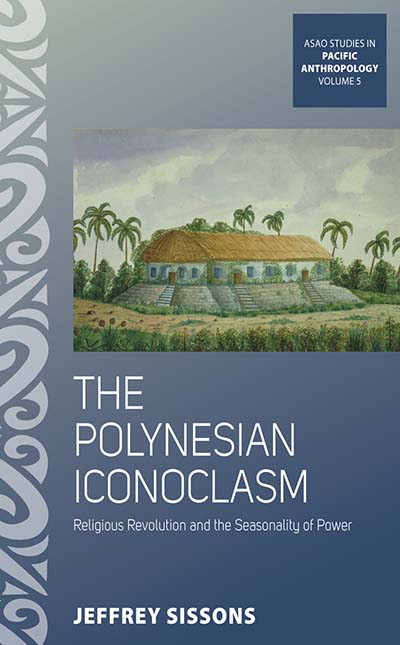
In his recently published book, The Polynesian Iconoclasm: Religious Revolution and the Seasonality of Power, Jeffrey Sissons explains the ten-year period during which Hawaiians, Tahitians, and other South Pacific island societies almost completely destroyed their religious temples and god figures. Later, the native religion and its symbols were replaced by the Christian religion, and the churches and laws that accompanied it. Below, the author shares the significance of the book’s cover, followed by images from the book, photos taken by the author’s son, Hugo.


__________________________________

Continue reading “Ruins of a Religion: ‘The Polynesian Iconoclasm’ in Photos”

Reframing Shock to Provide Space for New Solutions and Practices to Emerge

Anthropology in Action

This post was submitted by Mark Powell, who–along with Stephanie Glendinning, Vanesa Castán Broto, Emma Dewberry, and Claire Walsh–contributed the article Shaped by Shock: Staff on the Emergency Department ‘Shop Floor’ to the most recent issue of Anthropology in Action. In this post, Powell discusses some of the challenges and rewards of researching this topic. 


Continue reading “Reframing Shock to Provide Space for New Solutions and Practices to Emerge”

The Road to Belonging is Paved with Charity

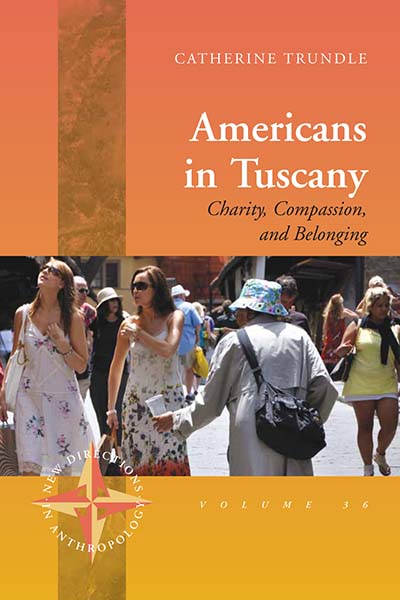
Catherine Trundle’s recently published volume Americans in Tuscany: Charity, Compassion, and Belonging explores the lives of American female migrants to Italy, and follows a collection of women as they navigate Tuscan society in an attempt to integrate. The author discovered that these women have used charitable acts as a road map to guide their quest to belong. Following, the author provides more information about her background and how it led her to share the stories of this migrant group.


_______________________


What drew you to the study of American female migrants in Italy and their quest for inclusion?


I had conducted previous ethnographic work on American migrants to rural New Zealand, and was fascinated with what it meant to be an American abroad – how one’s sense of nationality and citizenship gets transforms through engagements with the stereotypes that others have of the migrant self, and how ‘culture’ gets characterized and sometimes essentialized in the process.


Continue reading “The Road to Belonging is Paved with Charity”

The Life of a Religious Movement: Steps in a Trajectory

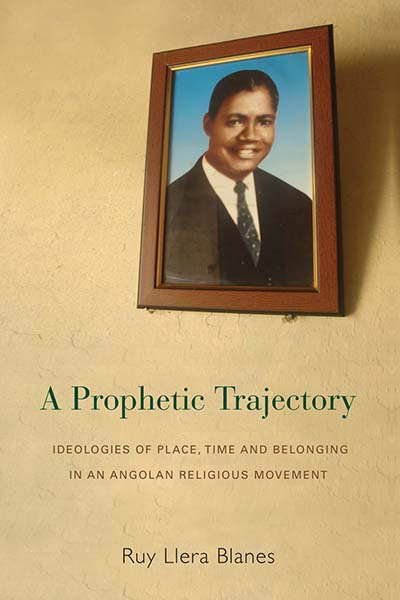
Ruy Blanes’ A Prophetic Trajectory follows the life of Simão Toko and the dissemination of the religious movement he founded. While conducting his research, the author worked in Angola, Portugal, and the United Kingdom, where he gathered facts and a collection of photographs — which are introduced and displayed below.


_______________________________


My recently published book, A Prophetic Trajectory, highlights the life and memory of an Angolan prophet, Simão Gonçalves Toko (1918-1984). Continue reading “The Life of a Religious Movement: Steps in a Trajectory”

Cultivating Communication between Cultures

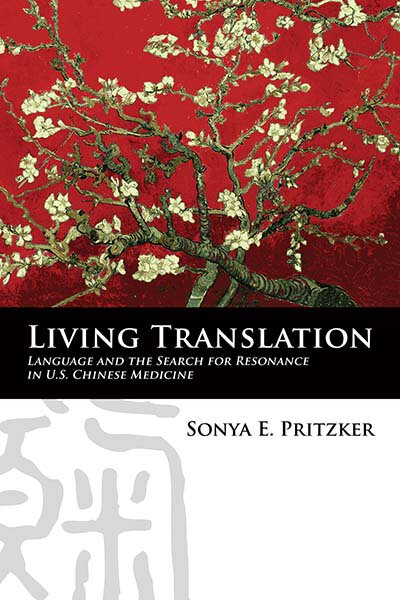
Later this month, Sonya Pritzker’s monograph Living Translation: Language and the Search for Resonance in U.S. Chinese Medicine will be published. Within this volume, Pritzker explains that translation is not a static exercise, but is instead a variable and experiential undertaking. Following, the author shares how she became enamored of Chinese culture and discovered the life of language.


____________________________________


I went to China for the first time in 1995. I was 19. The skies in Beijing were blue then, and the remnants of a stark and closed era were everywhere. I look back on the things of that time with nostalgia, the ever-present red thermoses with flowers, cheap rubber shoes, mian bao che or “bread box” cars, flying pigeon bicycles. My passion for China, in particular the Chinese language, had arisen over time.


Continue reading “Cultivating Communication between Cultures”

Researching Relevance, or How Sociology Preserved the Church

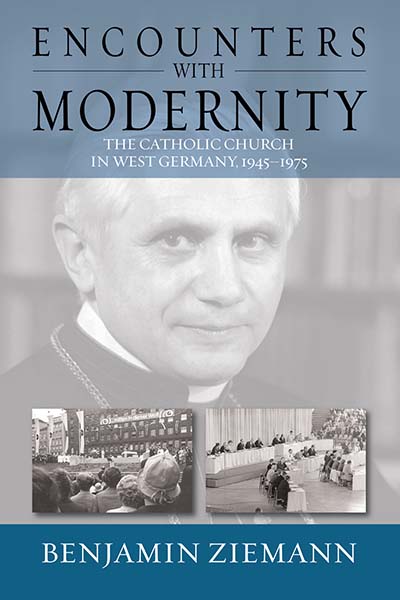
In Benjamin Ziemann’s historical account Encounters with Modernity: The Catholic Church in West Germany 1945-1975, to be published next month, the author explains how the church attempted to systematically — using the tools of social science — maintain its relevance in post-war German society. Following, the author explains how he, almost completely by accident, happened upon this research that would lead to his future book.

_____________________________

Rather than being the result of meticulous planning, I stumbled over this topic by chance. Originally, I had an interest in writing about the Catholic milieu in 1950s West Germany, and thought that starting with the miners at the Ruhr would be a good idea, not least because I taught at Bochum at the time. One of the challenges that I faced was to gather data on the practiced piety of Catholic workers such as church attendance or Easter Communions, which I thought were difficult to obtain. While I spent time pursuing other hints in the Essen municipal library, I found reports by the “Pastoral Sociological Institute of the Diocese in Essen” (PSI) for the late 1950s. This institute had broken down a count of churchgoers in Essen according to social strata, gender and other social characteristics. Here, I had all the data that I seemed to need.

Continue reading “Researching Relevance, or How Sociology Preserved the Church”

The Historic Influence of Intellectuals

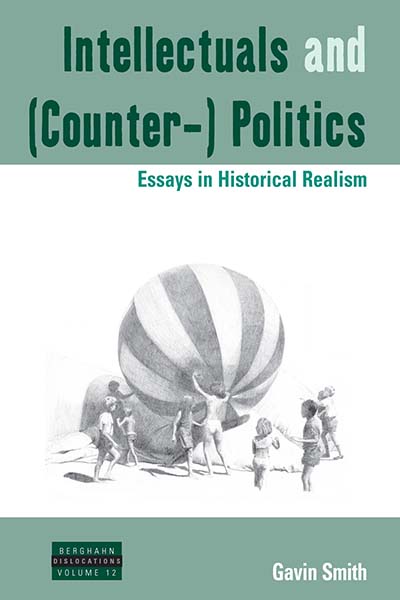
In Gavin Smith’s Intellectuals and (Counter-) Politics: Essays in Historical Realism, which was published earlier this month, the author takes a look at the role of the intellectual (specifically the social scientist) in three important areas — studying capitalism, making histories, and producing places. According to the author, “Reflexivity for the social scientist, Bourdieu argued, involves an objectivist ethnography of ethnographers,” a task Smith himself undertook in both Spain and Peru. Following, he reflects on his time spent conducting ethnographic research in Peru.


Continue reading “The Historic Influence of Intellectuals”