 Join our Email List




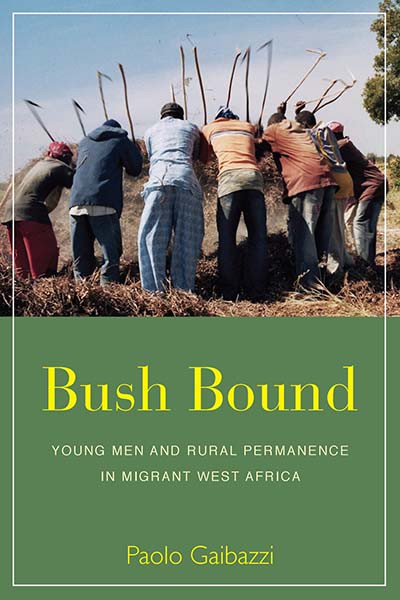 The following is a guest blog post written by Paolo Gaibazzi, Social Anthropologist and Research Fellow at the Centre for Modern Oriental Studies (ZMO). Gaibazzi is also the author of Bush Bound: Young Men and Rural Permanence in Migrant West Africa. Below, Gaibazzi discusses how ‘staying put’ may shed light on current West African migrations.
How can the experience of a small, migrant-sending West African village contribute thoughts on the current migration crisis in Europe? Sabi is a rural community in the Gambia River valley with a long history of male international emigration in which I have had the privilege to live and do research. The resulting book – titled Bush Bound – is an account of how migration pervades everyday life in the community, but especially of how people continue staying on the land. I suggest that this small but significant laboratory of (im)mobility might help us rethink the assumptions about freedom, movement and sedentariness informing, and often distorting, European debates about African immigration.
Tag: author article
Populist radical right parties and (trans)national environmental issues
 This is a guest post written by Bernhard Forchtner, contributor to Volume 10: Issue 2 of the journal Nature and Culture . Bernhard Forchtner is a contributor to the article titled “The Nature of Nationalism: ‘Populist Radical Right Parties’ on Countryside and Climate.”
Conversations about “populist radical right parties” (Cas Mudde) in contemporary Europe usually turn to issues such as asylum seekers, ‘foreigners’ and the European Union. What tends to surprise audiences, however, are stories about far-right ecology. Environmental issues are, after all, issues supposedly covered by ‘the left’. However, even if far-right actors across Europe have hardly prioritised environmental protection over the last decades, these actors do intervene in such debates, making the latter meaningful on the basis of their nationalist stance. And maybe, this should not surprise us in the first place given that nature protection, in its beginnings in the 19th century, was often pushed by rather conservative forces.
In the article The Nature of Nationalism, my colleague Christoffer Kølvraa and I thus ask whether and how different types of “populist radical right parties”, the more mainstream Danish People’s Party and the more radical British National Party, have addressed the topic of the national countryside and the transnational issue of climate change.
Although differences in the ‘radicalism’ of the position of these actors exist, these differences are not fundamental. Instead, there is a fundamental difference in how national countryside and transnational climate are assessed. With regards to the countryside, both parties are ardent defenders of what they view as a quintessential national space, a position underpinned by what we call a nationalist symbolic aesthetics. That is, both parties frame the countryside in terms of its natural splendour coupled with a claim for historical continuity of the national community in this territory, thereby making manifest the political sovereignty the people enjoy over the land. In relation to the nature of climate too, the British National Party goes much further than the Danish People’s Party, the former voicing strong scepticism (if not denial) regarding the thesis of (man-made) climate change – something the latter rather insinuates. However, both parties share a symbolic materialism via which international bodies, arguably necessary in the fight against an inherently transnational phenomenon, are criticised as they apparently endanger national sovereignty and classical nationalist ideas of self-sufficiency. When nationalists justify their stance on environmental issues and claim that “we all hold our land in trust for future generations” (British National Party), one should not simply dismiss their arguments as strategic in order to attract voters. Instead, their notion of ecology and environmental protection is deeply embedded in their ideology.
While the topic has received rather scant attention in the literature to date, and thus research charters much previously unmapped territory, the topic has also proven to be challenging – something noticeable in particular in conversations with environmental activists. While the climate politics of “populist radical right parties” are easily rejected by these activists, many of their more subtle positions, for example on invasive species, cannot easily be distinguished from mainstream and even left-wing arguments. Where they exist, these similarities need to be taken seriously! As the modernization of the far-right across Europe does not seem to lose steam, more and more related, counter-intuitive cases emerge. Currently, a group of German neo-Nazis (Balaclava Küche) promotes veganism within their scene. Partly due to environmental concerns, they do so through their YouTube channel but have also offered catering service at neo-Nazi concerts, etc. In a series of interviews conducted after the completion of The Nature of Nationalism, actors (previously) belonging to “populist radical right parties” voiced ‘traditional’ views on a far-right ecology. For example, interviewees lamented about what they perceive as a cultural crisis which ignores the laws of nature. Instead, nations should be viewed as (eco)systems which – if too much alien elements enter – lose their natural equilibrium and collapse. Subsequently, “nomadic cultures and races” were rejected in favor of rooted (“sesshafte”) people who supposedly care for the environment. This can easily take an anti-Semitic twist but definitely contains a rejection of “foreigners” who are not committed to the beauty of ‘our’ country the way ‘natives’ supposedly are.
What these interviews have shown is that differences between these groups are worth investigating. While our paper foregrounds similarities based on a shared ideological ground, subsequent case-studies should equally focus on differences between various actors within a national space or across boundaries. There is work to do as these actors seem to have a future in, at least European, politics.
Flexible Bureaucracy & The “Public Good”: Land Restitution in Post-Apartheid South Africa
 In its spring 2015 volume, The Cambridge Journal of Anthropology published the special issue “Remaking the Public Good: A New Anthropology of Bureaucracy”, edited by Laura Bear and Nayanika Mathur. In this blog post, Olaf Zenker – contributor of the article “De-judicialization, Outsourced Review and All-too-flexible Bureaucracies in South African Land Restitution” – describes how he came across the peculiar case analysed in his article and how this land claim ended up speaking about the “Remaking of the Public Good” in South Africa and beyond.
How is the new South African state imagined, enacted and contested, when citizens engage officials in the attempts to get back their land lost through racist colonial and apartheid dispossessions? What kinds of “public goods” are brought into play, by whom and with what effects, when the post-apartheid state simultaneously functions as the main driving force behind this land restitution process, as its judicial arbiter through the specialist Land Claims Court, and as its core reference point, as all claims are lodged against the state? Questions like these have driven my intermittent ethnographic fieldwork on South African land restitution since 2010 – not only with regard to claimant communities, but especially also concerning the operations within the two relevant state agencies: the Land Claims Commission and the Land Claims Court.
Full House at The Power of Death Book Launch
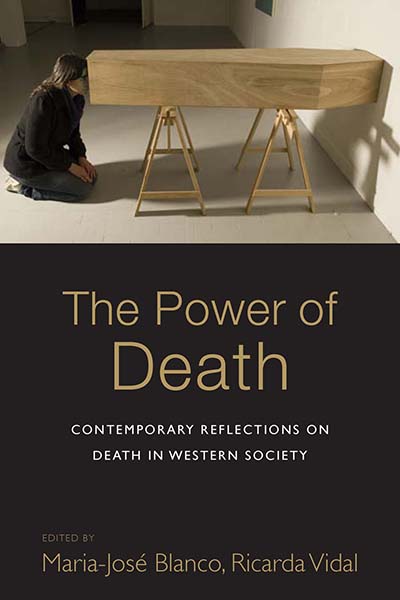 This is a guest post written by the authors of The Power of Death: Contemporary Reflections on Death in Western Society. Ricarda Vidal and Maria-José Blanco launched The Power of Death on May 15th, at the River Room, King’s Building, King’s College London. Below, the authors discuss the successful event.
We were very happy about the large turnout for our Round Table on the Aesthetics of Death, film screening and book launch of our edited volume The Power of Death: Contemporary Reflections of Death in Western Society.
The artist Sarah Sparkes started us off with a presentation about her work on ghosts and the world in-between life and death. Ricardo Gutierrez, a PhD candidate in the department of Spanish, Portuguese and Latin American Studies, gave a talk about femicide and the stylisation and sacralisation of the mothers of murdered women in Mexico. Photographer Briony Campbell closed with a very moving presentation about her work ‘The Dad Project’, which documented her father’s death by cancer.
Ricarda Vidal and Maria-Jose then presented the book The Power of Death, which covers the various aspects of death – the slow painful death of cancer, the grief and mourning of those left behind, as well as the more sensational side of violent death, sudden accidental death or the taboos and transgressions of murder.
The evening closed with a series of short films which ranged from the black humour of a spoof advertisement for a completely automatic Harakiri-kit to a thought-provoking, albeit poetic, criticism of the American justice system.
Anyone interested in buying the Harakiri-Kit or our book at a 50% discount, please get in touch with Ricarda Vidal (ricarda.vidal@kcl.ac.uk) or Maria-José Blanco (maria-jose.blanco@kcl.ac.uk).
Read more about this book here.
‘More than the Sum of Our Isolated Parts’: Reflections of a Co-Author
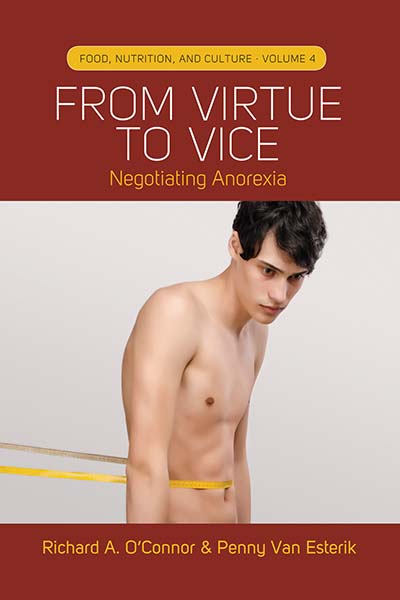 From Virtue to Vice: Negotiating Anorexia is the result of creative and academic collaboration between Penny Van Esterik and Richard A. O’Connor. In the following post, Van Esterik reflects on the collaboration of this pair—Van Esterik, an expert on breastfeeding, and O’Connor, an anthropologist who watched someone close suffer with anorexia—and how their book was made much stronger through their unique vantage points.
__________________________
Like most academics, I am a lone wolf writer, needing the silence to propel my thoughts on to screens and paper. But sometimes we become more than the sum of our isolated parts when we work together. Richard’s voice as an anthropologist was already in my work long before we began formal collaboration on From Virtue to Vice and ongoing in The Dance of Nurture [their next co-written book on breastfeeding].
Continue reading “‘More than the Sum of Our Isolated Parts’: Reflections of a Co-Author”
Tradition Taboo: Disagreements between Common Practice and Public Discourse
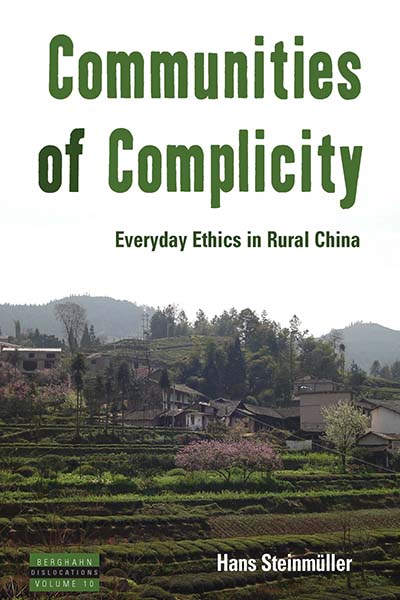 Hans Steinmüller’s Communities of Complicity: Everyday Ethics in Rural China is now available in paperback. The ethnography explores the moral uncertainties experienced by the people of the village of Zhongba in Central China as they navigate and balance the expectations of capitalism and their traditional culture. The author offers a reflection on his fieldwork in rural China and insights into Chinese culture in the following post.
____________________
The main idea of ‘Communities of Complicity’ has to do with the delicate relationship between vernacular practices and official discourse in rural China. In regards to geomancy (fengshui), rituals, gifting, and corruption discourse, for instance, official representations are often inconsistent with local practice. While it is very common to invite ritual masters for family celebrations and to give money gifts at such occasions, these practices are often described in public discourse as backwards and corrupt.
Continue reading “Tradition Taboo: Disagreements between Common Practice and Public Discourse”
Helping without Harming and Minding the Balance
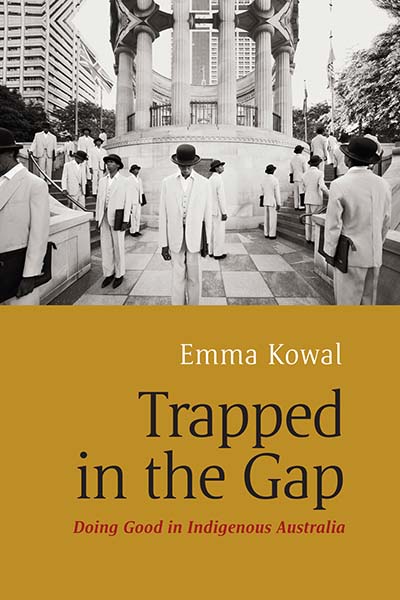 Author Emma Kowal explores the “good” that well-meaning White Australians are doing for Indigenous Australians. This path to help is charted in Trapped in the Gap: Doing Good in Indigenous Australia, a recently published book that asks the question: How can one help without harming? Following, Kowal explains the origins and reception of her work studying this group of “White anti-racists.”
___________________________________
‘You’re an anthropologist and you study… White people?’ I regularly receive a puzzled look from people when I tell them what I do. Anthropologists are supposed to study Indigenous tribes in remote locations, aren’t they? Or at least something exciting, like drug addicts or slum dwellers.
Continue reading “Helping without Harming and Minding the Balance”
Making-Over Northern Ireland by Changing Facades & Perceptions
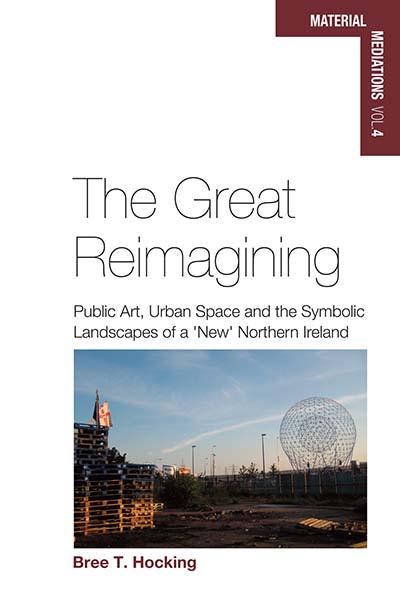 Through art, architecture, and “symbolic landscapes,” post-conflict Northern Ireland is changing the “face” it shows the world. Bree T. Hocking explores this new identity in The Great Reimagining: Public Art, Urban Space, and the Symbolic Landscapes of a ‘New’ Northern Ireland. In the following short essay, the author explains some of actual and perceived changes, by way of the words exchanged with a young Protestant man.
On a recent visit to Northern Ireland, I met a young Protestant man from the Shankill Road heading home after dropping off his daughter at a nearby crèche. It was hardly an extraordinary encounter—save for the fact that the man had just left his toddler at a nursery on the Catholic side of one of Belfast’s largest and oldest peace walls. (These walls, sometimes up to eight metres tall, separate many working-class neighborhoods across the city along ethno-national lines.)
Continue reading “Making-Over Northern Ireland by Changing Facades & Perceptions”
Landscape as Literary Criticism in Jane Austen’s Fiction
 The following is the third in a series of posts on Jane Austen. This is a guest post written by Anne Toner, contributor to a special issue of Critical Survey which is devoted to the subject of Jane Austen. Anne Toner is the author of the article titled “Landscape as Literary Criticism: Jane Austen, Anna Barbauld and the Narratological Application of the Picturesque.”
We are in the midst of Jane Austen bicentenary celebrations. Formidably, in the six years preceding her death in 1817, when she was only 41, Austen saw four novels published, as well as writing another complete novel (Persuasion) and revising one more (Northanger Abbey), both to be published posthumously.
Continue reading “Landscape as Literary Criticism in Jane Austen’s Fiction”
Visions of The Other: Swiss & Malagasy See, But Do They Understand?
 Where do Switzerland and Madagascar meet, and what do the people of each place think of those in the other? Eva Keller, in her recently published Beyond the Lens of Conservation: Malagasy and Swiss Imaginations of One Another, in seeking to connect these two places winds up highlighting the disconnect between them. Following, the author offers a brief glimpse into the volume from two directions: from a Swiss classroom looking at Madagascar and from a Malagasy man looking at a national park.
_______________________________
Read the following extract of a conversation which took place in a Swiss classroom with pupils aged between 11 and 12. My questions are in italics.
What do you know about Madagascar?
Takschan: I think there are cannibals there, I think, the people, like they eat the flesh.
Continue reading “Visions of The Other: Swiss & Malagasy See, But Do They Understand?”