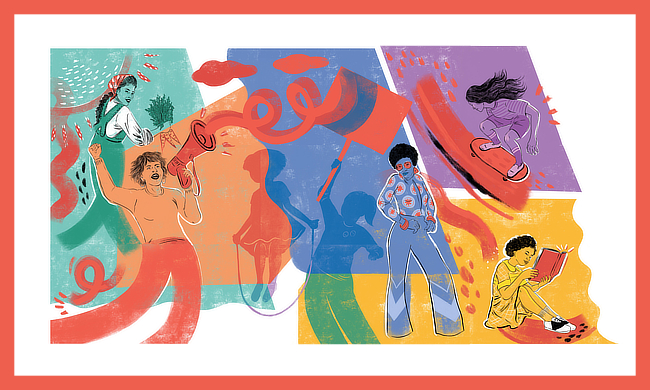
Celebrating Women

Women’s History Month, celebrated during March in the US, and International Women’s day, celebrated March 8th across the world, present an opportunity to honor women’s contributions to history, culture and society while calling for greater equality.

In recognition, Berghahn is delighted to offer discount code IWD2022 for 25% off all Gender Studies print & eBooks throughout March. In addition, Berghahn Journals is offering FREE access to Girlhood Studies until March 15th. Scroll down to view redemption details and read Open Access volumes of the journal Aspasia: The International Yearbook of Central, Eastern, and Southeastern European Women’s and Gender History.


Continue reading “Celebrating Women”
Celebrating Anthropology Day with Open Access from Berghahn Books

Berghahn Books supports practical open access policies that help make scholarship available to a broader audience in a sustainable way.

In addition to offering gold open access options that uphold publication mandates instituted by our authors’ funding partners, we also participate in initiatives, such as Knowledge Unlatched, which provide collective funding opportunities for selected titles. To find out more visit our website.

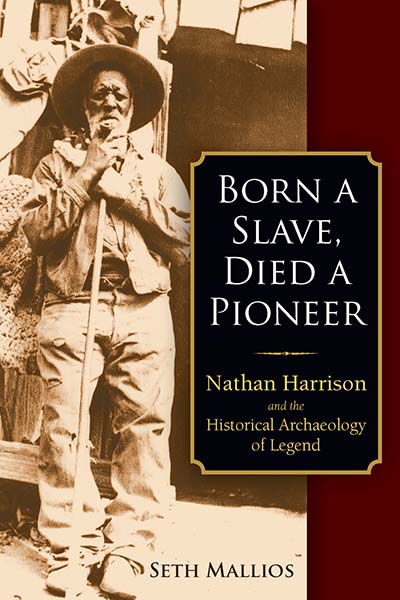
To celebrate Anthropology Day (Feb 17th), we are pleased to present a selection of our new and recent Open Access Anthropology titles.

Continue reading “Celebrating Anthropology Day with Open Access from Berghahn Books”

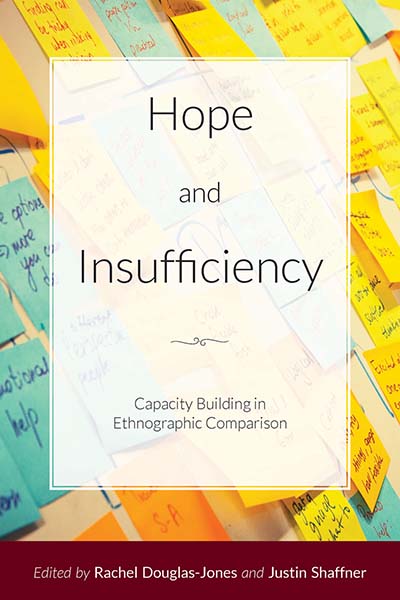
Capacity Building in Ethnographic Comparison

by Rachel Douglas-Jones and Justin Shaffner, editors of Hope and Insufficiency: Capacity Building in Ethnographic Comparison

We open our new edited collection Hope and Insufficiency by traveling the world in workshops. Three capacity building events, ranging from Paramaribo to Addis Ababa, sketched as thumbnails, form our introductory paragraph. These three events, drawn from thousands, simply demonstrate the breadth of topics to which it is applied. Capacity building, or its more recent iteration as capacity development, is, we argue, both ubiquitous and under-theorised within the social sciences. The title of our book identifies characteristics of capacity building’s intervention: as we put it, hope and insufficiency interplay in a way that makes the idea of capacity building persuasive.

Continue reading “Capacity Building in Ethnographic Comparison”