Marking Museum Week: #AskTheCurator or View the Book

This week hundreds of museums across the United Kingdom and Europe are participating in Twitter’s first Museum Week campaign. Each day during this week is associated with a hashtag, from #DayInTheLife to #MuseumMemories, all intended to hit on various delightful aspects of the museum world. Today’s hashtag, #AskTheCurator is an opportunity to engage with museum experts. But for those who prefer to engage with experts the classic way — by way of their books — we have curated a collection of some of our Museum Studies titles in the following gallery.

_______________________________________
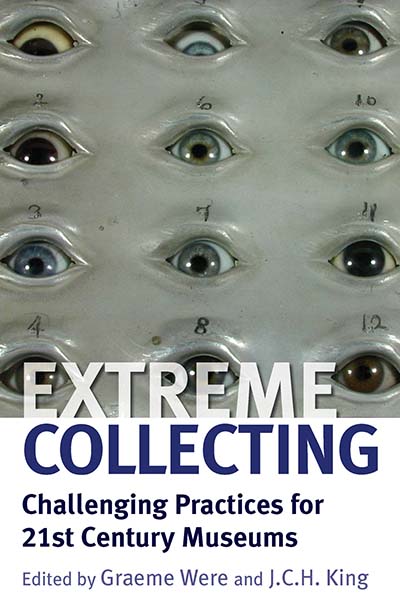
EXTREME COLLECTING

Challenging Practices for 21st Century Museums

Edited by Graeme Were and J. C. H. King

By exploring the processes of collecting, which challenge the bounds of normally acceptable practice, this book debates the practice of collecting ‘difficult’ objects, from a historical and contemporary perspective; and discusses the acquisition of objects related to war and genocide, and those purchased from the internet, as well as considering human remains, mass produced objects and illicitly traded antiquities. Much of the book engages with the question of the limits to the practice of collecting as a means to think through the implementation of new strategies. Continue reading “Marking Museum Week: #AskTheCurator or View the Book”
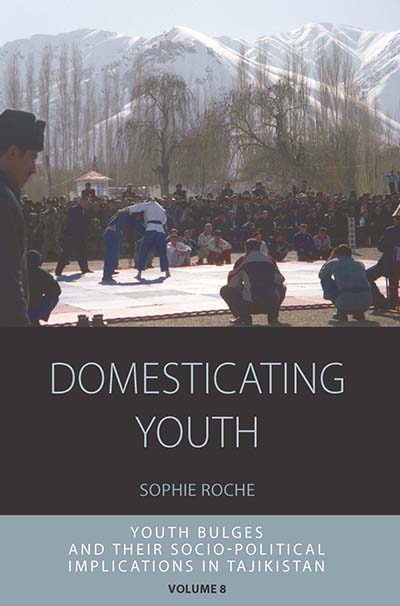
‘Youth Bulge’ and Social Change in Tajikistan

It is common for a society’s population to grow exponentially after a war. In the U.S., the best example of this “youth bulge” is the population of post-World War II “Baby Boomers.” In her soon-to-be-released volume, Domesticating Youth: Youth Bulges and their Socio-political Implications in Tajikistan, Sophie Roche explores this phenomenon in post-civil war Tajikistan and what its implications may be. Following, the author reflects on her fieldwork, and shares how it felt to return to her site after a decade of absence.


_____________________________________________


With an ethnographic book a story is out in the world that has been documented for a while but that does not stop with the last page but continues to develop. Often after reading an ethnographic study I wonder what happened to the actors in the book, some of whom we are introduced very intimately; what happened to the place, the village, the authorities, the children? Where they really just living to be examples of a theory? How does the story of the people develop after the book?

Continue reading “‘Youth Bulge’ and Social Change in Tajikistan”

The Ethical Sequence of Eugenics?

If you could modify the human population to be more intelligent or more beautiful, would you? When this idea of eugenics — or selectively breeding a population with more “desirable” traits — was first popularized in the twentieth century, such contemporary figures as Winston Churchill, Theodore Roosevelt, H.G. Wells, and, not surprisingly, Adolf Hitler, were supporters. Now, with renewed interest in the science of eugenics, editors Calum MacKellar and Christopher Bechtel explore the unsavory aspects and issues in The Ethics of the New Eugenics, to be published this month. Following, the editors explain what led them to study this science, and what may be ahead for the field.


___________________________________________


What drew you to the study of eugenics?


Calum MacKellar: Over the many years that I have worked in the field of human bioethics, I have always suspected that the topic of eugenics would eventually come back to haunt society.

Continue reading “The Ethical Sequence of Eugenics?”

Uzbekistan, Social Network of Choice

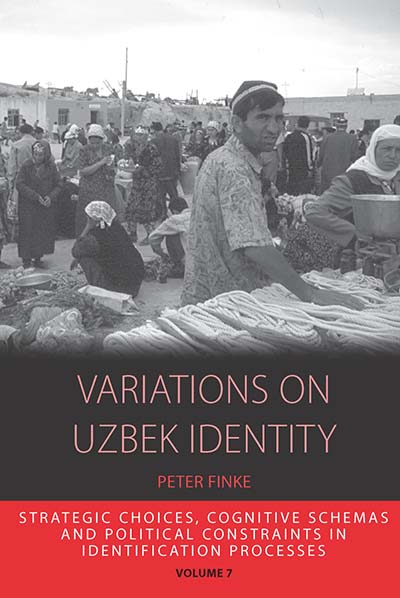
In the Republic of Uzbekistan, being Uzbek has less to do with one’s lineage and more to do with one’s allegiance to a society. The advantages of this voluntary membership within the Uzbek “social network” are explored in Variations on Uzbek Identity: Strategic Choices, Cognitive Schemas and Political Constraints in Identification Processes. Below, Peter Finke discusses his attraction to Uzbekistan, his writing process, and the volume’s potentially controversial reception.


_____________________________________________

Berghahn Books: What drew you to the study of Uzbekistan, specifically “Uzbek Identity”?


Peter Finke: My general interest in Central Asia goes back a long way into childhood fantasies of roaming horse riders and the like. Most of Uzbekistan does not really fit that well into this and indeed my early research in the region was on nomadic pastoralists in Western Mongolia. It was after I took up a postdoc at the Max Planck Institute to work on identity issues that I not only switched topics but also field sites.

Continue reading “Uzbekistan, Social Network of Choice”

Throwing Out Ideas, The Culture of ‘Urban Pollution’

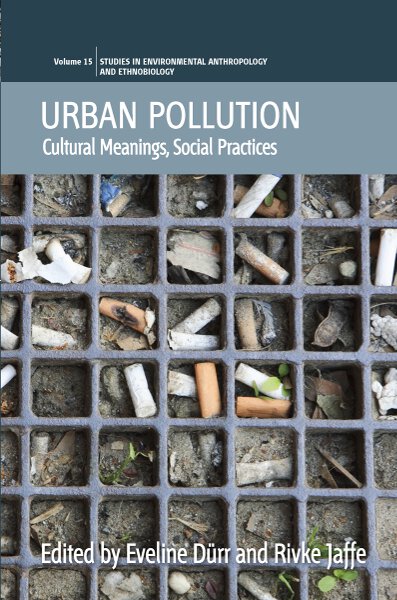
The celebrated volume of anthropologist Mary Douglas, Purity and Danger (1966), broke ground with its discussion of cleanliness, dirtiness, and sacred ritual. Editors Rivke Jaffe and Eveline Dürr took this up in their 2010-published Urban Pollution: Cultural Meanings, Social Practices. The volume, which was published as a paperback earlier this month, dusts off the concepts of clean and dirty, and looks at modern intersections of pollution and culture. Jaffe and Dürr revisit the origins and makings of the volume, below.
 

_____________________________________________


Berghahn Books: What is the idea behind the collection, and how did the book come about?


Rivke Jaffe and Eveline Dürr: We wanted put together a collection that could help bridge the divide between environmental anthropology and urban anthropology. The bulk of work in environmental anthropology has neglected cities and specifically urban pollution. Meanwhile, urban anthropologists rarely incorporate an environmental dimension in their work.

Continue reading “Throwing Out Ideas, The Culture of ‘Urban Pollution’”

Love in the Time of Ethnography

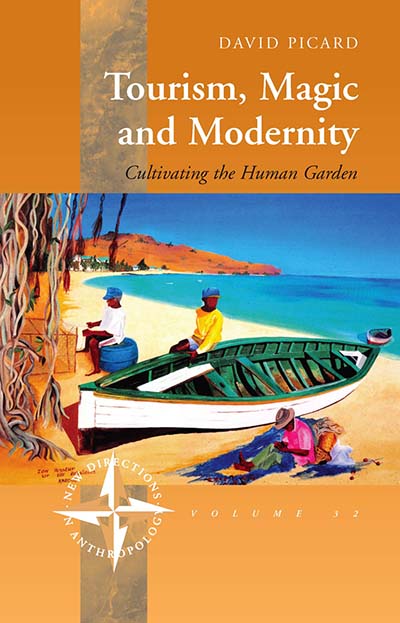
In David Picard’s Tourism, Magic and Modernity: Cultivating the Human Garden, the author uses analogy to shed light on life in La Réunion, a tropical tourist destination in the Indian Ocean. The volume, recently published in paperback, shows that, like plants in a garden, local life is pruned — using the shears of development and nature initiatives — to become a dazzling display for travelers to behold. Following, Picard once again embraces literary technique — on this occasion using a story of lovers — to enchant and delight the reader with the study of anthropology.


____________________________________________


Eve-Marie and Adamsky are 20 when they first meet. They are students at the university of La Réunion, in the Western Indian Ocean. They party together, discover life and love, and progressively turn into adults. They fall in love. As with most couples, through their relationship, the two meet different worlds and family histories, and have to grapple with these differences. Their love gets entangled with the aspirations of their respective milieus.


Continue reading “Love in the Time of Ethnography”

Following the Diaspora: A Study of the Hadrami Community

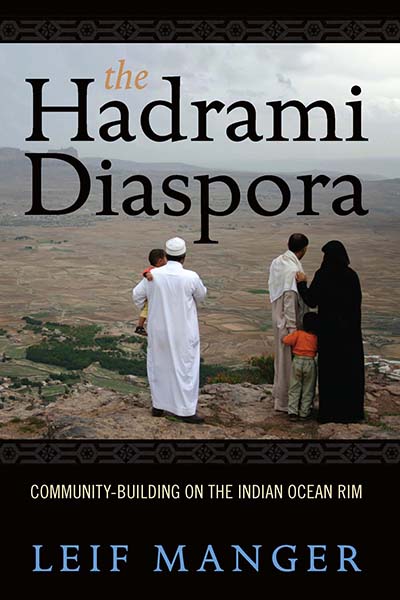
The Hadrami community’s migratory patterns throughout the Indian Ocean region have historically been propelled by trade and religious ambitions. Leif Manger’s complex ethnographic account of this community’s varied and widespread diaspora from South Yemen is explored in The Hadrami Diaspora: Community-Building on the Indian Ocean Rim, which was published this month in paperback. Following, Manger discusses his work on this volume and his time spent with this diverse community in widespread areas.


_______________________________________


Berghahn Books: What came first, your interest in Hadrami culture or your interest in migration? What drew you to these areas of study?


Leif Manger: Yemen has always been a dream for me, but I was particularly fascinated by the terraces in the mountains of the north of the country and the ecological effects of adaptations in such areas. This was due to my research interests in my early career, on intensification of agriculture, agro-pastoral interaction and development.

Continue reading “Following the Diaspora: A Study of the Hadrami Community”

The Importance of Being Nourished

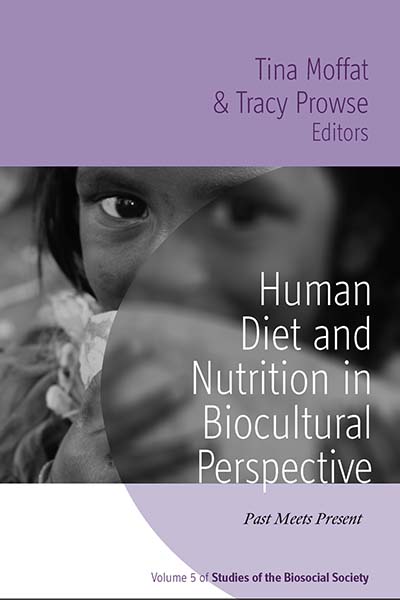
Nutrition is essential to human life, no matter one’s cultural background or period in which one lived. Human Diet and Nutrition in Biocultural Perspective: Past Meets Present, published in 2010 and recently available as an ebook, follows this fundamental building block of life and its impact on society from prehistoric to contemporary times, across the world. Following, volume editors Tracy Prowse and Tina Moffat discuss the most (and least) enjoyable aspects of editing a collection, changes in the study of human diet, and the way forward in the Anthropology of diet and nutrition.


___________________________________________


Berghahn Books: What drew you to the study of health and nutrition?


Tracy Prowse: I really like food. Seriously, I’ve always been interested in diet and nutrition in past populations.


Tina Moffat: I started out in infant mortality studies and child health and realized quickly that nutrition is a major component of child health. 

Continue reading “The Importance of Being Nourished”

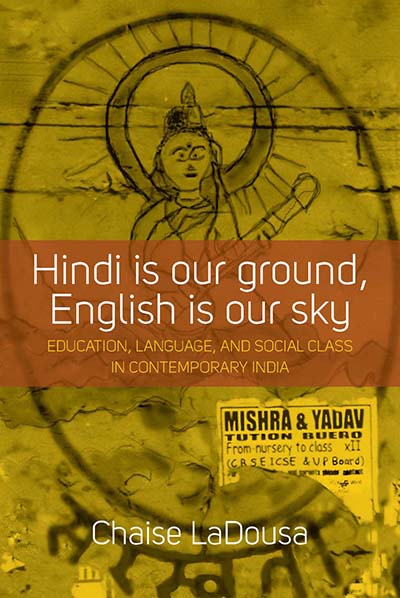
A Class Issue: Language and Education in India

In the past three decades within India, a knowledge of the English language has become more important for economic advantage. All the while, Hindi is essential to those who wish to pursue class mobility. These “mediums” form a divide within the country’s educational system, which come to the forefront in Chaise LaDousa’s Hindi is our Ground, English is our Sky: Education, Language, and Social Class in Contemporary India, published this month. Following are two excerpts from the book, the first from the Foreword by Krishna Kumar, and the second from the Preface.

__________________________________________________


[Chaise LaDousa] has studied India’s vertical language divide in the North Indian city of Varanasi. The study takes us well beyond the shibboleths proffered about India’s linguistic plurality. The key word that enables LaDousa to enter the separate yet interwoven milieus of Varanasi is “medium.” The term is so omnipresent in the Indian urban environment that no one marvels at the versatile service it renders to India’s society and state. It resides securely in the phrase “medium of instruction” that is used across India as a public code to identify two types of schools and the opportunity markets to which they promise access.

Continue reading “A Class Issue: Language and Education in India”

A Note on the Influence of ‘Rhetoric and Culture’

 Astonishment and Evocation: The Spell of Culture in Art and Anthropology, edited by Ivo Strecker and Markus Verne, was published earlier this year as the newest volume within the Studies of Rhetoric and Culture series. The volume and series have gained attention within the academic community, one such supporter being Michał Mokrzan, a future collaborator within the series and a scholar of rhetoric. In response to the newest volume, Mokrzan writes an entry of his own interactions with the series, series editors, and series volumes.

StreckerAstonishment
___________________________________________


Due to the fact that the Rhetoric Culture Project develops at a rapid pace – Astonishment + Evocation is the fifth volume of the Berghahn Books series Studies in Rhetoric and Culture – one can risk the thesis that we are now witnessing a crystallization of a new theoretical and methodological trend in anthropology, which can be described as a ‘rhetorical turn in anthropology’.


Continue reading “A Note on the Influence of ‘Rhetoric and Culture’”