A Celebration of Asian-Pacific Heritage

In 1992, a bill was signed into law designating May as Asian-Pacific American Heritage Month. According to the Asian-Pacific Heritage website, “The month of May was chosen to commemorate the immigration of the first Japanese to the United States on May 7, 1843, and to mark the anniversary of the completion of the transcontinental railroad on May 10, 1869.” Commemorate this month with the following selection of Asia-Pacific titles, and view the complete list here.


___________________________________

Asia Pacific World

The Journal of the International Association for Asia Pacific Studies

Chief Editor: Malcolm J.M. Cooper, Ritsumeikan Asia Pacific University (APU)

Published on behalf of the International Association for Asia Pacific Studies Continue reading “A Celebration of Asian-Pacific Heritage”
Picturing Post-War Croatia

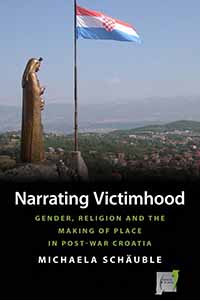
In Michaela Schäuble’s ethnographic account, Narrating Victimhood: Gender, Religion and the Making of Place in Post-War Croatia, she examines religion, gender relations, and nation building in the newly independent country. Following, the author gives readers a photographic glimpse into the Republic of Croatia after its war for independence. See the other photos in the gallery here.
Continue reading “Picturing Post-War Croatia”

The Historic Influence of Intellectuals

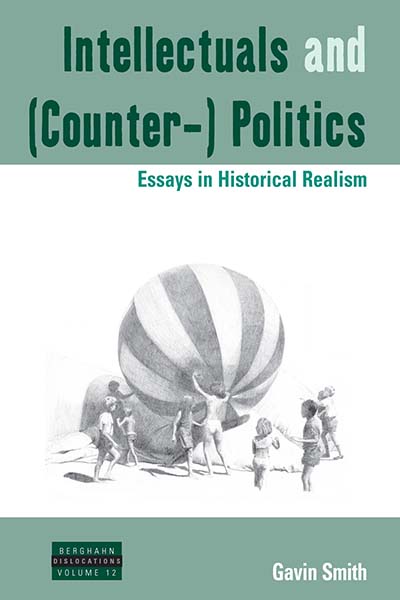
In Gavin Smith’s Intellectuals and (Counter-) Politics: Essays in Historical Realism, which was published earlier this month, the author takes a look at the role of the intellectual (specifically the social scientist) in three important areas — studying capitalism, making histories, and producing places. According to the author, “Reflexivity for the social scientist, Bourdieu argued, involves an objectivist ethnography of ethnographers,” a task Smith himself undertook in both Spain and Peru. Following, he reflects on his time spent conducting ethnographic research in Peru.


Continue reading “The Historic Influence of Intellectuals”

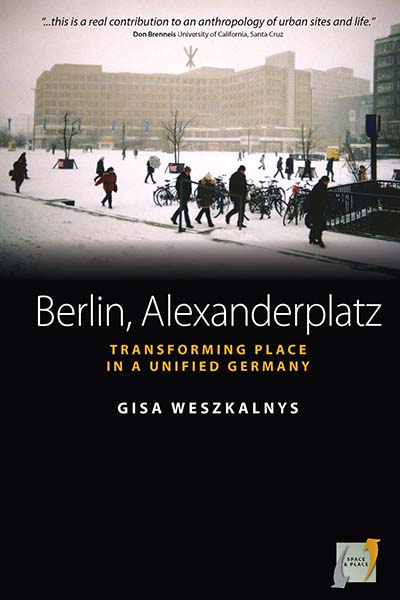
Urban Update: Alexanderplatz Seen as a Site to Improve

In 1990s Germany, Alexanderplatz, a centuries-old public square and transportation hub in Berlin, was seen a site in need of updating. Plans to improve the space, which were a part of post-unification revitalization, are central to Gisa Weszkalnys’ Berlin, Alexanderplatz: Transforming Place in a Unified Germany, which was published as a paperback late last year. Following is an excerpt from the volume, which gives insight into the collaborative process of the planned update.

____________________

In the early 1990s, Alexanderplatz was identified as a problem of urban design. A solution was to be found through an urban design competition, launched by the Senat’s Administration for Urban Development (SenStadt) in 1993. The winning design was to provide the basis for future constructions in the square. Following the competition, the Berlin Senat proceeded to establish a public-private partnership and to sign so-called urban development contracts with prospective investors.

Continue reading “Urban Update: Alexanderplatz Seen as a Site to Improve”

Simulated Shelves: Browse May’s New-Book Library

This month, Berghahn’s library will expand by eleven books. The soon-to-be-published titles make up a distinct lot, ranging from Abigail Loxham’s Cinema at the Edges to Anne Eriksen’s Antiquities to Heritage to Philip Ther’s The Dark Side of Nation-States. The following list of new volumes is complete with brief descriptions of the books and a peek at each cover.

_____________________________


NEGOTIATING IDENTITY IN SCANDINAVIA

Women, Migration and the Disaspora

Edited by Haci Akman

Continue reading “Simulated Shelves: Browse May’s New-Book Library”

Visual Voice: ‘Narrating Victimhood’ in Photos

The 1991-1995 war following the dissolution of socialist Yugoslavia is referred to as “Homeland War” (Domovinski rat) in Croatia. It is narrated both as a struggle of independence and a defense against aggression and occupation by Serbia. Postwar social and political processes continue to be dominated by competing nationalisms, aspects of which come into focus in Narrating Victimhood: Gender, Religion and the Making of Place in Post-War Croatia, published earlier this month. In the following photo essay, author Michaela Schäuble gives readers a visual glimpse into the role religion, and Marian veneration in particular, plays in these processes in contemporary post-war Croatia.


______________________________


Continue reading “Visual Voice: ‘Narrating Victimhood’ in Photos”

Conception to Delivery: Sharing an Account of Mizrahi Mothers

Smadar Lavie’s soon-to-be-published book Wrapped in the Flag of Israel: Mizrahi Single Mothers and Bureaucratic Torture is a personally inspired account that  stems from her own life as a single mother in Israel. Following, the author reveals how this inspiration became a book, and speculates about how this account will be received. This is the second of the author’s reflections on the Berghahn blog, read the first here.


_________________________________


http://berghahnbooks.com/blog/wp-content/uploads/2014/04/LavieWrapped-e1397829882448.jpgBerghahn Books: What inspired your love of your subject? When?
 

Smadar Lavie: My years in Israel as a welfare mother forced me to become my own informant. Those years were full of hardship. I am using the privilege of my U. C. Berkeley education and the power and proficiency of my English words to call attention to the plight of all Mizrahi single mothers in the State of Israel.

Continue reading “Conception to Delivery: Sharing an Account of Mizrahi Mothers”

A Look through the Lens at ‘Domesticating Youth’


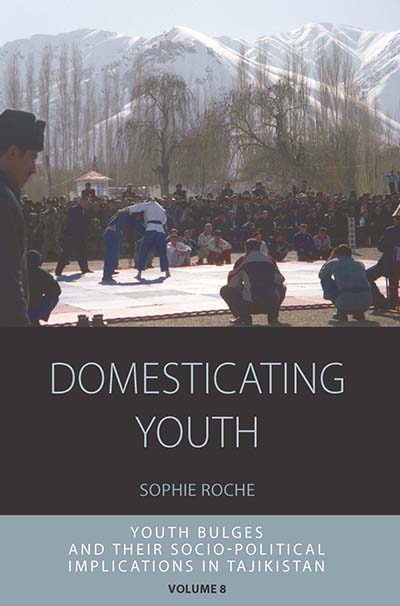
Sophie Roche’s volume Domesticating Youth: Youth Bulges and their Socio-political Implications in Tajikistan, published last month, is the fruit of her ethnographic labor in the post-Soviet republic of Tajikistan. During her fieldwork in the first decade of the 21st century, the country was in a state of transition following its civil war in the 1990s and subsequent population growth. In an earlier post, which can be read here, the author wrote of her study within the country — specifically how it changed after she left. Following she returns to her story of the country — this time through photos from her fieldwork in three locations within Tajikistan: Jirgatol, Shahritus, and Shahrigul.

Continue reading “A Look through the Lens at ‘Domesticating Youth’”

Examining ‘Public Health’: A Reflection on Reception

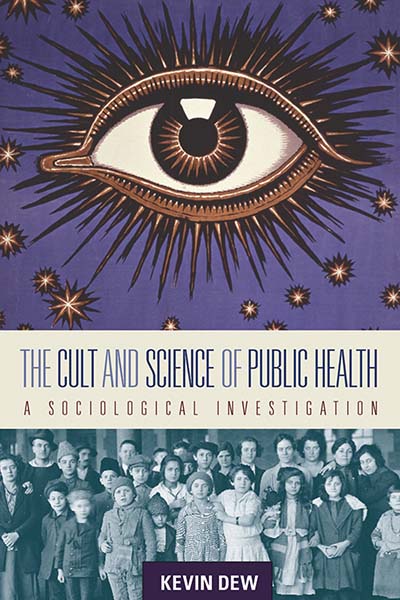
With World Health Day coming up April 7, the paperback release of Kevin Dew’s exploration of public health is quite timely. The Cult and Science of Public Health: A Sociological Investigation was published originally in February 2012 and will be published as a paperback this month. Below is a brief description of the book, and the author’s reflection on its reception since the initial publication.

________________________________________________


As a cult of humanity, public health provides a moral force in society that replaces ‘traditional’ religions in times of great diversity or heterogeneity of peoples, activities and desires. This is in contrast to public health’s foundation in science, particularly the science of epidemiology. The rigid rules of ‘scientific evidence’ used to determine the cause of illness and disease can work against the most vulnerable in society by putting sectors of the population at a disadvantage.

Continue reading “Examining ‘Public Health’: A Reflection on Reception”

Doubly Disenfranchised: A Firsthand Account of Life as a Mizrahi Woman

The largest population of Mizrahi Jews, those with origins in Middle Eastern countries, lives in Israel. However, in this country Mizrahim are historically and currently disenfranchised, with preference given to Jews of European descent, or Ashkenazi. In Wrapped in the Flag of Israel: Mizrahi Single Mothers and Bureaucratic Torture, to be published this month, Smadar Lavie, herself a Mizrahi Jewish woman, explores the Israeli bureaucratic system and Mizrahi women’s relationship with it. Following, the author answers the question: What aspect of writing Wrapped in the Flag of Israel did you find most challenging? Most rewarding?


_____________________________________


Most challenging was weaving a text out of two decades worth of fieldwork data. Though I started my research efforts in 1990 as a tenured professor at U. C. Davis, the bulk of the fieldwork was collected during my years as a Mizrahi single mother on welfare between 1999-2007. For a typical book-length ethnography, most scholars spend a total of around two years in the field collecting data, supported by grants and sabbaticals. Afterward, they return to their home university and write the book manuscript, also supported by grants and sabbaticals.

Continue reading “Doubly Disenfranchised: A Firsthand Account of Life as a Mizrahi Woman”