Hot Off the Presses- New Journal Releases from Berghahn

New journal releases from Berghahn:
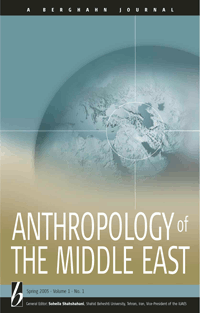
Anthropology of Middle East, Volume 7, Number 1, Spring 2012
This issue focuses on the ethnography of contemporary Afghanistan, with articles village life, war, reconstruction, and more.

Journeys: The International Journal of Travel and Travel Writing, Volume 13, Issue 1, Summer 2012
Articles on an English pilgrimage site, Peter Carey’s writings on Tokyo and Sydney, hotel culture in Victorian England and Ireland, and a reconsideration of the tourist/traveler distinction with regard to 18th century Europe.

Social AnalysisVolume 56, Issue 1, Spring 2012
A special issue on “Cosmologies of Fortune: Luck, Vitality, and Uncontrolled Relatedness.” Articles examines “fortune” as it is present in a wide array of cultures spanning the globe, including the Amazon, Siberia, Mongolia, Malaysia, Japan, and others.

Exhibitor Tables at Academic Conferences in Theory and Practice

Although we’ve been in the midst of several heat waves here in New York City (if I hear the weatherman use the word “sweltering” one more time, I might cry!), I’m already starting to think about fall. In between dreaming of cozy sweaters and pumpkin pie, I’m hard at work coordinating our attendance at half a dozen academic conferences in some of our most important fields. A fan of checklists and packing, this is one of my favorite responsibilities. However, it can certainly also get a bit overwhelming making sure every part of the process gets taken care of while maintaining all of the different deadlines for each event. Continue reading “Exhibitor Tables at Academic Conferences in Theory and Practice”

Hot Off the Presses- New Book Releases

New in print from Berghahn:
After The History of Sexuality: German Genealogies with and beyond Foucault, edited by Scott Spector, Helmut Puff, and Dagmar Herzog

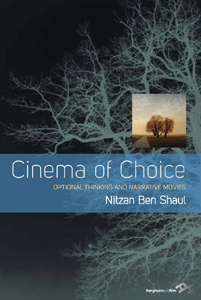
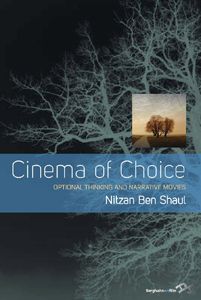
Cinema of Choice: Optional Thinking and Narrative Movies, by Nitzan Ben Shaul

Hitler’s Volksgemeinschaft and the Dynamics of Racial Exclusion: Violence against Jews in Provincial Germany, 1919-1939, by Michael Wildt, translated from German by Bernard Heise

Sharing the Sacra: The Politics and Pragmatics of Intercommunal Relations around Holy Places, edited by Glenn Bowman

Get to Know Berghahn: Brian Campbell

Get to Know Berghahn is a recurring interview feature that introduces the hardworking people behind the scenes at Berghahn. This week’s subject is Social Media Manager Brian Campbell.

1. How long have you been at Berghahn? What did you do before that?
I’ve been at Berghahn for about a year and a quarter. Before I came here I was a historical researcher for a non-profit that studied childhood poverty, which was depressing. Prior to that I worked in media sales. Continue reading “Get to Know Berghahn: Brian Campbell”

On the Evening News, the Galapagos Islands, and the Purpose of the Academy

A post by Journals Marketing Manager Young Lee.

Whenever I watch the news these days, I know I’m in for a depressing half-hour, especially in New York, where crimes big and small seem to happen nonstop. Whether it’s a subway groper, a child falling out of a seventh story window, or the violence in Syria, I am starting to understand that no news really is the only good news.

This steady stream of bad news makes me wish for a Garden of Eden on this world, a place that’s a little more innocent, and I’m reminded of a trip I took last December to the Galapagos Islands, famous for their role in the inception of Darwin’s theory of evolution. What struck me most about the islands was that, with wildlife galore and few predators, all the animals seemed to coexist so peacefully. Sea lions casually rested their heads on iguanas and birds never worried about their eggs being eaten. Tropical flamingos and penguins lived side-by-side. It was the oddest thing I had ever seen and it was inspiring. Continue reading “On the Evening News, the Galapagos Islands, and the Purpose of the Academy”

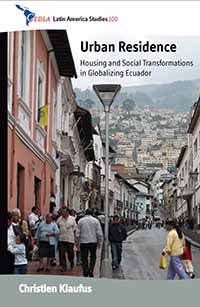
Interview with the Author- Christien Klaufus, Author of Urban Residence: Housing and Social Transformations in Globalizing Ecuador

Christien Klaufus is the author of Urban Residence: Housing and Social Transformations in Urbanizing Ecuador, published this spring by Berghahn. Her work examines two contrasting populations in Ecuador’s cities: popular-settlement residents and professionals in the planning and construction sector to understand how they shape the city itself. Here she discusses her work, how she came to it, and her many varied interests outside the academy.

1. What drew you to the study of urban spaces in Ecuador?
My fascination for Latin America started when I was a child. I used to collect clippings about Peru, Bolivia, Mexico and Guatemala from the National Geographic journals that my father brought home. After graduating in Architecture in 1993, I travelled through South America for a few months. It was during that trip that I decided I wanted to switch careers from working in architectural design to becoming an academic researcher on urban spaces and architecture, preferably in Latin America. Ecuador became my favorite destination. So I applied for a BA and MA in Cultural Anthropology at the University of Amsterdam, which later resulted in a PhD dissertation on that topic. The book was a logical outcome of my multidisciplinary academic background and a long-lasting fascination for Latin America. Continue reading “Interview with the Author- Christien Klaufus, Author of Urban Residence: Housing and Social Transformations in Globalizing Ecuador”

“Why is marking a book indespensible to reading it?”

“Why is marking a book indespensible to reading it? First, it keeps you awake — not merely conscious, but wide awake. Second, reading, if it is active, is thinking, and thinking tends to express itself in wordes, spoken or written…Third, writing your reactions down helps you to remember the thoughts of the author…Marking a book is literally an expression of your differences or your agreements with the author, It is the highest respect you can pay him.” Mortimer Adler, How to Read a Book

Quotation of the Week

Interview with the Author- Nitzan Ben-Shaul, Author of Cinema of Choice: Optional Thinking and Narrative Movies

Nitzan Ben-Shaul is the author of Cinema of Choice: Optional Thinking and Narrative Movies, which will be released by Berghahn this month. His book explores films such as Sliding Doors, Run Lola Run, Inglourious Basterds, and Rashomon that present alternate narrative paths and uses these films to examine how standard linear films close down thinking processes, while arguing that optional thinking in film can be stimulating and rewarding. Here, he answers questions about his research and topic.

1. What drew you to the topic of cinema that proposes alternate narrative paths?
I was initially drawn to these movies when working on my book on interactive cinema (Hypernarrative Interactive Cinema: Problems and Solutions, Rodopi, 2008). Being concerned there with drama-guided interaction I found movies like Run Lola Run, Sliding Doors, and Rashomon to be excellent models for devising engaging interactive movies given their bifurcating narrative paths. I also produced a feature length interactive movie entitled Turbulence (2009) based on my research into interactive movies. I then asked myself what is the added value of these films and realized that they encourage optional thinking, that is, they get you thinking about options in life, a process that most movies actually derail by their encouraging closed-mindedness in their one-track narrative trajectory leading in an apparent strict causality to a relieving closure. Continue reading “Interview with the Author- Nitzan Ben-Shaul, Author of Cinema of Choice: Optional Thinking and Narrative Movies

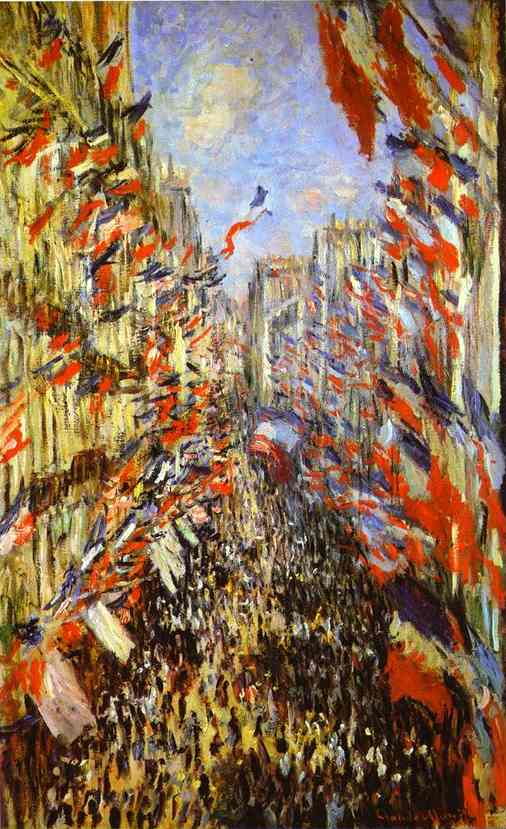
Happy Bastille Day- A Brief History of the Holiday and French Revolution Resources from Berghahn

Most national days celebrate about what you would expect a national day to celebrate. Some, like the national days of the United States, Albania, and Haiti mark the signing of a declaration of independence from a colonial power. Other countries, like much of Africa, choose to remember the day the colonial power actually left. Countries like Germany and Italy celebrate unification. Others are a little quirkier, like Austria which celebrates its declaration of neutrality and Luxembourg which honors the Grand Duke’s birthday. A handful of countries such as the United Kingdom and Denmark have no national holiday. But few countries can top France for the sheer coolness of their national day which commemorates the day an angry mob stormed a prison. Continue reading “Happy Bastille Day- A Brief History of the Holiday and French Revolution Resources from Berghahn”