 Join our Email List




The release of the July 2012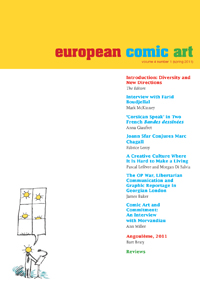 issue of European Comic Art has been a big deal around our offices because it marks the journal’s relaunch as a Berghahn title. Published in partnership with the American Bande Dessinée Society and the International Bande Dessinée Society, it is the first English-language journal devoted to European graphic novels and comic strips. Continue reading “New to Berghahn Journals- European Comic Art”
An Excerpt from Fortune and the Cursed: The Sliding Scale of Time in Mongolian Divination
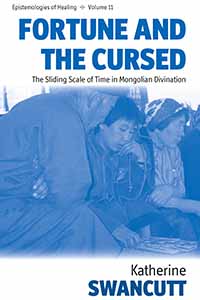 Note: Berghahn recently published Katherine Swancutt’s Fortune and the Cursed: The Sliding Scale of Time in Mongolian Divination, an ethnographic study of the world of Buryat Mongol divination. An excerpt from the book follows a note from the author which places it in the context of her larger argument.
It’s common knowledge that, when under duress, many people turn to religion. Yet the human penchant for inventing new magical practices during this ‘turn to religion’ is rarely revealed.
When I first went to Mongolia, I wanted to uncover how a shamanic cosmology comes to be reinvented over time. My plan was to document the shamanic practices – and especially the divinations (aka ‘fortune-tellings’) – undertaken by Buryat Mongols at the northeastern fringes of the country. These shamans manage everything from major health and business crises to everyday fluctuations in a person’s fortune, which, I learned, is not just a kind of luck-filled prosperity that can rise or fall dramatically. Fortune is also a driving force behind Buryat innovation-making. Continue reading “An Excerpt from Fortune and the Cursed: The Sliding Scale of Time in Mongolian Divination”
Get to Know Berghahn: Young Lee
 Get to Know Berghahn is a recurring interview feature that introduces the hardworking people behind the scenes at Berghahn. This week’s subject is Marketing Manager Young Lee.
1. How long have you been at Berghahn? What did you do before that?
I’m newbie! I’ve been at Berghahn for a little over 2 months. Previously, I worked as an Email Marketing Manager at a higher-ed company called Collegebound Network and I also worked as an account manager specializing in the Library Market at Barnes & Noble.
2. What do you read when you aren’t reading Berghahn books?
Mostly fiction but the last book I read was a non-fiction title called The Immortal Life of Henrietta Lacks and it was fantastic! The next book on my list is The Marriage Plot by Jeffrey Eugenides. I also read the Harry Potter series once a year. I know, it’s a sickness.
3. What’s a skill or talent you have that no one at the office knows about?
It’s more of a hobby, but I do like to bake. Unfortunately, I don’t do it much during the summer due to the heat that the oven radiates in my tiny Brooklyn kitchen/living room.
4. Where would you want to live if you could move the Berghahn offices anywhere? Why?
Somewhere by an ocean and mountains. I would say Mid-Coast Maine. Seafood is essential in my life and access to nature activities like hiking and skiing would be great! The longer I live in the city, the more I fantasize about moving to the country.
5. What’s your favorite thing about working at Berghahn?
I love that Berghahn is a small office. Everyone here works really hard and truly cares about the quality of their work. It has been a very easy transition for me since everyone has been so nice and helpful. The short commute isn’t bad either!
Gender, Sports, and Culture: The Victorians and Us
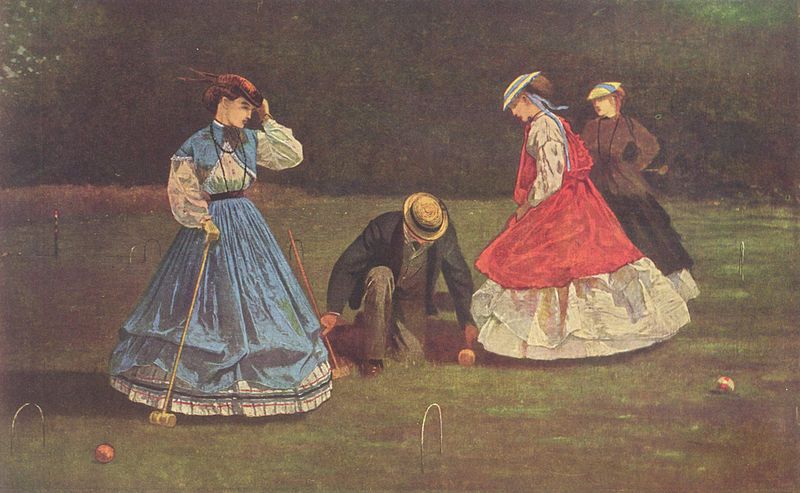 Graduate school ruins your ability to view anything related to your topic of study with an unacademic eye. This is fine if your topic doesn’t come up every day like, say, Byzantine art, but when you choose something that crops up often, like the influence of American music on Continental youth culture in the 1950s, it means you’ll be mentally revising your thesis every time you hear “Johnny B. Goode.” I’m reminded of this phenomenon every Olympiad because I wrote my master’s thesis on sports in Nazi Germany, using the party’s sports policy up until the 1936 Berlin Olympics as a window into their ideas about race and its intersection with political priorities before the war. The fast-approaching 2012 Olympics already have me mentally revising my thesis (something I’m sure I’ll be doing on my death bed), but the most recent issue of our journal Critical Survey has me wondering if I didn’t miss an altogether more interesting topic- sports and gender. Continue reading “Gender, Sports, and Culture: The Victorians and Us”
Interview with the Editor- Gemma Blackshaw, Co-Editor of Journeys into Madness: Mapping Mental Illness in the Austro-Hungarian Empire
 Gemma Blackshaw, along with Sabine Wieber, is one of the editors of Journeys into Madness: Mapping Mental Illness in the Austro-Hungarian Empire. In her own contribution to the volume, she discusses the work and life of Viennese author and poet and Peter Altenberg. Here, she answers questions about her research and herself.
1. What drew you to Peter Altenberg as a topic?
A caricature of Altenberg was chosen as the poster image for the Madness & Modernity exhibition I curated with Leslie Topp and Sabine Wieber, which looked at the relationship between mental illness and the visual arts in Vienna circa 1900 (Wellcome Collection, London and Wien Museum, Vienna, 2009-10). It was a last-minute addition to the exhibition, gratefully received from the Neue Galerie Museum for Austrian and German Art in New York, and I had little time to research its history. I touched upon Altenberg’s own experience of what was termed ‘nervous disorder’ in the accompanying catalogue in an essay on the artist Oskar Kokoschka, who painted Altenberg’s portrait in 1909, and made a mental note to follow up what seemed to me to be an intriguing set of questions: was Altenberg as ‘mad’ as he appeared in the caricature; did an answer to that question even matter; what were the circumstances of his being institutionalised; what was the value and the differences in being represented, and representing yourself, as ‘mad’? These questions formed the starting point of a long research journey which became so compelling a trail that I produced not only this essay but also a documentary film collaboration with artist and filmmaker David Bickerstaff titled Altenberg: The Little Pocket Mirror. Continue reading “Interview with the Editor- Gemma Blackshaw, Co-Editor of Journeys into Madness: Mapping Mental Illness in the Austro-Hungarian Empire”
“It is always in season for old men to learn.” Aeschylus, Agamemnon
Quotation of the Week
Hot Off the Presses- New Journal Releases from Berghahn
 Critical Survey, Volume 24, Issue 1, Spring 2012
German Politics and Society, Volume 30, Issue 2, Summer 2012
Girlhood Studies, Volume 5, Issue 1, Summer 2012, Special Issue: “Girls and Dolls”
Historical Reflections/Réflexions Historiques, Volume 38, Issue 2, Summer 2012, Special Issue: “Writing History for a Variety of Publics”
Girls and Dolls: A Note on Images from the Latest Issue of Girlhood Studies
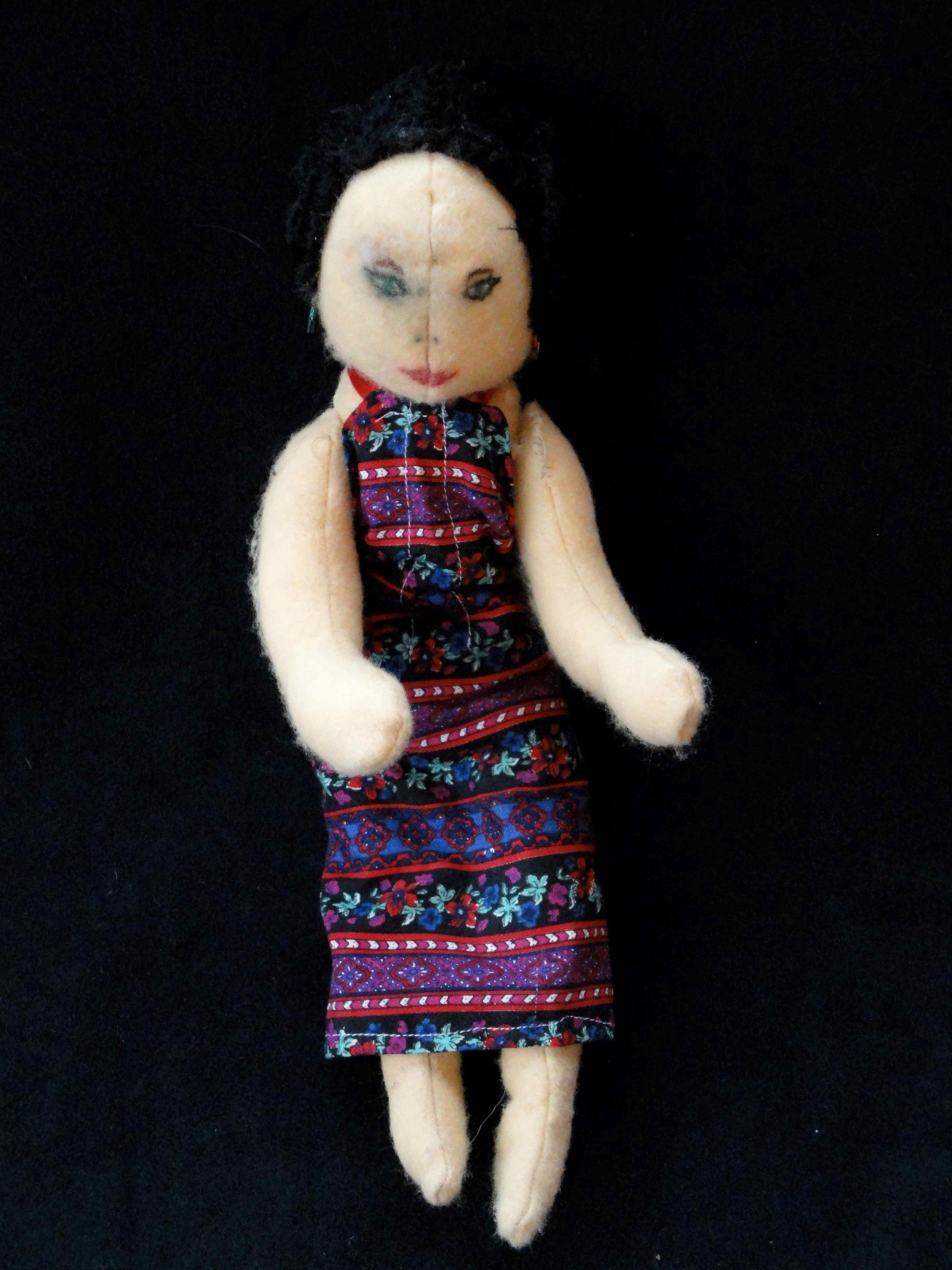
Most of my work deals with text, so it was a bit of a treat when I opened up the files for the latest Girlhood Studies and found them chock full of images of dolls. This journal covers many themes related to the challenges and dangers facing girls all over the world – it’s always such a pleasure to work on but I was particularly excited to see an issue that also speaks to the creative and serious play of girlhood. Dolls, needless to say, are cultural artefacts and reflect the society that makes them as well as the girls who play with them: an American Girl doll capturing an immigrant Jewish girlhood essentially whitewashed of tenements and the memory of pogroms; nineteenth-century paper dolls embodying both moral tales and fashion plates; Barbie and her Dream House reflecting the dimensions of modern architecture. All three of these examples are mediated by commercial culture and present tensions between cultural constructs and individual play. Continue reading “Girls and Dolls: A Note on Images from the Latest Issue of Girlhood Studies”
Get to Know Berghahn- Ben Parker
 Get to Know Berghahn is a recurring interview feature that introduces the hardworking people behind the scenes at Berghahn. This week’s subject is Publicity and Marketing Executive Ben Parker.
1. How long have you been at Berghahn? What did you do before that?
I have been at Berghahn for almost 2 years, it will be my second anniversary here at the end of August. Before that I was at The History Press, based in Stroud.
2. What do you read when you aren’t reading Berghahn books?
Almost exclusively poetry. Mainly contemporary poets, but also people like Yeats and Eliot. I have also started to read my own work in public, at various Oxford venues, as can be seen in the photo.
3. What’s a skill or talent you have that no one at the office knows about?
In my spare time I write poetry, and have published in a number of UK magazines, but people in the office know about that because I drag them along to the readings I do! No one in the office has seen me climb though, and that is my hobby of choice after poetry.
4. Where would you want to live if you could move the Berghahn offices anywhere? Why?
I currently live on the same road as the Berghahn office, so if the office moved my commute would be significantly longer. That said, I’d be happy somewhere warmer and with some decent rocks to climb. The middle of England is not very good for either of those things.
5. What’s your favorite thing about working at Berghahn?
Because the office is quite small I feel that I know everyone here far more than I would at a larger company, which makes the atmosphere an enjoyable one to work in, and I have a real sense of involvement with the books we publish.
Hot Off the Presses- New Book Releases

European Foundations of the Welfare State, by Franz-Xavier Kaufmann, translated by John Veit-Wilson, foreword by Anthony B. Atkinson
Fortune and the Cursed, the Sliding Scale of Time in Mongolian Divination, by Katherine Swancutt
Investigating Srebrenica: Institutions, Facts, Responsibilities, edited by Isabelle Delpla, Xavier Bougarel, and Jean-Louis Fourn
Journeys into Madness: Mapping Mental Illness in the Austro-Hungarian Empire, edited by Gemma Blackshaw and Sabine Wieber
Learning from the Children: Childhood, Identity and Culture in a Changing World, edited by Jacqueline Waldren and Ignacy-Marek Kaminski
A Lover’s Quarrel with the Past: Romance, Representation, Reading, by Ranjan Ghosh
The Making of the Pentecostal Melodrama: Religion, Gender and Media in Kinshasa, by Katrien Pype
Ordinary Lives and Grand Schemes: An Anthropology of Everyday Religion, edited by Samuli Schielke and Liza Debevec
The Politics of Educational Reform in the Middle East: Self and Other in Textbooks and Curricula, edited by Samira Alayan and Achim Rohde, and Sarhan Dhouib
Revisiting Feminist Approaches to Art Therapy, edited by Susan Hogan