A Celebration of Asian-Pacific Heritage

In 1992, a bill was signed into law designating May as Asian-Pacific American Heritage Month. According to the Asian-Pacific Heritage website, “The month of May was chosen to commemorate the immigration of the first Japanese to the United States on May 7, 1843, and to mark the anniversary of the completion of the transcontinental railroad on May 10, 1869.” Commemorate this month with the following selection of Asia-Pacific titles, and view the complete list here.


___________________________________

Asia Pacific World

The Journal of the International Association for Asia Pacific Studies

Chief Editor: Malcolm J.M. Cooper, Ritsumeikan Asia Pacific University (APU)

Published on behalf of the International Association for Asia Pacific Studies Continue reading “A Celebration of Asian-Pacific Heritage”
Picturing Post-War Croatia

In Michaela Schäuble’s ethnographic account, Narrating Victimhood: Gender, Religion and the Making of Place in Post-War Croatia, she examines religion, gender relations, and nation building in the newly independent country. Following, the author gives readers a photographic glimpse into the Republic of Croatia after its war for independence. See the other photos in the gallery here.
Continue reading “Picturing Post-War Croatia”

The Historic Influence of Intellectuals

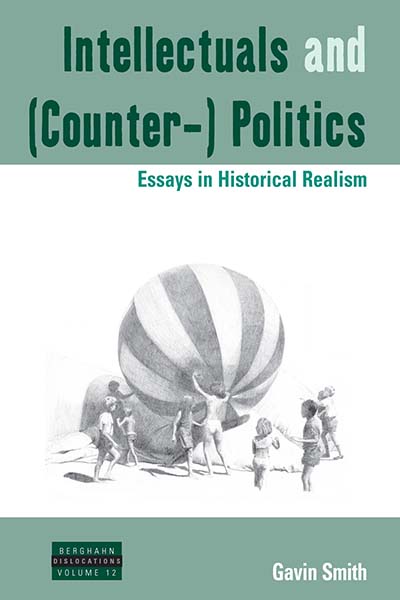
In Gavin Smith’s Intellectuals and (Counter-) Politics: Essays in Historical Realism, which was published earlier this month, the author takes a look at the role of the intellectual (specifically the social scientist) in three important areas — studying capitalism, making histories, and producing places. According to the author, “Reflexivity for the social scientist, Bourdieu argued, involves an objectivist ethnography of ethnographers,” a task Smith himself undertook in both Spain and Peru. Following, he reflects on his time spent conducting ethnographic research in Peru.


Continue reading “The Historic Influence of Intellectuals”

Hot Off the Presses – New Journal Releases for April

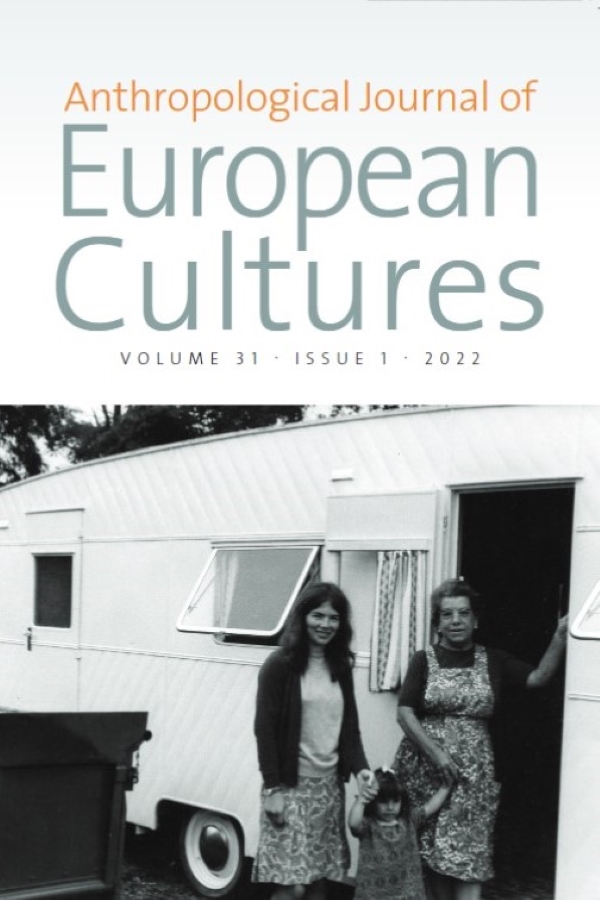
Anthropological Journal of European Cultures
Volume 23, Issue 1
The articles in this special issue address policy as a socio-political practice and ongoing process.

Projectioms
Volume 8, Issue 1
This issue ranges across the avant-garde cinema, tear-jerking melodramas, the nature of historical trauma, and narratives that assume playful, game-like formats and that may be found in title sequences and trailers.

Journal of Educational Media, Memory, and Society
Volume 6, Issue 1
The journal explores perceptions of society as constituted and conveyed in processes of learning and educational media

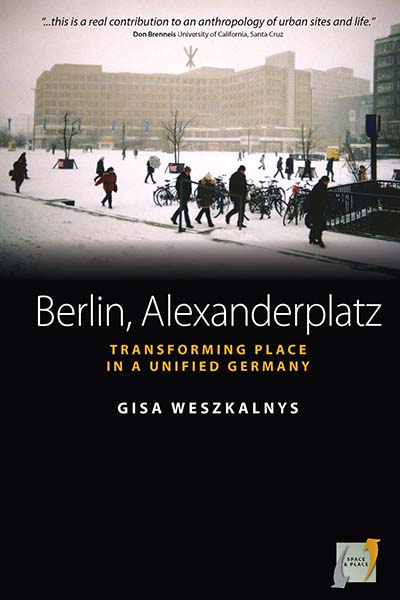
Urban Update: Alexanderplatz Seen as a Site to Improve

In 1990s Germany, Alexanderplatz, a centuries-old public square and transportation hub in Berlin, was seen a site in need of updating. Plans to improve the space, which were a part of post-unification revitalization, are central to Gisa Weszkalnys’ Berlin, Alexanderplatz: Transforming Place in a Unified Germany, which was published as a paperback late last year. Following is an excerpt from the volume, which gives insight into the collaborative process of the planned update.

____________________

In the early 1990s, Alexanderplatz was identified as a problem of urban design. A solution was to be found through an urban design competition, launched by the Senat’s Administration for Urban Development (SenStadt) in 1993. The winning design was to provide the basis for future constructions in the square. Following the competition, the Berlin Senat proceeded to establish a public-private partnership and to sign so-called urban development contracts with prospective investors.

Continue reading “Urban Update: Alexanderplatz Seen as a Site to Improve”

Revealing the ‘Vanished History’ of the Holocaust

Although in Slovakia, Bohemia and Moravia (parts of Czechoslovakia), more than a quarter million lives were claimed during the Holocaust, these deaths have been mostly concealed in post-World War II Czech and Slovak history. A Czech native himself, author Tomas Sniegon shines a light on this cover up in Vanished History: The Holocaust in Czech and Slovak Historical Culture, to be published this month. Following, Sniegon uses the example of Oskar Schindler — famous as the protagonist of the 1993 film Schindler’s List — to explain just how much was hidden from citizens of the Czech Republic and Slovakia.


_____________________________

Film hero Oskar Schindler, played by Liam Neeson, entered the 1990s in the Steven Spielberg’s film Schindler’s List as a new symbol of a so-called “Good citizen of the Third Reich,” which provoked both positive and negative reactions worldwide. However, very few at the same time knew that the real Oskar Schindler — far more complicated than the film character — had never lived in Germany until the World War II and thus actually had never been a “genuine-German German.”

Continue reading “Revealing the ‘Vanished History’ of the Holocaust”

Marx is the New Black

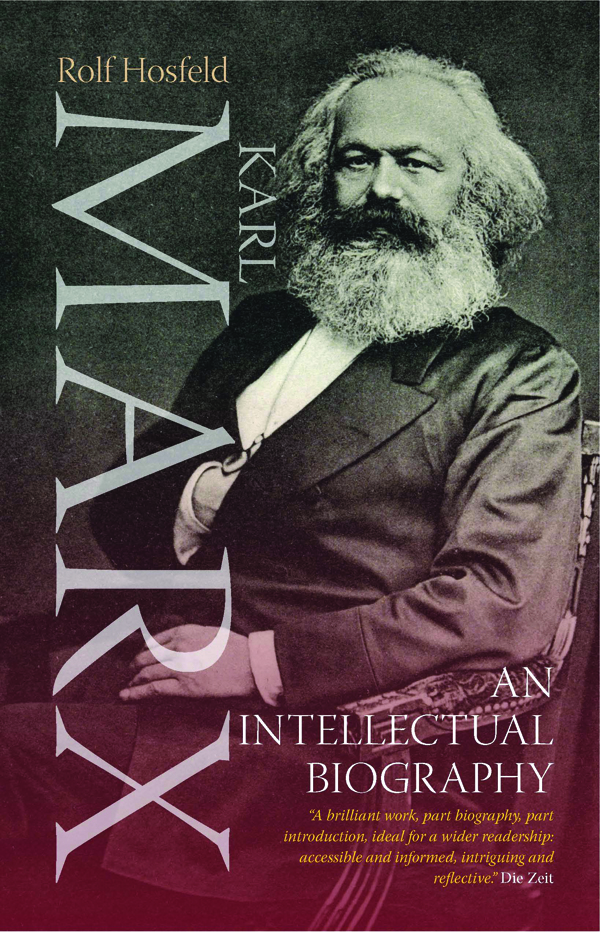
HosfeldKarlWere he still alive, the philosopher behind The Communist Manifesto and Das Kapital would be celebrating his 196th birthday today.

Marx has made a comeback recently, with new books on his life and ideas popping up more frequently, and a new wave of “Millennial Marxists” taking to social media to discuss the original socialist’s ideas in a more modern light.

In honor of the undeniable influence Karl Marx has had on economic and political discourse over the years, we invite you to take a look at our intellectual biography of the philosopher himself.


Here’s what the critics are saying about Karl Marx: An Intellectual Biography by Rolf Hosfeld:

“…an elegant compact study [that] explores Marx’s ideas in all their messy complexity.” —Times Literary Supplement

“This 200 page compendium is a deftly written biography offering an informed and informative presentation of Marx’s turbulent personal and professional life. A seminal work of impressive scholarship, [this book] is enhanced by the inclusion of an extensive bibliography making it an especially useful and highly recommended contribution to academic library reference collections and Marxist Studies supplemental reading lists.” —The Midwest Book Review

“This book is a delightful gain: biography, theory, revolutionary history, modern history—altogether convincing and gripping. The lively portrait of a brilliant, eternally radical, and strictly speaking rather apolitical, philosopher is illustrated here by Rolf Hosfeld—A great achievement.” —DeutschlandRadio


Click here to learn more!


Simulated Shelves: Browse May’s New-Book Library

This month, Berghahn’s library will expand by eleven books. The soon-to-be-published titles make up a distinct lot, ranging from Abigail Loxham’s Cinema at the Edges to Anne Eriksen’s Antiquities to Heritage to Philip Ther’s The Dark Side of Nation-States. The following list of new volumes is complete with brief descriptions of the books and a peek at each cover.

_____________________________


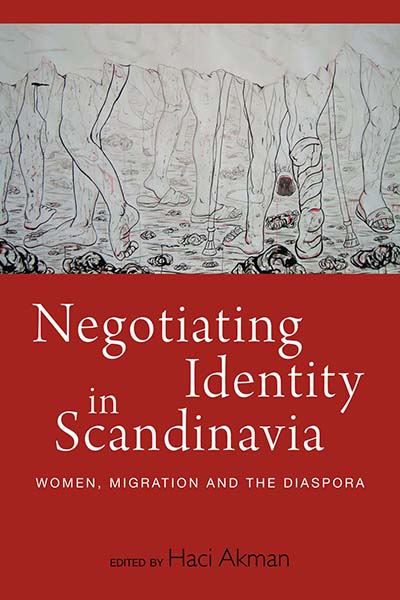
NEGOTIATING IDENTITY IN SCANDINAVIA

Women, Migration and the Disaspora

Edited by Haci Akman

Continue reading “Simulated Shelves: Browse May’s New-Book Library”

Filmic Multiple Reality Syndrome

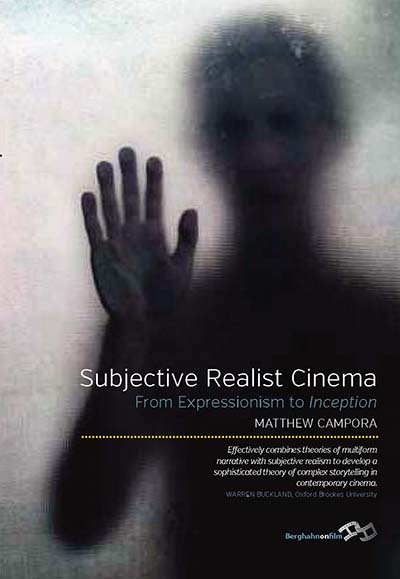
The nonlinear narratives of such films as Mulholland Drive, Memento, and Eternal Sunshine of the Spotless Mind come into sharper focus in Matthew Campora’s newly released book Subjective Realist Cinema: From Expressionism to Inception. Following, the author introduces an excerpt to his book, tells the reader of his initial inspiration to write it, and gives insight into “multiform narrative.”


______________________________

What follows is an excerpt from my book Subjective Realist Cinema. I have chosen to present it here because it contains some of the key ideas of the book, as well as a brief analysis of the film that inspired my interest in complex narrative cinema in the first place, Terry Gilliam’s Brazil. Watching it teenager, I found Brazil confusing, even incomprehensible. However, I was also fascinated by it and suspected there was more to the film than I had grasped. When I returned to it years later and discovered that I was able to comprehend it in a way that had eluded me earlier, I was even more intrigued. How could I have NOT grasped what seemed so simple to me now? That the key to understanding the film lay in recognizing the shifts between Sam Lowry’s nightmarish waking world on the one hand, and his imagination, dreams, and hallucinations on the other. The lack of clearly marked shifts between the film’s different ontological levels had created a complexity that I was not accustomed to, and solving the puzzle the film posed had proven tremendously satisfying. I began seeking out similar films in order to understand how they created their effects and what follows is fragment of the work that has grown out of the years spent with these films.

Continue reading “Filmic Multiple Reality Syndrome”

Visual Voice: ‘Narrating Victimhood’ in Photos

The 1991-1995 war following the dissolution of socialist Yugoslavia is referred to as “Homeland War” (Domovinski rat) in Croatia. It is narrated both as a struggle of independence and a defense against aggression and occupation by Serbia. Postwar social and political processes continue to be dominated by competing nationalisms, aspects of which come into focus in Narrating Victimhood: Gender, Religion and the Making of Place in Post-War Croatia, published earlier this month. In the following photo essay, author Michaela Schäuble gives readers a visual glimpse into the role religion, and Marian veneration in particular, plays in these processes in contemporary post-war Croatia.


______________________________


Continue reading “Visual Voice: ‘Narrating Victimhood’ in Photos”