Tracing the Path Toward and Away From Genocide

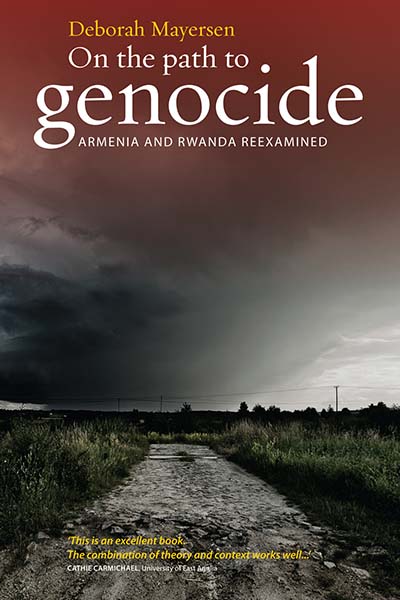
How and why does genocide occur, and how can we identify these warning signs to prevent it in the future? In On the Path to Genocide: Armenia and Rwanda Reexamined, Deborah Mayersen looks to conflicts in 1915 Turkey and 1994 Rwanda to answer these difficult questions. Following, the author explains the path to her study of genocide, traces her steps to the book, and points to where her research will take her in the future.


__________________________________________
 

Berghahn Books: What attracted you to study the genocide of Armenian and Rwandan peoples?


Deborah Mayersen: As a school student, I learned about the Holocaust and the international promise of ‘Never Again’ in its wake. Yet at University, I learned about the betrayal of this promise, with the genocides in Cambodia and Rwanda for example. I wanted to understand more about the history of genocide, and why it has become so prevalent in the modern world. This led me to examine in greater detail these two genocides, at the opening and closing of the twentieth century.

Continue reading “Tracing the Path Toward and Away From Genocide”
Conception to Delivery: Sharing an Account of Mizrahi Mothers

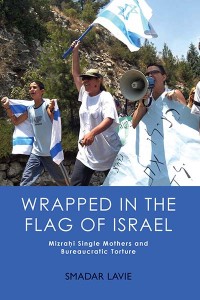
Smadar Lavie’s soon-to-be-published book Wrapped in the Flag of Israel: Mizrahi Single Mothers and Bureaucratic Torture is a personally inspired account that  stems from her own life as a single mother in Israel. Following, the author reveals how this inspiration became a book, and speculates about how this account will be received. This is the second of the author’s reflections on the Berghahn blog, read the first here.


_________________________________


http://berghahnbooks.com/blog/wp-content/uploads/2014/04/LavieWrapped-e1397829882448.jpgBerghahn Books: What inspired your love of your subject? When?
 

Smadar Lavie: My years in Israel as a welfare mother forced me to become my own informant. Those years were full of hardship. I am using the privilege of my U. C. Berkeley education and the power and proficiency of my English words to call attention to the plight of all Mizrahi single mothers in the State of Israel.

Continue reading “Conception to Delivery: Sharing an Account of Mizrahi Mothers”

Transnational Ahead of Its Time: Author Examines Council of Women

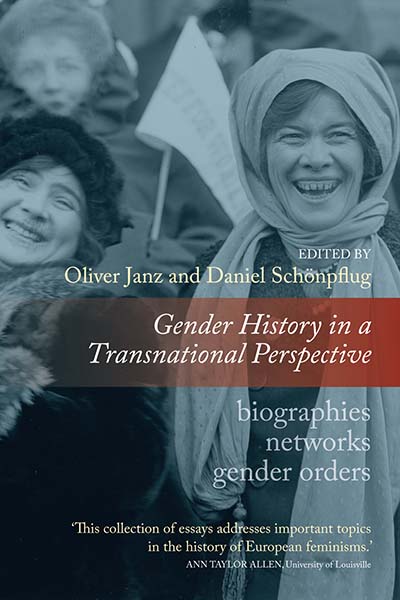
National borders are broken down in Oliver Janz and Daniel Schönpflug’s soon-to-be-released collection Gender History in a Transnational Perspective: Networks, Biographies, Gender Orders. The contributors examine historic cross-continent networks of European feminists. Following a short introduction from the author is a excerpt from Karen Offen’s chapter, in which the author examines the International Council of Women, which she considers “transnational” before the term was coined.

____________________________________


Karen Offen introduces this first part of the volume with reflections on a fundamental question: Can the category “transnational” be applied to the early international women’s movement, even though its representatives did not yet employ the term.


Historical scholarship is pressed to justify anachronistic terminology. It seems, though, that its use is often unavoidable, since historians’ implicit and explicit questions about the past always stem from their own present. Also, from a theoretical and methodological point of view, employing anachronistic terms allows for clearer analytical terminology as the linguistic horizon of the contemporaries is often ambivalent, contradictory and multifold. 

Continue reading “Transnational Ahead of Its Time: Author Examines Council of Women”

A Lived Journey: Tracing ‘The Path to the Berlin Wall’

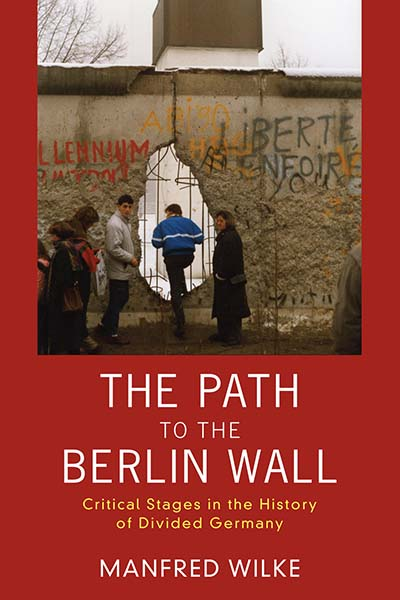
The Berlin Wall may have been erected in 1961, but the figurative foundation was laid in 1945, as the Soviet Union’s Communist Party and its allies made selections of their areas of influence. In The Path to the Berlin Wall: Critical Stages in the History of Divided Germany, author Manfred Wilke traces the events that led to the eventual construction of the Berliner Mauer. Wilke’s original volume was translated from German into English by Sophie Perl. Following is Perl’s interview with the author about his book.

Continue reading “A Lived Journey: Tracing ‘The Path to the Berlin Wall’”

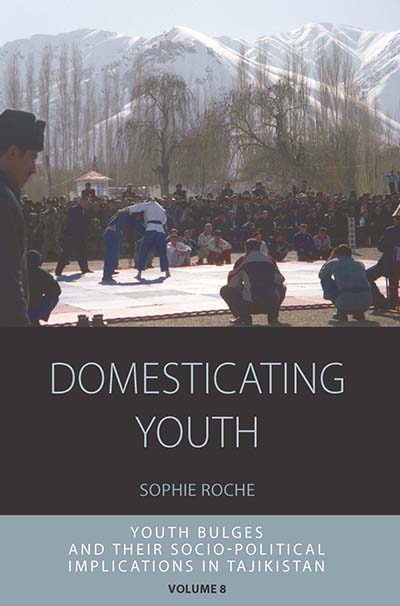
A Look through the Lens at ‘Domesticating Youth’


Sophie Roche’s volume Domesticating Youth: Youth Bulges and their Socio-political Implications in Tajikistan, published last month, is the fruit of her ethnographic labor in the post-Soviet republic of Tajikistan. During her fieldwork in the first decade of the 21st century, the country was in a state of transition following its civil war in the 1990s and subsequent population growth. In an earlier post, which can be read here, the author wrote of her study within the country — specifically how it changed after she left. Following she returns to her story of the country — this time through photos from her fieldwork in three locations within Tajikistan: Jirgatol, Shahritus, and Shahrigul.

Continue reading “A Look through the Lens at ‘Domesticating Youth’”

Hot Off the Presses – New Journal Releases for March

German Politics and Society
Volume 32, Issue 1
This special issue is titled West Germany’s Cold War Radio: The Crucible of the Transatlantic Century.

Girlhood Studies
Volume 7, Issue 1
This special issue is titled Cultural Studies and the Re-description of Girls in Crisis.

French Politics, Culture & Society
Volume 32, Issue 1
The special issue is titled Representations, History, and Wartime France.

Historical Reflections
Volume 40, Issue 1
The special issue is titled War, Occupation, and Empire in France and Germany.

International Journal of Social Quality
Volume 3, Issue 2
This issue assembles contributions to inquire into the future of the “social” from an interdisciplinary perspective, drawing on sociology, political science, and law.

Learning and Teaching
Volume 6, Issue 3
This special issue is titled The Ethnography of the University, and it is dedicated to William F. Kelleher (1950-2013), inspiring teacher, brilliant thinker, activist scholar and co-founder of the Ethnography of the University initiative.

Projections
Volume 8, Issue 1
This issue ranges across avant-garde cinema, tear-jerking melodramas, the nature of historical trauma, and narratives that assume playful, game-like formats and that may be found in title sequences and trailers.

Regions & Cohesion
Volume 4, Issue 1
This issue opens with an article that furthers our critical analysis of regional social policy. This article is followed by two more that examine North American border politics as well as a Leadership Forum section and a Review Essay.

Social Analysis
Volume 58, Issue 1
The special issue is titled War Magic and Warrior Religion: Sorcery, Cognition, and Embodiment.

Transfers
Volume 4, Issue 1
The articles in this issue examine a variety of topics.


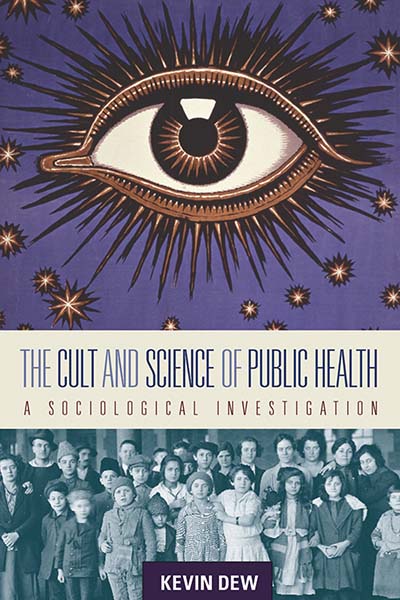
Examining ‘Public Health’: A Reflection on Reception

With World Health Day coming up April 7, the paperback release of Kevin Dew’s exploration of public health is quite timely. The Cult and Science of Public Health: A Sociological Investigation was published originally in February 2012 and will be published as a paperback this month. Below is a brief description of the book, and the author’s reflection on its reception since the initial publication.

________________________________________________


As a cult of humanity, public health provides a moral force in society that replaces ‘traditional’ religions in times of great diversity or heterogeneity of peoples, activities and desires. This is in contrast to public health’s foundation in science, particularly the science of epidemiology. The rigid rules of ‘scientific evidence’ used to determine the cause of illness and disease can work against the most vulnerable in society by putting sectors of the population at a disadvantage.

Continue reading “Examining ‘Public Health’: A Reflection on Reception”

Doubly Disenfranchised: A Firsthand Account of Life as a Mizrahi Woman

The largest population of Mizrahi Jews, those with origins in Middle Eastern countries, lives in Israel. However, in this country Mizrahim are historically and currently disenfranchised, with preference given to Jews of European descent, or Ashkenazi. In Wrapped in the Flag of Israel: Mizrahi Single Mothers and Bureaucratic Torture, to be published this month, Smadar Lavie, herself a Mizrahi Jewish woman, explores the Israeli bureaucratic system and Mizrahi women’s relationship with it. Following, the author answers the question: What aspect of writing Wrapped in the Flag of Israel did you find most challenging? Most rewarding?


_____________________________________


Most challenging was weaving a text out of two decades worth of fieldwork data. Though I started my research efforts in 1990 as a tenured professor at U. C. Davis, the bulk of the fieldwork was collected during my years as a Mizrahi single mother on welfare between 1999-2007. For a typical book-length ethnography, most scholars spend a total of around two years in the field collecting data, supported by grants and sabbaticals. Afterward, they return to their home university and write the book manuscript, also supported by grants and sabbaticals.

Continue reading “Doubly Disenfranchised: A Firsthand Account of Life as a Mizrahi Woman”

Marking Museum Week: #AskTheCurator or View the Book

This week hundreds of museums across the United Kingdom and Europe are participating in Twitter’s first Museum Week campaign. Each day during this week is associated with a hashtag, from #DayInTheLife to #MuseumMemories, all intended to hit on various delightful aspects of the museum world. Today’s hashtag, #AskTheCurator is an opportunity to engage with museum experts. But for those who prefer to engage with experts the classic way — by way of their books — we have curated a collection of some of our Museum Studies titles in the following gallery.

_______________________________________

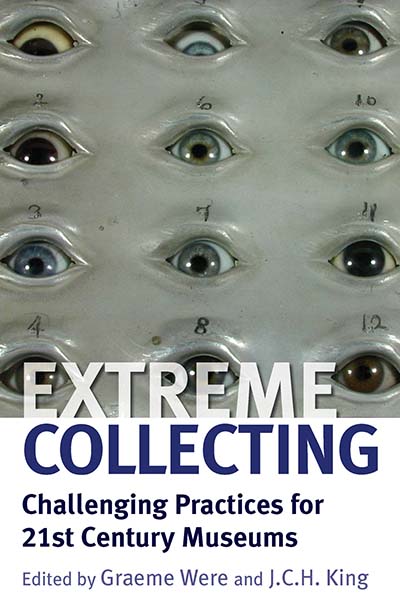
EXTREME COLLECTING

Challenging Practices for 21st Century Museums

Edited by Graeme Were and J. C. H. King

By exploring the processes of collecting, which challenge the bounds of normally acceptable practice, this book debates the practice of collecting ‘difficult’ objects, from a historical and contemporary perspective; and discusses the acquisition of objects related to war and genocide, and those purchased from the internet, as well as considering human remains, mass produced objects and illicitly traded antiquities. Much of the book engages with the question of the limits to the practice of collecting as a means to think through the implementation of new strategies. Continue reading “Marking Museum Week: #AskTheCurator or View the Book”

Storms, Sickness, Suspicions: The Darker Side of Migration

In Points of Passage: Jewish Migrants from Eastern Europe in Scandinavia, Germany, and Britain 1880-1914, published last October, contributors reveal some of the less-savory aspects of immigration (of which there were many). Following, in an excerpt from the newly published volume, editor Tobias Brinkmann gives two examples of passengers enduring misery before arriving on the supposed paradise of North American soil. This is the second entry about the book; read the former here.
_______________________________________

The essay collection “Points of Passage” seeks to shift attention from the well-known success story of Jewish immigration in the United States to the journey. On which paths did Jewish (and other) migrants travel from Eastern Europe to the ports on the North Sea and across the Atlantic between the 1880s and the 1920s, and which obstacles did they face? Researching the paths of migration can be much more challenging than studying immigration.

Continue reading “Storms, Sickness, Suspicions: The Darker Side of Migration”