Storms, Sickness, Suspicions: The Darker Side of Migration

In Points of Passage: Jewish Migrants from Eastern Europe in Scandinavia, Germany, and Britain 1880-1914, published last October, contributors reveal some of the less-savory aspects of immigration (of which there were many). Following, in an excerpt from the newly published volume, editor Tobias Brinkmann gives two examples of passengers enduring misery before arriving on the supposed paradise of North American soil. This is the second entry about the book; read the former here.
_______________________________________
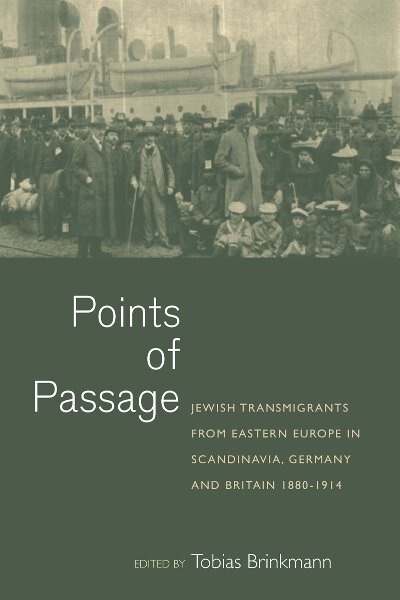
The essay collection “Points of Passage” seeks to shift attention from the well-known success story of Jewish immigration in the United States to the journey. On which paths did Jewish (and other) migrants travel from Eastern Europe to the ports on the North Sea and across the Atlantic between the 1880s and the 1920s, and which obstacles did they face? Researching the paths of migration can be much more challenging than studying immigration.

Continue reading “Storms, Sickness, Suspicions: The Darker Side of Migration”
Not So Different After All: Connecting British and Bengali Education Systems

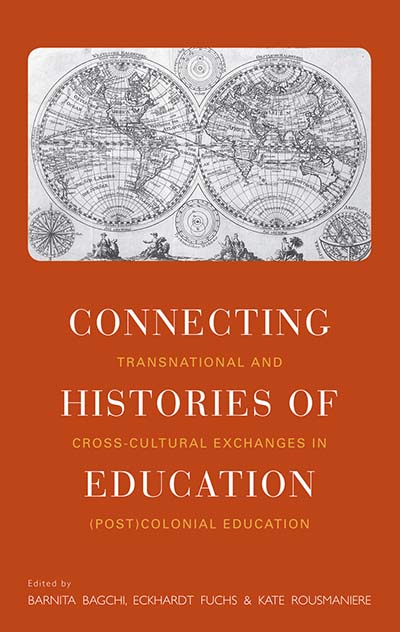
Connecting Histories of Education: Transnational and Cross-Cultural Exchanges in (Post)Colonial Education, edited by Barnita Bagchi, Eckhardt Fuchs and Kate Rousmaniere, has recently been published by Berghahn. The editors previously shared an excerpt from the volume’s Introduction, which can be read here. A second extract, this one from Mary Hilton’s chapter “A Transcultural Transaction: William Carey’s Baptist Mission, the Monitorial Method and the Bengali Renaissance,” gives readers insight into the education system shared between Britain and Bengal.


__________________________________________

To understand the early-nineteenth-century reforming mentality that drove change in both Britain and Bengal, we must first sketch those systems of basic education that prevailed in their traditional rural communities before the English industrial revolution and before the development of the fully evangelical, self-righteous and reforming mercantile thrust of English imperialism.

Continue reading “Not So Different After All: Connecting British and Bengali Education Systems”

The Ethical Sequence of Eugenics?

If you could modify the human population to be more intelligent or more beautiful, would you? When this idea of eugenics — or selectively breeding a population with more “desirable” traits — was first popularized in the twentieth century, such contemporary figures as Winston Churchill, Theodore Roosevelt, H.G. Wells, and, not surprisingly, Adolf Hitler, were supporters. Now, with renewed interest in the science of eugenics, editors Calum MacKellar and Christopher Bechtel explore the unsavory aspects and issues in The Ethics of the New Eugenics, to be published this month. Following, the editors explain what led them to study this science, and what may be ahead for the field.


___________________________________________


What drew you to the study of eugenics?


Calum MacKellar: Over the many years that I have worked in the field of human bioethics, I have always suspected that the topic of eugenics would eventually come back to haunt society.

Continue reading “The Ethical Sequence of Eugenics?”

The Author and Ingmar Bergman: Two Legacies Endure

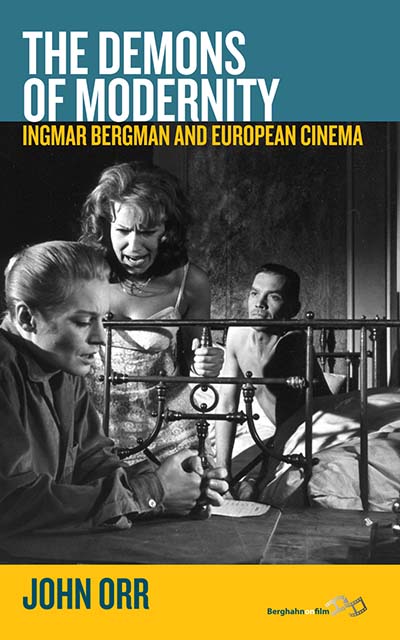
John Orr’s proposal for a text on Swedish director Ingmar Bergman first came to Berghahn in 2009. In September 2010, however, the prominent film scholar passed away with a manuscript in peer review. It was Professor Orr’s wife, Anne, who took up the finalization of the book, shepherding it through stages of review, revision and production to its publication. Now, this month, The Demons of Modernity: Ingmar Bergman and European Cinema will be published. Following, Anne Orr, who wrote about her experience in the volume’s Afterword, briefly introduces the book and what it meant to help bring it to fruition.


_____________________________________

When my husband John Orr died suddenly during the writing of The Demons of Modernity, it was comforting to be assured by two of the foremost experts on Ingmar Bergman – Peter Cowie and Maaret Koskinen – that they considered the manuscript as it stood an original and worthwhile contribution to studies of Bergman.

Continue reading “The Author and Ingmar Bergman: Two Legacies Endure”

Egress and Ingress: Exploring ‘Points of Passage’

Ellis Island in New York City is a historically recognized entrance point for European migrants to the United States. But if this is so well-known, then why do we know so little about the points of departure? This is one of many research questions that informed the writing of Points of Passage: Jewish Migrants from Eastern Europe in Scandinavia, Germany, and Britain 1880-1914, published last October. Following, an excerpt from the volume — bookended by comments from editor Tobias Brinkmann — delves deeper into these queries.


 _________________________________________


When I began researching the history of Jewish migrations in the 1990s I concentrated on immigrants. I collected sources on the settlement of Jewish immigrants from small villages in the Central and Eastern European countryside in Chicago between 1840 and 1900. Within a few years the immigrants built a Jewish community, prospered economically and became respected members of Chicago’s social and political circles. My first book concentrated on two major research questions that continue to drive immigration studies: the impact of forces strengthening or weakening ethnic communities, and the impact of assimilation processes on immigrants.

Continue reading “Egress and Ingress: Exploring ‘Points of Passage’”

The Reciprocal Relationship of Media and Movement

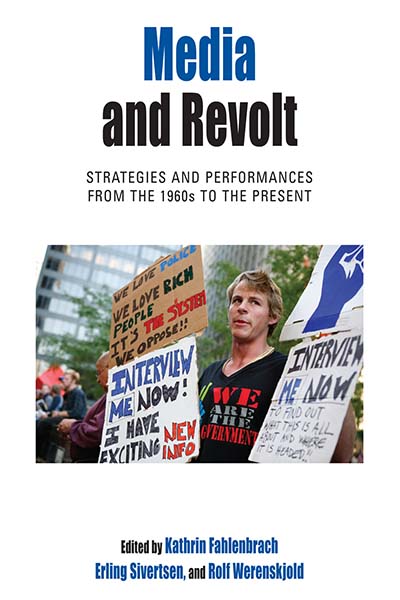
Editors Kathrin Fahlenbrach, Erling Sivertsen and Rolf Werenskjold’s volume Media and Revolt: Strategies and Performances from the 1960s to the Present was published last month. Following, the editors introduce the timely volume and share an excerpt from the Introduction. 


__________________________________________________


Looking at journals, television, or on the internet in these days, news dealing with protests abounds: the upheavals around the Euro-Maidan in the Ukraine, anti-governmental protests in Bangkok, the “Occupy-Gezi-Park”-manifestations in Istanbul or protest actions of NGOs like Greenpeace against oil companies or whale hunters. Obviously protest has an enormous “news value”: it offers spectacular pictures, it makes evident political conflicts and decisions by polarizing their actors, and it offers media the chance to perform as center of society.

Continue reading “The Reciprocal Relationship of Media and Movement”

Variations on an Educational Theme

When the traditional educational system of colonizing societies was disseminated to indigenous societies, it was not accepted by the colonized “as-is,” but was adopted as merely an underlying framework. This hybridization led to a multitude of varied, yet similar, educational systems across the post-imperialized world. In the following excerpt from the Introduction of Connecting Histories of Education: Transnational and Cross-Cultural Exchanges in (Post)Colonial Education, to be published this month, editors Barnita Bagchi, Eckhardt Fuchs and Kate Rousmaniere further explain the connections within modern educational culture.


______________________________

Connecting Histories of Education bears a double meaning. The volume connects historians of education from South Asia and other parts of the world to enhance a comparative perspective and create a wider research network beyond the Euro-Western world. In addition, it presents local, regional, national and transnational research, with the goal of highlighting the interconnectedness of histories of education in the modern world.

Continue reading “Variations on an Educational Theme”

Uzbekistan, Social Network of Choice

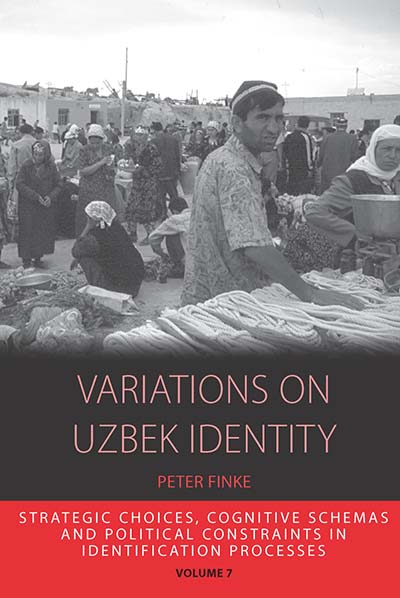
In the Republic of Uzbekistan, being Uzbek has less to do with one’s lineage and more to do with one’s allegiance to a society. The advantages of this voluntary membership within the Uzbek “social network” are explored in Variations on Uzbek Identity: Strategic Choices, Cognitive Schemas and Political Constraints in Identification Processes. Below, Peter Finke discusses his attraction to Uzbekistan, his writing process, and the volume’s potentially controversial reception.


_____________________________________________

Berghahn Books: What drew you to the study of Uzbekistan, specifically “Uzbek Identity”?


Peter Finke: My general interest in Central Asia goes back a long way into childhood fantasies of roaming horse riders and the like. Most of Uzbekistan does not really fit that well into this and indeed my early research in the region was on nomadic pastoralists in Western Mongolia. It was after I took up a postdoc at the Max Planck Institute to work on identity issues that I not only switched topics but also field sites.

Continue reading “Uzbekistan, Social Network of Choice”

A ‘Privileged’ Prisoner is Still a Prisoner

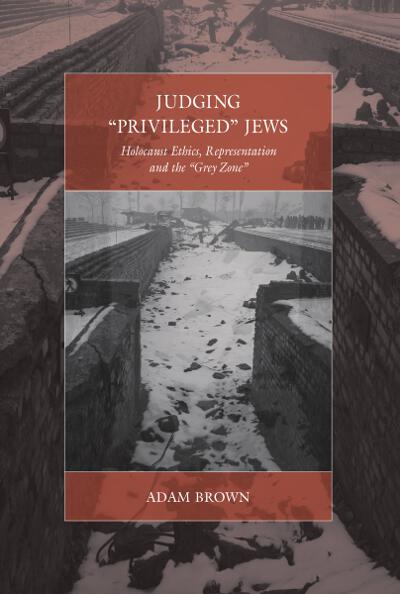
In German concentration camps, some Jewish prisoners were selected by their Nazi captors to hold more-advantaged positions within the population of the camp. This not only allowed them some protections, but also made them targets of disdain from other victims. Author Adam Brown sheds light on these “privileged” few in his volume Judging “Privileged” Jews: Holocaust Ethics, Representation, and the “Grey Zone,” published in July of last year. Following, Brown discusses about the origins of his interest in the Holocaust in general, and in this inspirational “Grey Zone,” in particular.


________________________________________________


The evolution of my book, Judging “Privileged” Jews: Holocaust Ethics, Representation and the “Grey Zone,” was – like most books no doubt – somewhat long and complex. To take the long-term view, the project began when I heard the moving personal stories spoken by survivor guides on a high school trip to the Jewish Holocaust Centre in 1999. As a non-Jewish teenager with next to no background knowledge of the event, the visit to the JHC inspired a lasting curiosity and sense of obligation to find out more.

Continue reading “A ‘Privileged’ Prisoner is Still a Prisoner”

In the Beginning, There Were ‘Visions of the End’

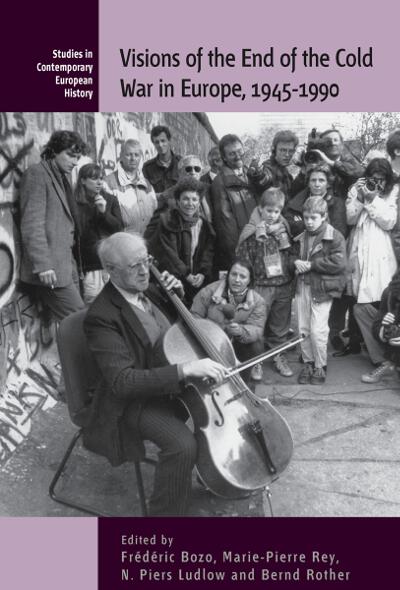
When WWII drew to a close in the late 1940s, the fighting may have stopped, but the tension was just building. This sustained Cold War friction lasted longer than four decades, the whole time of which, the main players had ideas of how it would look when it ended. The editors and contributors of Visions of the End of the Cold War in Europe, 1945-1990, to be published next month, explore these ‘conceived programmes’ and ‘utopian aspirations.’ Below, an excerpt from the Introduction sets the scene, starting at the end, with the fall of the Wall.


___________________________________________

The fall of the Berlin Wall on 9 November 1989 quickly came to symbolize the end of the Cold War as a whole, including the liberation of Eastern Europe from Soviet rule in 1989, the unification of Germany in 1990 and the break-up of the Soviet Union in 1991. Its twentieth anniversary in autumn 2009 was therefore an opportunity to celebrate not just that particular event – however meaningful – but an extraordinary period that in barely two years led from the dismantling of the Iron Curtain to the liquidation of the whole ‘Yalta’ order.


Continue reading “In the Beginning, There Were ‘Visions of the End’”